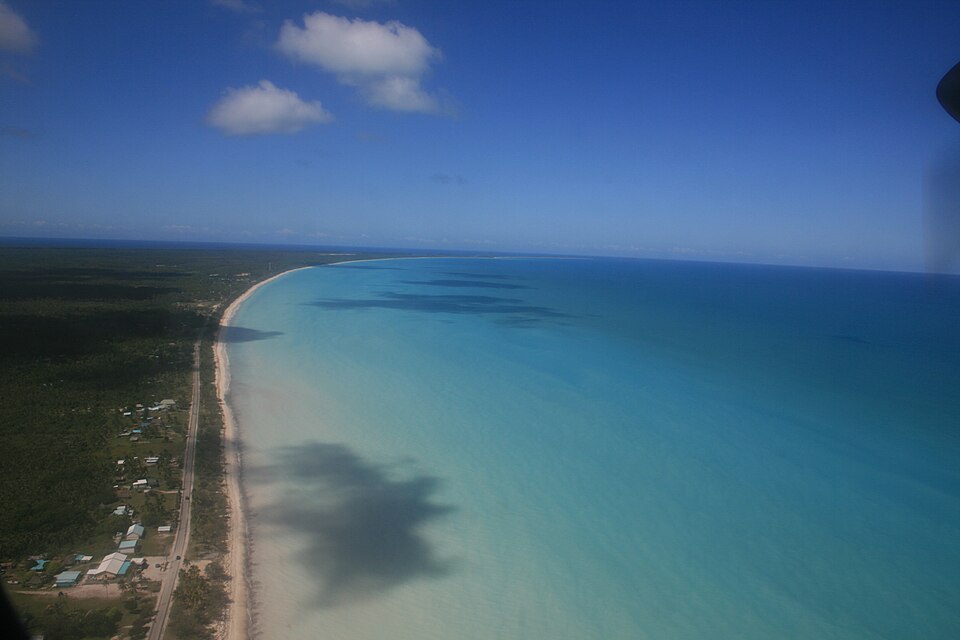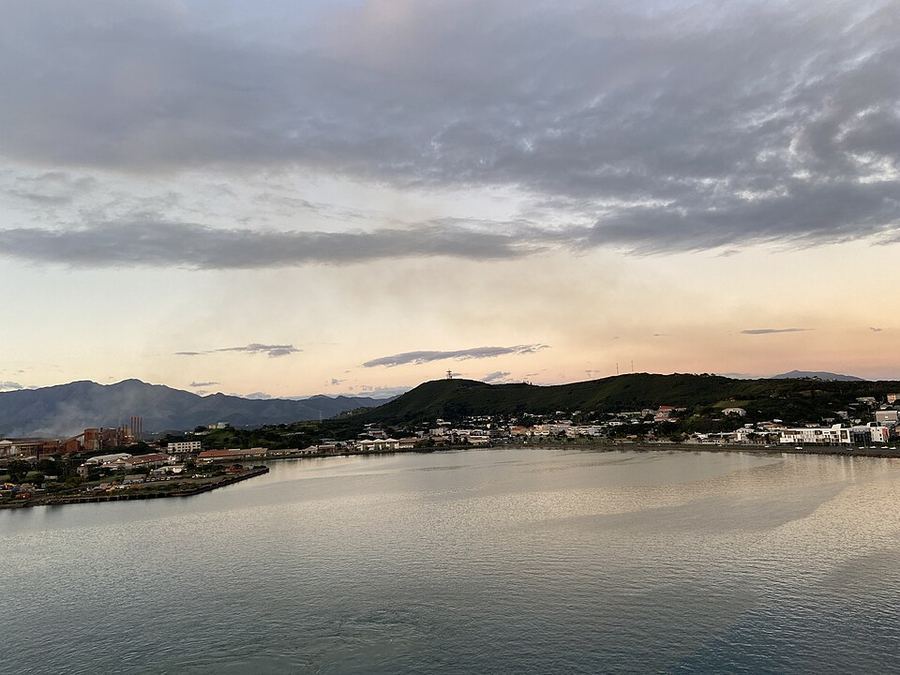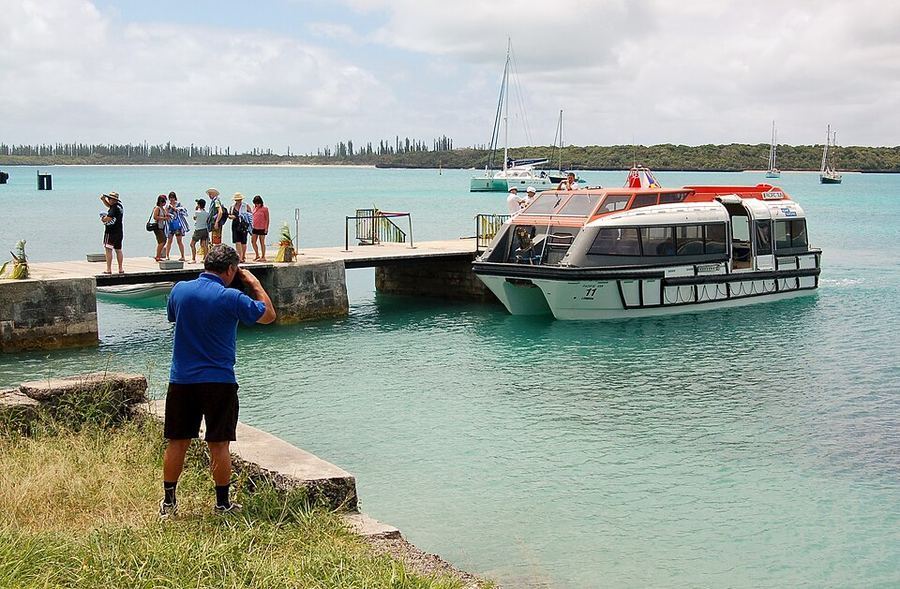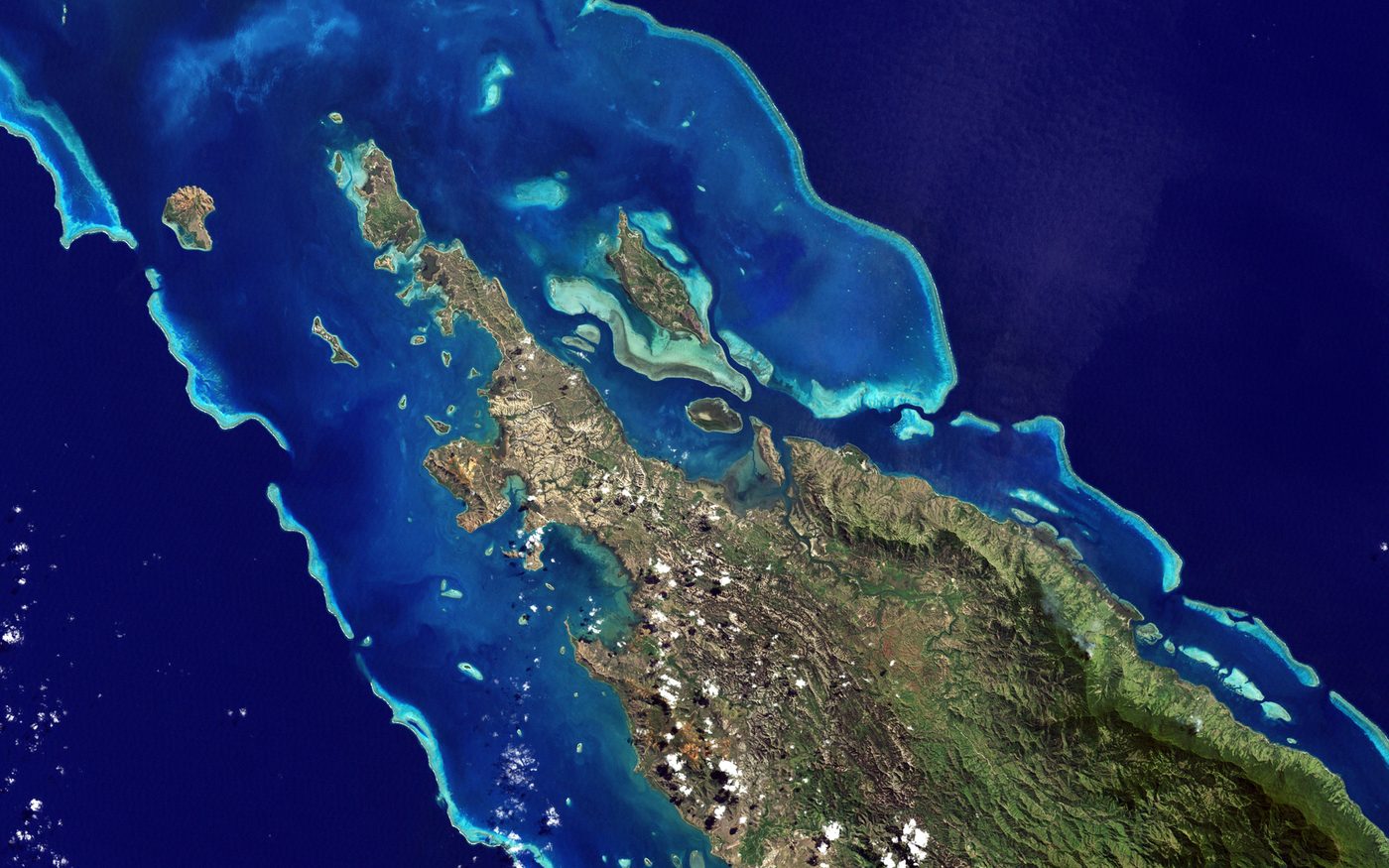
New Caledonia Lagoon North — Photo: Image taken by the Landsat-7 satellite, a joint mission of NASA and the U.S. Geological Survey (USGS). Credit: NASA/NASA Goddard Space Flight Center/Landsat. Image created by Jesse Allen, using Landsat data provided by the USGS. Caption adapted from original written byMichon Scott. Source: NASA Goddard Space Flight Center Flickr page. / CC BY 4.0 via Wikimedia Commons
Did You Know
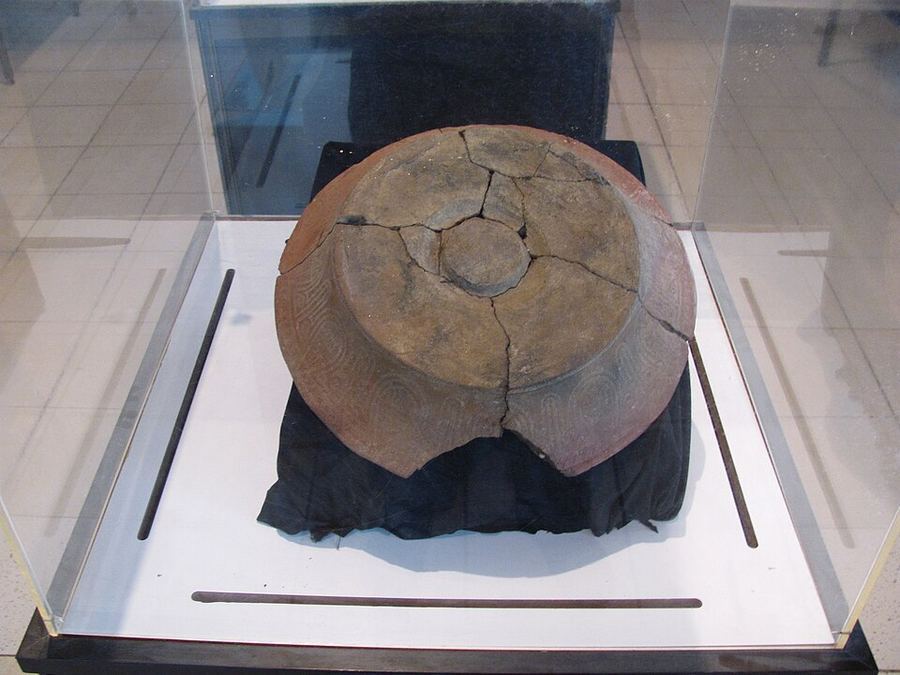
The Lapita culture that spread across the Pacific is named after an archaeological site near Koné in New Caledonia, where its distinctive stamped pottery was first properly excavated in the 1950s. — Smithsonian
New Caledonia is a French overseas collectivity in the south-west Pacific, some 1,200 kilometres east of Australia, made up of the long mountainous main island of Grande Terre, the Loyalty Islands of Ouvéa, Lifou and Maré, the Isle of Pines and a scattering of smaller islands, with a population of about 308,000. Nouméa, in the far south of Grande Terre, holds roughly half of it. The indigenous Melanesian population, the Kanak, make up around 39 percent, with a European-descended population of about 27 percent alongside Wallisian, Futunian, Tahitian, Indonesian, Vietnamese and Ni-Vanuatu communities. French is the official language and around thirty Kanak languages are spoken. The territory holds roughly a tenth of the world's known nickel reserves, and nickel mining and smelting has dominated its economy and its politics for over a century. Its central question since the 1980s has been whether it will become independent: the Matignon Accords of 1988 and the Nouméa Accord of 1998 set out a long process of transferred powers and referendums, three of which were held between 2018 and 2021 and all of which returned a no, the last under a pro-independence boycott. Serious rioting in 2024 reopened the whole settlement.
The islands were settled around three thousand years ago by Austronesian voyagers of the Lapita culture, which takes its name from an archaeological site near Koné on Grande Terre excavated in the 1950s; the distinctive dentate-stamped Lapita pottery found there became the type specimen for the whole Pacific settlement horizon. James Cook sighted the main island in 1774 and named it New Caledonia. Sandalwood traders and then labour recruiters followed in the nineteenth century, and France annexed the territory in 1853 under Napoleon III. From 1864 to 1897 it served as a penal colony, receiving over twenty thousand convicts including several thousand Communards deported after the Paris Commune of 1871, among them Louise Michel. Settler expansion and land seizure provoked the great Kanak revolt of 1878 under the chief Ataï, which was suppressed with heavy loss of life, and a further rising in 1917. Kanak were governed under the punitive indigénat code and confined to reserves until 1946. During the Second World War Nouméa became the headquarters of the United States South Pacific command, with tens of thousands of American troops stationed on Grande Terre, an episode that transformed local expectations and infrastructure.
Kanak society is organised around the clan and the chefferie, and its central institution is la coutume, custom: a formal exchange in which a visitor presents a gift, traditionally a length of cloth, tobacco and a small sum of money wrapped together, accompanied by a spoken address, and receives a counter-gift. It opens meetings, marks arrivals and departures, settles disputes and accompanies births, marriages and deaths, and it is practised in public life well beyond Kanak communities. The clan house, the grande case, is a circular high-roofed structure whose central pillar and carved doorposts embody the chief's authority and whose roof spire, the flèche faîtière, is topped with shell and pierced with spears; that spire is the emblem on the Kanak flag. The yam is the ritual crop, and the yam calendar governs the ceremonial year, with the first harvest marked by ceremonies of exchange between clans. Alongside this sits an entirely French institutional life, Catholic and Protestant churches with deep local roots, and the distinct communities of Wallisian, Futunian, Javanese, Vietnamese and Tahitian descent whose own associations and festivals fill the Nouméa calendar.
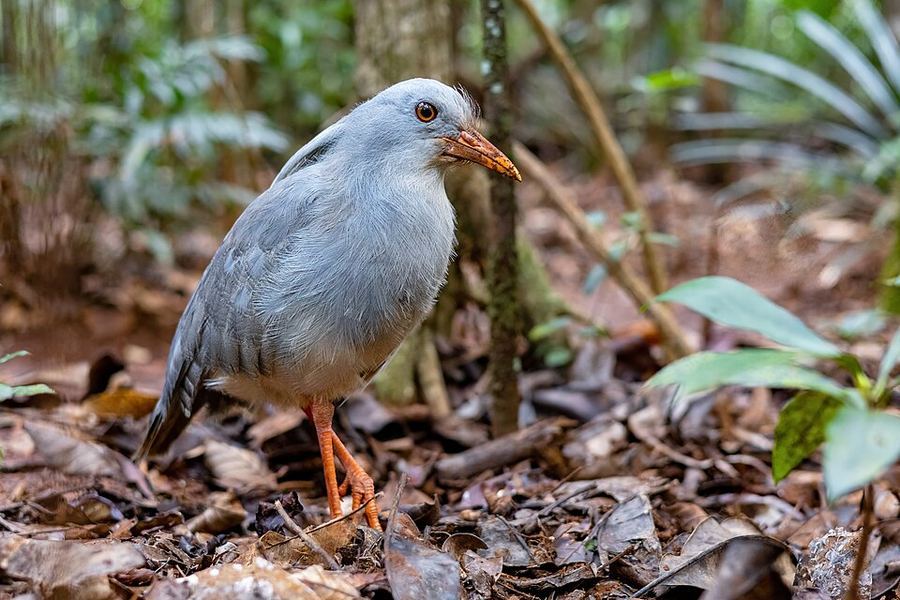
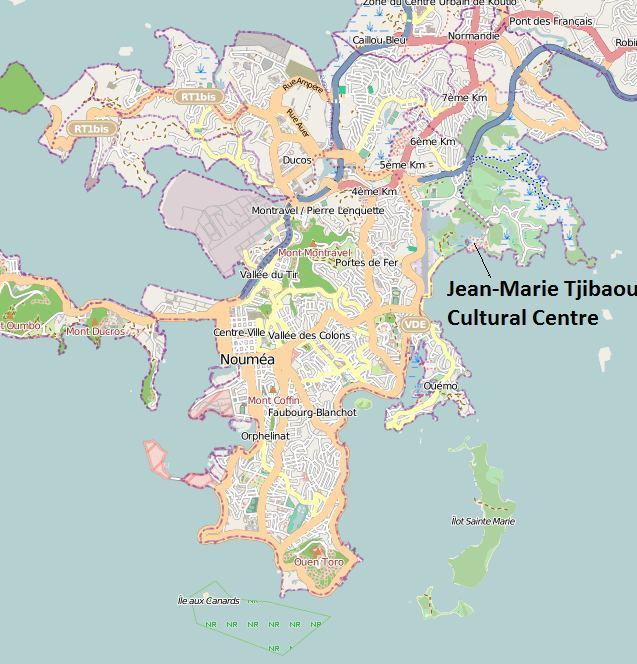
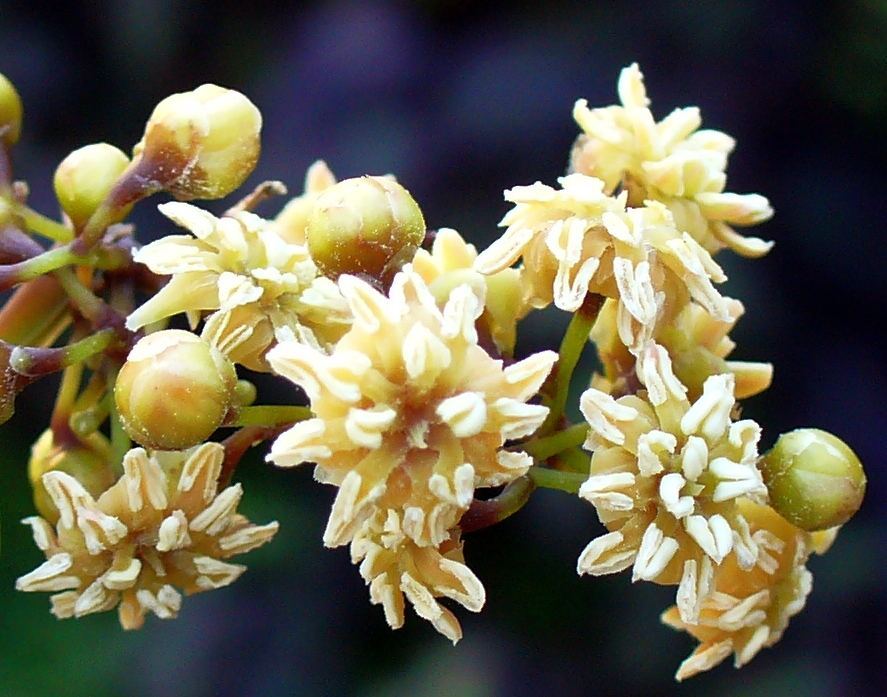
The Lagoons of New Caledonia were inscribed as a UNESCO World Heritage site in 2008, covering six marine clusters within a reef system that runs some 1,500 kilometres and forms one of the longest continuous barrier reefs on Earth, enclosing a lagoon of about 24,000 square kilometres with exceptional coral and fish diversity and populations of dugong and green turtle. On land, the ultramafic soils produced by the island's ancient geology have generated one of the most extraordinary concentrations of endemic plants anywhere: around three-quarters of the vascular flora is found nowhere else, and the island holds thirteen of the world's nineteen Araucaria pine species. Amborella trichopoda, a small understorey shrub found only in New Caledonia, is the sole surviving member of the lineage that diverged first from all other flowering plants, making it the single most significant plant in the world for understanding the origin of flowers. The kagu, a grey flightless forest bird with a crest and a barking call, is the territorial emblem. The Jean-Marie Tjibaou Cultural Centre in Nouméa, designed by Renzo Piano and opened in 1998, is the architectural expression of Kanak identity.
New Caledonia's population is a direct product of colonial labour policy. Convicts and free settlers arrived from France; Javanese and Vietnamese indentured workers were brought in from the 1890s to work the nickel mines and plantations, and their descendants remain distinct communities with their own associations, temples and restaurants; Wallisian and Futunian migration from the 1950s onward, driven by mining employment, has produced a community now larger than the Polynesian population of Wallis and Futuna itself. The result in Nouméa is a city where a French bakery, a Vietnamese pho counter and an Indonesian nasi stall sit on the same street, and where bo bun and nem are ordinary local food rather than imports. Language reflects the layering: French is the medium of school, administration and commerce, but roughly thirty distinct Kanak languages are spoken across Grande Terre and the Loyalties, several with only a few hundred speakers, and Drehu of Lifou and Nengone of Maré have the largest communities. The rusa deer introduced from Java in 1870 has become both an ecological problem and a staple of the local table.
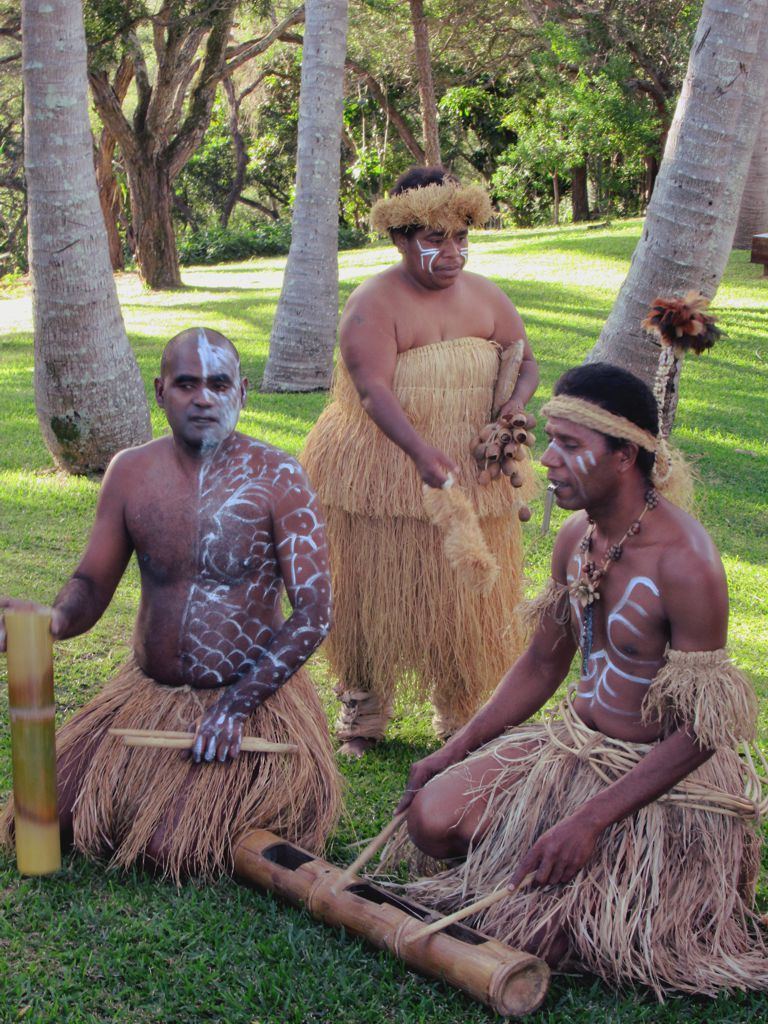
The oldest Kanak musical forms are the ae-ae, a polyphonic chant sung in unison lines with a characteristic rhythmic pulse, and the pilou, a night-long circle dance historically performed at major exchanges and commemorations, accompanied by bamboo stamping tubes, bark clappers and conch. Missionaries suppressed much of this repertoire in the nineteenth century, and its recovery has been part of the wider Kanak cultural revival since the 1970s. The dominant modern form is kaneka, a genre created deliberately in the mid-1980s at a period of intense political mobilisation, fusing traditional rhythms and vocal lines with reggae, and sung in Kanak languages and French. It became the sound of the independence movement and remains the territory's defining popular music; groups including Bwanjep, Gurejele, OK! Ryos and the singer Edou are among its established names. The Melanesia 2000 festival organised by Jean-Marie Tjibaou in 1975 is treated as the founding moment of the modern cultural revival, and the Jean-Marie Tjibaou Cultural Centre now programmes dance, music and theatre continuously and hosts the Festival of Melanesian Arts when it comes to the territory.
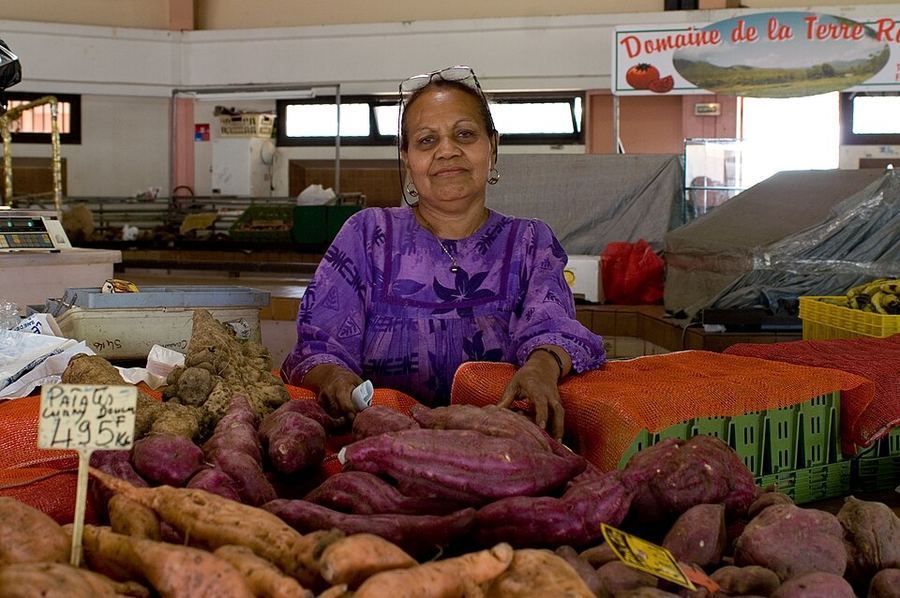
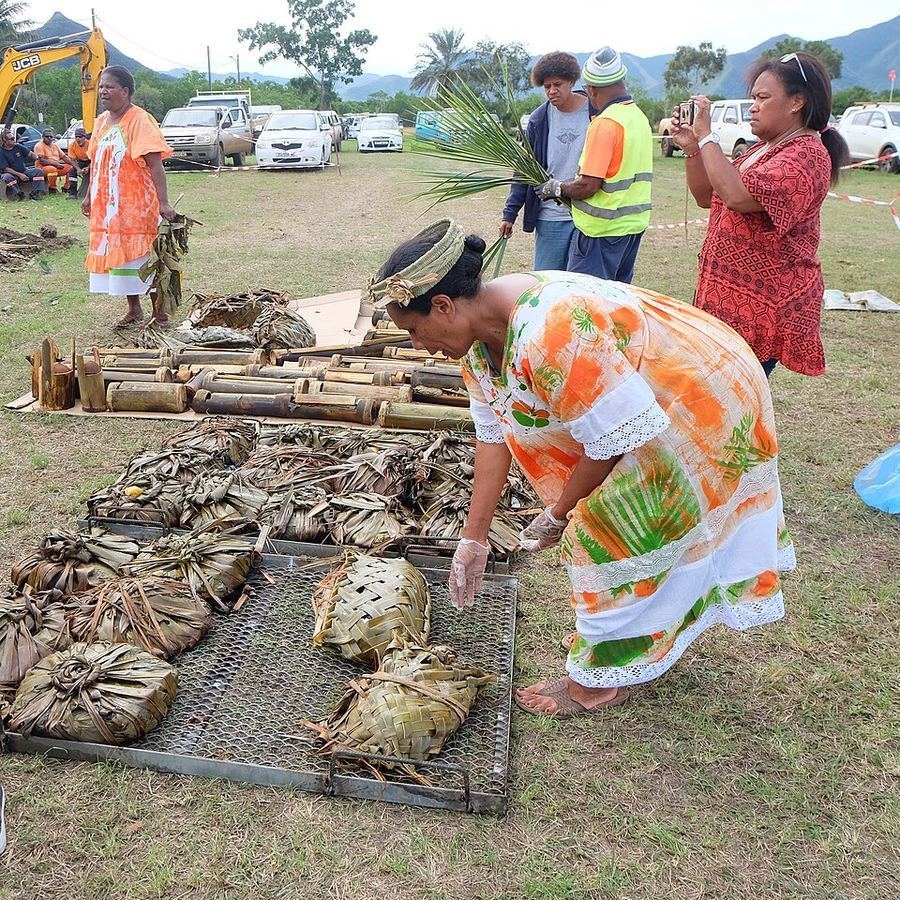
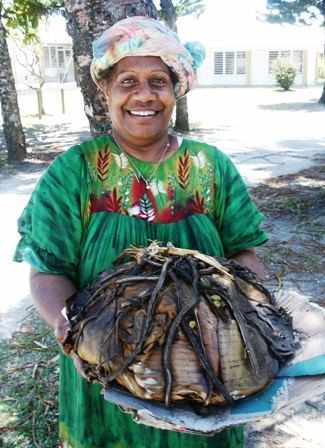
The emblematic Kanak dish is bougna: yams, taro, sweet potato and banana layered with chicken, fish or crab, soaked in coconut milk, wrapped in banana leaves and cooked for hours in an earth oven over hot stones. It is a dish for occasions rather than everyday eating, and it belongs to the same ceremonial world as the yam calendar. Everyday food across the territory is unusually French for the Pacific: baguettes and croissants from proper boulangeries, charcuterie, and restaurant cooking in Nouméa that would not be out of place in provincial France. Layered on that is Asian food brought by indentured labour, with Vietnamese bo bun, nem and pho and Indonesian nasi and bami all thoroughly naturalised. From the lagoon come mangrove crab, prawns farmed in the south, poisson cru marinated in lime and coconut milk in the Polynesian manner, and the coconut crab of the Loyalty Islands. Venison from the introduced rusa deer is common and cheap, and the deer's overabundance makes eating it an act of pest control. Local vanilla, the Isle of Pines' produce and Nouméa's Port Moselle market anchor the food calendar.
The characteristic dress of Kanak women is the robe mission, a loose, ankle-length, long-sleeved dress with a yoked shoulder and often a frill, introduced by nineteenth-century missionaries as a garment of modesty and adopted so thoroughly that it is now the recognised marker of Kanak womanhood, made up in bright printed cottons and worn at church, at customary ceremonies and in daily life across the Loyalty Islands and Grande Terre. Its history parallels the Mother Hubbard dress found across the Pacific and the mu'umu'u of Hawaii. Men's customary dress at ceremonial occasions involves a manou, a wrapped cloth worn at the waist, with shell and fibre ornament; the ceremonial money of woven fibre and shell beads that changes hands during la coutume is closer to regalia than clothing but carries far more meaning than any garment. At major customary events dancers wear fibre skirts, bark belts and ornament of nautilus shell, seeds and feathers. Everyday urban dress in Nouméa is entirely French and Australian in character, and the contrast between the city and the customary areas is visible at a glance.
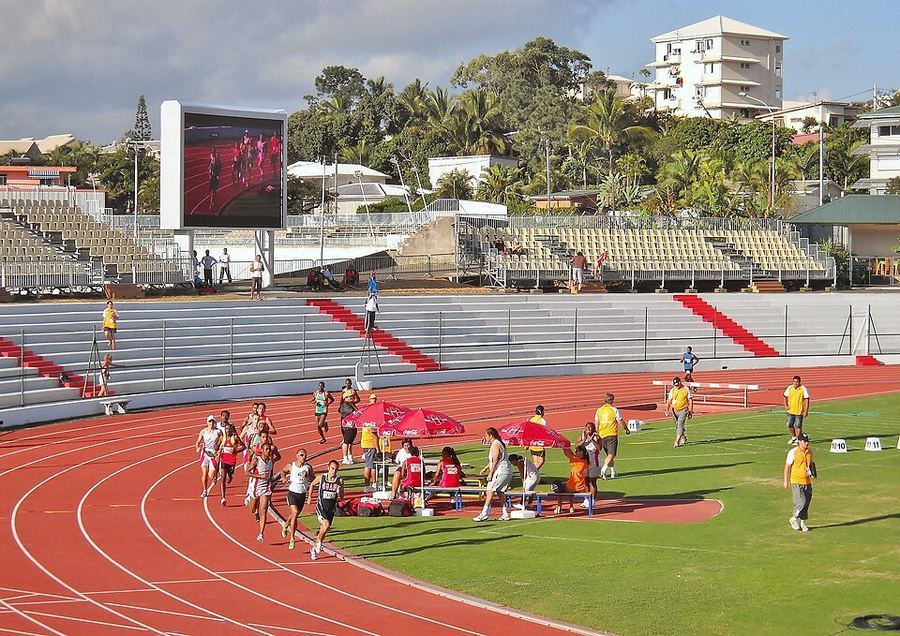
Football is the dominant sport by participation and following, played in every village and organised through a territorial league; the Kanak communities in particular have produced a steady stream of players who have gone to French professional academies, which is why a territory of 300,000 has supplied a World Cup winner. Rugby union and rugby league both have followings, reflecting French and Australian influence, and cricket occupies a distinctive niche: Kanak women in the Loyalty Islands and on Grande Terre play a locally adapted version of the game introduced by missionaries, played in robes mission with large teams and local rules, and it functions as much as a community institution as a sport. Petanque is played seriously everywhere. Water sports have obvious advantages here, with sailing, outrigger canoe racing, surfing, kitesurfing and diving all well established, and the traditional pirogue races between the Loyalty Islands and Grande Terre are significant events. Athletics, judo, volleyball and basketball fill out the territorial competition calendar, which is oriented above all towards the Pacific Games.
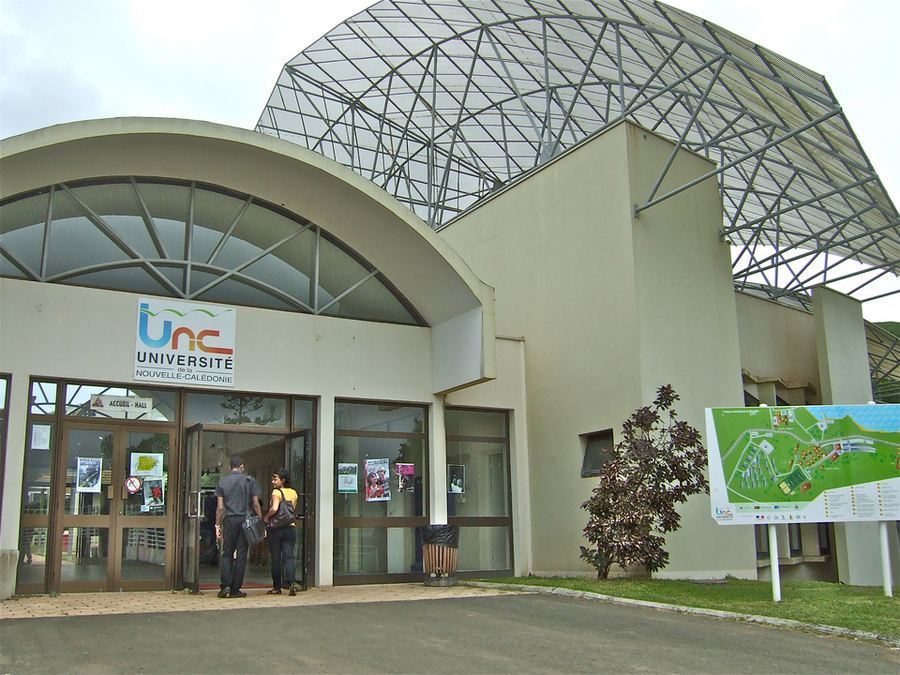
Education follows the French national system, with the baccalauréat as the terminal school qualification and curricula largely set in France, though since the Nouméa Accord the territory has taken over responsibility for primary and then secondary schooling and has introduced Kanak languages and local history into the programme. Four Kanak languages, Drehu, Nengone, Paicî and Ajië, can be taken at the baccalauréat, and there has been sustained effort to develop teaching materials for languages with only a few hundred speakers. Educational outcomes diverge sharply between Nouméa and the Kanak-majority North Province and Loyalty Islands, a gap that is one of the standing grievances of the independence movement and one of the explicit targets of the rebalancing policies written into the accords. The University of New Caledonia in Nouméa, established as an independent institution in 1999, offers degrees in law, economics, science, literature and teacher training, with a specific research focus on the territory's biodiversity and mining environment. The Institut de Recherche pour le Développement and the French marine research agency both maintain significant research centres in Nouméa.
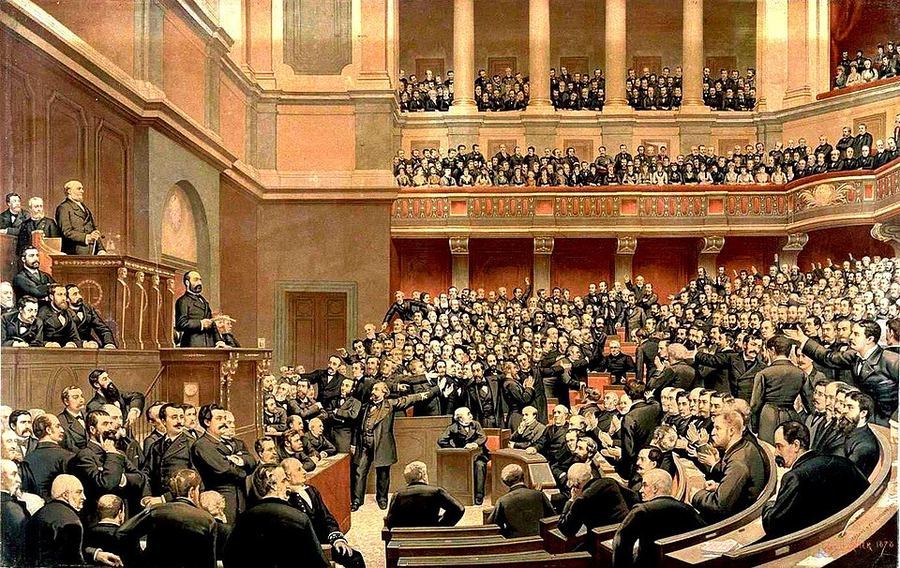
The period from 1984 to 1988, known locally simply as les Événements, brought the territory close to civil war. A pro-independence boycott of territorial elections in November 1984 was followed by the killing of ten Kanak activists in an ambush at Hienghène in December, among them two brothers of Jean-Marie Tjibaou, and by the shooting of the independence leader Éloi Machoro by police marksmen in January 1985. The crisis culminated in April and May 1988 on Ouvéa, where militants killed four gendarmes and took hostages in a cave; the French assault that ended the siege killed nineteen Kanak and two soldiers. The Matignon Accords of June 1988 stopped the violence, and Tjibaou and the anti-independence leader Jacques Lafleur shook hands over them; Tjibaou was assassinated a year later by a Kanak opponent of the deal. The Nouméa Accord of 1998 set out three referendums, held in 2018, 2020 and 2021, all returning no, the last boycotted by the independence movement. In May 2024 a French constitutional amendment to widen the electoral roll triggered the worst rioting since the 1980s, with more than a dozen deaths, extensive destruction in Nouméa and a state of emergency.
The overriding dispute is internal and constitutional: whether New Caledonia becomes an independent state. The Nouméa Accord of 1998 created a New Caledonian citizenship, a restricted electoral roll frozen to long-term residents, an irreversible transfer of powers from Paris, and the three self-determination referendums held between 2018 and 2021. The first two returned no by narrowing margins, 56.7 percent and 53.3 percent; the third, held in December 2021 despite pro-independence requests to postpone it during a Covid mourning period, returned 96.5 percent no on a turnout of around 44 percent after a comprehensive boycott, and the independence movement has never accepted it as legitimate. The French proposal in 2024 to unfreeze the electoral roll, which the FLNKS read as diluting the Kanak vote, produced the May riots, after which the amendment was withdrawn. A further agreement negotiated at Bougival in July 2025 proposing a State of New Caledonia within the French Republic was contested by parts of the independence movement rather than settling the question. Externally, France's claim to Matthew and Hunter Islands as part of New Caledonia is disputed by Vanuatu.
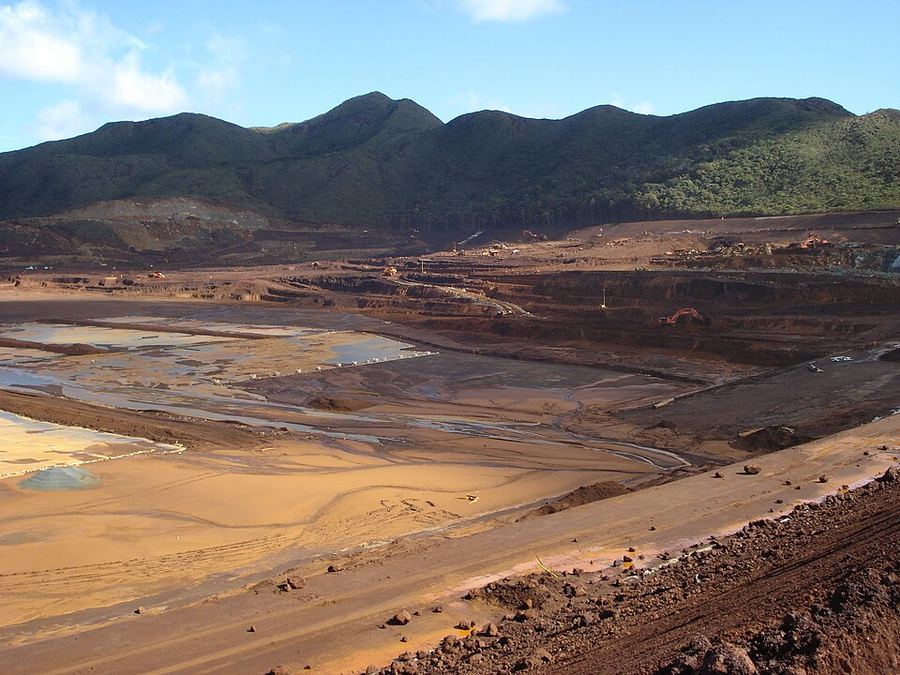
Grande Terre is a long, narrow island roughly 400 kilometres from end to end, split lengthwise by a central mountain chain rising to 1,629 metres at Mont Panié, which divides a wet, forested, cliff-bound east coast from a drier west coast of savannah and cattle country. The island is a fragment of the ancient continent of Zealandia rather than a volcanic arc, and much of it is capped by ultramafic rock rich in nickel, iron and magnesium and toxic to most plants, which is precisely why its flora is so strange and so endemic. Open-cast nickel mining has stripped large areas of the massifs and left severe erosion scars. The Loyalty Islands to the east are raised coral atolls, flat and porous with no surface rivers, and the Isle of Pines to the south is similar. The barrier reef runs almost continuously around the whole territory. The climate is tropical, moderated by the trade winds, with a hot humid season from November to April that carries the cyclone risk and a cooler drier season from May to September. Coral bleaching and cyclone intensity are the principal climate concerns.
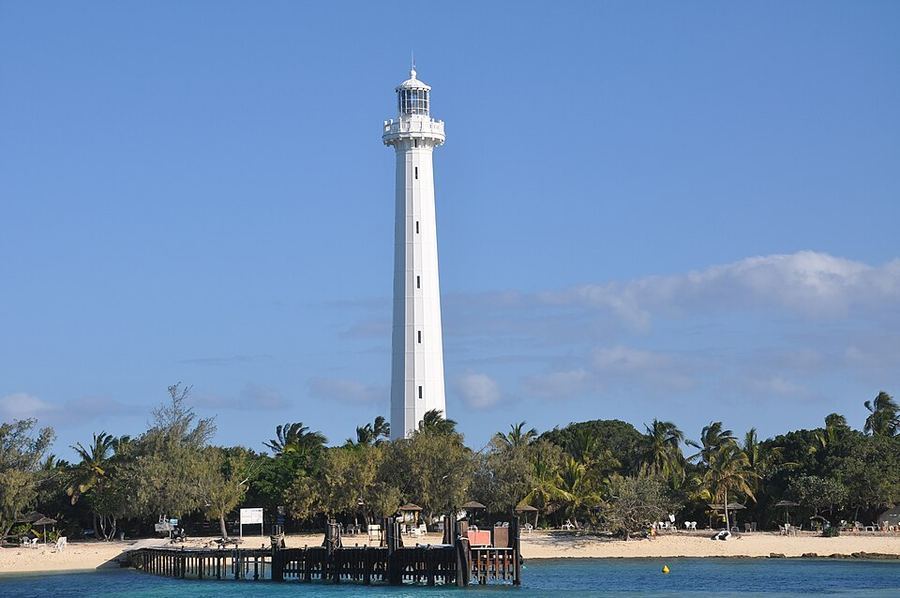
The lagoon dominates recreation. Nouméa's Anse Vata and Baie des Citrons are the city beaches, with kitesurfing and windsurfing off Anse Vata in the trade winds and boats running out to the Amédée lighthouse, a slender cast-iron tower manufactured in Paris and erected on its islet in 1865, one of the tallest metal lighthouses in the world. The Isle of Pines is the territory's showpiece, with the sheltered bays of Kuto and Kanuméra, the tall columnar araucaria pines along the shore, and the natural pool at Oro Bay reached by a walk through forest. Lifou's Jinek Bay is a protected snorkelling site of unusual clarity, and Maré and Ouvéa have long empty beaches. Inland, the Parc Provincial de la Rivière Bleue in the south is the best place to see kagu in the wild and the standard hiking destination, and the north offers the Hienghène coast with its striking black limestone rock formations. Diving on the barrier reef is world class. Boules, rugby and football fill village afternoons, and the weekend market at Port Moselle is a fixture of Nouméa life.
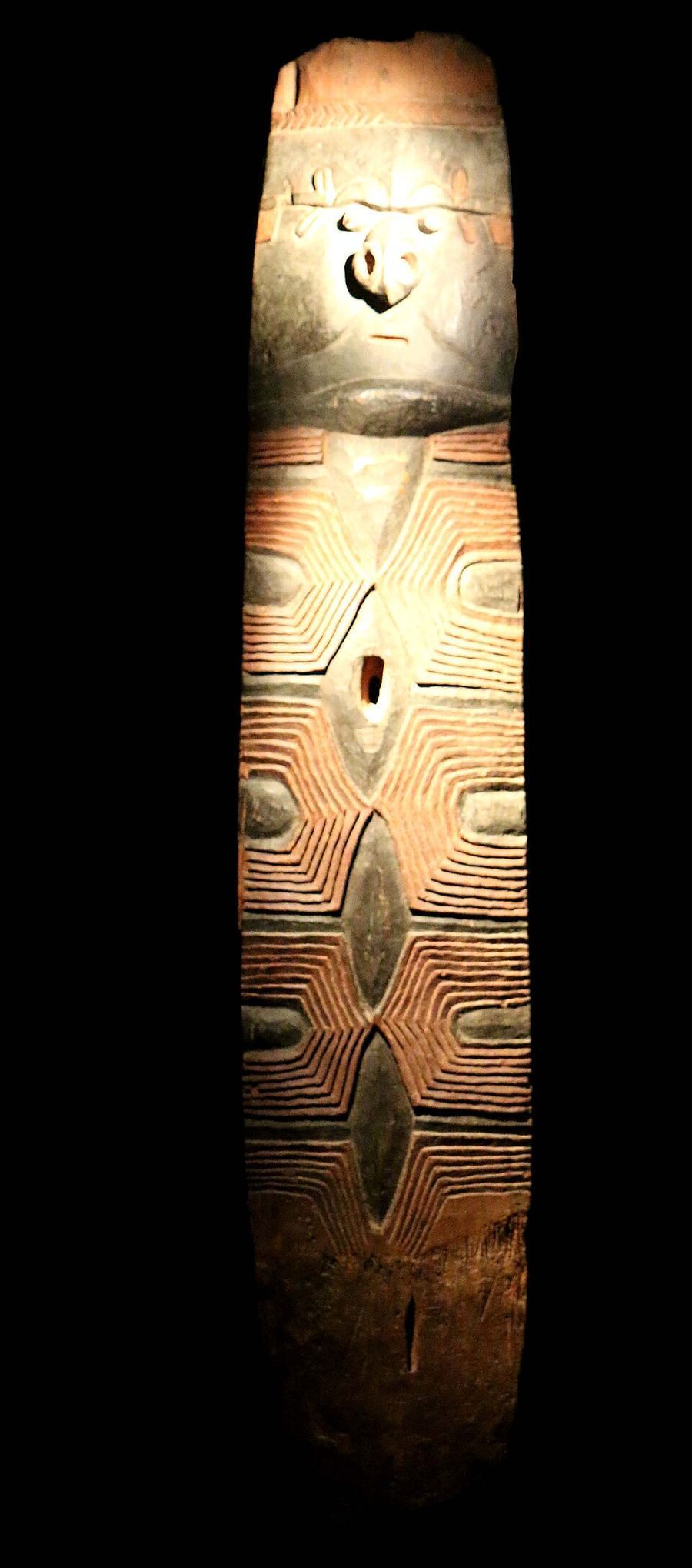
Kanak visual art is architectural and sculptural. The chambranles, carved wooden door jambs that flank the entrance of the grande case, depict ancestral faces in a flattened, strongly linear style, and the flèche faîtière that crowns the roof combines carved figure, pierced spears and shell. Both are ritual objects tied to the authority of a chief and a clan rather than decorative work. A second distinctive tradition is the bambou gravé, engraved bamboo: lengths of bamboo incised with fine narrative scenes, which flourished in the nineteenth century and recorded, among other things, the arrival of Europeans, missionaries, ships and soldiers from a Kanak point of view, and which are now held in museums including the Musée du quai Branly in Paris. The Musée de Nouvelle-Calédonie in Nouméa holds the principal territorial collection of Kanak and wider Melanesian material. The Jean-Marie Tjibaou Cultural Centre, Renzo Piano's cluster of ten curved timber and steel structures on a peninsula outside Nouméa, evoking unfinished traditional houses and designed to work with the trade winds, is both the territory's leading arts institution and its best-known building.
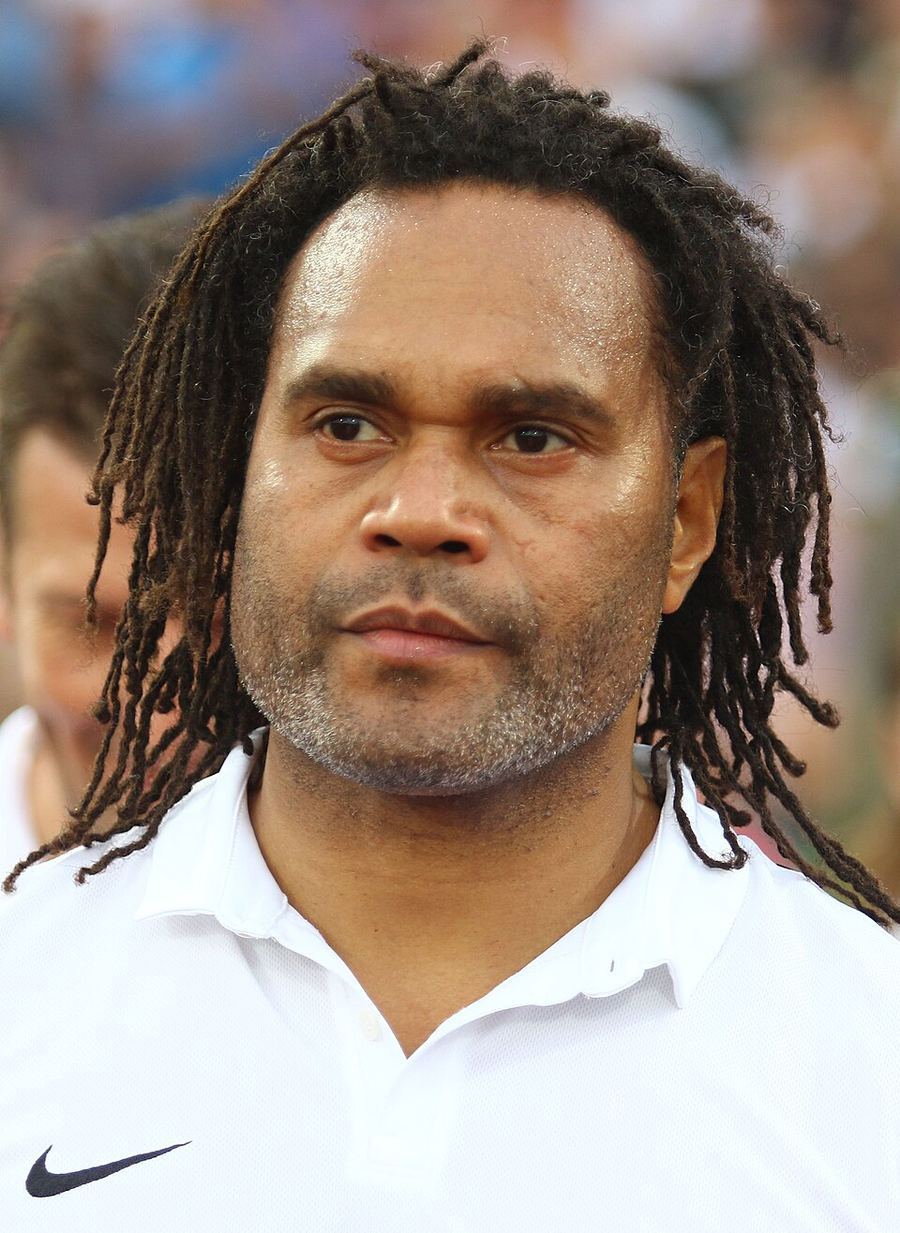
Ataï, the chief who led the 1878 revolt against settler land seizure and was killed in its suppression, is the foundational figure of Kanak resistance, and the return of his remains from France in 2014 was a major public event. Louise Michel, the French anarchist deported after the Paris Commune, spent seven years in New Caledonia, taught Kanak children, and unlike almost all her fellow deportees sided with the 1878 rebels. Jean-Marie Tjibaou, a former priest who became the leader of the independence movement, organised the Melanesia 2000 festival in 1975, negotiated the Matignon Accords in 1988 and was assassinated by a Kanak opponent of the agreement in May 1989; the cultural centre carries his name. Jacques Lafleur led the anti-independence camp and signed those accords with him. Déwé Gorodé, poet, novelist and later vice-president of the government, was the first major Kanak woman writer. In sport, Christian Karembeu, born on Lifou, won the World Cup with France in 1998 and the European Championship in 2000, and Antoine Kombouaré played for Paris Saint-Germain and went on to a long career managing in Ligue 1.
New Caledonia's contributions are metallurgical and archaeological rather than a catalogue of devices. The engineer Jules Garnier identified the territory's nickel-bearing ore in 1864, and the hydrous nickel silicate he described was named garnierite after him; the discovery created the industry that has defined the economy ever since and made New Caledonia one of the world's principal sources of nickel, an element central to stainless steel and now to lithium-ion battery cathodes. Processing laterite ores of this type economically has driven sustained metallurgical development, including the high-pressure acid leach plant in the far south, one of the largest of its kind. In archaeology, the site at Lapita gave its name to the entire cultural horizon of Pacific settlement: the dentate-stamped pottery first properly excavated there in the 1950s is the marker used to trace the Austronesian expansion across the western Pacific, so the territory supplied the reference point for the whole discipline. Traditional Kanak horticulture developed irrigated terraced yam and taro cultivation on steep slopes, an engineered agricultural system whose stone-faced terraces survive across Grande Terre.
New Caledonia is one of the world's most important sites for evolutionary botany. Its ultramafic soils, high in nickel and magnesium and low in the nutrients most plants need, drove extreme specialisation, and roughly three-quarters of its vascular plant species grow nowhere else, giving it one of the highest rates of plant endemism of any territory on Earth. The most consequential of them is Amborella trichopoda, an unremarkable-looking understorey shrub confined to the island's wet forests, which molecular phylogenetics identified as the sister lineage to all other living flowering plants; its genome, published in 2013, is the standard reference for reconstructing what the earliest flowering plants were like. Some New Caledonian plants are nickel hyperaccumulators, storing the metal at concentrations that have made them a focus of research into phytomining and contaminated-soil remediation. The territory's crows are equally significant to another field: New Caledonian crows manufacture and use hooked tools from twigs and barbed pandanus leaves in the wild, and the experimental work done on them has reshaped the study of animal cognition. Marine research on the barrier reef, coral bleaching and dugong populations is coordinated from Nouméa.
New Caledonia competes internationally under its own name in most sports, an unusual position for a French territory. It is a full member of FIFA, having joined in 2004, and of the Oceania Football Confederation, and its national team is among the strongest in the Pacific: it reached the final of the OFC Nations Cup in 2008 and again in 2024, and that 2024 result carried it into the intercontinental play-off route for the 2026 World Cup, the closest the territory has come to qualifying. Because it has no national Olympic committee, New Caledonian athletes who reach the Olympics compete for France, which is how Christian Karembeu's generation of footballers came to wear the French shirt. The territory's principal multi-sport arena is the Pacific Games, where it is consistently among the top nations in the medal table alongside Tahiti, Papua New Guinea and Fiji, and it hosted the Games in Nouméa in 2011. It also competes at the Pacific Mini Games and in regional competition across athletics, swimming, judo and volleyball.
Court of Appeal or Cour d'Appel; organized into civil, commercial, social, and pre-trial investigation chambers; court bench normally includes the court president and 2 counselors); Administrative Court
number of judges NA
Economy, Trade & Government
Currency & GDP
CFP Franc — XPF (None)
GDP (PPP): $8.469 billion (2024 est.)
Per capita: $34,600 (2024 est.)
Exports
$1.92 billion (2021 est.)
iron alloys, nickel, nickel ore, processed crustaceans, shellfish (2023)
Partners: China 75%, Japan 9%, Taiwan 3%, India 3%, France 2% (2023)
Imports
$2.26 billion (2021 est.)
refined petroleum, coal, cars, aircraft, packaged medicine (2023)
Partners: France 36%, Singapore 16%, Australia 15%, China 6%, NZ 3% (2023)
Government
Type: parliamentary democracy (Territorial Congress); an overseas collectivity of France
Independence: none (overseas collectivity of France)
Terrain → Where People Live
How mountains, coasts, and rivers shape settlement (LandScan).
Coming — data
Migration & Ethnic Settlement
Where groups settled and how people move (GeoEPR + UNHCR).
Coming — data
Universities
Notable institutions, mappable as points.
Coming — data
Economy & government facts: CIA World Factbook (public domain), via OpenFactBook / factbook.json.
Every fact and narrative claim will carry a visible source citation. Data-driven
sections light up automatically wherever HERA has coverage.