HERA · Human Entity Reference Atlas by Masego Inc

← Niger 🌐 3D View
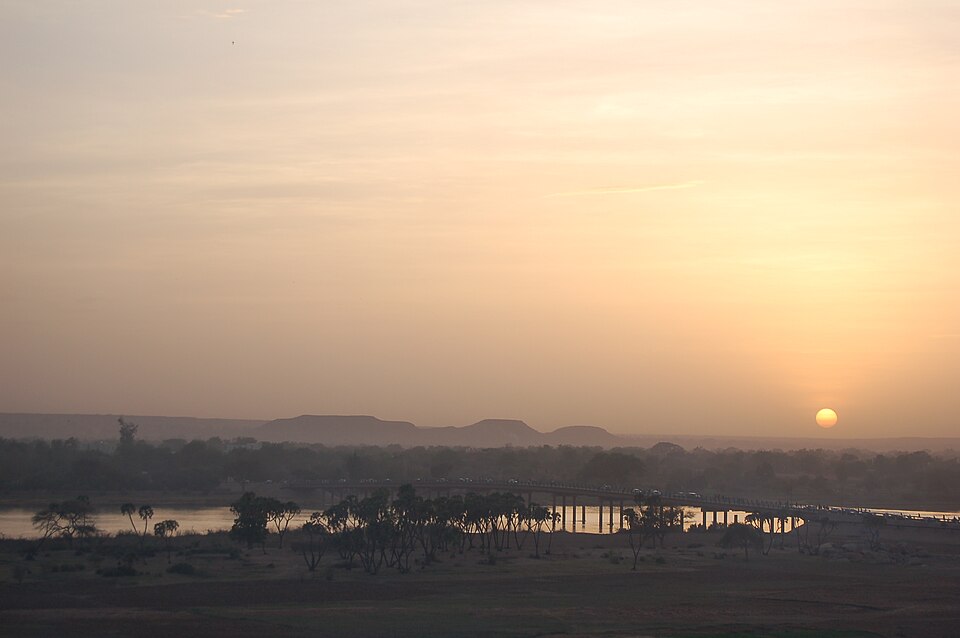
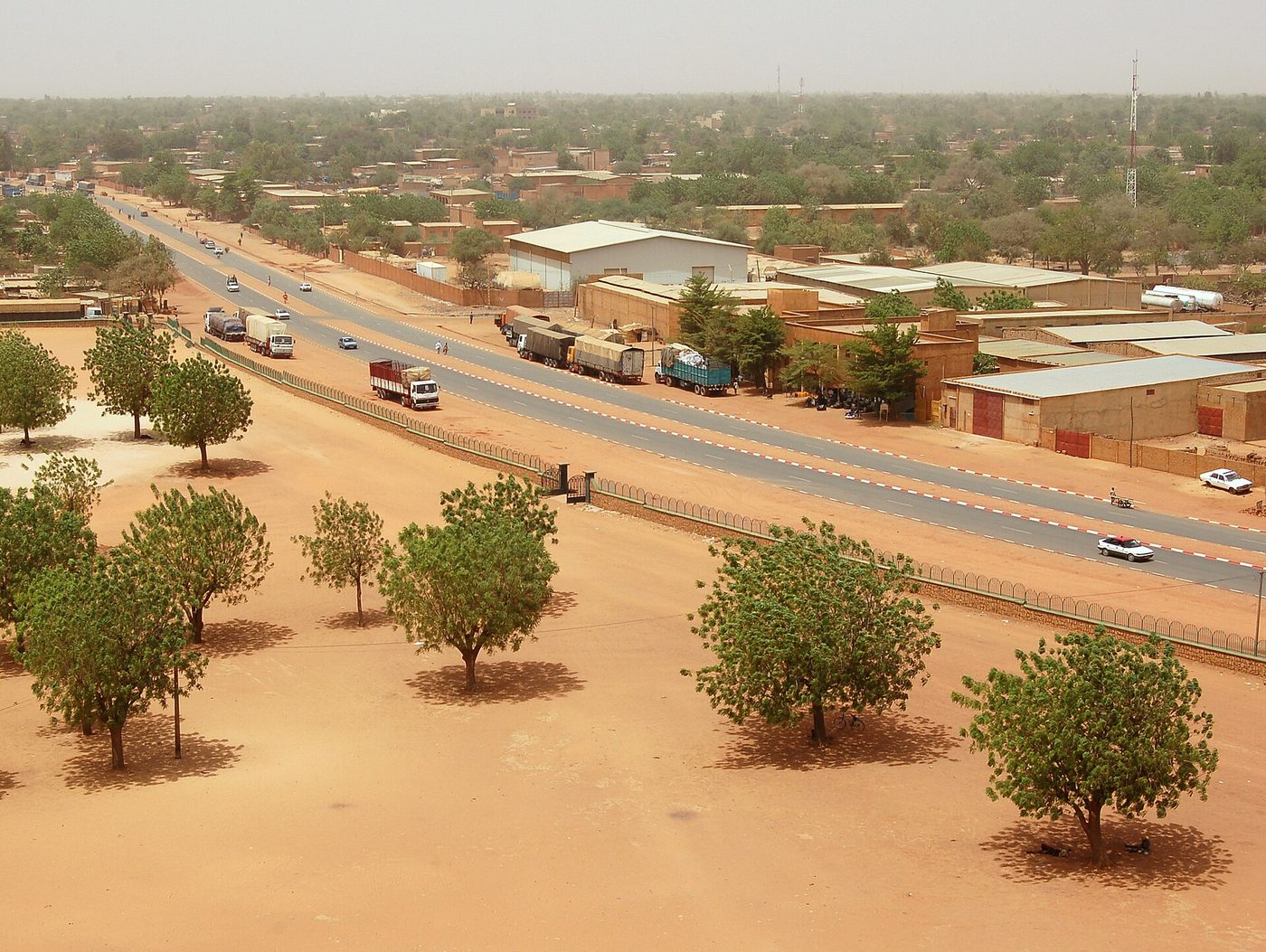
Blvd Mali Bero from grand mosquee niamey, Niger
Niger NER
Blvd Mali Bero from grand mosquee niamey — Photo: Roland Huziaker / CC BY-SA 2.0 via Wikimedia Commons
Did You Know Traditional wrestling, not football, is Niger's national sport, and the annual Sabre National championship is the biggest sporting event of the year. — Encyclopaedia Britannica

Niger is a landlocked country of about 27 million people in the West African Sahel, the largest state in West Africa by area and roughly four-fifths desert. The Sahara covers the north and centre, the Aïr Mountains and the Ténéré sand sea among them; almost the entire population lives in the narrow southern belt along the Nigerian border and in the south-west, where the Niger River passes Niamey, the capital. Hausa speakers make up just over half the population, with Zarma and Songhai, Tuareg, Fulani, Kanuri, Gurma, Arab and Toubou communities alongside them; French is the official language and Islam is professed by around 95 percent. Niger has the youngest population in the world, with a median age of about 15 and the highest fertility rate of any country, which makes demographic pressure the single largest fact about its future. It is among the world's largest uranium producers and began exporting crude oil through a pipeline to Benin in 2024, yet remains near the bottom of global income and development rankings. Independence from France came on 3 August 1960; a military coup in July 2023 removed the elected president and installed a junta that has since realigned the country away from France and its West African neighbours.

CIA World FactbookWorld BankUNReuters
Population
27,322,555
Capital
Niamey
Currency
Fr XOF
Time zones
Largest city
Niamey
Human Geography Themes
Loading national figures…
Largest Cities
Niamey1,600,656
Zinder748,965
Maradi673,215
Tahoua369,905
Agadez360,388
Dosso236,673
Birni N'Konni181,092
Abalak176,157
In Perspective

Niamey's urban core is home to about 1,600,656 people.

That's bigger than Amsterdam — each a great world city in its own right.

Niamey1,600,656
Amsterdam1,223,407

Among the world's megacities, though, it's one of many — the giants of Asia and Latin America run larger still:

Niamey1,600,656
Jakarta40,545,126
Dhaka37,307,160
Tokyo33,244,670
Shanghai30,678,616
Cairo25,230,325
The Country & Its People

History

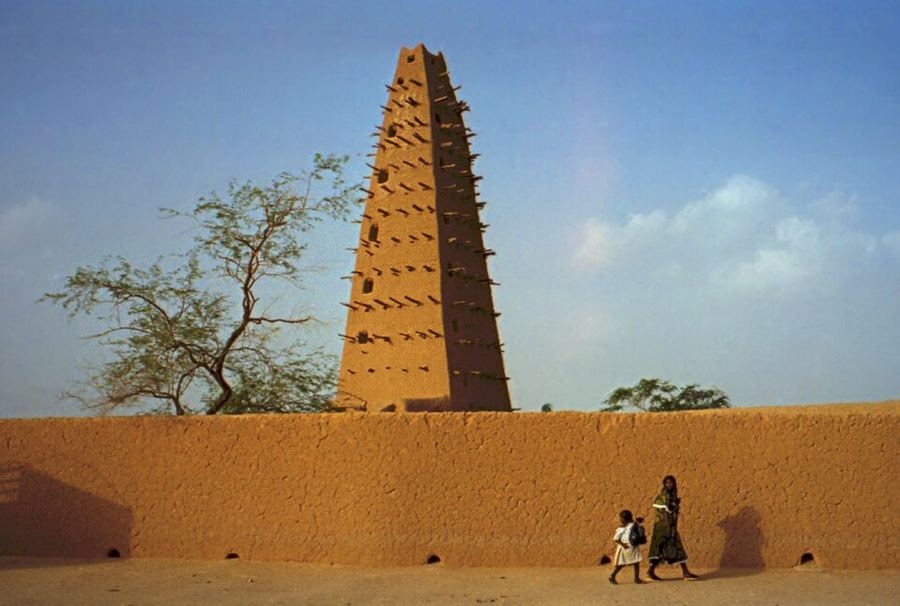
The Sahara was green within human memory, and the cemetery excavated at Gobero in the Ténéré, the largest Stone Age burial ground yet found in the desert, records two successive populations living beside lakes between roughly 10,000 and 5,000 years ago. As the desert dried, trans-Saharan trade replaced settlement, and Niger's north became a corridor for salt, gold and slaves. The Agadez sultanate was founded around 1449 and grew into the principal Tuareg market of the central Sahara. In the south, Hausa city-states traded with Kano and Katsina, Kanem-Bornu dominated the east around Lake Chad, and the Songhai Empire held the Niger River bend to the west until its collapse in 1591. The Sokoto jihad of the early nineteenth century reshaped the Hausa south. French conquest came at the end of that century and was exceptionally brutal: the Voulet-Chanoine mission of 1898 to 1899 burned villages and massacred civilians across the south before its officers were killed. Niger became a colony within French West Africa in 1922 and independent on 3 August 1960 under Hamani Diori, who was overthrown in 1974 by Seyni Kountché during the great Sahel drought.
History, Niger
Dan Lundberg / CC BY-SA 2.0

Culture

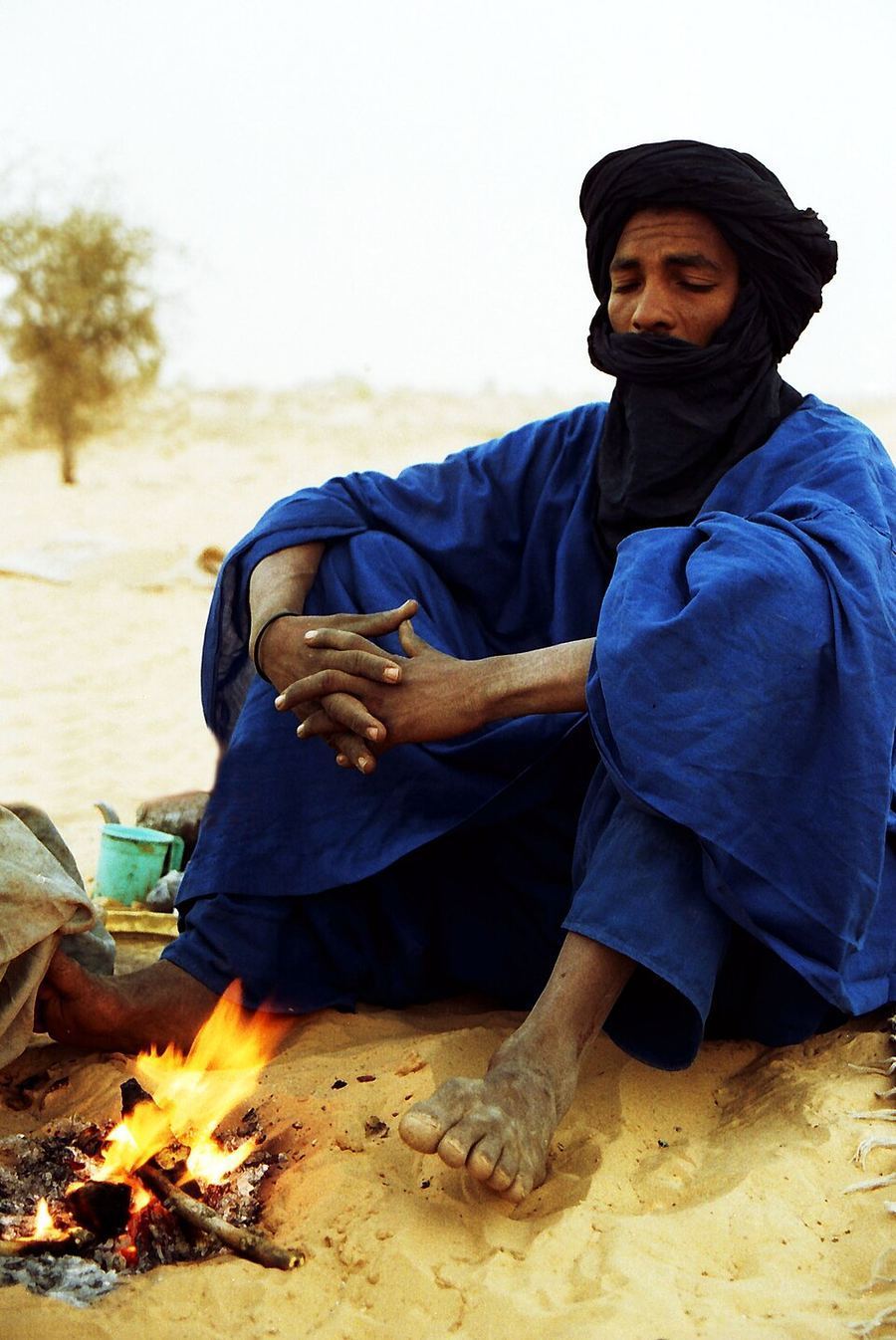
Nigerien culture is layered by ethnicity and by the Sahara-Sahel divide. In the settled Hausa south, life turns on the market, Quranic scholarship, Sufi brotherhoods and a rich tradition of praise singing by griots; the older Bori spirit-possession cult, in which practitioners are mounted by named spirits during drumming ceremonies, persists alongside Islam and has been documented on film since the 1950s. Zarma and Songhai communities along the river share much of that pattern with their own musical and ritual repertoire. In the north, Tuareg society is organised by confederation and caste, is matrilineal in descent though Muslim in law, and reverses the usual convention of veiling: it is men who cover the face with the tagelmust, the long indigo veil that gave rise to the phrase blue men of the desert. Among the Wodaabe Fulani, cattle herders of the centre, the annual Guérewol is a male beauty display in which young men paint their faces, line up and dance for hours to be judged by young women. The great meeting point is the Cure Salée at In-Gall each September, where Tuareg and Wodaabe herders gather at the salt pastures.
Culture, Niger
Dan Lundberg / CC BY-SA 2.0

Points Of Pride

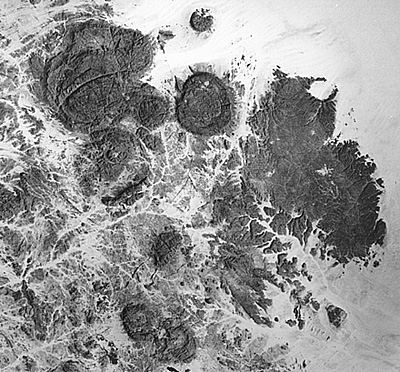
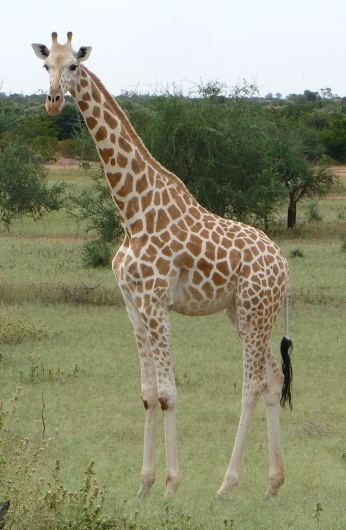
Niger holds three UNESCO World Heritage sites. The Historic Centre of Agadez, inscribed in 2013, is a mud-brick desert city whose Grand Mosque minaret, rebuilt in 1844 on a sixteenth-century foundation, rises some 27 metres with projecting wooden beams and is the tallest mud-brick structure of its kind. The Aïr and Ténéré Natural Reserves, inscribed in 1991, form the largest protected area in Africa, taking in a volcanic massif and the sand sea beside it; they have been on the List of World Heritage in Danger since 1992. The W National Park, inscribed in 1996 and later extended into the transboundary W-Arly-Pendjari complex with Benin and Burkina Faso, holds West Africa's most significant remaining savannah wildlife. Beyond the heritage sites, Niger's proudest conservation achievement is the West African giraffe: reduced to about fifty animals in the 1990s and surviving nowhere else on Earth, the herd around Kouré southeast of Niamey has been brought back past six hundred, living unfenced among farming villages, with animals translocated to establish a second population.
Points Of Pride, Niger
NASA / Landsat / Public domain

Cultural Fusion

Niger is the meeting ground of the Sahara and the Sudanic belt, and its cultural mixtures follow that seam. Islam arrived along the trans-Saharan trade routes from the eleventh century and spread through commerce and scholarship rather than conquest, then was reinforced from the south by the Sokoto jihad in the nineteenth century, which is why Nigerien Islam carries both a Saharan Maliki and Sufi character and a Hausa reformist one. Older practice was absorbed rather than erased: Bori spirit possession among the Hausa and comparable Songhai practices coexist with mosque attendance, and were filmed extensively by the French ethnographer Jean Rouch, whose Niger work founded a whole tradition of ethnographic cinema. Hausa is the effective lingua franca of the south and crosses the border seamlessly into northern Nigeria, so that trade, marriage, music and religious authority all operate on both sides of a line drawn in Paris and London. Tuareg and Toubou networks likewise span the Libyan and Algerian frontiers. French remains the language of the state, courts and secondary schooling, spoken fluently by a small educated minority.
Cultural Fusion, Niger
Mab.black / CC BY-SA 4.0

Music & Dance

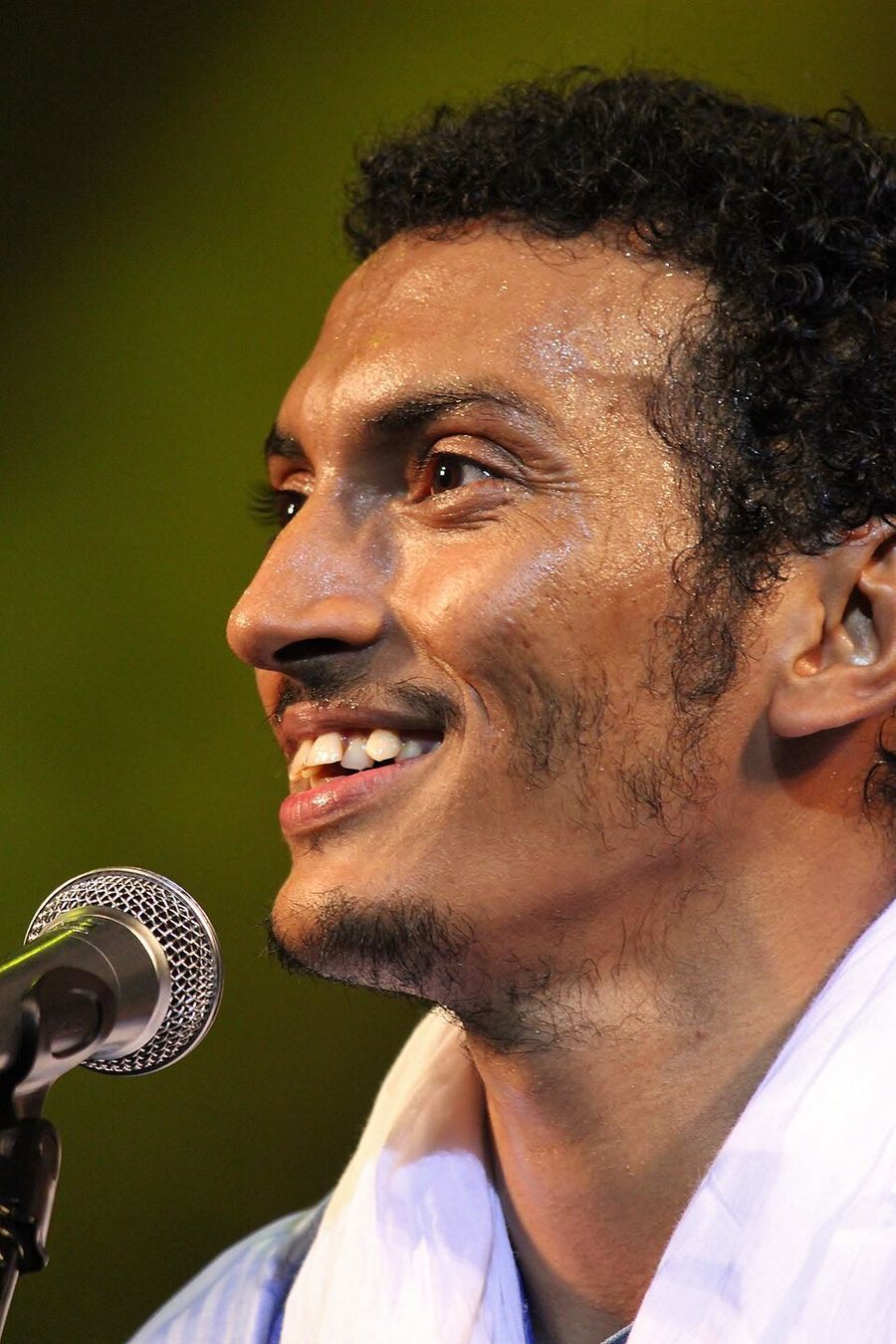
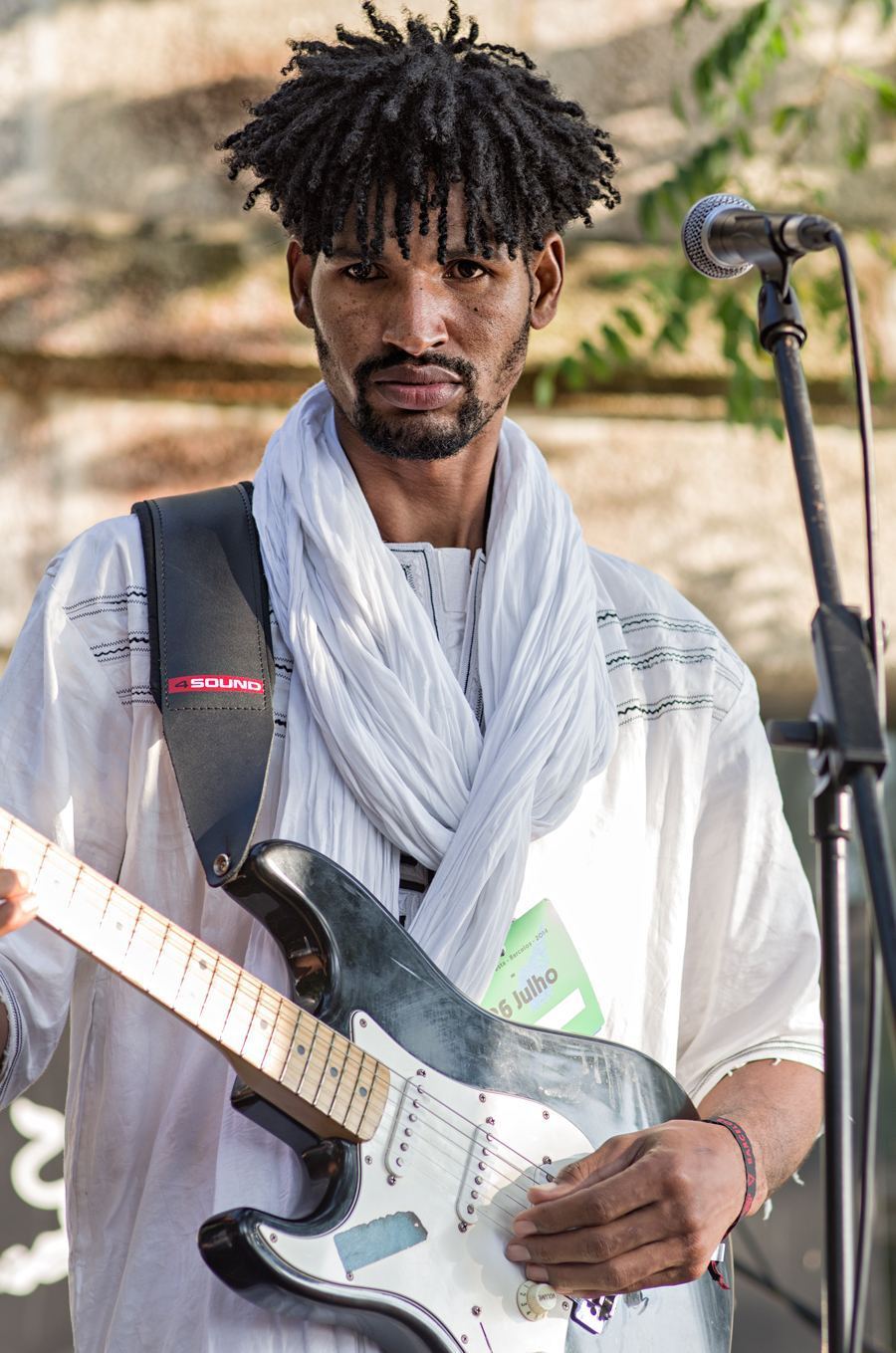
Niger has produced one of the most internationally successful musical exports of the contemporary Sahel. Tuareg guitar music, the style widely marketed as desert blues, grew out of the exile camps and rebellions of the 1980s and 1990s, when young Tuareg took up the electric guitar in place of the traditional teherdent lute and set lyrics about displacement, drought and autonomy to it. Bombino, from Agadez, has toured worldwide and had an album nominated for a Grammy; Mdou Moctar, from the Tahoua region, built an audience through hand-to-hand mobile phone distribution before signing internationally and now plays rock festivals across Europe and North America. Les Filles de Illighadad brought the women's tende drum and vocal tradition of the herding camps onto the same stages, with Fatou Seidi Ghali among the very few Tuareg women to play guitar publicly. Tal National from Niamey works a fast Zarma and Hausa dance-band style. Traditional forms remain strong: Hausa griots with the molo lute and the goge single-string fiddle, the calabash and drum ensembles of the Zarma, the tende mortar drum of Tuareg women, and the slow male line dance of the Wodaabe Guérewol.
Music & Dance, Niger
Аркадий Зарубин / CC BY-SA 3.0

Cuisine & Misattributed Foods

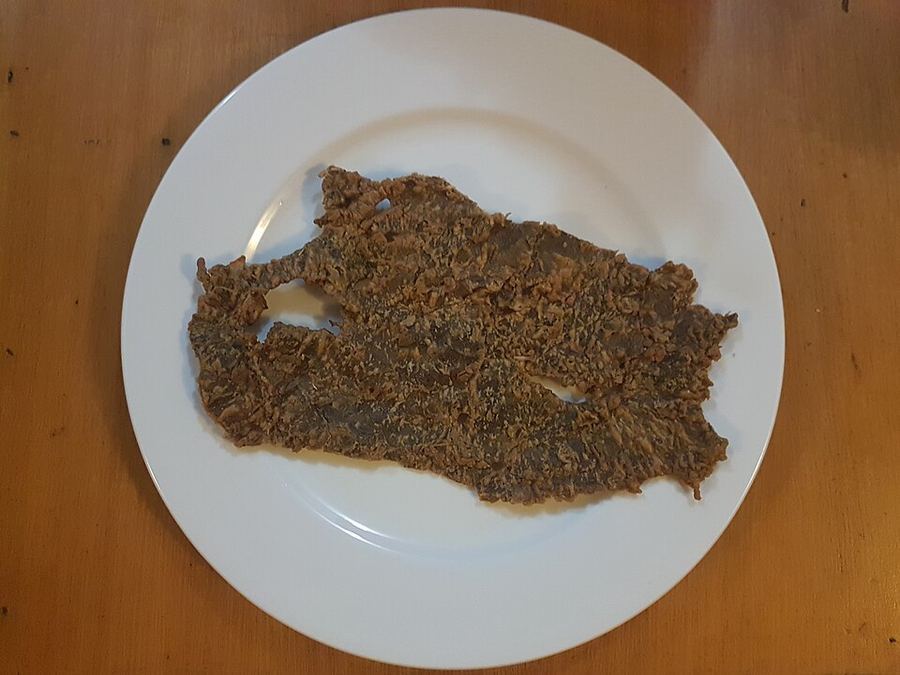
Millet and sorghum are the base of Nigerien eating, and the defining national dish is dambou: millet or wheat semolina steamed in layers with finely chopped moringa leaves, then dressed with oil, tomato, onion and spice, served for celebrations and increasingly as everyday food. Tuwo, a stiff porridge of millet or sorghum, is eaten with sauces of baobab leaf, sorrel, okra or the groundnut-thickened taushe. Riz au gras, rice cooked in a spiced tomato and meat stock, is the standard restaurant and celebration rice dish. From the Hausa tradition comes kilishi, beef sliced paper-thin, coated in a paste of groundnut, spices and chilli, and sun-dried into a dense, intensely flavoured sheet that keeps for months and is Niger's best-known food export. Fura da nono, balls of ground millet mixed into soured cow's milk, is the herders' staple and a ubiquitous street drink. Brochettes of grilled mutton are the standard evening street food. Dates from the Kaouar oases at Bilma, the salt from the same oases carried by camel caravan, and moringa grown along the river fill out a diet in which meat is prized and rarely abundant.
Cuisine & Misattributed Foods, Niger
DonCamillo / CC BY-SA 4.0

National Dress

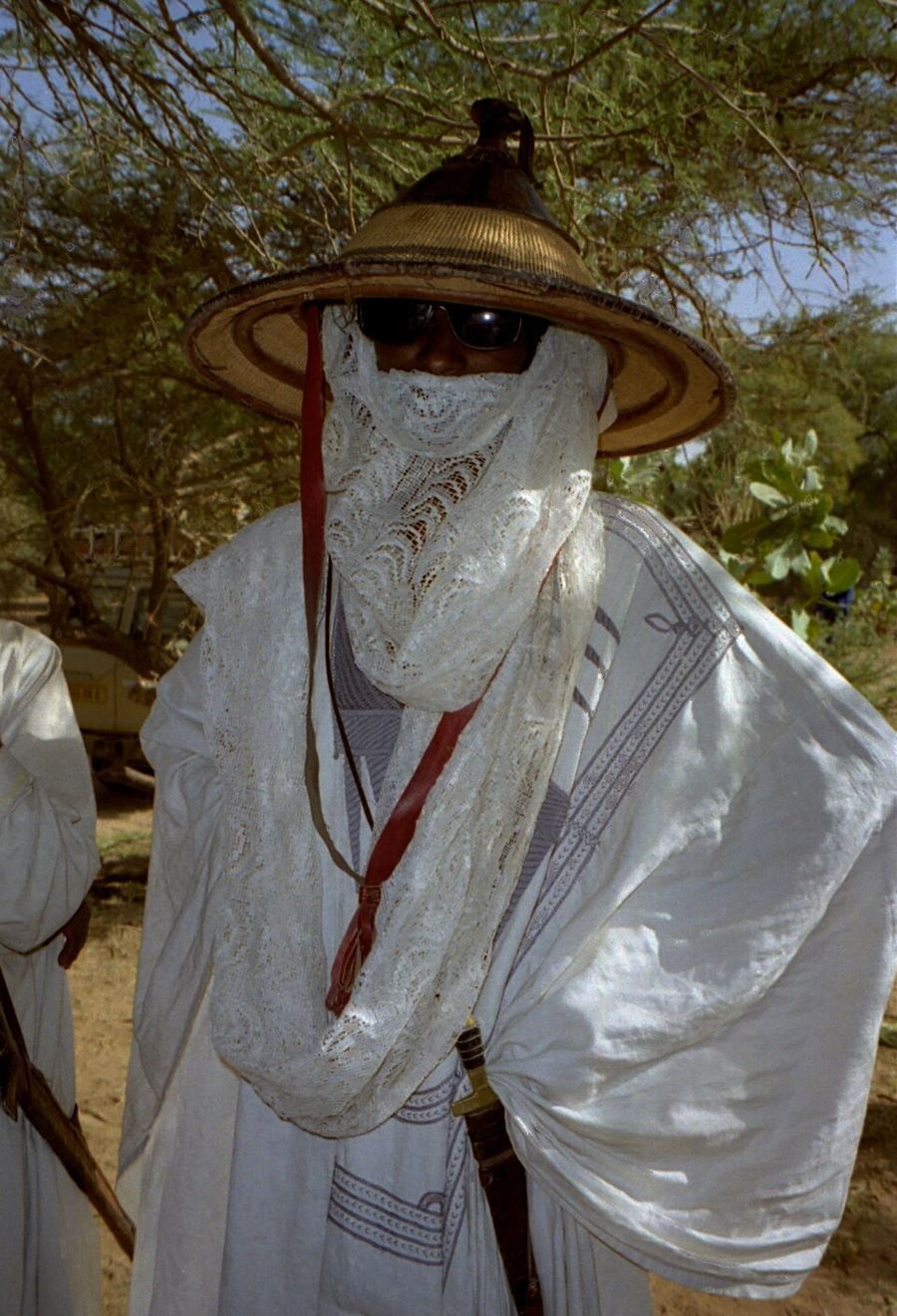
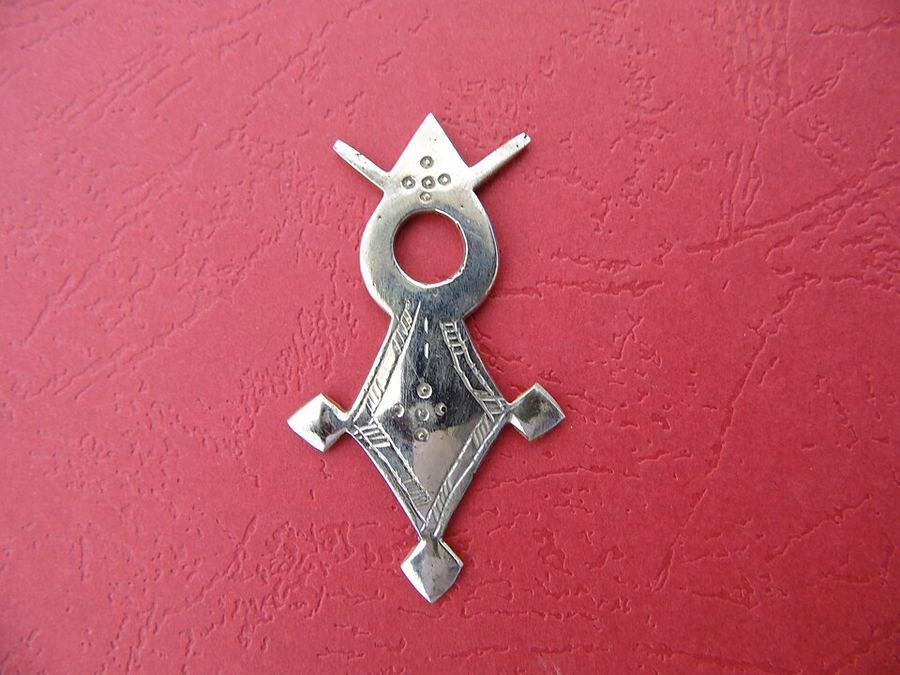
Niger's dress is among the most visually distinctive in Africa. The Tuareg tagelmust is a long strip of cloth, traditionally dyed with indigo so heavily that the pigment rubs off onto the skin, wound around the head and across the face and worn by men rather than women; it protects against sun and sand and carries strong conventions of modesty and status, and the indigo staining gave rise to the description of Tuareg as blue men. Tuareg silverwork is worn with it, above all the croix d'Agadez, a pierced cross-and-loop pendant of which each region has its own recognised variant, and which functions as a national symbol well beyond Tuareg communities. In the Hausa south men wear the babban riga, a voluminous embroidered gown over a long shirt and trousers, with a stiff embroidered cap, and women wear wrappers, blouses and elaborate head ties. Wodaabe men at the Guérewol paint their faces yellow and red, line the eyes and lips in black to make the teeth and eyes appear whiter, and wear ostrich-feather headdresses. Fulani women wear large hammered gold earrings, the kwottone kanye, as inherited wealth.
SmithsonianEncyclopaedia BritannicaBritish Museum
National Dress, Niger
Dr. Ondřej Havelka (cestovatel) / CC BY 4.0

Sports & Inspiring Athletes

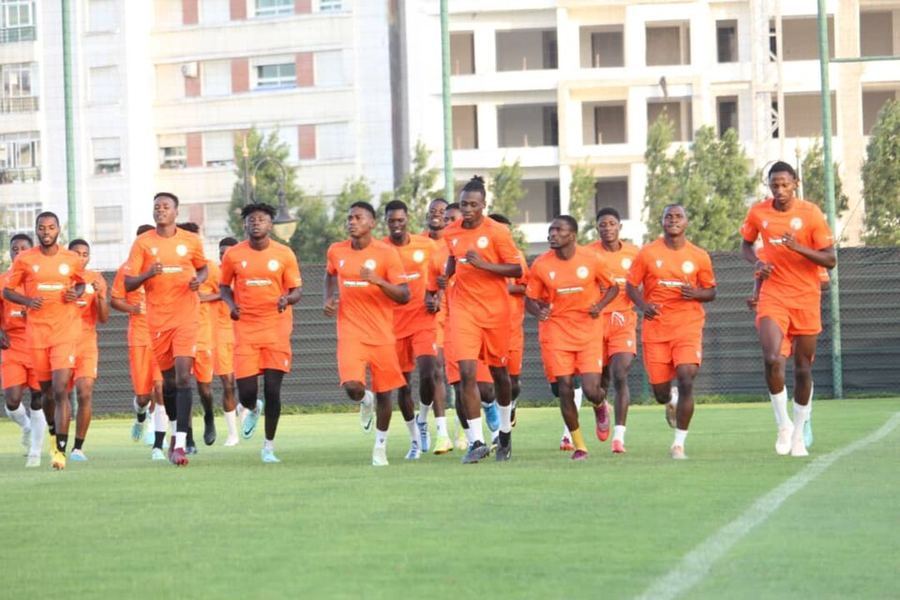
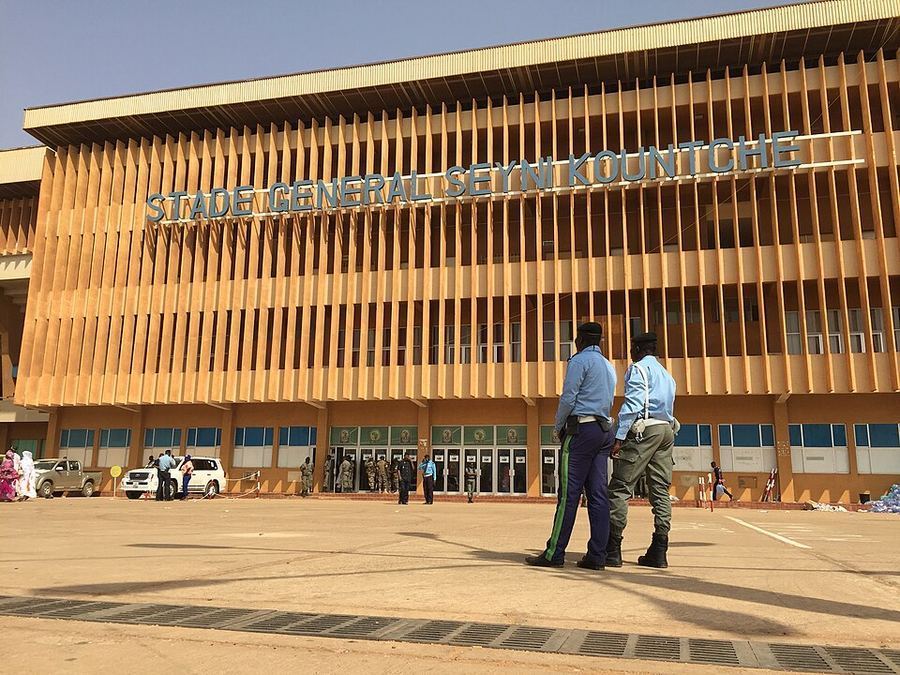
Traditional wrestling is the national sport and commands a following nothing else approaches. Bouts follow a codified form in which the aim is to force any part of the opponent's body other than the feet to the ground, wrestlers fight in leather or heavy cloth costume, and the annual national championship, the Sabre National, rotates between regional capitals and is the sporting event of the Nigerien year, with the winner taking a ceremonial sabre and considerable national fame. Football is the most widely played sport, organised through a national league dominated by Niamey clubs including Sahel SC and AS FAN, and the national side is known as the Mena, the antelopes. Camel racing is central to Saharan festivals and to the Cure Salée gathering. Athletics and boxing are organised nationally, and taekwondo has produced the country's most successful individual competitor. Sporting infrastructure is very thin outside Niamey, and the insecurity across the north and the border regions since the mid-2010s has curtailed both organised competition and the festival calendar that carried much of the traditional sporting life.
Sports & Inspiring Athletes, Niger
Cellule Communication Fenifoot / CC BY-SA 4.0

Notable Educational Programs

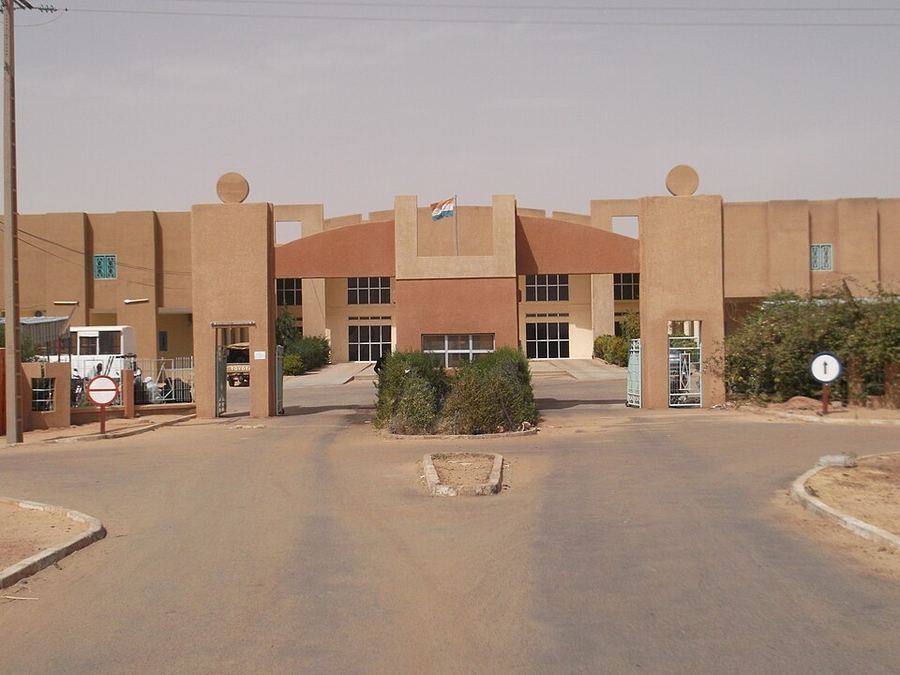
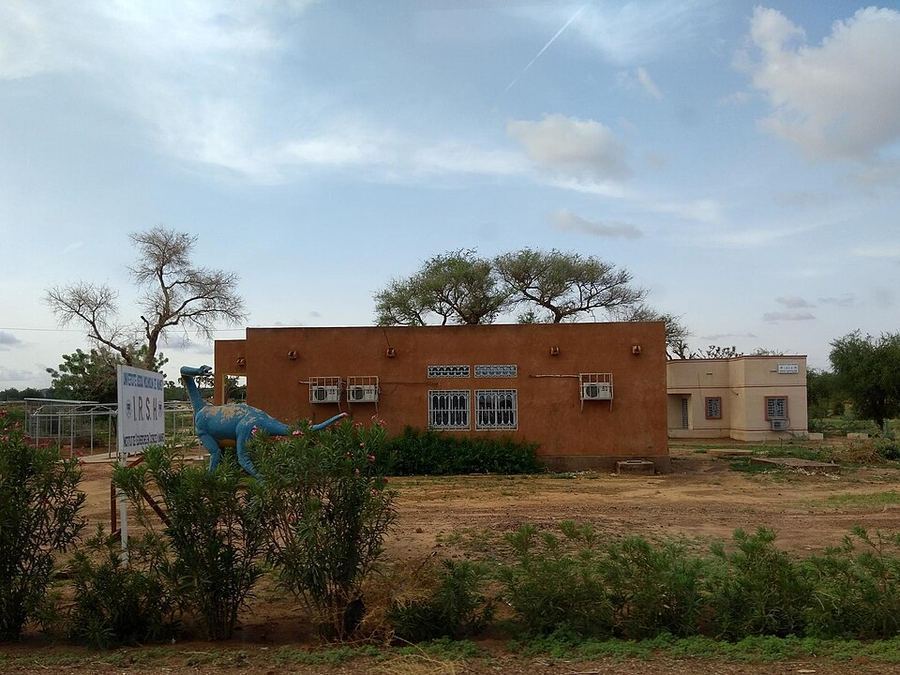
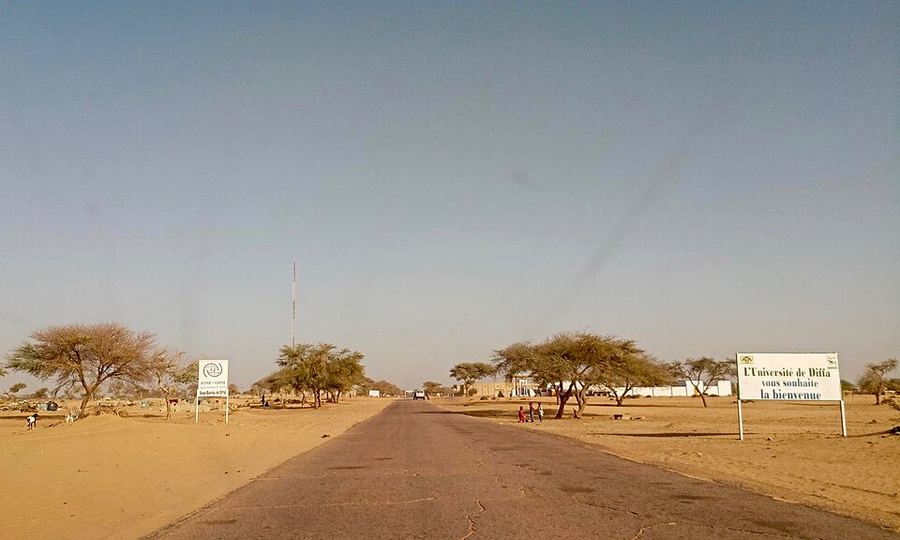
Niger has among the lowest literacy and school participation rates in the world, and education is the country's most acute development constraint. Enrolment has risen substantially since 2000 but completion is low, girls' attendance drops sharply at secondary level, child marriage rates are the highest globally, and a large share of children receive their only formal instruction in Quranic schools. Insecurity has compounded the problem: attacks and threats in the Tillabéri, Diffa and Tahoua regions have closed hundreds of schools and displaced both pupils and teachers. The state system teaches in French, with a long-running programme of bilingual schools teaching initial literacy in Hausa, Zarma, Fulfulde, Tamasheq and Kanuri before transitioning. Abdou Moumouni University in Niamey, founded in the early 1970s, is the flagship institution, with faculties of science, agronomy, medicine, law and letters; universities at Zinder, Maradi, Tahoua and Dosso have been added since 2010. The Islamic University of Niger at Say, established with Organisation of Islamic Cooperation backing, draws students from across West Africa, and the regional agronomic training centre at Niamey serves the wider Sahel.
Notable Educational Programs, Niger
severingeo @ Mapillary.com / CC BY-SA 4.0

Wars & Conflicts

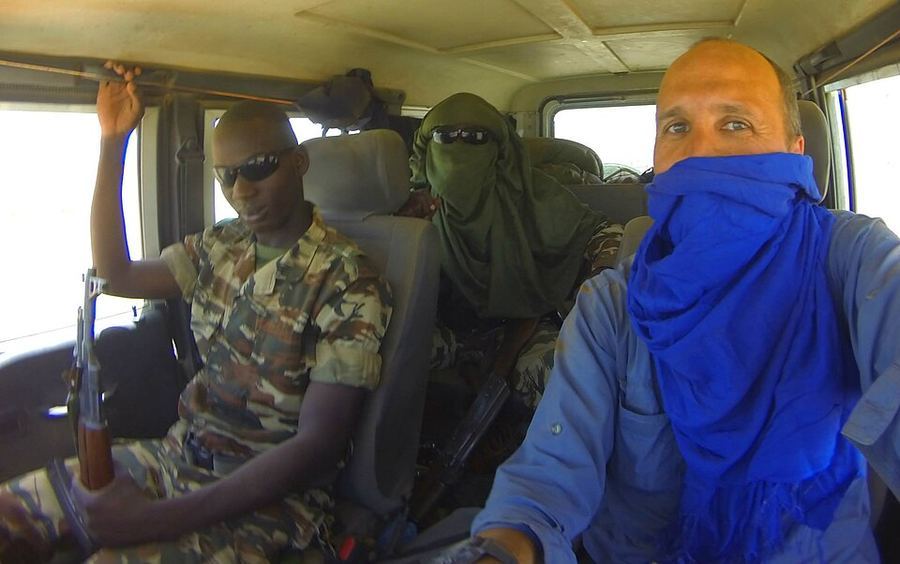
Niger faces armed conflict on three fronts simultaneously. In the south-east around Diffa, Boko Haram and its Islamic State West Africa Province offshoot have attacked from the Lake Chad basin since 2015, displacing hundreds of thousands. In the west, in the Tillabéri region at the three-borders area with Mali and Burkina Faso, the Islamic State in the Greater Sahara and groups affiliated to Jama'at Nusrat al-Islam wal-Muslimin have carried out repeated mass-casualty attacks on soldiers and villagers, including the ambushes at Inates and Chinégodar in 2019 and 2020 and the killing of four American and four Nigerien soldiers at Tongo Tongo in 2017. Tuareg rebellions in the north in 1990 to 1995 and again in 2007 to 2009 were settled by negotiated agreements. On 26 July 2023 the presidential guard commander Abdourahamane Tiani deposed and detained President Mohamed Bazoum; ECOWAS imposed sanctions and threatened intervention before backing down, and Niger joined Mali and Burkina Faso in the Alliance of Sahel States and announced withdrawal from ECOWAS. French forces left by the end of 2023 and United States forces vacated the drone base at Agadez in 2024. Attacks have continued to rise since.
Current as of 2026-08-07
Wars & Conflicts, Niger
mugisha @ Mapillary.com / CC BY-SA 4.0

Land & Border Disputes

Niger's boundary questions have largely been settled by adjudication. The frontier with Benin, which turns on which channel of the Niger River constitutes the boundary and therefore which state owns the islands in it, was referred to the International Court of Justice, which ruled in 2005 that the boundary followed the main navigable channel and awarded the majority of the islands, including the long-contested Lété Island, to Niger. The border with Burkina Faso was likewise settled by the ICJ in 2013. Libya has historically asserted a claim to a strip of territory in northern Niger. The most disruptive dispute since 2023 has been political rather than territorial: after ECOWAS sanctions followed the coup, Niger kept its border with Benin closed even after Benin reopened its side, which stranded traffic and complicated the operation of the new crude oil pipeline running from the Agadem field to the Beninese coast, the country's largest single infrastructure project. Relations with France collapsed after the coup, and the junta has revoked or renegotiated foreign mining rights, including moving against the French company Orano's long-held uranium concessions.
Land & Border Disputes, Niger
diasUndKompott / CC BY-SA 2.0
Land, Life & Legacy

Land & Climate

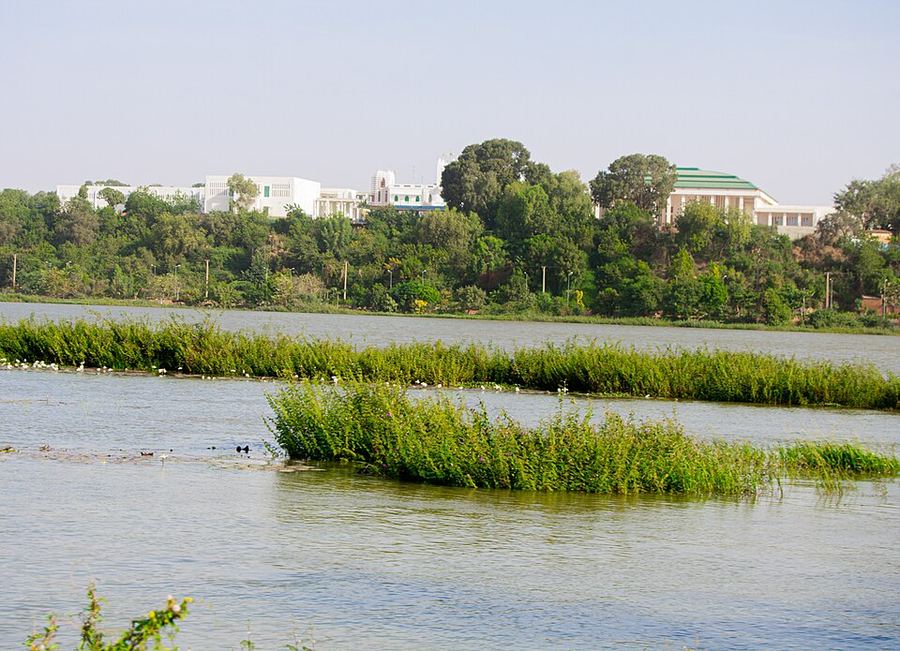
Niger is overwhelmingly desert. The Sahara covers roughly the northern four-fifths, including the Ténéré, one of the emptiest sand seas on Earth, the Djado plateau in the far north-east and the volcanic Aïr massif, which rises to 2,022 metres at Mont Idoukal-n-Taghès, the country's high point, and traps enough moisture to support oasis agriculture in an otherwise waterless region. South of the desert runs the Sahel, a semi-arid belt of thorn scrub and millet fields where almost everyone lives, giving way in the far south to Sudanian savannah. The Niger River crosses the south-west corner for about 550 kilometres, passing Niamey, and is the country's only permanent river; Lake Chad touches the south-east corner and has shrunk drastically since the 1960s. The climate is hot and dry with a single short rainy season from June to September that decreases sharply from south to north, and Niger regularly records some of the highest temperatures on the planet. Drought, desertification and increasingly erratic rainfall are the country's central environmental problems, and flash flooding during the short rains has become steadily more destructive.
Land & Climate, Niger
Francis Tapon / CC BY-SA 4.0

Entertainment

Social life is conducted outdoors and over tea. The Tuareg and Saharan tea ritual, in which the same leaves are brewed three times and poured from height into small glasses, each round sweeter than the last, structures visits and negotiations across much of the country and is a genuine institution rather than a courtesy. Markets are the main gathering points, and the Grand Marché of Niamey and the weekly regional markets serve as much for meeting as for trading. Traditional wrestling draws the largest crowds of any sport, with regional bouts filling arenas. Football is played on any open ground. Along the Niger River at Niamey, pirogue trips at sunset, riverside cafés and the hippo pools upstream are the standard outing, and the giraffe reserve at Kouré, an hour from the capital, is the country's most popular excursion, where visitors walk on foot among free-ranging giraffe with local guides. The Cure Salée gathering at In-Gall each September, with its camel races, Guérewol dancing and mass camps of herders, is the single largest social event of the year. Insecurity has closed off much of the north and the border regions to ordinary travel.
Entertainment, Niger
Eric.dane / CC BY-SA 3.0

Art & Museums

The Agadez cross is Niger's signature art object, a pierced silver pendant cast by the lost-wax method by inadan smiths, with distinct recognised forms for Agadez, Iferouane, Zinder, Tahoua and other regions; the smiths also work leather, producing tooled and dyed camel saddles, bags and amulet cases of exceptional quality. Hausa architecture in the south is a major tradition in its own right: the old quarter of Zinder, the Birni, with its sculpted mud walls, buttressed façades and the sultan's palace, and the mud-brick mosques and houses of Agadez, represent a Sahelian building art in which the surface is modelled rather than merely rendered. Calabash decoration, pyro-engraved by Fulani and Hausa women, carries fine geometric work. The Niger National Museum in Niamey, established in 1959, is unusually broad in scope, combining ethnographic collections, palaeontological halls holding dinosaur material from the Ténéré, a craft village of working artisans and the preserved remains of the Tree of Ténéré. Moustapha Alassane, a pioneer of animation in Africa, and Oumarou Ganda, who won the first Étalon de Yennenga at FESPACO in 1972, established Nigerien cinema as a serious national art form.
SmithsonianBritish MuseumUNESCOEncyclopaedia Britannica
Art & Museums, Niger
Amadouibrahim2 / CC BY-SA 4.0

Notable People

Sarraounia Mangou, the priestess-queen of the Azna at Lougou who fought the Voulet-Chanoine column in 1899 rather than submit, is Niger's foremost historical heroine, and the subject of a novel by Abdoulaye Mamani and of Med Hondo's 1986 film. Hamani Diori led the country to independence in 1960 and governed until the 1974 coup; Seyni Kountché ruled through the following decade. Mahamadou Issoufou, president from 2011 to 2021, was awarded the Ibrahim Prize for African leadership in 2020 for leaving office at the end of his constitutional term, and his handover to Mohamed Bazoum was the first transfer between elected presidents in Niger's history; Bazoum was deposed and detained in the coup of July 2023. Boubou Hama, historian, writer and long-serving assembly president, shaped the country's intellectual life. Oumarou Ganda, who acted in Jean Rouch's Moi, un Noir before directing his own films, and Moustapha Alassane, the animator, are its cinematic figures. In music Bombino and Mdou Moctar are its best-known living exports. In sport, the taekwondo fighter Abdoulrazak Issoufou Alfaga took silver at the Rio Olympics.
Notable People, Niger
Rafael Ojea Perez from Vigo, Galicia, España / CC BY-SA 2.0

Inventions & Breakthroughs

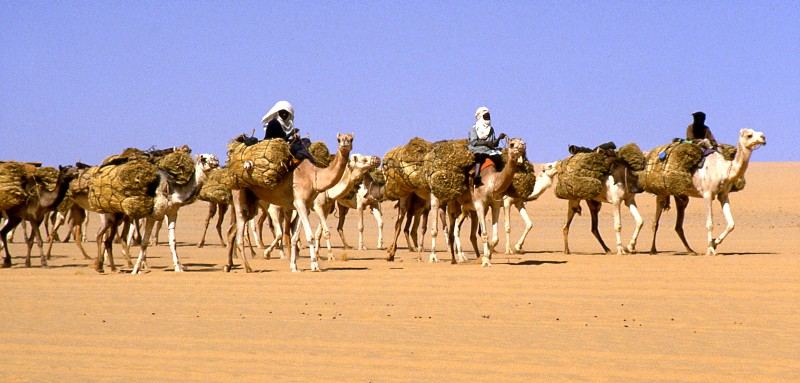
Niger's most consequential contribution is agricultural and was made by farmers rather than laboratories. From the 1980s, smallholders in the Maradi and Zinder regions began systematically protecting and pruning the tree seedlings that regenerated naturally in their millet fields instead of clearing them, a practice that came to be called farmer-managed natural regeneration, and combined it with zaï planting pits and stone contour bunds that capture the little rain that falls. Adopted village by village without significant outside investment, the technique has restored tree cover across roughly five million hectares of the Nigerien Sahel, adding an estimated 200 million trees, raising crop yields, restoring soil fertility and providing fodder and fuel, and it is now the reference model for the Great Green Wall initiative and for dryland restoration generally. Alongside it, Tuareg and Hausa metalworking traditions represent centuries of refined lost-wax casting and silversmithing, and the salt caravans of the Kaouar oases, still running camel trains between Bilma and the south, preserve a trans-Saharan logistics system essentially unchanged for a thousand years.
World BankFAONatureUNDP
Inventions & Breakthroughs, Niger
Holger Reineccius / CC BY-SA 3.0

Science & Technology

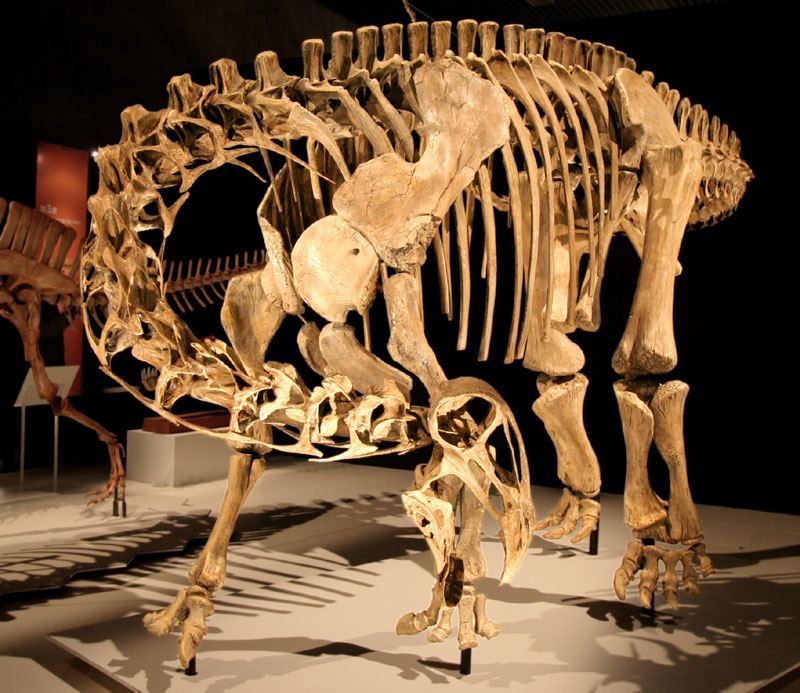
The Ténéré is one of the world's richest fossil grounds, and expeditions led by the palaeontologist Paul Sereno have made Niger a fixture in vertebrate palaeontology. Finds from its Cretaceous beds include Nigersaurus, a long-necked sauropod with a broad straight-edged jaw carrying hundreds of teeth arranged like a lawnmower blade, and Sarcosuchus, a crocodilian reaching around twelve metres. The same expeditions uncovered Gobero, the largest and oldest known Stone Age cemetery in the Sahara, which documented two distinct populations occupying a green Sahara of lakes and fish thousands of years before the desert closed in, and it remains a central data point in the study of the African Humid Period. In applied science, Niger's position as a major uranium producer, with mines at Arlit and Akokan in the Sahara, has made it part of the global nuclear fuel cycle for half a century, though ownership and operation of the concessions has been contested since 2023. The Kandadji dam on the Niger River and the Gorou Banda solar plant near Niamey are the principal energy projects, and Niger is a central participant in the Great Green Wall restoration initiative.
ScienceNatureIEAWorld Bank
Science & Technology, Niger
Kabacchi / CC BY 2.0
On The World Stage
Champions of Niger

Champions & Defining Moments

Niger has competed at the Olympic Games since 1964 and has won two medals. Issaka Daborg took bronze in light-welterweight boxing at Munich in 1972, and Abdoulrazak Issoufou Alfaga won silver in the heavyweight taekwondo division at Rio in 2016, a result that made him the country's most celebrated athlete and drew large crowds to his return to Niamey. In football, the Mena have reached the Africa Cup of Nations twice, qualifying for the 2012 tournament in Gabon and Equatorial Guinea and again for the 2013 tournament in South Africa, exiting at the group stage on both occasions, and have never reached a World Cup. The country competes at the African Games, the Francophone Games and in West African regional competition, with wrestling, boxing, athletics and taekwondo supplying most of its representation. Niger also hosts and competes in the regional traditional wrestling championships organised across West Africa, a circuit invisible in global sporting coverage but followed intensely across the Sahel. Resource constraints and, since 2023, the country's diplomatic isolation have limited international participation.

(VOA/Nicolas Pinault) / Public domain
Government & Leadership

Formerly, semi-presidential republic

Seat of the executive

Executive

Abdourahame Tiani — President of the National Council for the Safeguard of the Homeland General

In office since 28 July 2023

Cnsp Prime Minister Ali Mahaman Lamine Zeine — Head of government

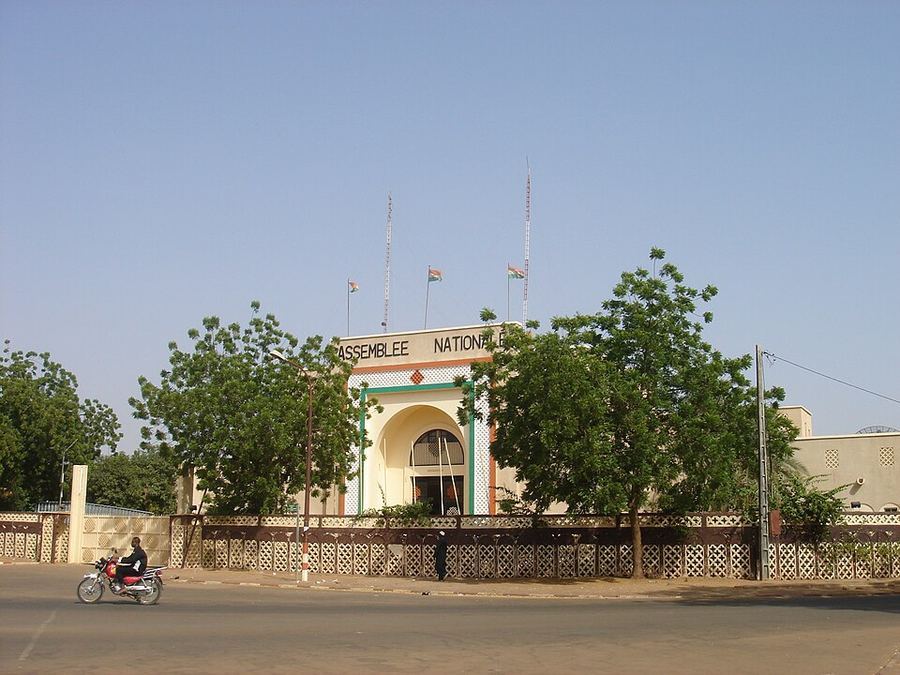
The legislature

Advisory Council for the Refoundation (Conseil consultatif de la refondation)

Unicameral

Composition — 194 seats

Last election 5/1/2025 · 19.6% women

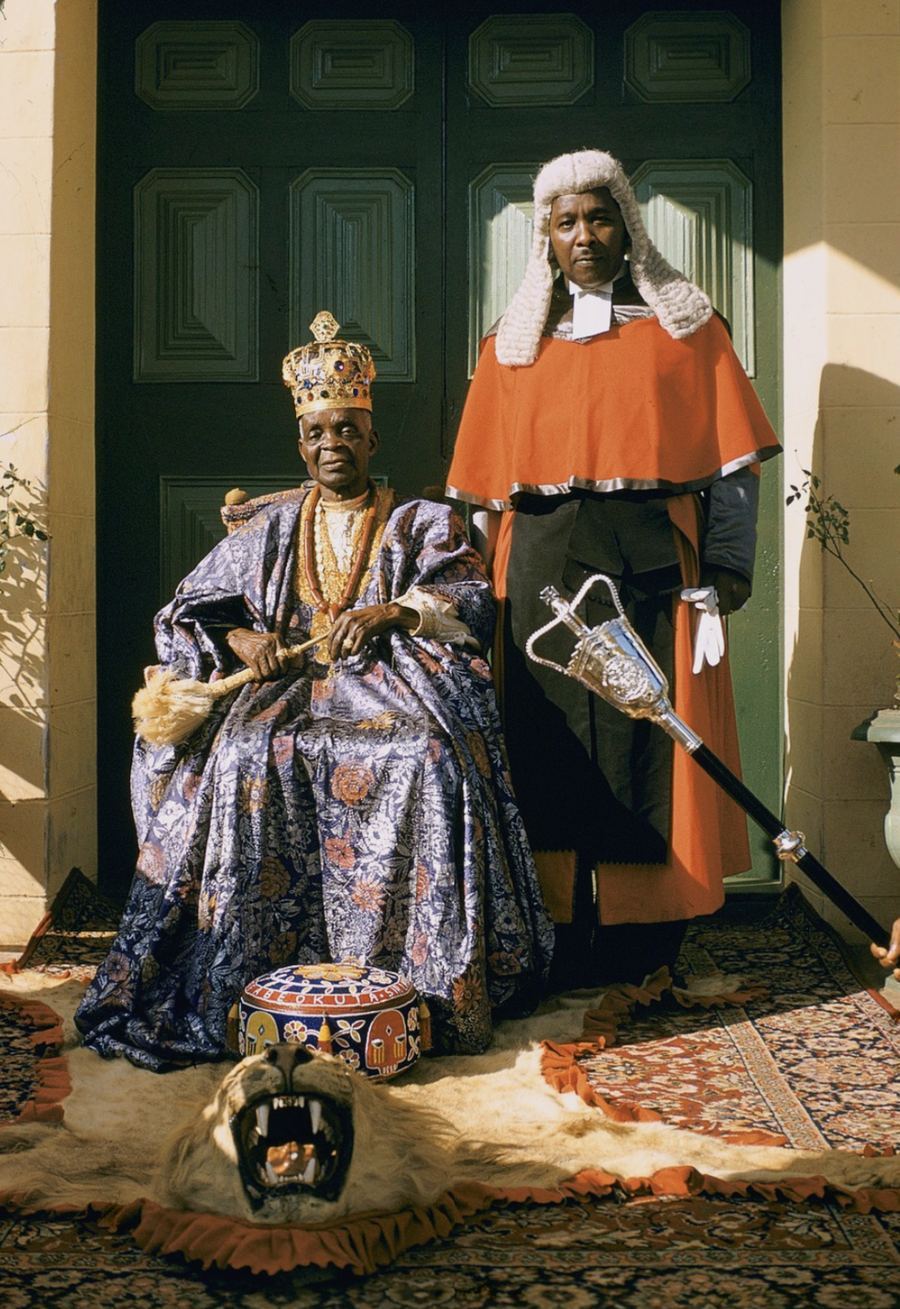
The highest court
The highest court — Eliot Elisofon / Public domain

High Court of Justice

consists of 7 members); Supreme Court (membership NA); Constitutional Court (consists of 7 judges

Economy, Trade & Government

Currency & GDP

CFA Franc BCEAO — XOF (Fr)

GDP (PPP): $47.921 billion (2024 est.)

Per capita: $1,800 (2024 est.)

Exports

$1.223 billion (2023 est.)

gold, oil seeds, uranium and thorium ore, radioactive chemicals, refined petroleum (2023)

Partners: UAE 31%, France 23%, China 18%, India 6%, Sweden 5% (2023)

Imports

$3.808 billion (2023 est.)

rice, aircraft parts, iron structures, refined petroleum, centrifuges (2023)

Partners: China 26%, France 15%, India 12%, Nigeria 7%, UAE 6% (2023)

Government

Type: formerly, semi-presidential republic

Independence: 3 August 1960 (from France)

Terrain → Where People Live

How mountains, coasts, and rivers shape settlement (LandScan).

Coming — data

Migration & Ethnic Settlement

Where groups settled and how people move (GeoEPR + UNHCR).

Coming — data

Universities

Notable institutions, mappable as points.

Coming — data
Economy & government facts: CIA World Factbook (public domain), via OpenFactBook / factbook.json.
Every fact and narrative claim will carry a visible source citation. Data-driven sections light up automatically wherever HERA has coverage.