HERA · Human Entity Reference Atlas by Masego Inc

← Norway 🌐 3D View
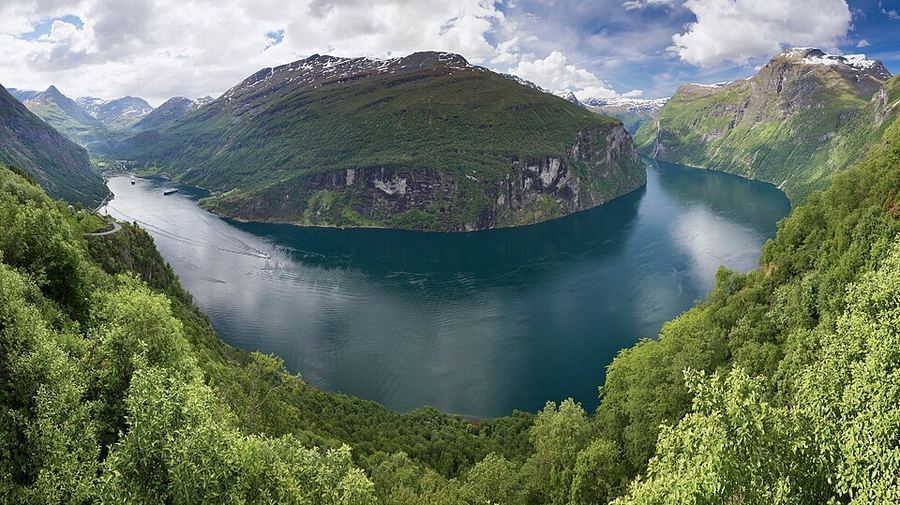
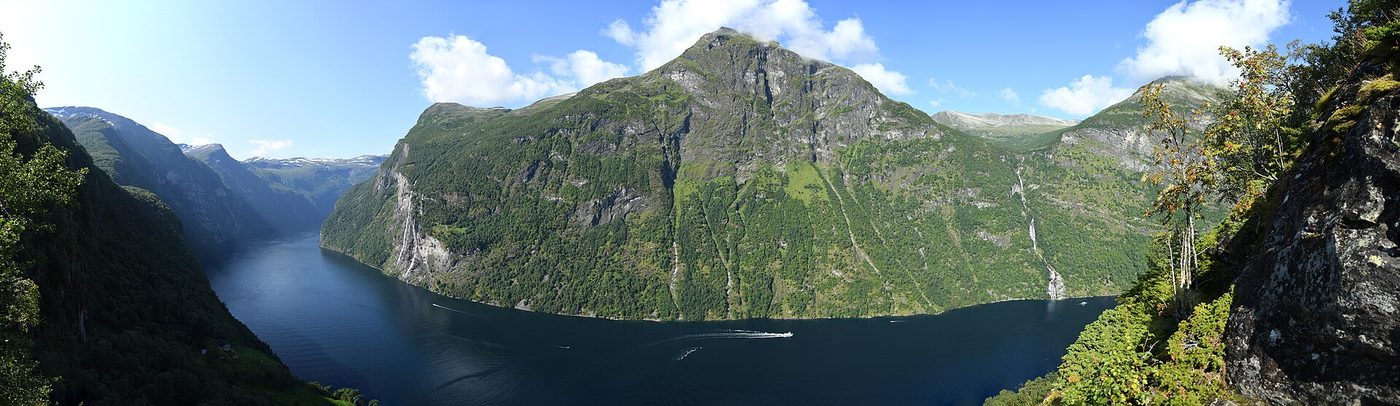
Panorama of Geirangerfjord from Skagefla, Norway
Norway NOR
Panorama of Geirangerfjord from Skagefla — Photo: Carsten Steger / CC BY-SA 4.0 via Wikimedia Commons
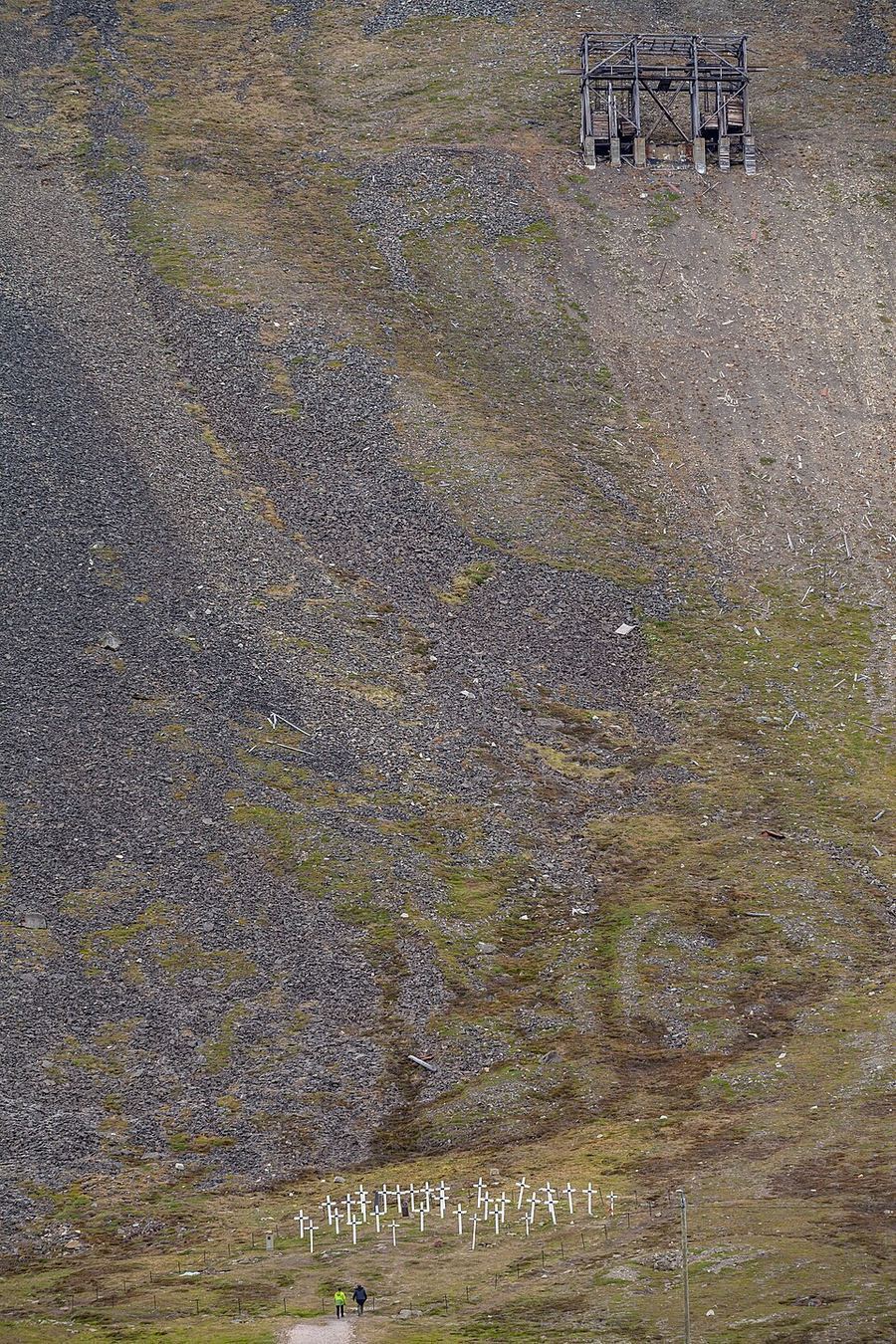
Did You Know The Svalbard Global Seed Vault, dug into the permafrost of an Arctic mountainside near Longyearbyen, safeguards over a million seed samples from around the world as a backup for global crop diversity. — Encyclopaedia Britannica

Norway occupies the long western spine of the Scandinavian Peninsula, a country of about 5.5 million people stretched along one of the most dramatic coastlines on Earth — a shoreline shredded into thousands of fjords, islands, and skerries reaching far above the Arctic Circle. Governed from Oslo as a parliamentary constitutional monarchy, it dissolved its union with Sweden peacefully in 1905 and has spent the century since building one of the world's most prosperous and egalitarian societies. The discovery of North Sea petroleum transformed a nation of fishermen, farmers, and shippers into an energy superpower: natural gas, crude oil, and refined petroleum lead its exports, with fish and aluminium close behind, and the United Kingdom, Germany, and the Netherlands as top customers. GDP per capita runs around $91,100 — among the highest anywhere — and the state banks its oil wealth in a sovereign wealth fund of unmatched size for the generations after the wells run dry. Norway consistently sits at or near the top of the UN's Human Development Index, and its citizens keep a distinctly outdoor definition of the good life: the krone in the bank matters less than the mountain outside the door.

CIA World FactbookUNEncyclopaedia Britannica
Population
5,509,733
Capital
Oslo
Currency
kr NOK
Time zones
Largest city
Oslo
Human Geography Themes
Loading national figures…
Largest Cities
Oslo889,573
Stavanger205,533
Trondheim142,104
Bergen138,237
Tromsø53,615
Fredrikstad52,114
Lagunen51,871
Drammen51,726
In Perspective

Oslo's urban core is home to about 889,573 people.

Among the world's megacities, though, it's one of many — the giants of Asia and Latin America run larger still:

Oslo889,573
Jakarta40,545,126
Dhaka37,307,160
Tokyo33,244,670
Shanghai30,678,616
Cairo25,230,325
The Country & Its People

History

Norway enters written history explosively, with the Viking Age: from the late eighth century, Norse seafarers raided and traded from Ireland to the Mediterranean, settled Iceland and Greenland, and — in the person of Leif Eriksson — reached North America around the year 1000. Harald Fairhair is credited by tradition with first unifying the petty kingdoms in the late ninth century, and King Olaf II, killed at the Battle of Stiklestad in 1030 and canonized as St. Olaf, became the enduring symbol of a Christianized Norwegian realm. The Kalmar Union of 1397 folded Norway into a Scandinavian union under the Danish crown, beginning more than four centuries as the junior partner of Denmark. When Denmark backed the losing side in the Napoleonic Wars, Norway was transferred to Sweden in 1814 — but not before Norwegians convened at Eidsvoll and adopted their own constitution on 17 May 1814, a date still celebrated as the national day. The union with Sweden was dissolved peacefully on 7 June 1905, and Norwegians chose a Danish prince as King Haakon VII. Nazi Germany occupied the country from 1940 to 1945 — the collaborator Vidkun Quisling gave the world a new word for traitor — and Norway answered by becoming a founding member of NATO in 1949. Voters twice rejected European Community/Union membership, in 1972 and 1994, and the discovery of North Sea oil in 1969 opened the petroleum era that reshaped everything.
History, Norway
Bjørn Erik Pedersen / CC BY-SA 4.0

Culture

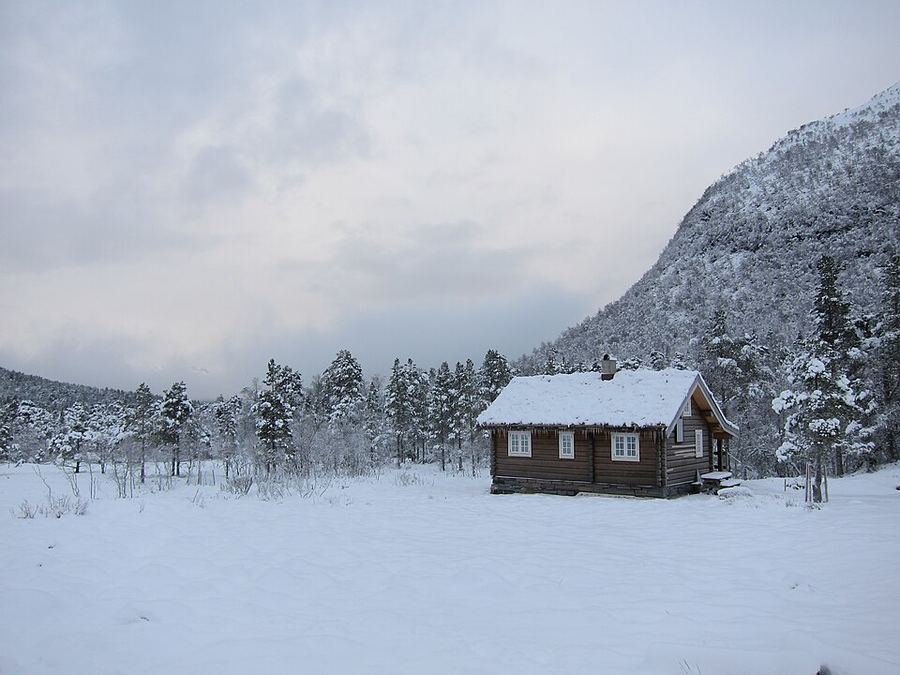
Norwegian culture is organized around a single conviction: life is better outside. The national creed of friluftsliv — 'open-air living' — sends Norwegians onto trails, skis, and fjords in all weather, and it is backed by law: the allemannsretten, the traditional right to roam, guarantees free passage across uncultivated land regardless of who owns it. The counterweight to the mountain hike is the hytte, the simple cabin — often deliberately spartan — where hundreds of thousands of families retreat for Easter and summer holidays. Social life is tempered by janteloven, the 'Law of Jante' articulated by the Dano-Norwegian novelist Aksel Sandemose, a code of egalitarian modesty that frowns on thinking yourself better than anyone else — a sensibility that survives even in one of the world's richest countries. The literary and artistic canon is formidable for a small nation: Henrik Ibsen's dramas — A Doll's House, Peer Gynt, Hedda Gabler — made him the father of modern theater; Edvard Munch's The Scream became one of the most recognized images ever painted; and Knut Hamsun and Sigrid Undset both carried home Nobel Prizes in Literature. Two written standards of Norwegian, Bokmål and Nynorsk, share official status — a legacy of the nineteenth-century struggle to build a national language out from under Danish rule.
Culture, Norway
Mænsard vokser / CC BY-SA 4.0

Points Of Pride

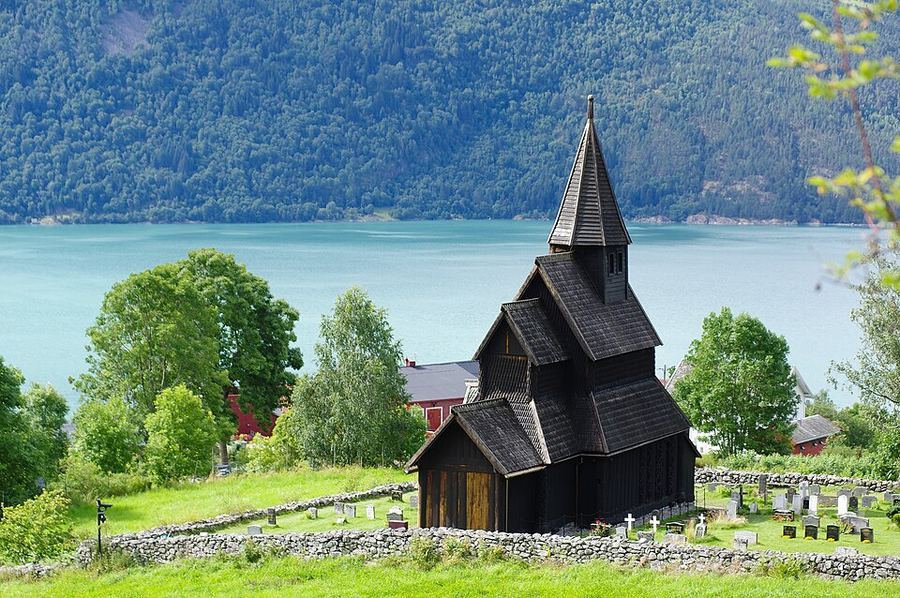
Norway's proudest modern invention is fiscal: the Government Pension Fund Global, the sovereign wealth fund into which the state deposits its petroleum revenues. It has grown into the largest fund of its kind in the world — worth well over a trillion dollars, it owns on average more than one percent of all listed companies on Earth, a rainy-day account for five and a half million people. Every 10 December, the Nobel Peace Prize is awarded in Oslo — alone among the Nobels, which are otherwise presented in Stockholm, because Alfred Nobel's will assigned the peace prize to a committee chosen by Norway's parliament. The landscape itself is a credential: the West Norwegian Fjords — Geirangerfjord and Nærøyfjord — are inscribed on UNESCO's World Heritage List, alongside Bergen's medieval Hanseatic wharf at Bryggen and the stave church at Urnes. The polar explorers Fridtjof Nansen and Roald Amundsen — the latter first to the South Pole in 1911 — remain national icons, and Nansen's humanitarian work earned Norway its own Peace Prize. And the country has claimed a piece of the future too: Norway has pushed electric vehicles to the highest share of new-car sales in the world, even as it pumps oil for export — a paradox Norwegians debate openly.
Points Of Pride, Norway
Ximonic (Simo Räsänen) / CC BY-SA 3.0

Cultural Fusion

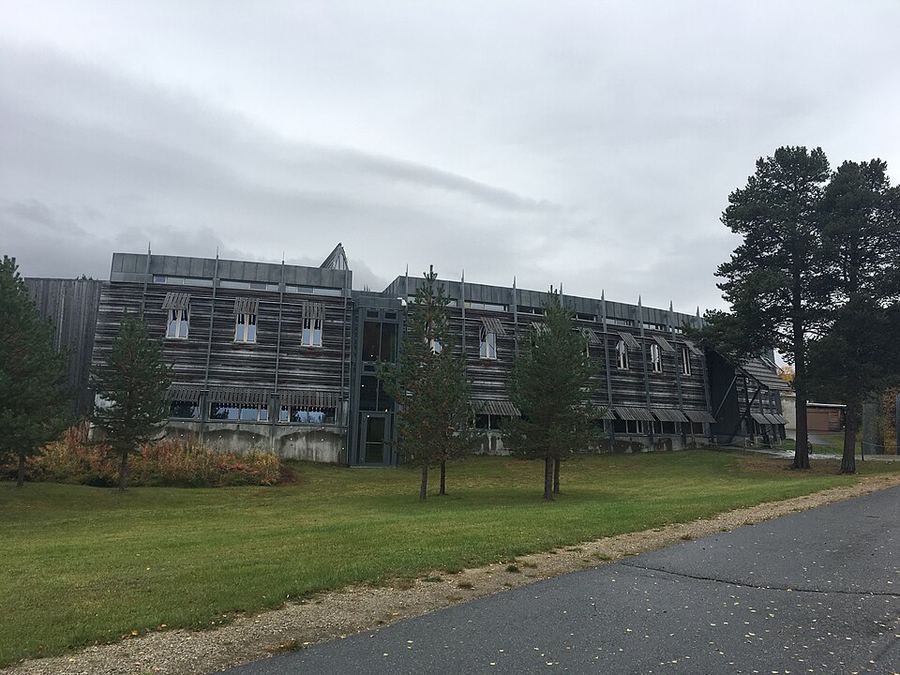
Norway's oldest cultural thread is also its most distinct: the Sami, the indigenous people of the northern Fennoscandian region, of whom roughly 60,000 live in Norway — more than in any other country. After generations of forced assimilation under the 'Norwegianization' policy, the state reversed course: a Sami Parliament (Sámediggi) opened in Karasjok in 1989, and Sami is today an official language in nine northern municipalities, taught in schools and spoken in broadcast media. The Kven, descendants of Finnish-speaking migrants to the far north, are recognized as a national minority with their own language. The larger demographic story is newer: about 81.5 percent of the population is ethnic Norwegian, with other Europeans — Poles, Lithuanians, and Swedes prominent among labor migrants — making up nearly 9 percent, and communities with Somali, Pakistani, Syrian, and Eritrean roots concentrated in and around Oslo. Russia's war in Ukraine added a fresh layer, with refugees and displaced persons in Norway numbering over 111,000 by 2024. Religion tracks the same layering: the Evangelical Lutheran Church of Norway claims about two-thirds of the population, alongside growing Muslim and Catholic minorities — the latter swelled largely by European migration.
Cultural Fusion, Norway
Astrid Carlsen (WMNO) / CC BY-SA 4.0

Music & Dance

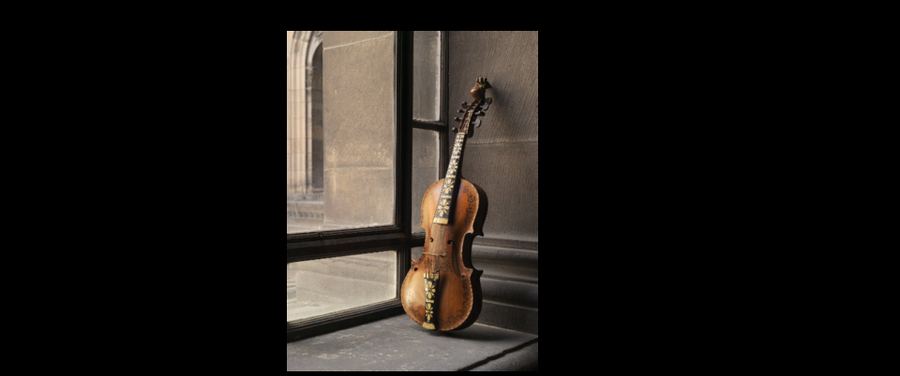
Norway's musical voice was defined by Edvard Grieg, the Bergen-born Romantic whose Piano Concerto in A Minor and incidental music for Ibsen's Peer Gynt — including 'Morning Mood' and 'In the Hall of the Mountain King' — folded Norwegian folk melody into the European canon and made him the country's national composer. Behind Grieg stands the folk tradition itself: the hardingfele, or Hardanger fiddle, with its shimmering sympathetic strings, accompanies regional dances like the springar and the athletic halling, in which male dancers leap to kick a hat from a raised pole. The modern era has been improbably loud for a quiet country. In the 1980s, the Oslo trio a-ha took 'Take On Me' to the top of the American charts, its pencil-sketch video becoming one of pop's enduring artifacts. In the early 1990s, Norway — Bergen especially — became the crucible of black metal, a raw, controversial extreme-metal movement that remains one of the country's most studied cultural exports. A generation later Norwegian producers conquered global dance music, led by Kygo, the Bergen DJ who popularized the mellow 'tropical house' sound and headlined festivals worldwide. The Oslo Philharmonic and the annual Bergen International Festival keep the classical inheritance in vigorous repair.
Music & Dance, Norway
St Cecilia's Hall / CC BY 3.0

Cuisine & Misattributed Foods

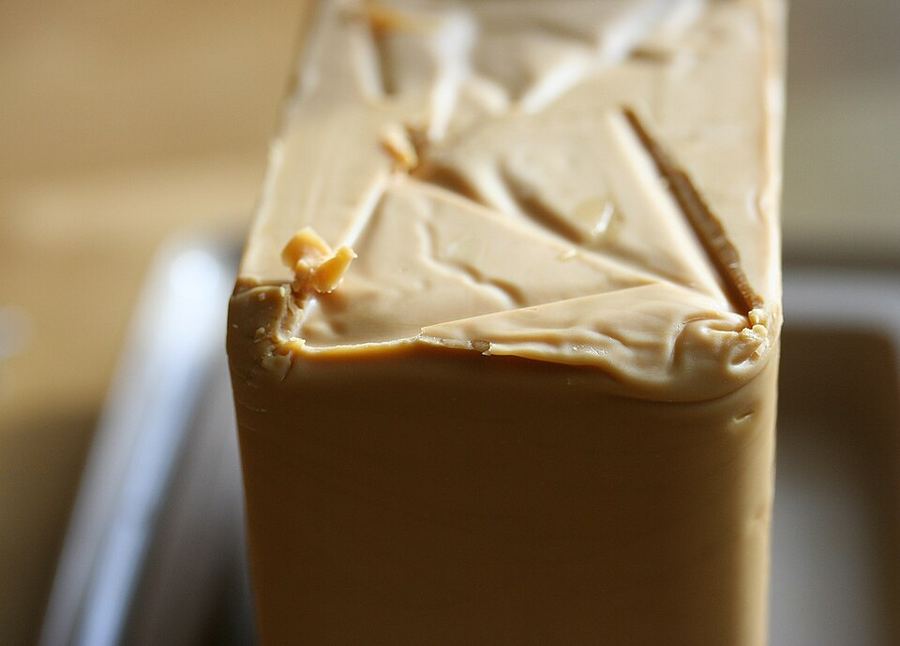
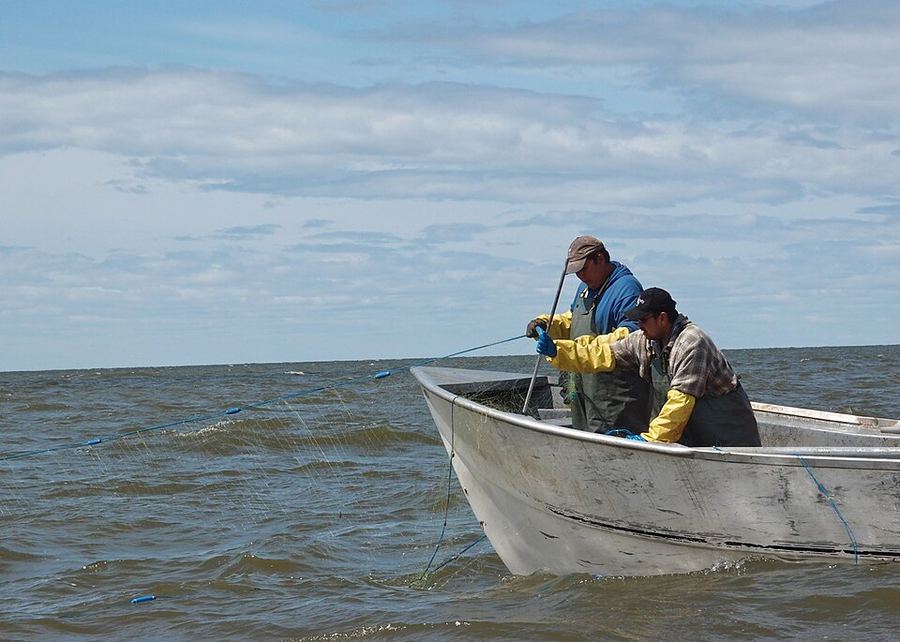
Norwegian cuisine is built on what the cold sea and short growing season provide: fish, above all. Norway is one of the world's great seafood exporters — fish ranks among its top export commodities — and farmed Atlantic salmon is its culinary flagship. Indeed, Norway's most successful food export may be an idea: salmon sushi, now assumed everywhere to be an ancient Japanese pairing, was popularized in Japan in the 1980s and '90s by a Norwegian campaign to sell its salmon to the raw-fish market. The traditional table is more austere and more curious. Brunost, the caramel-brown whey 'cheese,' is shaved onto morning bread and waffles with a uniquely Norwegian invention, the cheese slicer. Lutefisk — dried cod reconstituted in a lye solution to a translucent wobble — is a polarizing Christmas ritual, arguably eaten with more enthusiasm by Norwegian-Americans in the Upper Midwest than in Norway itself. Fårikål, a slow simmer of lamb and cabbage, holds the informal title of national dish; rakfisk (fermented trout), klippfisk (salt cod, the basis of Norwegian bacalao), and reindeer from the Sami north fill out the canon, chased with aquavit, the caraway spirit matured — in the finest tradition — in casks sent on sea voyages across the equator and back.
Cuisine & Misattributed Foods, Norway
color line / CC BY 2.0

National Dress

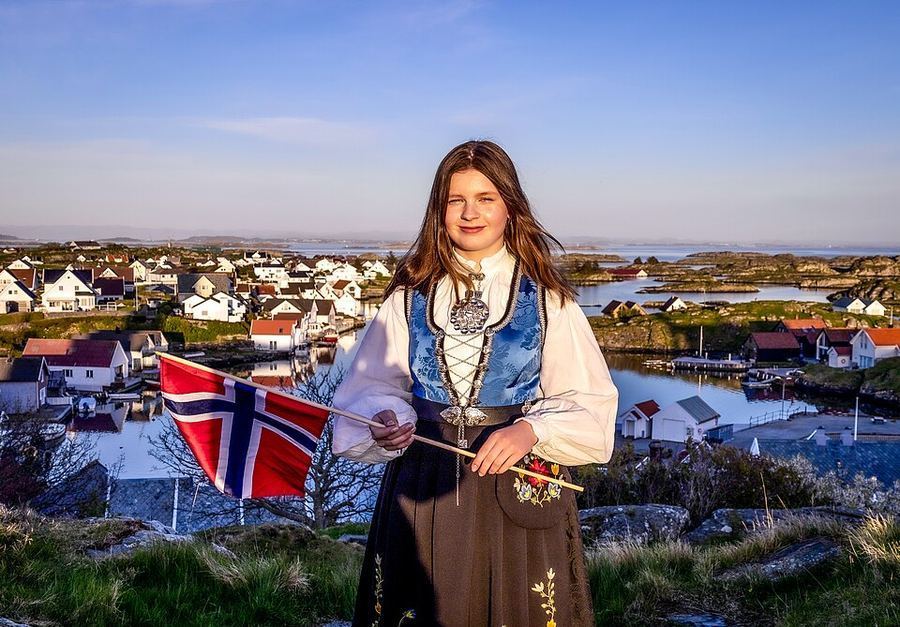
Norway's national costume, the bunad, is no museum piece — it may be the most actively worn folk dress in Europe. Rooted in rural festive clothing of the eighteenth and nineteenth centuries and codified during the national-romantic revival that accompanied independence, the bunad exists in hundreds of documented regional variants, each tied to a particular valley, fjord district, or town, with its own combinations of embroidered wool, brocade vests, and ornate silver clasps and brooches known as sølje. A full bunad is a serious investment — often handmade over months and handed down through families — and on 17 May, Constitution Day, the streets of every Norwegian town fill with them as children's parades march past flag-waving crowds; many Norwegians also wear bunad to weddings, confirmations, and christenings. Choice of bunad is a statement of family geography: one wears the costume of the district one's people come from, not simply the prettiest. Alongside it lives a separate and older tradition: the gákti of the Sami, whose bright blue, red, and yellow bands, pewter embroidery, and cut communicate the wearer's home region and family, worn both ceremonially and, by some, in daily life across the north.
National Dress, Norway
Mia1964 / CC BY-SA 4.0

Sports & Inspiring Athletes

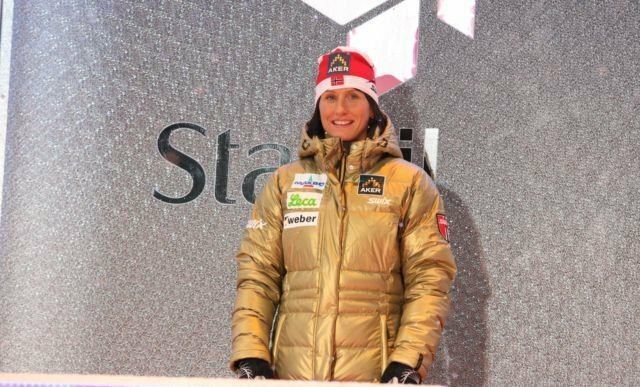
Norwegians like to say they are born with skis on their feet, and the medal table backs the boast: Norway has won more Winter Olympic medals than any other nation — a staggering return for a country of five and a half million — and topped the medal count at recent Winter Games. Cross-country skiing is the national sport and its champions are national royalty: Marit Bjørgen retired as the most decorated Winter Olympian in history, and biathlete Ole Einar Bjørndalen ranks just behind her. The country hosted the Winter Games at Oslo in 1952 and Lillehammer in 1994, the latter still remembered as one of the best-loved Olympics ever staged. Norwegian excellence has since spilled far beyond snow. Magnus Carlsen became world chess champion in 2013 and held the title for a decade while reigning as the game's top-rated player. Erling Haaland has rewritten Premier League scoring records as one of world football's most feared strikers. On the track, Karsten Warholm shattered the 400-meter hurdles world record in winning gold at the Tokyo Olympics, and Jakob Ingebrigtsen has collected Olympic and world middle-distance titles. Add sailing, handball — Norway's women are perennial world powers — and football's pioneering Ada Hegerberg, the first women's Ballon d'Or winner, and the per-capita case is closed.
Sports & Inspiring Athletes, Norway
Qwesy / CC BY 3.0

Notable Educational Programs

Norwegian education runs on a simple premise: the state pays, and childhood should include weather. Public university education is tuition-free for Norwegian citizens — students pay only a small semester fee — and the State Educational Loan Fund (Lånekassen) provides grants and low-interest loans for living costs, so higher education is effectively open to all; ten years of schooling are compulsory, and upper secondary education is a statutory right. At the other end of the pipeline, nearly all children attend heavily subsidized barnehager (kindergartens) from age one, and Norway is famous for its friluftsbarnehager — outdoor kindergartens where children spend most of the day outside year-round, napping in prams and learning in the forest in temperatures that would close schools elsewhere; 'there is no bad weather, only bad clothing,' the saying insists. The folkehøgskole, the Nordic folk high school offering a year of exam-free residential learning, remains a common gap year between school and university. Norway spends among the highest shares of national wealth on education in the OECD, tertiary attainment is well above the OECD average, and the University of Oslo (founded 1811), the Norwegian University of Science and Technology in Trondheim, and the University of Bergen anchor a research system that punches above the country's size — including a long tradition in polar and marine science.
Notable Educational Programs, Norway
Bernt Rostad / CC BY 2.0

Wars & Conflicts

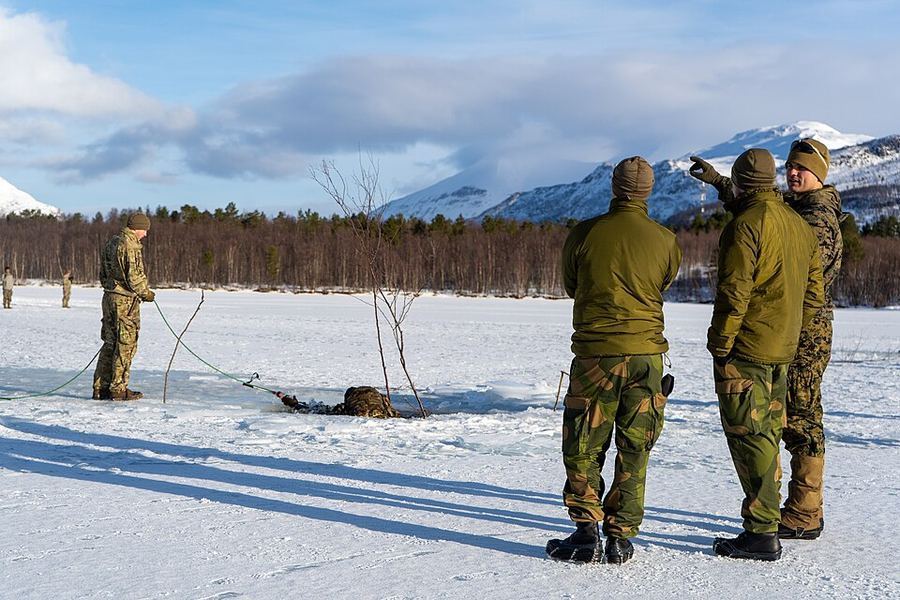
Norway is not engaged in any armed conflict on its own territory, and UCDP records no active conflict involving the Norwegian state at home. Its security posture in mid-2026, however, is the most alert since the Cold War, shaped by its 198-kilometer Arctic border with Russia and by the war in Ukraine. A NATO founding member, Norway hosted allied forces for the alliance's large Cold Response exercise in early 2026 and contributes to NATO's new Forward Land Forces presence in Finland, established in June 2026 to reinforce the northern flank; NATO also launched its Arctic Sentry activity in February 2026, and Norwegian defense officials have publicly warned against allowing Russia to dominate the 'Bear Gap' waters between mainland Norway and Svalbard (Reuters). Norway is among Ukraine's largest per-capita backers: its multi-year Nansen support program was expanded to roughly NOK 85 billion for 2026 — close to $8 billion, most of it military aid — and in April 2026 Oslo and Kyiv signed a defense declaration launching joint production of Ukrainian-designed strike drones on Norwegian soil, alongside more than NOK 1 billion for maritime drones and continued air-defense funding (Reuters). In July 2026 Norway joined Denmark, Finland, and Germany in a letter of intent to procure MQ-4C Triton surveillance drones for NATO coverage of the North Atlantic, Baltic, and Arctic (AP). Norwegian territory has seen no attacks, and the government characterizes its posture as deterrence and support, not belligerency.
Current as of 2026-07-18
Wars & Conflicts, Norway
U.S. Army photo by Capt. Thomas McCarty / Public domain

Land & Border Disputes

Norway's territorial questions cluster in the far north, and its biggest one is settled: in 2010, after some four decades of negotiation, Norway and Russia signed a treaty in Murmansk delimiting their maritime boundary in the Barents Sea and Arctic Ocean, dividing roughly 175,000 square kilometers of previously disputed waters approximately in half — a landmark resolution both sides have continued to observe. The live friction concerns Svalbard. The 1920 Svalbard Treaty grants Norway full sovereignty over the Arctic archipelago while giving all signatory states equal rights to engage in economic activity there; Norway maintains a 200-nautical-mile fisheries protection zone around Svalbard that several states — Russia most vocally — decline to recognize as within Norway's exclusive purview, producing recurring disagreement over fishing and seabed rights, sharpened by interest in snow-crab and potential hydrocarbon resources. An older Nordic dispute was resolved at the International Court of Justice: in its 1993 judgment in the Jan Mayen case (Denmark v. Norway), the Court drew the maritime boundary between Greenland and Norway's volcanic island of Jan Mayen. In the far south, Norway claims Queen Maud Land and Peter I Island in Antarctica — claims held in abeyance, like all others, under the Antarctic Treaty — and administers uninhabited Bouvet Island, a sub-Antarctic dependency whose surrounding waters it also controls, without challenge.
Land & Border Disputes, Norway
AWeith / CC BY-SA 4.0
Land, Life & Legacy

Land & Climate

Norway occupies about 324,000 square kilometres along the western edge of the Scandinavian Peninsula, long and narrow, with a coastline that, counted along its fjords and around some quarter of a million islands, is one of the longest in the world. Glaciation did the shaping: ice carved the fjords that cut deep inland, among them Sognefjord, the longest and deepest in the country, and Geirangerfjord and Nærøyfjord, which are inscribed as World Heritage. The Scandinavian Mountains form the spine and the border with Sweden; Galdhøpiggen in Jotunheimen, at 2,469 metres, is the highest point in northern Europe, and Jostedalsbreen is the largest glacier on the European mainland. About a third of the country lies north of the Arctic Circle, which brings the midnight sun in summer, polar night in winter and frequent aurora over Tromsø. The Norwegian Atlantic Current keeps the coast ice-free remarkably far north, so Norway is far milder than its latitude implies, while the interior valleys and Finnmark are properly cold. Svalbard and Jan Mayen are Arctic dependencies of the kingdom.
Land & Climate, Norway
Virtual-Pano / CC BY-SA 4.0

Entertainment

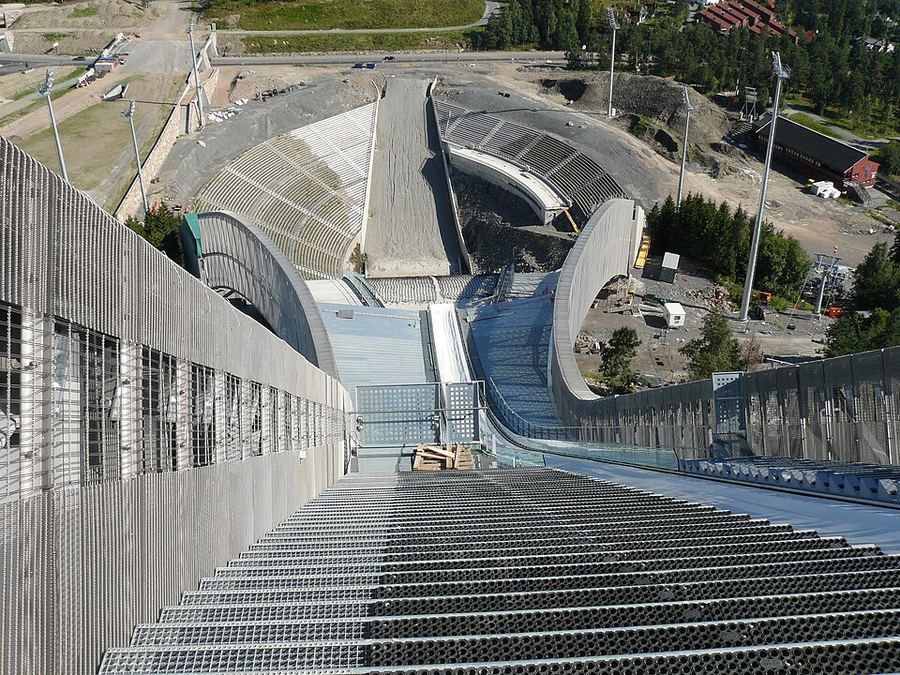
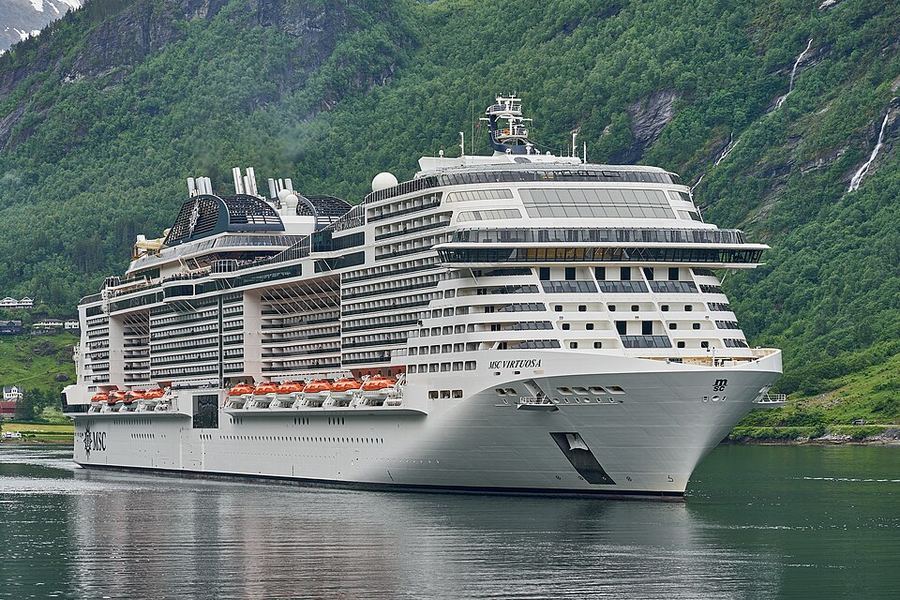
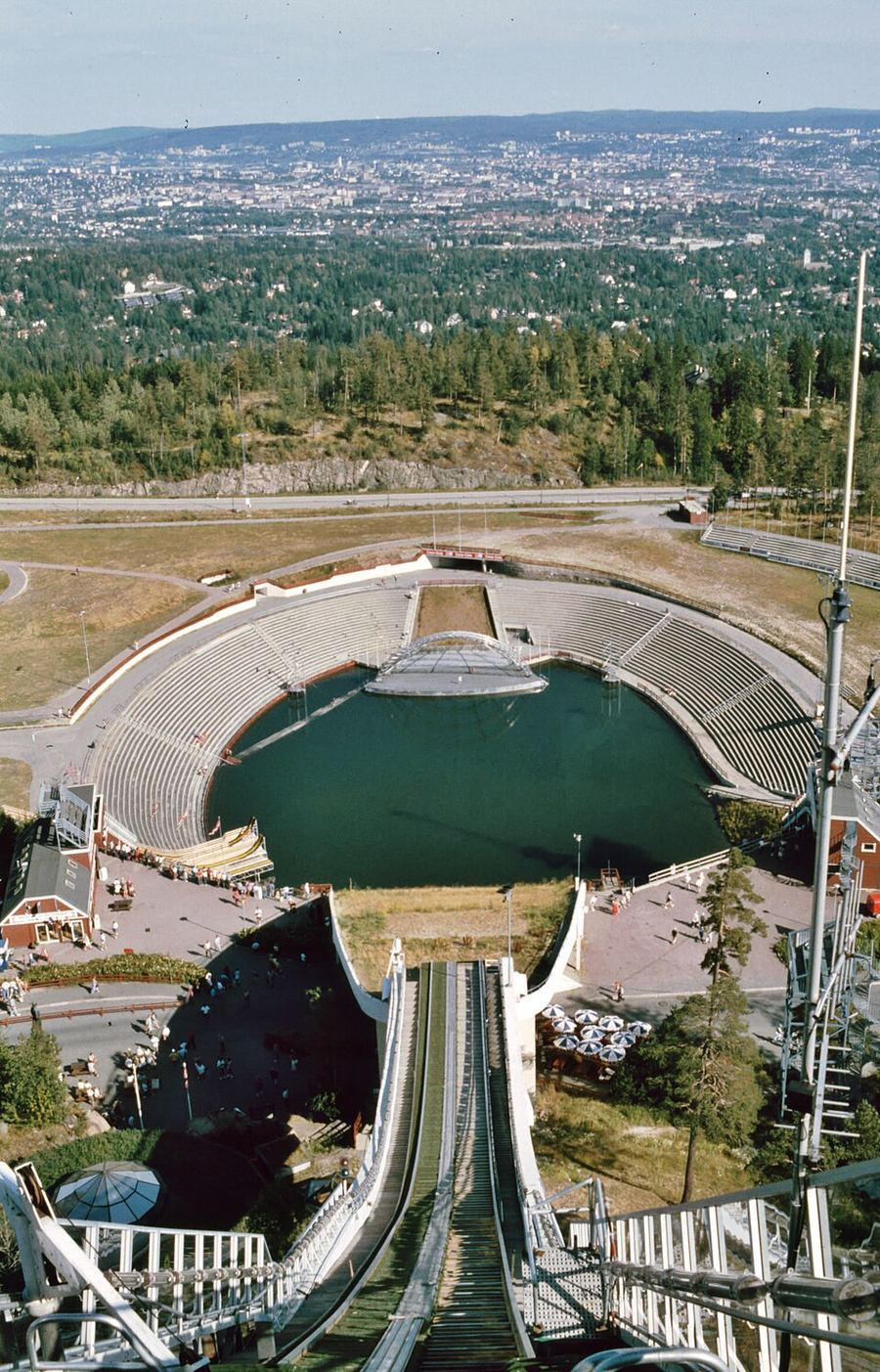
Norwegian leisure begins where the pavement ends. Roughly half a million hytter — family cabins — empty the cities at Easter; Oslo's metro runs directly to the forested Nordmarka, where floodlit trails and hundreds of kilometers of marked tracks make cross-country skiing an after-work activity; and the right to roam turns the whole outdoors into common property. The annual rhythm peaks on 17 May, when children's parades and bunad-clad crowds fill every town for Constitution Day, and at Holmenkollen, where ski-jumping Sundays have been an Oslo institution since 1892. Tourism now runs on spectacle: fjord cruises through UNESCO-listed Geirangerfjord and Nærøyfjord, the Flåm railway's plunge from mountain plateau to fjord shore, midnight sun over the Lofoten Islands, and northern-lights winters in Tromsø, which has boomed into an Arctic tourism capital. Even television bends outdoors — NRK's 'slow TV' broadcasts of a seven-hour train journey and a five-day coastal voyage became improbable national hits, watched by huge shares of the population.
Entertainment, Norway
qwesy qwesy / CC BY 3.0

Art & Museums

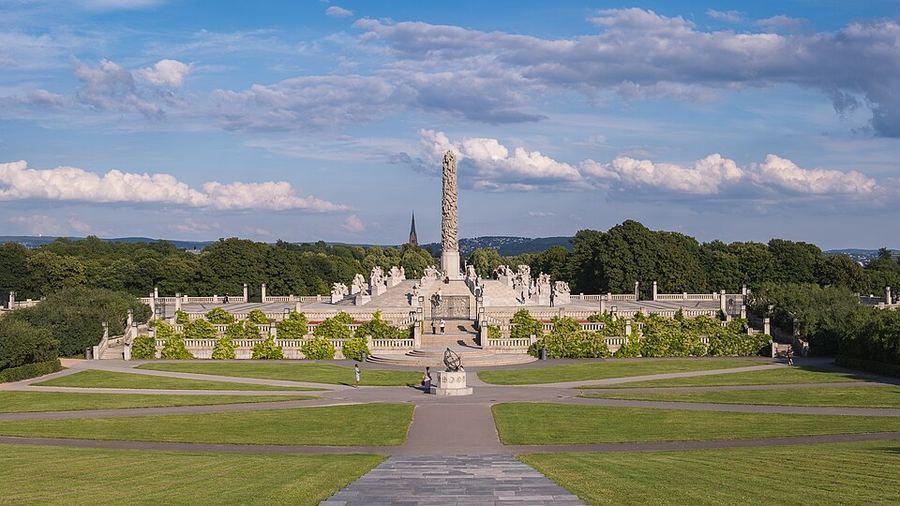
Norwegian art orbits one indelible image: Edvard Munch's The Scream (1893), painted in what is now Oslo and shared today between the National Museum and the thirteen-story Munch museum that opened on the waterfront in 2021 — Munch bequeathed the city his entire remaining estate of tens of thousands of works. Before Munch came the national romantics: J.C. Dahl, the father of Norwegian landscape painting; Adolph Tidemand and Hans Gude, whose Bridal Procession on the Hardangerfjord distilled the young nation's self-image; and Theodor Kittelsen, whose trolls and plague-hag drawings fixed the visual language of Norwegian folklore. Older still are the carved portals of the stave churches — Urnes, on UNESCO's World Heritage List, sets writhing beasts in eleventh-century wood — and the painted folk tradition of rosemaling. Oslo's Vigeland Park displays more than 200 sculptures by Gustav Vigeland, the largest sculpture park in the world devoted to a single artist, while the new National Museum, opened in 2022, is the largest art museum in the Nordic countries.
Art & Museums, Norway
Christian David / CC BY-SA 4.0

Notable People

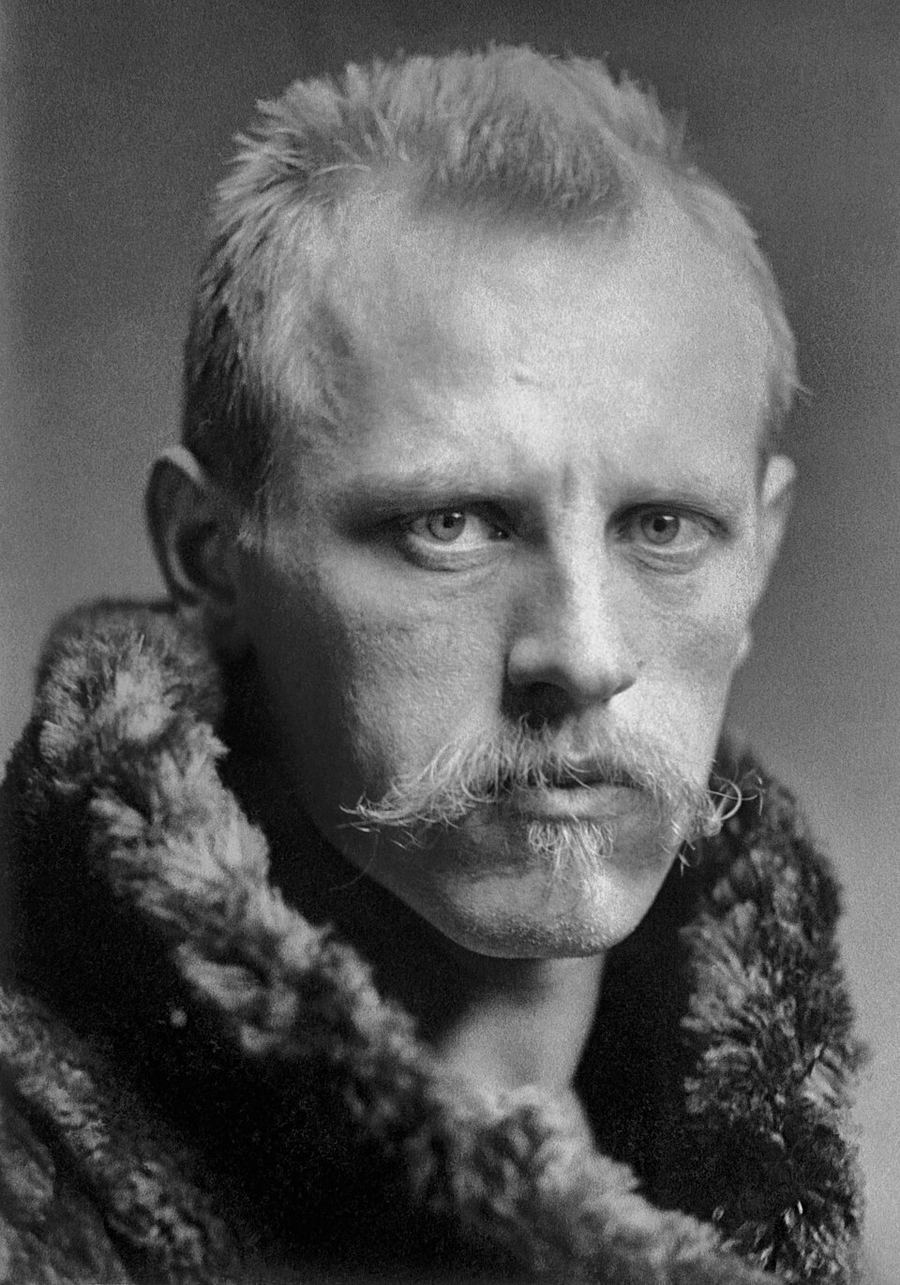
For a nation of five and a half million, Norway's roll call is dense. Playwright Henrik Ibsen and composer Edvard Grieg defined its nineteenth-century golden age; Knut Hamsun and Sigrid Undset both won the Nobel Prize in Literature. The polar generation produced Fridtjof Nansen — scientist, explorer, and winner of the 1922 Nobel Peace Prize for refugee work that gave stateless people the 'Nansen passport' — and Roald Amundsen, first to the South Pole in 1911 and first through the Northwest Passage. Trygve Lie served as the United Nations' first Secretary-General from 1946, and Gro Harlem Brundtland, Norway's first female prime minister, chaired the commission that defined 'sustainable development' before leading the World Health Organization. Mathematician Niels Henrik Abel, dead at 26, left fundamental theorems and a namesake prize; Thor Heyerdahl sailed the balsa raft Kon-Tiki across the Pacific in 1947. The current generation offers chess champion Magnus Carlsen and footballer Erling Haaland.
Notable People, Norway
Henry Van der Weyde / Public domain

Inventions & Breakthroughs

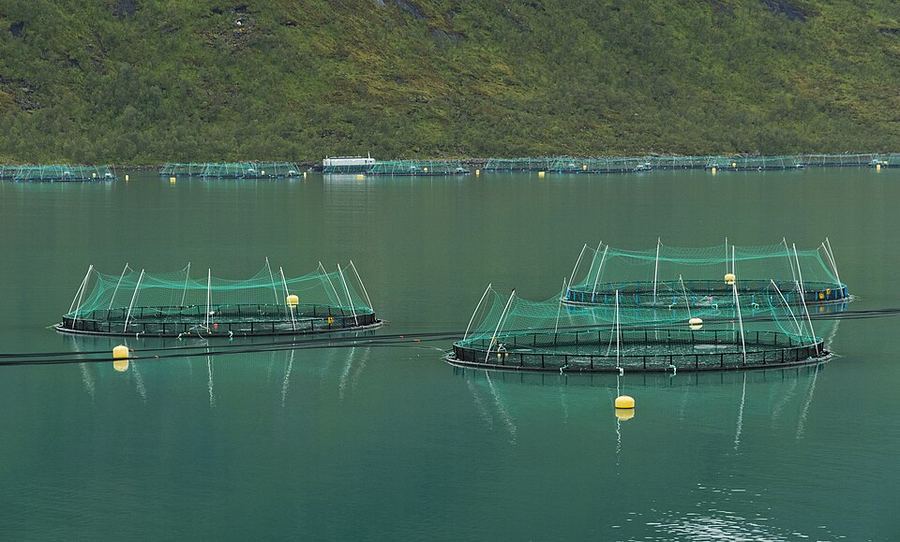
Norwegian invention favors the practical. Kristian Birkeland — the physicist whose aurora research made him a scientific celebrity — teamed with industrialist Sam Eyde in 1905 on the Birkeland–Eyde process, using cheap hydropower to fix atmospheric nitrogen into fertilizer, founding Norsk Hydro and helping feed a growing world. Erik Rotheim, an Oslo engineer, patented the aerosol spray can in 1927; Thor Bjørklund's 1925 cheese slicer conquered every Nordic breakfast table; and the paper clip is popularly, if loosely, credited to the Norwegian Johan Vaaler — a claim his countrymen commemorated with a giant clip statue. At sea, the Grøntvedt brothers' floating sea cages of the early 1970s launched modern Atlantic salmon farming, now a global industry, while Norwegian firms became leaders in marine sonar and the dynamic-positioning systems that hold offshore platforms on station. Science added Nobels: Odd Hassel shared the 1969 chemistry prize for conformational analysis, and Oslo-born Lars Onsager won the 1968 prize for his thermodynamics of irreversible processes.
Inventions & Breakthroughs, Norway
Ximonic (Simo Räsänen) / CC BY-SA 4.0

Science & Technology

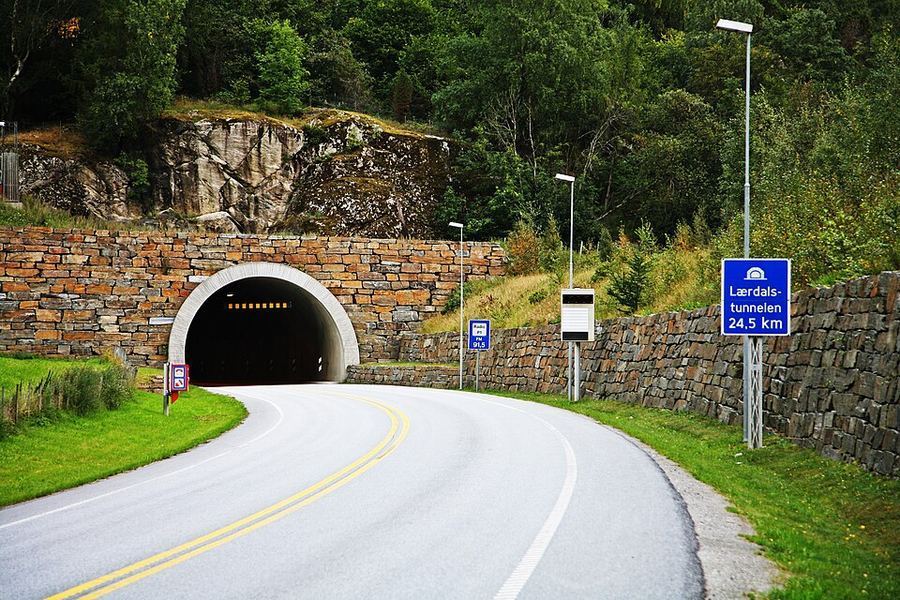
Norway's applied engineering was built on the North Sea after the Ekofisk discovery in 1969, and the supplier cluster around Stavanger and Bergen developed deepwater platforms, subsea production systems and the Troll A concrete platform, one of the tallest structures ever moved by people. From the same industry came a lead in carbon capture: the Sleipner field has injected carbon dioxide into a saline aquifer beneath the seabed since 1996, the longest-running storage project of its kind, and the Northern Lights project extends the approach to imported emissions. Domestically almost all electricity comes from hydropower, and Norway has the highest share of electric vehicles in new car sales of any country. In science, Kristian Birkeland explained the aurora as charged particles guided along the geomagnetic field and, with Sam Eyde, devised the Birkeland-Eyde process for fixing atmospheric nitrogen, which founded Norsk Hydro. Odd Hassel shared the 1969 Nobel Prize in Chemistry for conformational analysis, and May-Britt and Edvard Moser shared the 2014 prize in Physiology or Medicine for grid cells in the brain. The Svalbard Global Seed Vault stores duplicate crop seed.
IEANatureScienceEncyclopaedia Britannica
Science & Technology, Norway
W. Bulach / CC BY-SA 4.0
On The World Stage
Champions of Norway

Champions & Defining Moments

Norway's Winter Olympic record is without parallel: the all-time medal leader, it topped the table at PyeongChang 2018 with a record 39 medals and again at Beijing 2022 with a record 16 golds. Cross-country skier Marit Bjørgen's 15 medals make her the most decorated Winter Olympian in history; biathlete Ole Einar Bjørndalen sits just behind with 13, and Johannes Thingnes Bø carried the biathlon dynasty forward. Oslo staged the 1952 Winter Games and Lillehammer the beloved 1994 edition. Summer success has caught up: Karsten Warholm's 45.94-second 400-meter hurdles at the Tokyo Olympics demolished the world record, Jakob Ingebrigtsen took Olympic 1500-meter gold in Tokyo and 5,000-meter gold in Paris, and the women's handball team won consecutive Olympic titles in 2008 and 2012. In football, Ada Hegerberg won the first women's Ballon d'Or in 2018 and Erling Haaland set a 36-goal single-season Premier League scoring record, while Magnus Carlsen reigned as chess world champion for a decade.

Tadeusz Mieczyński / CC BY-SA 3.0
Government & Leadership

Parliamentary constitutional monarchy

Seat of the executive

Executive

Harald V — King

In office since 17 January 1991

Jonas Gahr Store — Prime Minister

The legislature

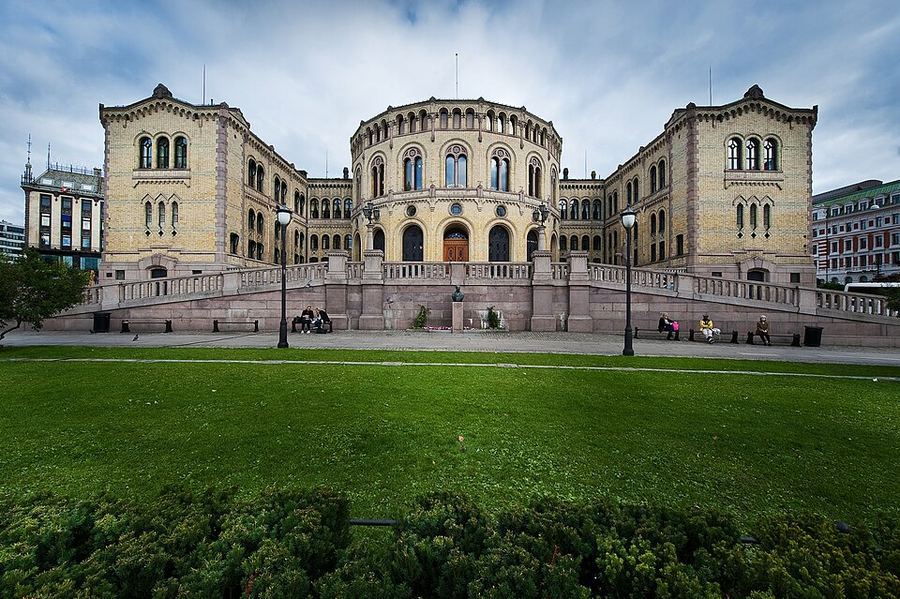
Parliament (Stortinget)

Unicameral

Composition — Labour Party largest party

Labour Party 53 · Progress Party 47 · Conservative Party 24 · Socialist Left Party 9 · Center Party 9 · Red Party 9 · Other 18

Last election 9/8/2025 · 40.2% women

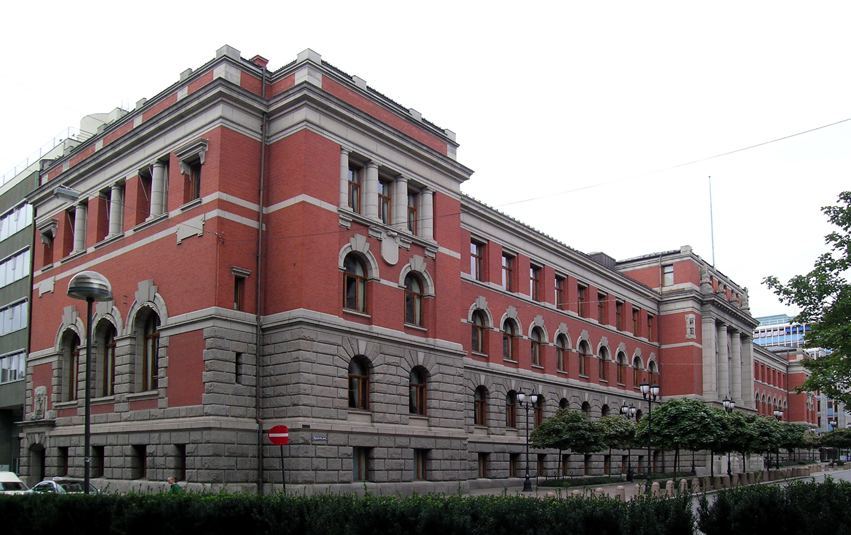
The highest court
The highest court — User:Mahlum / Public domain

Supreme Court or Hoyesterett

consists of the chief justice and 18 associate justices

Economy, Trade & Government

Currency & GDP

Norwegian krone — NOK (kr)

GDP (PPP): $558 billion (2023 est.)

Per capita: $91,100 (2024 est.)

Exports

natural gas, crude petroleum, refined petroleum, fish, aluminium (2021)

Partners: UK 21%, Germany 14%, Netherlands 10%, Sweden 7%, France 6% (2021)

Imports

cars, refined petroleum, packaged medicine, computers, ships (2021)

Partners: Sweden 11%, Germany 11%, China 10%, Denmark 5%, United States 5% (2021)

Government

Type: parliamentary constitutional monarchy

Independence: 7 June 1905 (union with Sweden dissolved); 26 October 1905 (Sweden agreed to the dissolution)

Terrain → Where People Live

How mountains, coasts, and rivers shape settlement (LandScan).

Coming — data

Migration & Ethnic Settlement

Where groups settled and how people move (GeoEPR + UNHCR).

Coming — data

Universities

Notable institutions, mappable as points.

Coming — data
Economy & government facts: CIA World Factbook (public domain), via OpenFactBook / factbook.json.
Every fact and narrative claim will carry a visible source citation. Data-driven sections light up automatically wherever HERA has coverage.