HERA · Human Entity Reference Atlas by Masego Inc

← Nauru 🌐 3D View
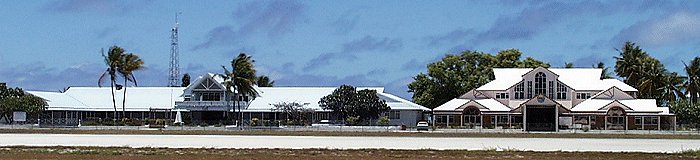
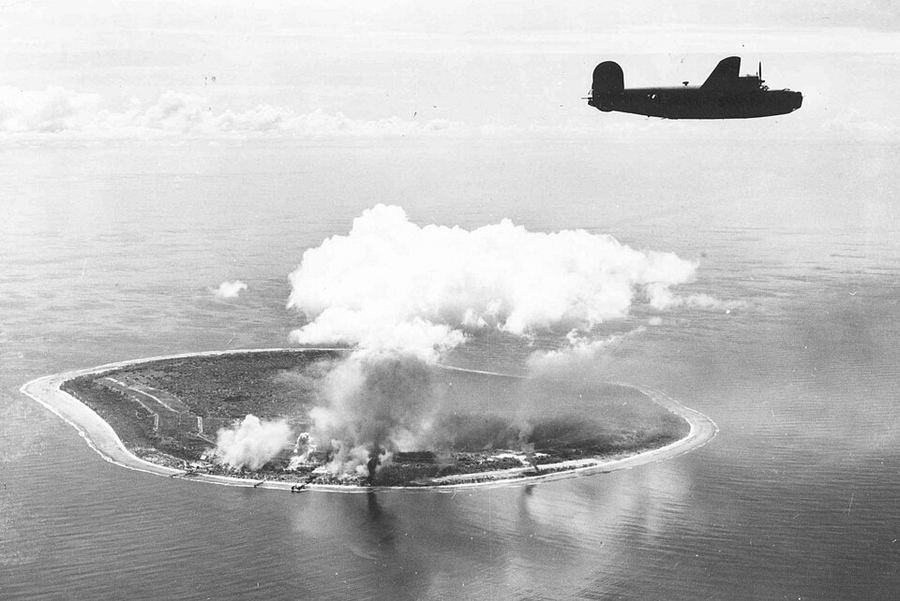
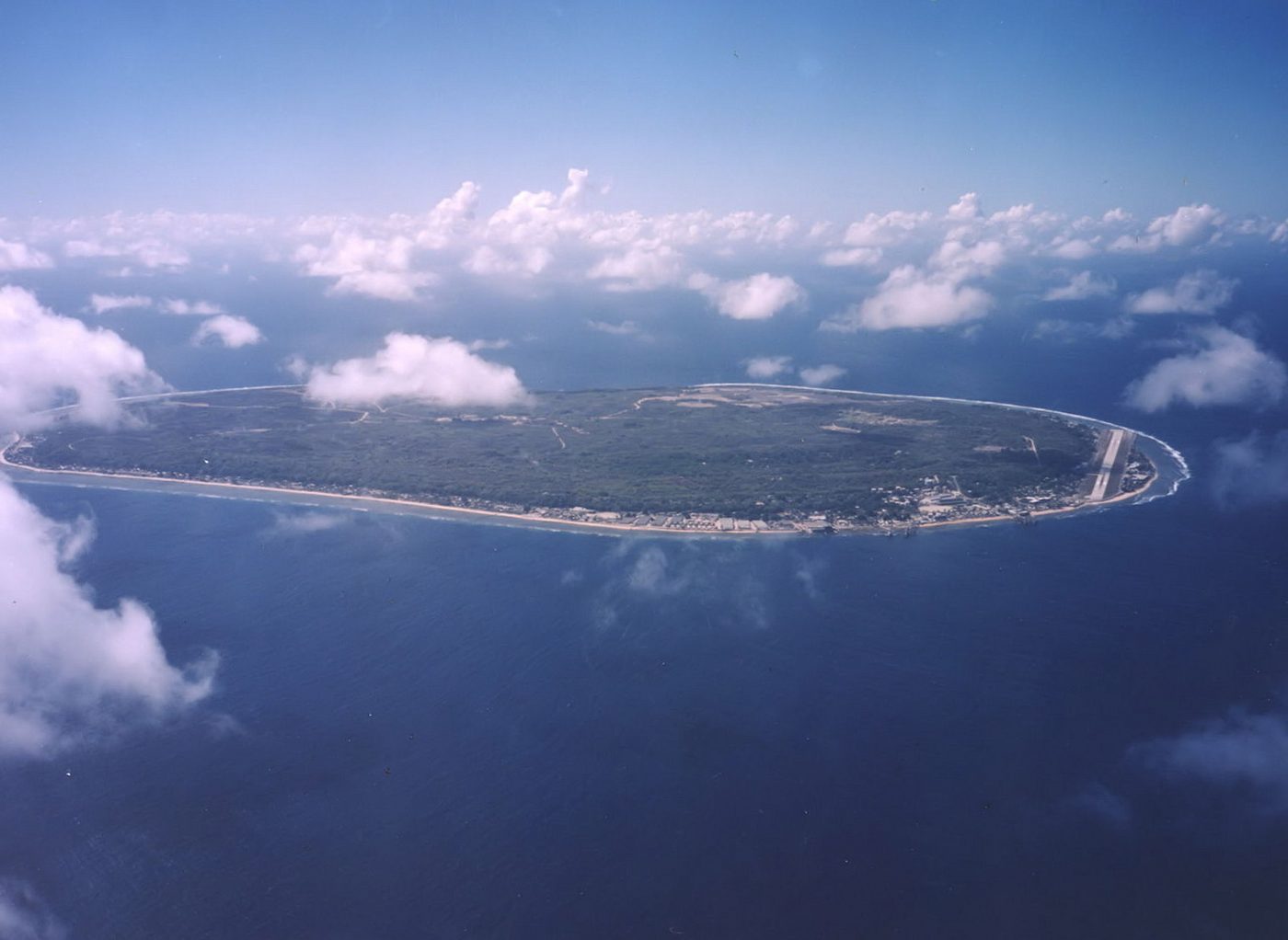
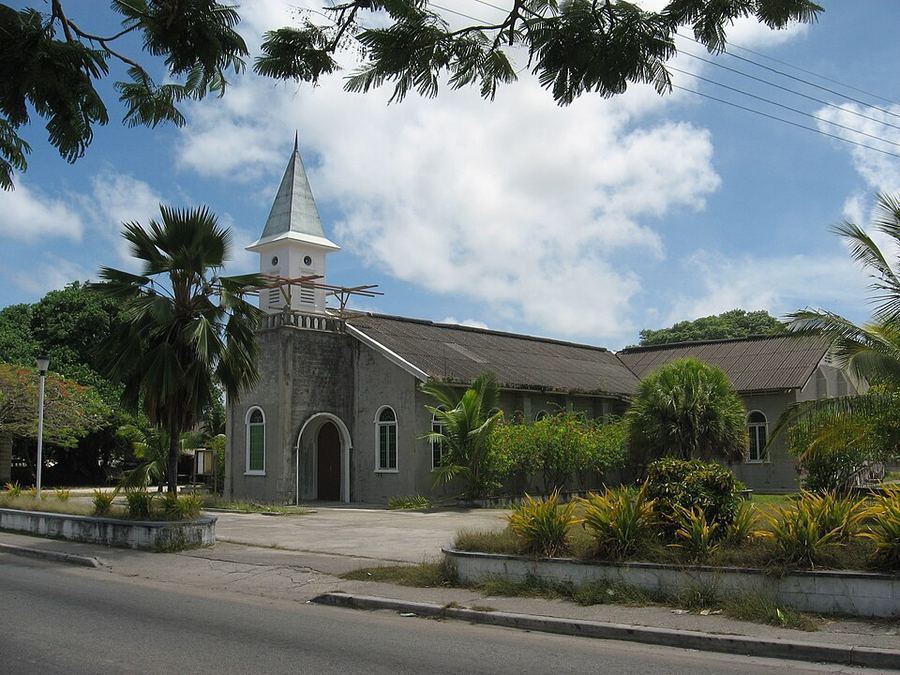
Aerial view of Nauru-mod, Nauru
Nauru NRU
Aerial view of Nauru-mod — Photo: [1] ( http://www.arm.gov/ ) / Public domain via Wikimedia Commons
Did You Know Marcus Stephen won multiple Commonwealth Games weightlifting gold medals for Nauru in the 1990s and later served as the country's President from 2007 to 2011. — Commonwealth Games Federation

Nauru is the world's smallest republic and its smallest island nation — a single raised coral island of about 21 square kilometres in the central Pacific, just south of the equator, with a population of roughly ten thousand. It is one of very few states with no official capital; government offices sit in the district of Yaren, and the whole country is circled by a coastal road under twenty kilometres long. Nauru's modern history was made by a single commodity: the phosphate rock that covers its interior plateau, mined from 1907 under German, then Australian, British and New Zealand administration, and after independence on 31 January 1968 by Nauruans themselves. For a period in the 1970s and 1980s the revenues gave Nauru one of the highest per-capita incomes in the world; poor investment of the trust fund and the exhaustion of the best deposits ended that abruptly, leaving an economy dependent on fishing licences, aid, and payments from Australia for hosting an offshore asylum processing centre. About 95% of the population is Nauruan and the Nauruan language, a Micronesian tongue with no close relatives, is spoken by the great majority. Protestant churches account for around 60% of religious affiliation and Roman Catholicism about a third.

CIA World FactbookEncyclopaedia Britannica
Population
9,930
Capital
no official capital; government offices in the Yaren District
Currency
$ AUD
Time zones
Largest city
Human Geography Themes
Loading national figures…
The Country & Its People

History

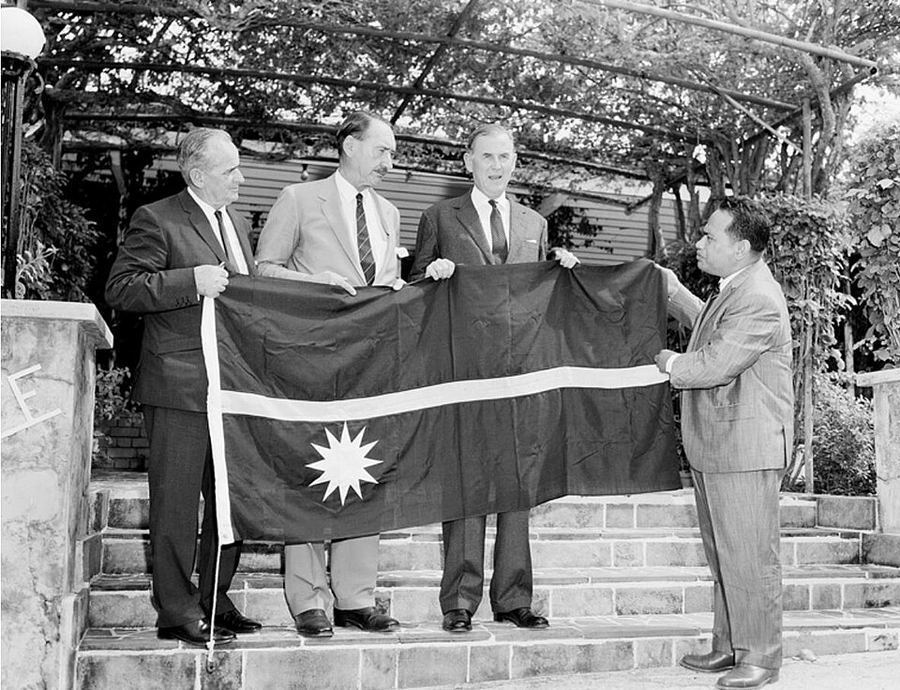
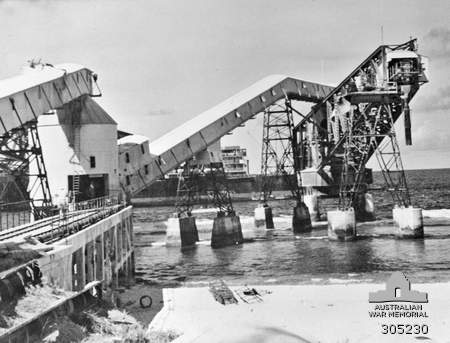
Nauru was settled by Micronesian and Polynesian voyagers and organised into twelve tribes, a division still commemorated by the twelve-pointed star on the national flag. Europeans arrived late — a British whaler sighted the island in 1798 — and the nineteenth century brought beachcombers, firearms and a destructive ten-year internal war that sharply reduced the population. Germany annexed Nauru in 1888 and administered it with its Marshall Islands protectorate; the discovery of high-grade phosphate rock in 1900 changed everything, and commercial mining began in 1907. Australian forces took the island in 1914, and after the First World War it became a League of Nations mandate administered by Australia on behalf of Britain and New Zealand, with the phosphate worked by the British Phosphate Commissioners. Japanese forces occupied Nauru from 1942 to 1945 and deported about 1,200 Nauruans to Chuuk, where roughly a third died before the survivors returned in 1946 — the most traumatic episode in the island's history. Nauru became a United Nations trust territory, moved steadily towards self-rule under Hammer DeRoburt, and gained independence on 31 January 1968. In 1970 the new republic bought out the phosphate industry, and for two decades afterwards the revenues made it extraordinarily wealthy.
Culture

Nauruan society is organised around extended family and the twelve traditional tribes, and descent is traced matrilineally — land and tribal membership pass through the mother's line, which remains legally and socially significant in a place where land is the scarcest resource. The most distinctive national observance is Angam Day on 26 October, which has no equivalent anywhere: 'angam' means homecoming or celebration, and the day marks the point at which the Nauruan population recovered to 1,500 people, the number long held to be the minimum for the community's survival. That threshold was reached in 1932 after the devastation of disease and war, lost again during the Japanese occupation, and regained in 1949 — a national holiday built around demographic survival rather than a battle or a founding. Independence Day on 31 January is the other major occasion. Christianity, brought by missionaries in the late nineteenth and early twentieth centuries, structures the weekly calendar, and the Nauruan Congregational tradition and the Catholic Church are both central to community life. Feasting, church singing, and family gatherings on the beach and in the districts are the ordinary forms of celebration, and English circulates alongside Nauruan in government and schooling.

Points Of Pride

Nauruans take pride first in independence itself: a community of a few thousand people negotiated its way out of trusteeship in 1968 and then, in 1970, bought the phosphate industry outright from the foreign commission that had run it — an act of economic self-determination unusual for any newly independent state and remarkable for one this size. Angam Day is a second and more intimate source of pride, marking survival as a people after epidemics, a war and mass deportation nearly extinguished the population. The country's sporting achievement is concentrated in weightlifting, where Marcus Stephen won a string of Commonwealth Games gold medals in the 1990s and later served as President of Nauru — an unusual double even by small-state standards. Diplomatically, Nauru has repeatedly used its United Nations seat to press the case of low-lying island states on climate change and sea-level rise, arguing that its vote counts equally with any other. And the island's geological oddity has its own claim: Nauru is the world's smallest republic, one of only three countries smaller in area, and among the very few states that has never designated an official capital city.
Encyclopaedia BritannicaUNCommonwealth Games Federation

Cultural Fusion

Nauru is ethnically homogeneous by the standards of most countries — about 95% of the population is Nauruan — but it has absorbed influences and people from several directions. Its language is Micronesian and unusually distinct, with no close relatives, and its traditional social structure of twelve matrilineal tribes is Micronesian in form, while contact with Kiribati, the Marshall Islands and Polynesia has left traces in vocabulary and custom. The phosphate industry brought long-term communities of I-Kiribati, Tuvaluan and Chinese contract workers, and small Chinese-run businesses and restaurants have been part of island life for generations. Colonial rule layered German, then Australian and British administration onto that, and English became the working language of government, commerce and secondary education. Christianity arrived through both Protestant and Catholic missions and displaced most pre-Christian practice, though matrilineal descent and tribal identity survived it intact. The most recent layer is the least comfortable: since 2001, and again from 2012, Australia's offshore processing arrangements have brought asylum seekers from Iran, Afghanistan, Sri Lanka, Iraq and elsewhere to a country of ten thousand people, an encounter with lasting social and political consequences.

Music & Dance

Traditional Nauruan music is vocal and rhythmic rather than instrumental. Its core is chanted song — sung in Nauruan, often in a call-and-response form, accompanied by clapping, body percussion and slit drums rather than by melodic instruments — performed by groups of seated or standing singers with coordinated arm and hand movement. Songs traditionally carried genealogy, tribal history, fishing and bird-catching lore, and the words mattered at least as much as the tune. Missionary contact from the late nineteenth century introduced four-part hymn singing, which took root deeply, and church choirs are now among the strongest musical institutions on the island; hymns translated into Nauruan form a substantial body of the language's sung repertoire. Twentieth-century contact added Pacific string-band music — guitar and ukulele — and, more recently, reggae, gospel and hip-hop from Australia, New Zealand and the wider Pacific dominate popular listening among younger Nauruans. Traditional dance and chant are performed principally at Angam Day and Independence Day celebrations, at church and community feasts, and at regional cultural festivals, where maintaining the older repertoire is treated as an act of cultural preservation in a very small population.

Cuisine & Misattributed Foods

Traditional Nauruan food came from the reef, the coconut and the pandanus. Fish caught from the narrow fringing reef and from canoes — tuna and reef species — was eaten fresh, dried or cooked in coconut cream; coconut supplied flesh, cream, oil and toddy; and pandanus fruit was chewed fresh or cooked down into a preserved paste that stored through lean periods. The island's most distinctive food practice is a form of aquaculture: fry of the ibija, or milkfish, were traditionally caught at sea and transferred to Buada Lagoon and inland brackish ponds, where they were raised to size — a rare freshwater-farming tradition on a coral island with no rivers. Coconut crab and seabirds, particularly noddies taken in the traditional evening catch, supplemented the diet. Almost none of this now describes how Nauruans eat. With very little arable land and an economy that made imports cheap and easy, the diet shifted decisively to imported rice, flour, tinned meat, sugar and processed foods, and the consequences have been severe: Nauru records some of the highest rates of obesity and type 2 diabetes measured anywhere in the world. Reviving local food production is an explicit public-health objective.

National Dress

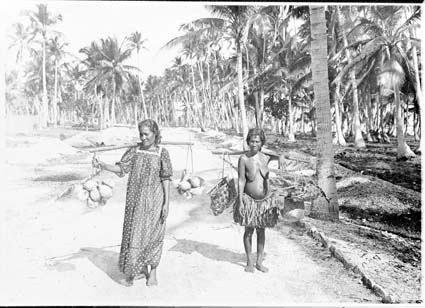
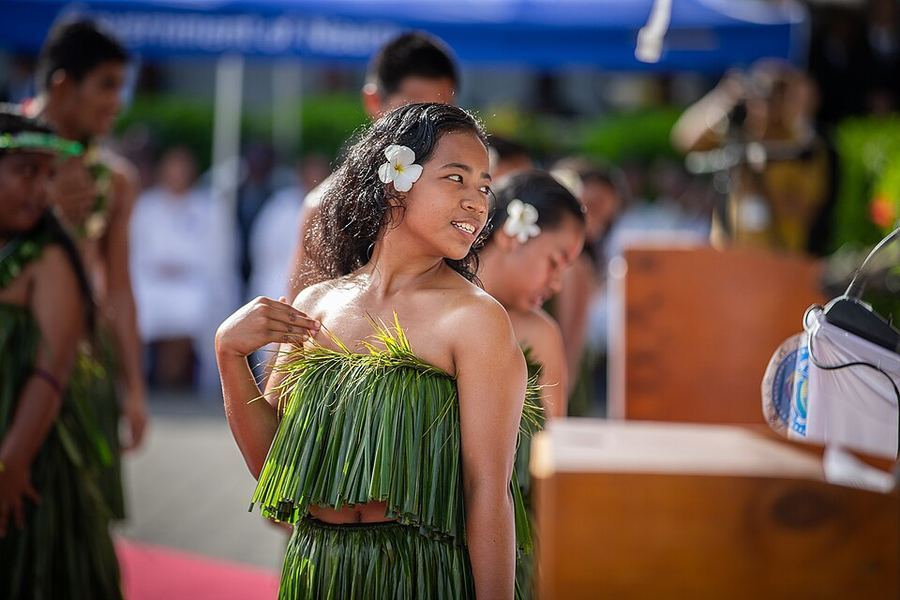
Nauru has no elaborate ceremonial costume, and traditional dress is worn today for celebration and performance rather than daily life. The historical Nauruan garment was made from local plant fibre: skirts of shredded and fringed pandanus or hibiscus fibre worn at the waist, with garlands, headbands and armbands of flowers, leaves and shell, and finely woven pandanus mats and bands used both as clothing and as valuables. Weaving remains the living craft — pandanus leaf worked into mats, baskets, fans and the fringed skirts used for dance — and skill in it is a respected accomplishment among older women. For Angam Day, Independence Day and school and church performances, dance groups wear these fibre skirts with floral crowns and body ornament, often with fabric tops in modern materials. Missionary influence introduced Western dress early and thoroughly: from the late nineteenth century, church attendance meant covered clothing, and modest dresses for women and shirts for men became the norm. Everyday clothing on Nauru today is entirely modern and casual, adapted to a hot, humid equatorial climate, with the island's Australian and wider Pacific connections visible in what people wear.

Sports & Inspiring Athletes

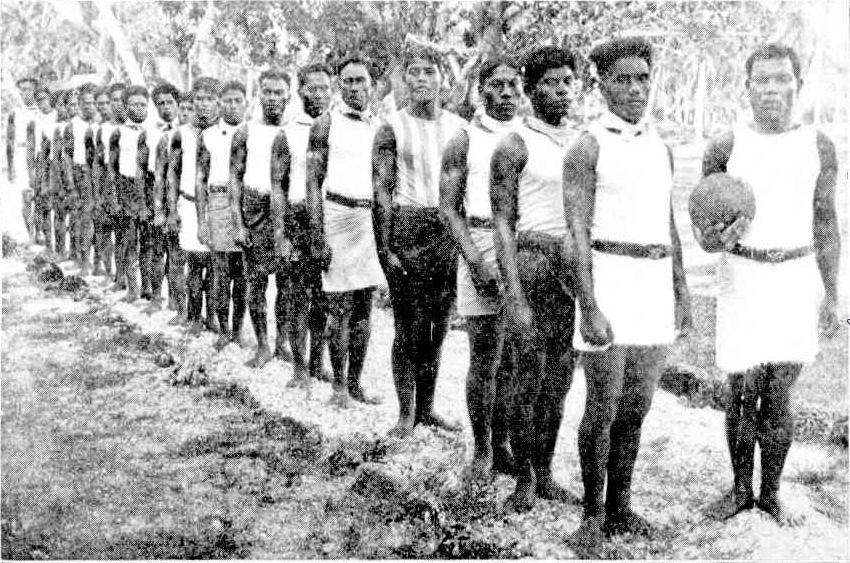
Australian rules football is Nauru's national sport, and the island is one of the few places outside Australia where the code is genuinely dominant rather than a curiosity — a legacy of Australian administration and of the many Nauruans educated in Australia. A local competition runs on the island's ground, matches draw substantial crowds relative to the population, and Australian league results are followed closely. Weightlifting is the other pillar and the source of nearly all of Nauru's international success: the sport has an unusually deep base for a country of ten thousand, sustained by a strong coaching tradition and by the example of Marcus Stephen, whose Commonwealth Games titles in the 1990s made him a national figure long before he became President. Beyond these two, softball, volleyball, basketball, touch rugby and athletics are played at school and inter-district level, and fishing competitions feature in national celebrations. The country's sporting infrastructure is necessarily minimal — a single main sports field, a gym, school facilities — and the standing challenge is the same one that affects everything else in Nauru: assembling and flying a team to any international competition is a major national expense.
Commonwealth Games FederationIOCEncyclopaedia Britannica

Notable Educational Programs

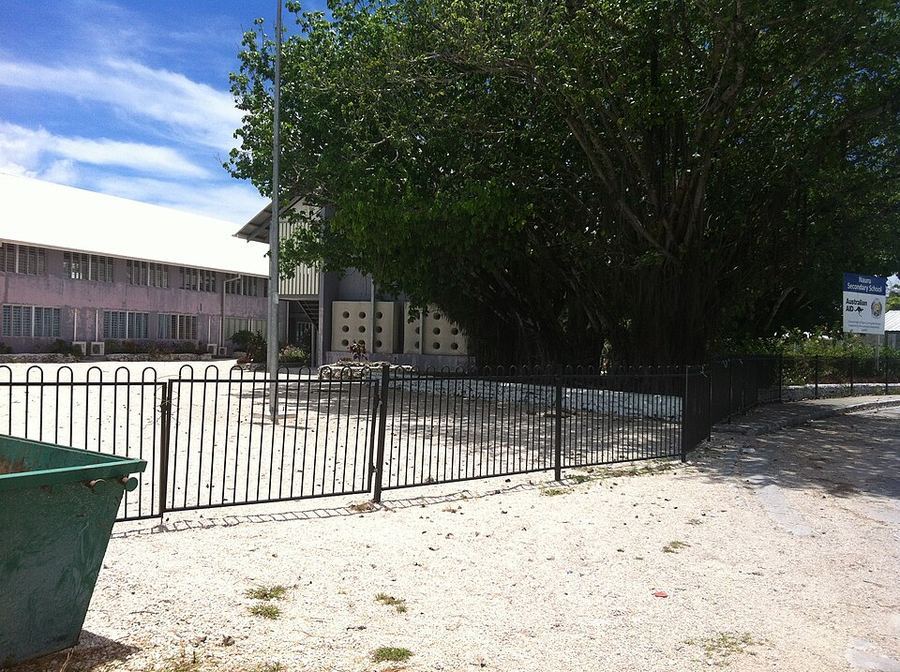
Nauru operates a small unified public school system: infant and primary schools distributed across the districts and Nauru Secondary School providing the upper years, with education free and compulsory to mid-secondary level. The curriculum draws heavily on Australian models, reflecting both the administrative history and the destination of most students who continue their education abroad, and instruction moves from Nauruan in the early years to English in the later ones. Retaining qualified teachers is a persistent difficulty, and the small scale means specialist subjects at senior level depend on a handful of individuals. Nauru is one of the member countries of the University of the South Pacific and hosts a campus that delivers distance and continuing education locally, which for many Nauruans is the practical route to a degree without leaving the island; others study in Australia, Fiji and New Zealand on scholarships, and encouraging graduates to return to a very small labour market is a standing policy concern. Vocational and technical training focuses on the skills the economy actually uses — construction, mechanical trades, hospitality, health and public administration — and adult education programmes in health and nutrition have been given particular weight given the country's diabetes burden.

Wars & Conflicts

Nauru has no armed forces — it maintains only a police force, with Australia providing for its defence under informal arrangement — and has fought no war as an independent state. Its formative experience of conflict was as an occupied territory. Japanese forces held the island from 1942 to 1945, built fortifications whose remains still sit on Command Ridge, and in 1943 deported about 1,200 Nauruans to Chuuk in the Caroline Islands, where roughly a third died of starvation and disease before the survivors were repatriated in 1946; the population loss was severe enough that the island's recovery to a viable number is commemorated as a national holiday. Earlier, in the late nineteenth century, a decade of internal fighting among the tribes, made lethal by imported firearms and alcohol, killed a substantial share of the population and was ended by German annexation in 1888. In the contemporary period Nauru's contentious issues are humanitarian rather than military: the offshore asylum processing centre operated on the island under agreement with Australia has been the subject of sustained criticism from UNHCR, Amnesty International and Human Rights Watch over detention conditions and the mental health of those held there.
Encyclopaedia BritannicaUNHCRAmnesty InternationalHuman Rights Watch
Current as of 2026-08-07

Land & Border Disputes

Nauru has no territorial disputes and no land borders; its maritime boundaries with neighbouring Pacific states have been settled by agreement. Its most significant international legal action was against its former administering power: in 1989 Nauru instituted proceedings at the International Court of Justice over rehabilitation of the phosphate lands mined before independence, and after the Court rejected Australia's objections to jurisdiction in 1992 the case was settled in 1993 with an Australian compensation package and contributions from Britain and New Zealand. Nauru's other contested positions are diplomatic and regulatory. Its recognition of Taiwan or the People's Republic of China has changed several times since 2002, most recently switching to Beijing in January 2024, a decision watched closely across the Pacific. Its sponsorship of a company seeking to mine polymetallic nodules on the deep seabed led it in 2021 to invoke a provision of the law of the sea framework that pressed the International Seabed Authority to finalise mining rules on a deadline, placing Nauru at the centre of an international dispute over whether commercial seabed mining should proceed at all. The terms and consequences of hosting Australia's offshore processing centre remain politically contested.
Land, Life & Legacy

Land & Climate

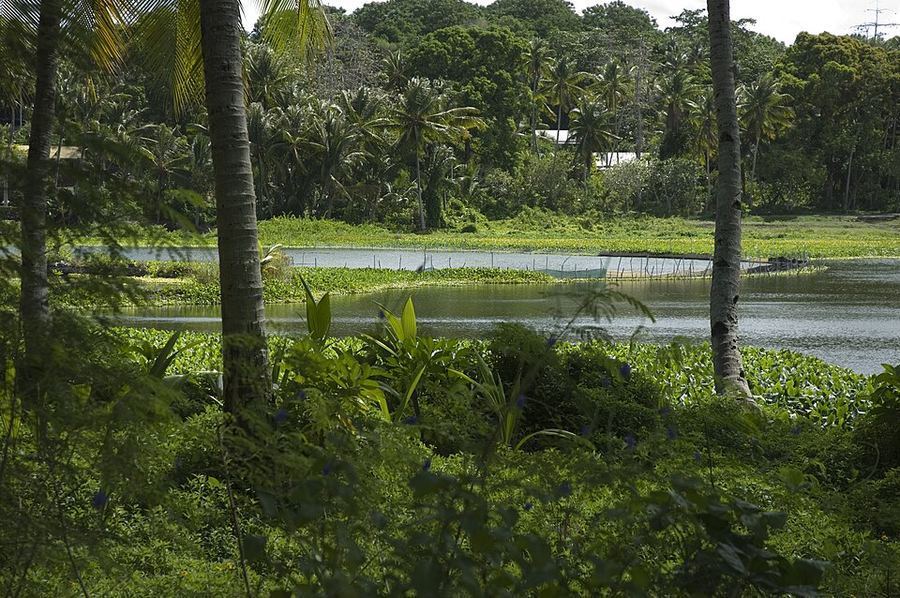
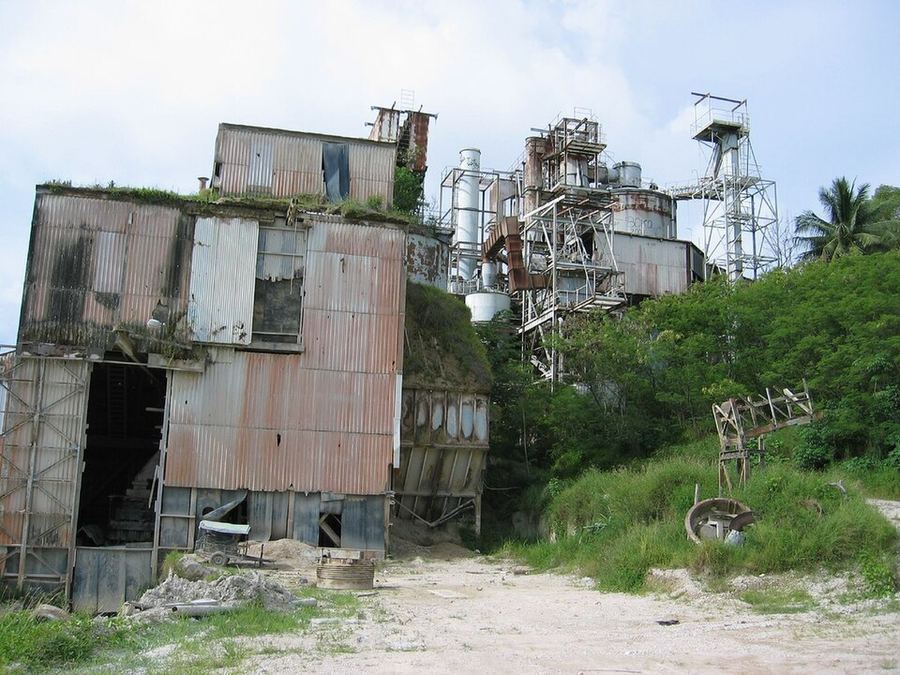
Nauru is a raised coral island — an uplifted atoll capped with phosphate rock — roughly oval and only about six kilometres across at its widest. A narrow fertile coastal belt, a few hundred metres wide, carries almost the entire population, the airport, the harbour and the ring road; behind it a low limestone escarpment rises to the central plateau known as Topside, which reaches around sixty-five metres at Command Ridge. Topside was the phosphate field, and roughly four-fifths of the island's surface has been mined out, leaving a landscape of bare coral pinnacles between which the original soil was stripped away — an environmental transformation of a scale few countries have experienced, and one that rehabilitation programmes have only begun to address. There are no rivers or streams. Buada Lagoon, a brackish inland pond, is the only significant standing water, and fresh water comes from rainwater catchment and desalination, leaving the island acutely exposed to drought. The climate is equatorial: hot, humid and dominated by a westerly monsoon season from about November to February, with rainfall that varies dramatically from year to year with the El Niño cycle. Sea-level rise, coastal erosion and coral bleaching are the principal long-term threats.

Entertainment

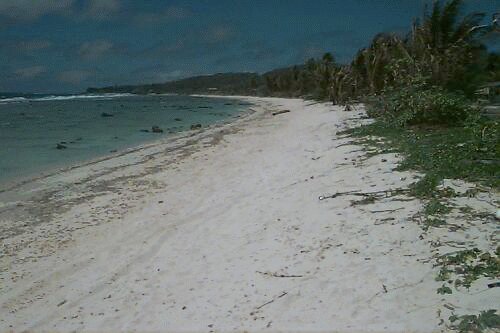
Leisure on Nauru is shaped by the island's size — every place is within a short drive on the ring road — and by the sea. Fishing is both livelihood and pastime, from the reef edge, from small boats beyond it, and from the harbour, and the evening catch is a social occasion as much as a food-gathering one. Anibare Bay, with the island's best beach, is the main swimming and picnic spot, and family gatherings on the sand around a barbecue are the standard weekend. Church activities — services, choir practice, youth and women's groups — occupy a substantial part of social life. Sport is the other pillar: Australian rules football is played and followed with real intensity, and weightlifting has an outsized presence for a population of ten thousand, with the national gym a genuine community institution. Volleyball, basketball, softball and touch rugby fill out the recreational calendar, and school and inter-district competitions draw crowds. Circumnavigating the island by car or on foot is a common evening activity. Angam Day and Independence Day bring the year's largest public celebrations, with feasting, dance performances, sports competitions and district-based contests.
Encyclopaedia BritannicaCommonwealth Games Federation

Art & Museums

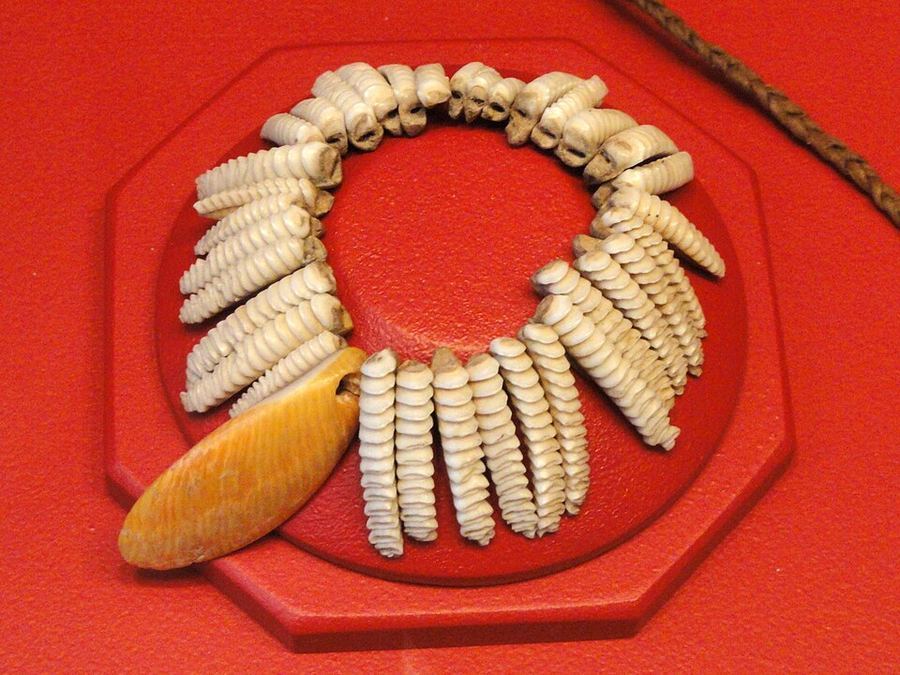
Nauru's visual tradition is functional and fibre-based rather than pictorial. The principal art form is weaving: pandanus leaf split, dried and worked into mats, baskets, fans, hats and the fringed skirts used in dance, with fineness of weave and regularity of pattern the marks of quality, and the best mats treated historically as items of value and exchange. Shell, coconut and seed ornament — necklaces, headbands and armbands — accompanies it, and the frigatebird, central to Nauruan tradition, recurs as a motif. Carving is limited by the absence of large timber on a coral island, but canoe building was a skilled craft, and functional objects — fishing gear, containers, bird-catching equipment — were made with considerable care. There is no historical tradition of monumental sculpture, painting or temple architecture of the kind found in larger Pacific societies, and Nauru's small population has not supported a professional contemporary art scene; artistic production today is largely community-based, taught in schools and church groups and displayed at Angam Day and Independence Day. The most significant Nauruan visual material held abroad consists of ethnographic collections of weaving and ornament gathered during the German and Australian administrations.

Notable People

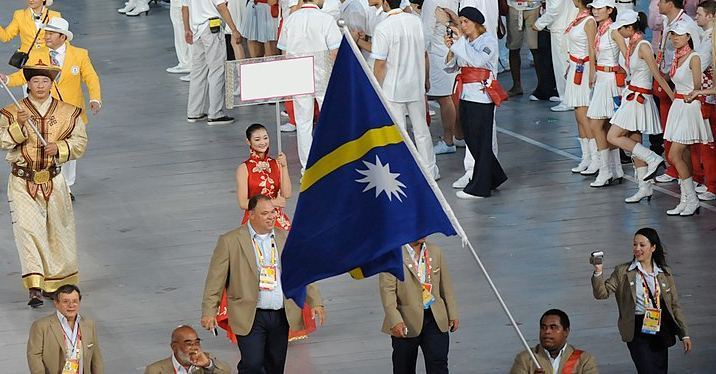
Hammer DeRoburt is the founding figure of the modern state: head chief under the trusteeship, leader of the negotiations that produced independence in 1968, and Nauru's first President, he also drove the 1970 purchase of the phosphate industry from the British Phosphate Commissioners and pressed the case for compensation over the mining damage done before independence. Marcus Stephen is the country's best-known figure internationally, a weightlifter who won multiple Commonwealth Games gold medals in the 1990s and carried Nauru's flag at the Olympic Games before entering politics and serving as President from 2007 to 2011, using the office to argue that climate change was a security issue for small island states. Baron Waqa, President from 2013 to 2019, went on to become Secretary-General of the Pacific Islands Forum, giving a Nauruan the leadership of the region's principal political body. Reanna Solomon, another Commonwealth Games weightlifting medallist, was among the athletes who established the sport's prominence on the island. Given a population of about ten thousand, Nauru's national record of producing world-level weightlifters and regionally significant political figures is disproportionate to its size.
Encyclopaedia BritannicaCommonwealth Games FederationIOC

Inventions & Breakthroughs

Nauru has no industrial or research base and makes no claim to technological invention, but it developed two subsistence techniques of genuine ingenuity that are specific to the island. The first is the raising of ibija, or milkfish, in Buada Lagoon and inland brackish ponds: fry caught at sea were transferred inland and grown to eating size, producing a reliable protein supply on a raised coral island with no rivers and no arable interior — an unusual solution to a very particular constraint, and a rare Pacific example of inland fish farming. The second is the traditional catching and taming of seabirds. Nauruans caught noddies at dusk using thrown lines and, more remarkably, tamed frigatebirds, keeping them on perches and using their homing behaviour, a practice recorded by early European visitors and closely bound up with Nauruan identity. Beyond these, the island's most consequential technical activity has been extractive rather than inventive: a century of open-cast phosphate mining, and more recently the country's decision to sponsor exploration for deep-sea polymetallic nodules in the Pacific, which has placed a state of ten thousand people at the centre of an international regulatory argument about seabed mining.

Science & Technology

Nauru's scientific and technical concerns are dominated by the consequences of phosphate mining and by the vulnerability of a low, water-scarce island. Roughly four-fifths of the land surface was stripped to bare coral pinnacles over a century of open-cast extraction, and rehabilitation — crushing and levelling pinnacles, rebuilding soil, re-establishing vegetation and identifying uses for reclaimed Topside land — is the country's largest long-term engineering project, pursued with international support. Water technology is equally central: with no rivers and unreliable rainfall, the island depends on rainwater catchment and on desalination plants, and drought planning is a standing government function. Energy has followed the same logic, with solar generation installed to reduce dependence on imported diesel for electricity and desalination alike. Fisheries science matters commercially, since licence fees for tuna caught in Nauru's exclusive economic zone are now a principal revenue source and are managed collectively with other Pacific states. Health research and surveillance focus on the country's exceptional burden of obesity, type 2 diabetes and kidney disease. Most recently, Nauru's sponsorship of deep-sea nodule exploration has drawn the island into the scientific and regulatory argument over the ecological effects of seabed mining.
On The World Stage

Champions & Defining Moments

Nauru's international sporting reputation rests almost entirely on weightlifting. Marcus Stephen won gold medals across several Commonwealth Games in the 1990s, an extraordinary return for a country of this size, and Reanna Solomon and other Nauruan lifters added further Commonwealth medals; the Commonwealth Games have consistently been the arena in which Nauru is competitive at world level. The country has competed at the Olympic Games since 1996, entering athletes principally in weightlifting and occasionally in judo and athletics, and has not won an Olympic medal; simply qualifying and appearing has been treated as a national achievement, and Nauruan flagbearers have used the platform to raise the vulnerability of low-lying island states. At regional level Nauru competes in the Pacific Games and the Pacific Mini Games, where it has been more successful, again chiefly in weightlifting. Australian rules football, though the national sport, offers no international competitive structure of consequence, so it does not translate into global visibility. The persistent constraints are population and cost: a national talent pool of a few thousand people of competition age, and airfares from a remote equatorial island to almost anywhere.

Commonwealth Games FederationIOC
Economy, Trade & Government

Currency & GDP

Australian Dollar — AUD ($)

GDP (PPP): $150.581 million (2024 est.)

Per capita: $12,600 (2024 est.)

Exports

$64.931 million (2023 est.)

fish, phosphates (2023)

Partners: Thailand 78%, Philippines 11%, NZ 5%, Japan 1%, Canada 1% (2023)

Imports

$150.193 million (2023 est.)

ships, titanium ore, refined petroleum, plastic products, other foods (2023)

Partners: Australia 50%, Japan 11%, Fiji 9%, Senegal 9%, China 9% (2023)

Government

Type: parliamentary republic

Independence: 31 January 1968 (from the Australia-, NZ-, and UK-administered UN trusteeship)

Terrain → Where People Live

How mountains, coasts, and rivers shape settlement (LandScan).

Coming — data

Migration & Ethnic Settlement

Where groups settled and how people move (GeoEPR + UNHCR).

Coming — data

Universities

Notable institutions, mappable as points.

Coming — data
Economy & government facts: CIA World Factbook (public domain), via OpenFactBook / factbook.json.
Every fact and narrative claim will carry a visible source citation. Data-driven sections light up automatically wherever HERA has coverage.