HERA · Human Entity Reference Atlas by Masego Inc

← Oman 🌐 3D View
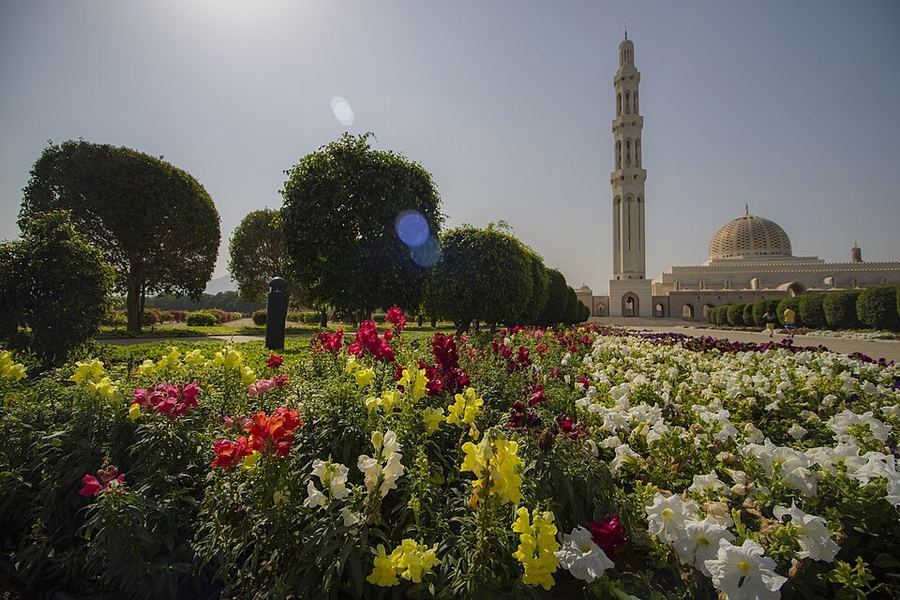
Sultan Qaboos Grand Mosque Muscat 06, Oman
Oman OMN
Sultan Qaboos Grand Mosque Muscat 06 — Photo: Rrburke / CC BY-SA 4.0 via Wikimedia Commons
Did You Know Oman is the only country in the world where Ibadi Islam is the dominant school — a tradition distinct from both Sunni and Shia Islam, and one often credited with shaping the country's neutral foreign policy. — Encyclopaedia Britannica

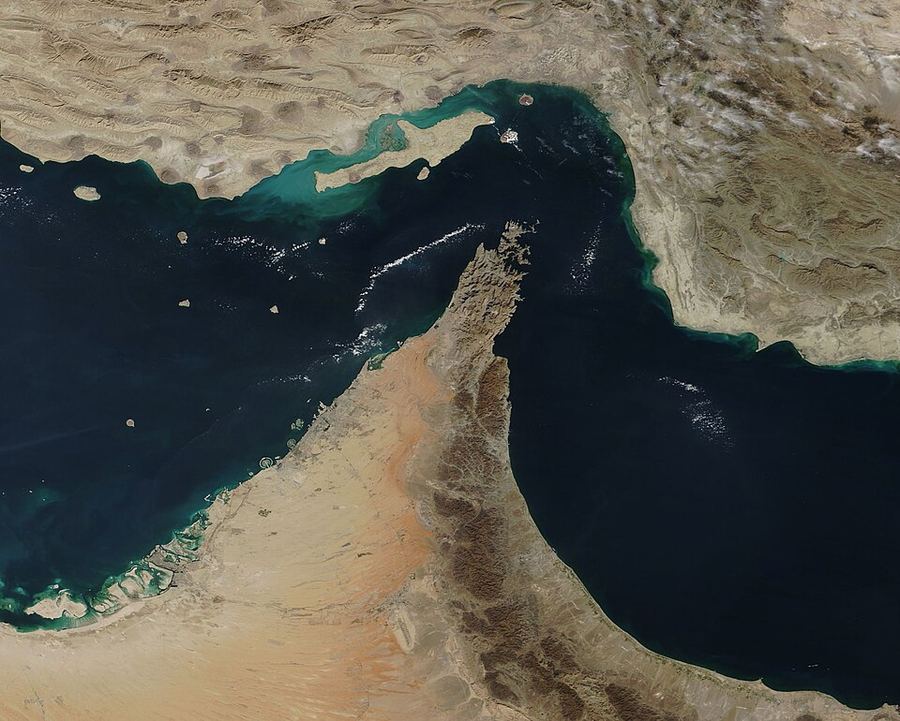
Oman occupies the south-eastern corner of the Arabian Peninsula, with about 3,000 kilometres of coastline facing the Gulf of Oman and the Arabian Sea and a detached northern exclave, Musandam, commanding the Strait of Hormuz. It is an absolute monarchy under Sultan Haitham bin Tariq, who succeeded Sultan Qaboos bin Said in January 2020 after the latter's fifty-year reign, and its population of roughly four million includes a very large expatriate workforce drawn mainly from South Asia. Muscat, the capital, sits between the Hajar Mountains and the sea. Oman's history is maritime and unusually independent: it dates its national day of independence to 1650, when Portuguese garrisons were expelled from its coastal forts, and it went on to build an Indian Ocean empire that reached Zanzibar and the East African coast. It is also the only country where Ibadi Islam, a school distinct from both Sunni and Shia traditions, is dominant — a fact reflected in a foreign policy of studied neutrality that has made Oman a mediator between adversaries in the region. The economy rests on crude oil, refined products and natural gas, with China taking well over a third of exports, and diversification into logistics, tourism and green hydrogen is the central national project.

CIA World FactbookEncyclopaedia Britannica
Population
3,969,824
Capital
Muscat
Currency
None OMR
Time zones
Largest city
Muscat
Human Geography Themes
Loading national figures…
Largest Cities
Muscat734,542
Seeb604,497
Salalah247,073
Sohar139,036
Al Amerat91,450
Dahariz park89,024
Barka70,219
Ibri56,884
In Perspective

Muscat's urban core is home to about 734,542 people.

Among the world's megacities, though, it's one of many — the giants of Asia and Latin America run larger still:

Muscat734,542
Jakarta40,545,126
Dhaka37,307,160
Tokyo33,244,670
Shanghai30,678,616
Cairo25,230,325
The Country & Its People

History

Oman's recorded history begins in the Bronze Age, when the region was almost certainly the land Mesopotamian texts call Magan and supplied Sumer with copper; the tombs and settlements at Bat, Al-Khutm and Al-Ayn survive from that era. In the south, the Dhofar coast grew rich on frankincense, exported to Egypt, Mesopotamia, Greece and Rome from ports whose ruins at Sumhuram and Al-Baleed are now protected. Oman accepted Islam in the seventh century without conquest, and Ibadism took root and became the dominant school. Portuguese forces under Afonso de Albuquerque seized Muscat in 1507 and held coastal positions until the Ya'ariba imams expelled them in 1650 — the date Oman marks as the beginning of its independence. The Al Bu Said dynasty, founded by Ahmad bin Said in 1744 and still reigning, built a maritime empire that took Zanzibar, Mombasa and holdings on the Makran coast; Said bin Sultan moved his court to Zanzibar in 1840, and the realm split into separate Omani and Zanzibari sultanates in 1856. The twentieth century brought the Jebel Akhdar war between sultan and imamate in the 1950s and the Dhofar rebellion from 1963. In 1970 Qaboos bin Said deposed his father and opened a fifty-year programme of modernisation.
Culture

Omani culture is conspicuously reserved and courteous, and Ibadi Islam — pragmatic, tolerant of difference and historically resistant to sectarian confrontation — shapes public temperament as much as private observance. The dominant social unit is the extended family and the tribe, and the majlis, a reception room where men gather to talk and settle matters, remains the basic institution of local life. Hospitality is formalised: guests are received with kahwa, coffee cut with cardamom served in small handleless cups, accompanied by dates and the dense, fragrant sweet called Omani halwa, and the host refills the cup until the guest shakes it. National dress is worn universally by Omani men rather than reserved for ceremony, and is a visible marker of the country's insistence on its own identity. Ramadan and the two Eids structure the year, with Eid al-Adha the great occasion for the slow-cooked meat feast of shuwa. In Dhofar the khareef, the summer monsoon that turns the mountains green, brings its own festival season and draws visitors from across the Gulf. Regional cultures differ markedly — the mountains of the interior, the Batinah coast, the Sharqiya desert, the Musandam peninsula and Dhofar all have distinct dialects, dress and custom.

Points Of Pride

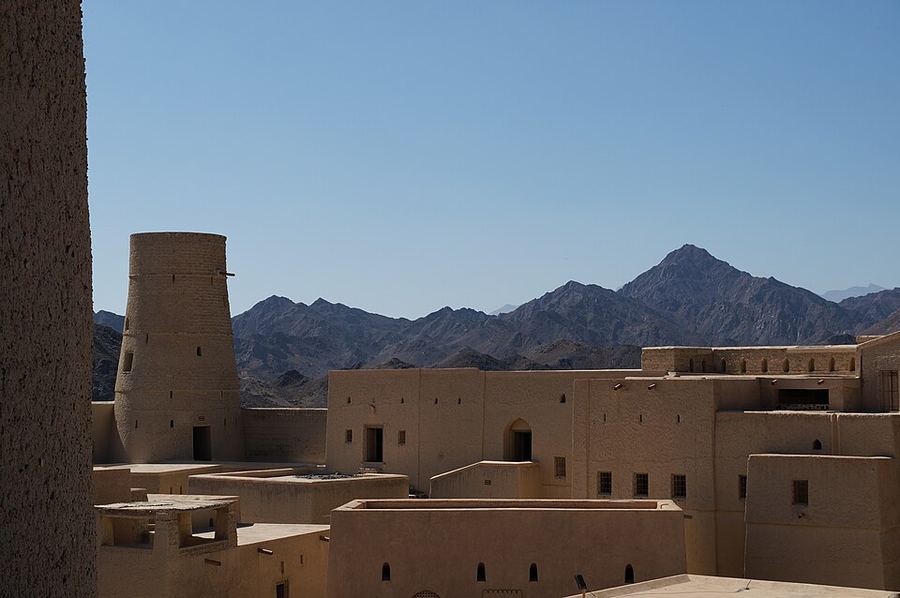
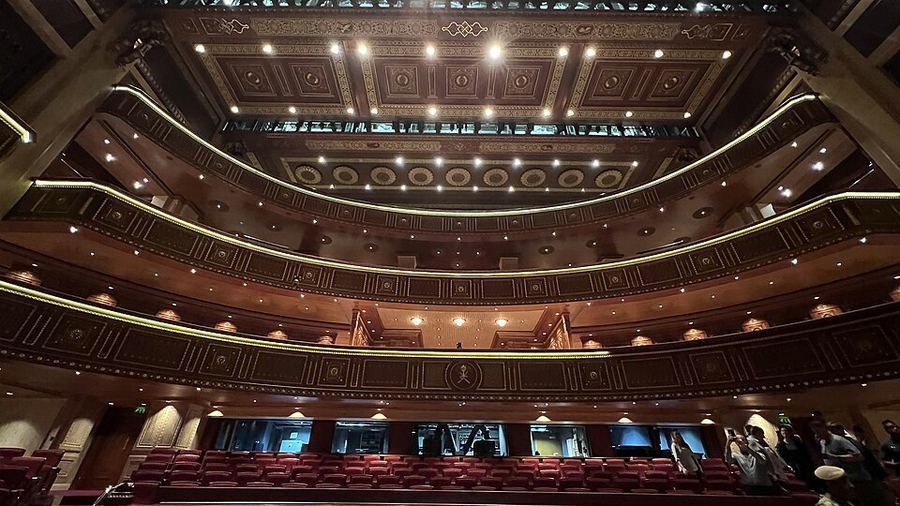
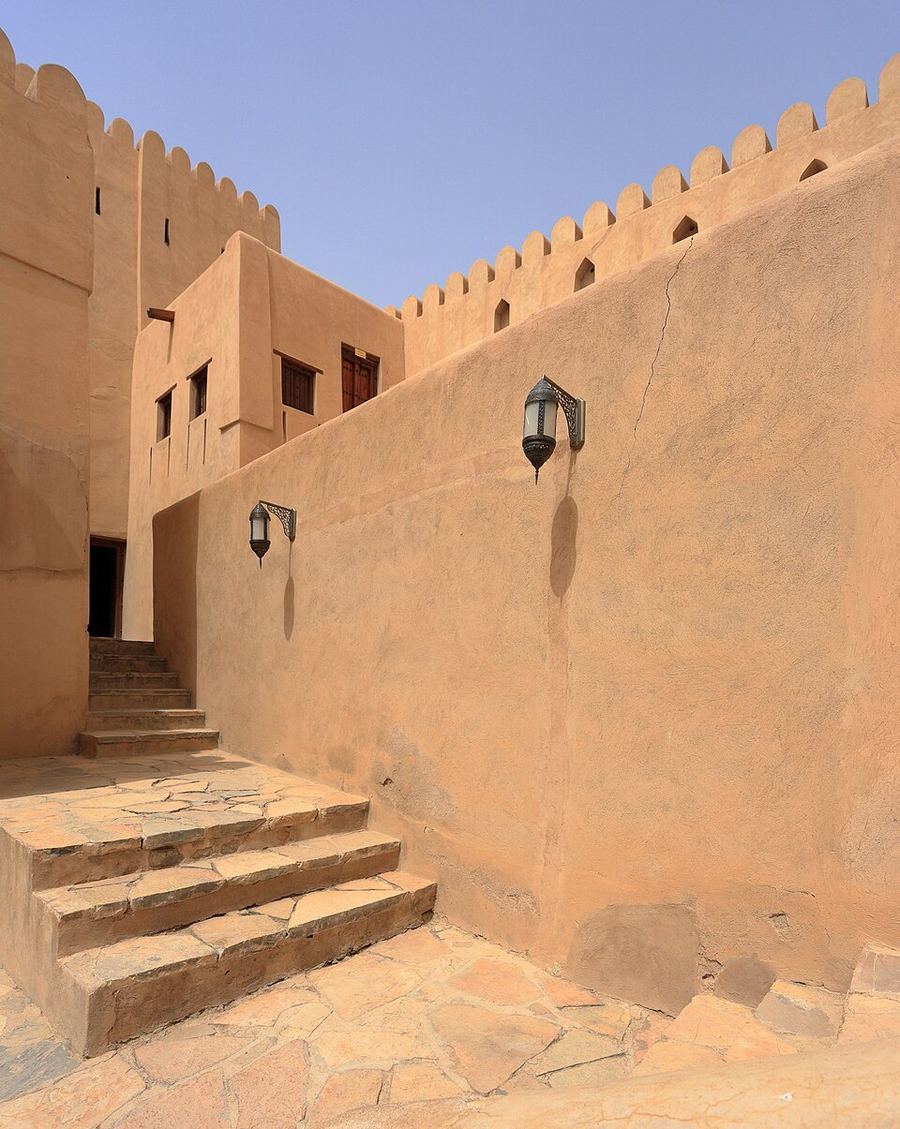
Omanis take pride in a history of independence unusual on the Arabian Peninsula: coastal forts were held by the Portuguese for well over a century, but the country was never a colony, and the expulsion of 1650 is treated as a national founding. The maritime empire that followed — reaching Zanzibar, the East African coast and the Makran shore — is the second source of pride, and the ports of Sur and Sohar keep the memory of the dhow trade alive. Ibadism itself is cited as a national distinction, and the country's record as an honest broker between rival powers is regarded as its diplomatic signature. UNESCO has inscribed five Omani World Heritage sites: the Bronze Age settlements and necropolis at Bat, Al-Khutm and Al-Ayn; the Land of Frankincense in Dhofar; Bahla Fort; the aflaj irrigation systems; and the ancient city of Qalhat. The country's forts and castles — Nizwa with its great round artillery tower, Jabrin, Nakhal, Rustaq — number in the hundreds. The Sultan Qaboos Grand Mosque in Muscat, with one of the world's largest handwoven carpets, and the Royal Opera House, the first on the Arabian Peninsula, are the emblems of the modern era.

Cultural Fusion

Oman is more visibly mixed than its neighbours, and the mixing is a direct legacy of empire. The Zanzibar connection means that Swahili is spoken as a first language by a substantial community of Omanis whose families returned from East Africa, particularly after the Zanzibar revolution of 1964; their cooking, music and dialect are recognisably distinct, and East African rhythms are audible in Omani popular and ceremonial music. Baluchi speakers, whose ancestors came from the Makran coast that Oman ruled — including Gwadar, held until it was transferred to Pakistan in 1958 — form another long-established community, historically prominent in the armed forces. Indian merchant families have traded in Muscat for centuries: the Shia Lawatiya community has its own quarter in Matrah, and the Hindu temples of Muscat are among the oldest in the Gulf, serving Bania families settled there for generations. Persian influence runs through architecture, food and language along the northern coast. Layered onto all of this is a modern expatriate workforce, largely Indian, Pakistani and Bangladeshi, which accounts for the country's substantial Hindu and Christian minorities and for the ubiquity of Urdu and Malayalam in commercial life.

Music & Dance

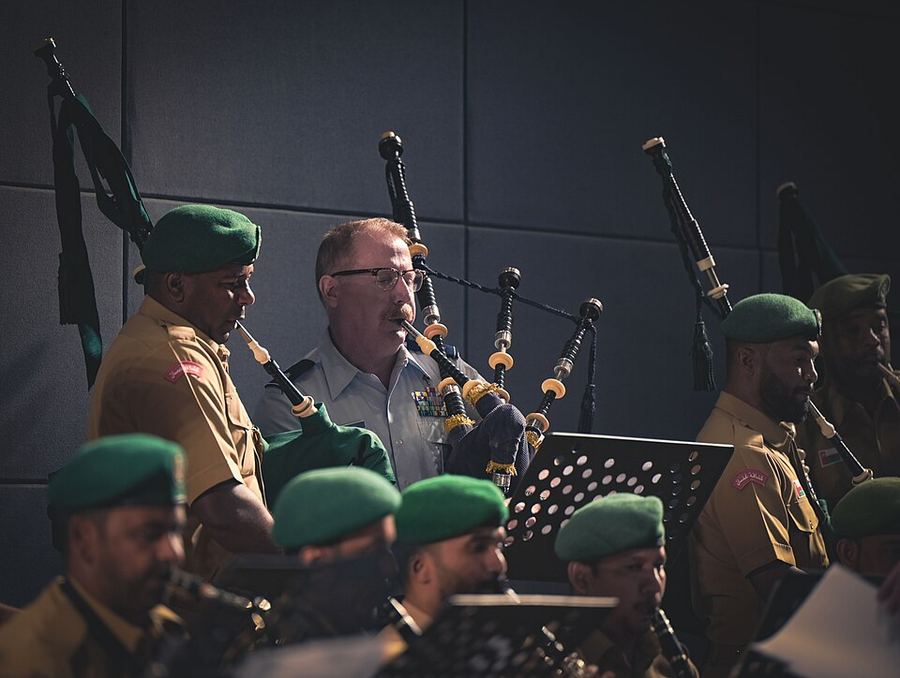
Omani performance is closely tied to occasion — weddings, Eid, the return of a fishing fleet, the reception of a dignitary — and is dominated by drums and sung poetry rather than melodic instruments. Al-'azi is a form in which a poet declaims verse in praise or exhortation while a chorus of men responds, sometimes brandishing swords, and it is inscribed by UNESCO as intangible cultural heritage. Al-bar'ah, the war dance of the Dhofar mountains, has a similar status: two men with khanjars step in a tight circle to drumming and clapping in a display of skill and restraint, watched by a semicircle of singers. The razha combines poetry contest with sword display and mock combat. Along the coast the East African inheritance is unmistakable, with heavier drumming and call-and-response singing that arrived through the Zanzibar connection, alongside Gulf-wide sea-shanty traditions sung by dhow crews. Bedouin chanted poetry of the al-taghrooda type, performed while riding, is recognised by UNESCO as shared heritage with the United Arab Emirates. In the modern era Sultan Qaboos founded both the Oman Centre for Traditional Music, to record and preserve these forms, and the Royal Oman Symphony Orchestra, an unusual institution in the region.

Cuisine & Misattributed Foods

Omani cooking is milder and more fragrant than the food of the Gulf states to its north, shaped by the spice routes that ran through its ports — cardamom, saffron, dried lime, turmeric and rosewater are its defining flavours. The ceremonial dish is shuwa: goat, lamb or camel rubbed with a paste of spices, wrapped in banana or palm leaf and buried in a stone-lined pit oven for a day or two, then unearthed for Eid and shared between families. Majboos, spiced rice cooked with meat and dried lime, is the everyday festive dish, and harees, wheat and meat pounded to a smooth porridge, is a Ramadan staple. On the coast, fish dominates — kingfish, tuna and shark are grilled, dried as maqdeed, or served as mashuai, whole roast kingfish with lemon rice. Rukhal, a paper-thin bread baked over a flame, accompanies almost everything. Omani halwa is the national sweet and a serious craft: semolina or starch cooked slowly with sugar, ghee, rosewater, saffron and nuts to a dense, glossy paste, offered with kahwa to every guest. Dates are cultivated in enormous variety and irrigated by aflaj channels, and Oman's frankincense and rosewater are used in cooking as well as in perfume.

National Dress

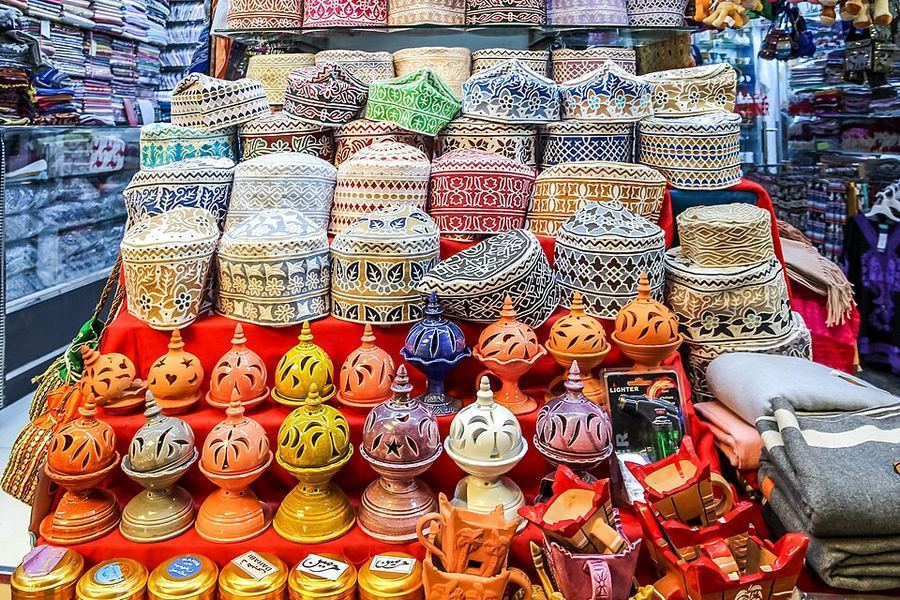
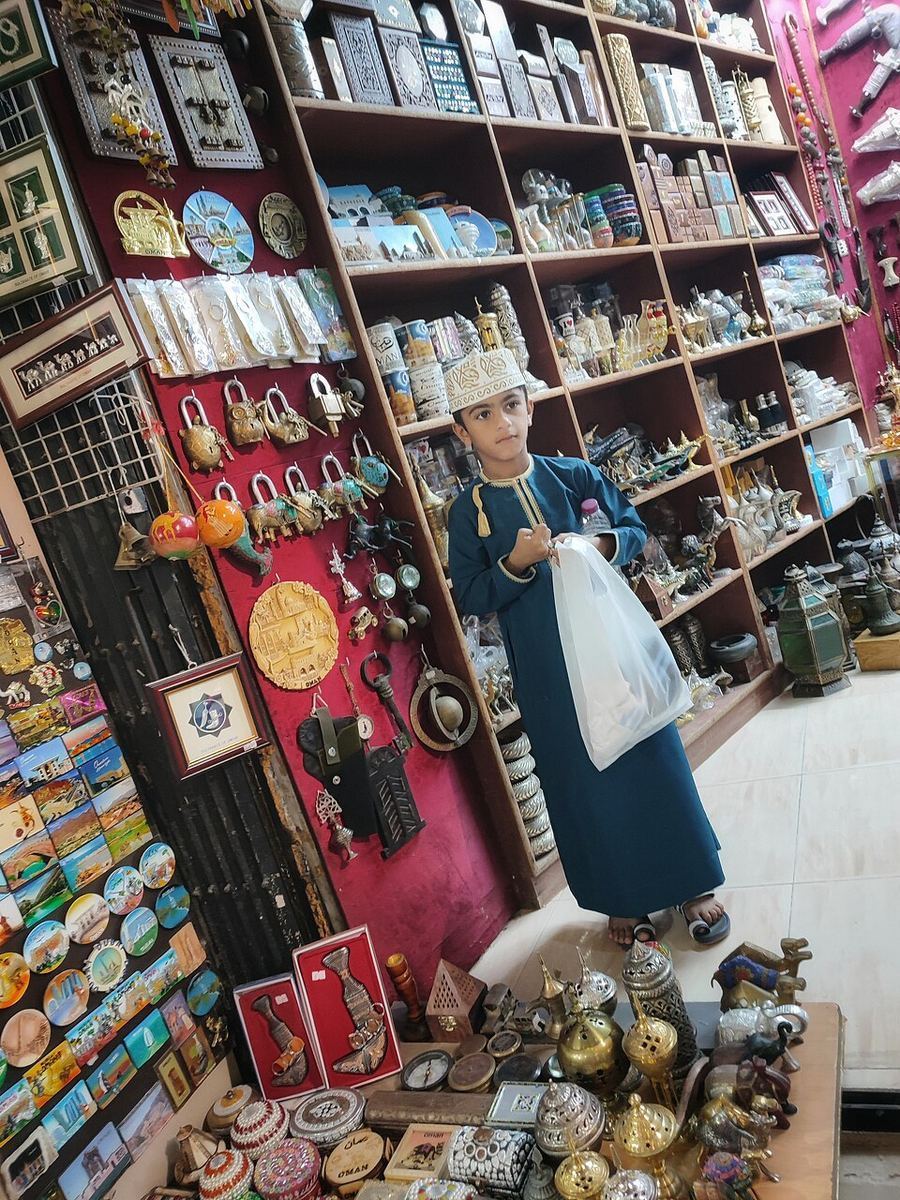
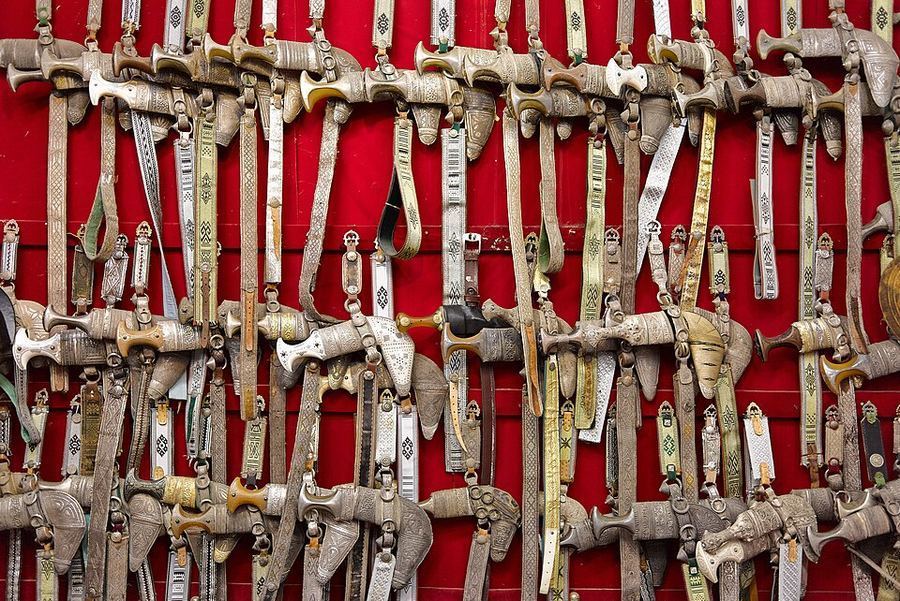
Omani national dress is worn as everyday clothing rather than as costume, and it is one of the clearest expressions of national identity in the country. Men wear the dishdasha, an ankle-length collarless robe, usually white but also in soft colours, distinguished from those of neighbouring states by the furakha — a tassel at the neck, traditionally scented with perfume or oud. On the head, the kummah is an embroidered brimless cap worn daily, while formal occasions call for the massar, a length of finely woven wool or cotton — much of it Kashmiri — wound into a turban whose style signals region and personal taste. For ceremony a man adds the khanjar, the curved silver-sheathed dagger worn at the front of a belt, which appears on the national emblem and the flag and remains a genuine object of craftsmanship and inheritance; a bisht, a fine cloak trimmed with gold, completes formal dress. Women's dress varies sharply by region: the Dhofari, Bedouin, Batinah and mountain styles differ in cut, colour, embroidery and headwear, typically comprising a long tunic over trousers with a head covering, and Omani women's regional costume is among the most colourfully varied in the peninsula.

Sports & Inspiring Athletes

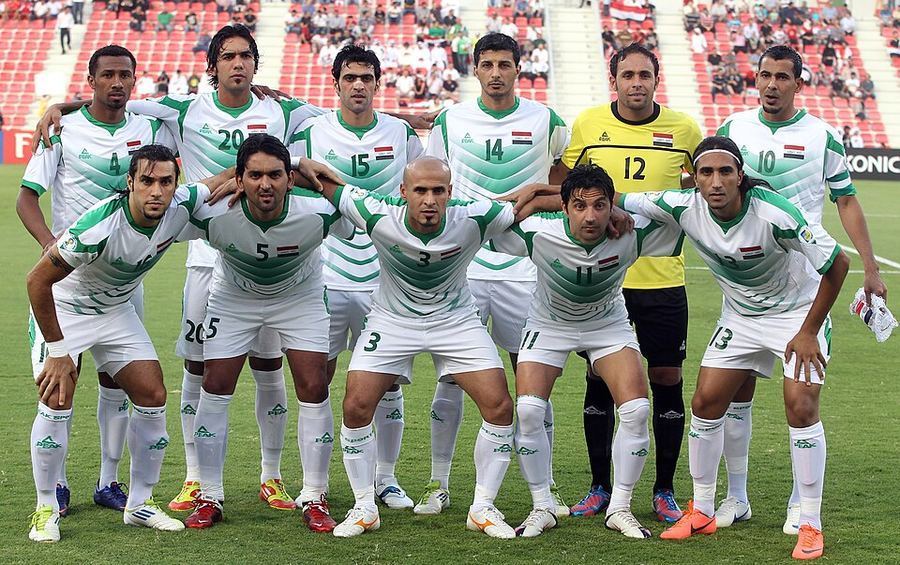
Football is Oman's dominant sport by participation and audience. The Oman Professional League feeds a national team that has been a consistent force in Gulf competition, winning the Arabian Gulf Cup in 2009 and again at the end of 2017, and the country's stadiums in Muscat and Salalah fill for regional fixtures. Cricket has grown rapidly on the strength of the large South Asian population and the national side's rise: Oman holds Twenty20 international status, has qualified for global tournaments, and co-hosted the opening round of the men's T20 World Cup in 2021 at the Al Amerat ground near Muscat. Sailing has been deliberately built as a national sport through the Oman Sail programme, which revived a maritime tradition that had lapsed and has put Omani crews into international offshore and multihull racing. Traditional sports retain real followings: camel racing across the Sharqiya, Arabian horse racing, and the bull-butting contests of the Batinah coast, where bulls are matched against each other in a non-lethal pushing competition. Volleyball, handball, athletics and shooting are organised nationally, and cycling has a growing base supported by an international stage race held in the country.

Notable Educational Programs

Oman's educational transformation is among the most rapid recorded anywhere. At the accession of Sultan Qaboos in 1970 the country had only a handful of schools, teaching a few hundred boys and no girls, and adult literacy was very low; within a generation schooling had been extended nationwide to both sexes, and literacy among younger Omanis is now near universal, with women outnumbering men in higher education. Sultan Qaboos University, opened in the late 1980s near Muscat, is the flagship public institution and covers medicine, engineering, agriculture, science and Islamic studies; the University of Nizwa, the German University of Technology in Oman and a growing set of private colleges and applied-science colleges have broadened provision, and many Omanis still study abroad on government scholarships. Technical and vocational training has been given increasing weight under the Vision 2040 development framework, which links education policy directly to the objective of replacing expatriate labour with Omani workers across the economy. The persistent challenges are the mismatch between graduate qualifications and private-sector demand, and youth unemployment in a population where a large share is under thirty.

Wars & Conflicts

Oman's last internal conflicts ended nearly half a century ago. The Jebel Akhdar war of the 1950s pitted the Sultan, supported by Britain, against the imamate of the interior and ended with the imamate's defeat and the unification of the country under Muscat's authority. The Dhofar rebellion, which began in 1963 and drew in a Marxist movement backed from South Yemen, was the more serious struggle; it was defeated by 1976 through a combination of military campaign, British and Iranian assistance and — decisively — an amnesty-and-development programme launched after Qaboos took power in 1970, which is often cited as a model counterinsurgency settlement. Since then Oman has fought no wars. Its defining strategic posture is neutrality: it stayed out of the Saudi-led military coalition in Yemen and instead served as a channel for talks, kept relations with Iran intact through periods of severe regional tension, declined to join the blockade of Qatar, and hosted the secret United States–Iran contacts that led to the nuclear agreement of 2015. It maintains defence relationships with Britain and the United States, including access arrangements at the port of Duqm.
Current as of 2026-08-07

Land & Border Disputes

Oman has no active territorial disputes. Its land boundary with Saudi Arabia was settled by agreement in 1990, and the complicated frontier with the United Arab Emirates — which separates the Musandam exclave from the rest of the country and produces the curiosity of the Madha enclave containing the UAE counter-enclave of Nahwa — was delimited by treaty in 2003, resolving questions that had been unclear since the era of the Trucial States. The maritime boundary with Iran across the Gulf of Oman was agreed in 1974, and boundaries with Yemen were settled in the 1990s. The country's most consequential geographic responsibility is not a dispute but a chokepoint: the shipping lanes of the Strait of Hormuz, through which a large share of the world's seaborne oil passes, run through Omani territorial waters off Musandam, and Oman shares management of the strait with Iran. That position underpins its insistence on neutrality and its unwillingness to align against Tehran. Domestically, Oman is an absolute monarchy in which political parties are prohibited; human rights organisations have raised concerns about restrictions on freedom of expression and association and about the treatment of migrant workers.
Land, Life & Legacy

Land & Climate

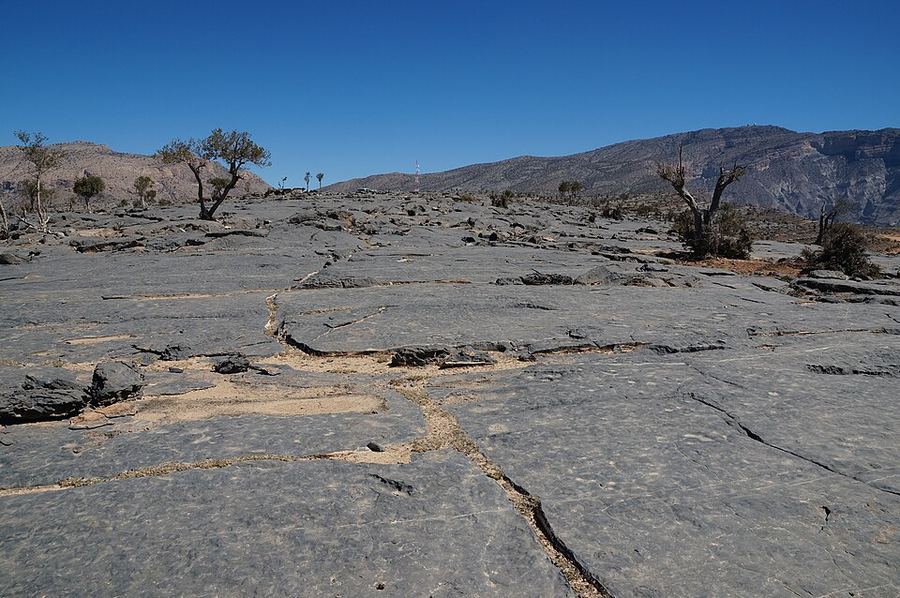
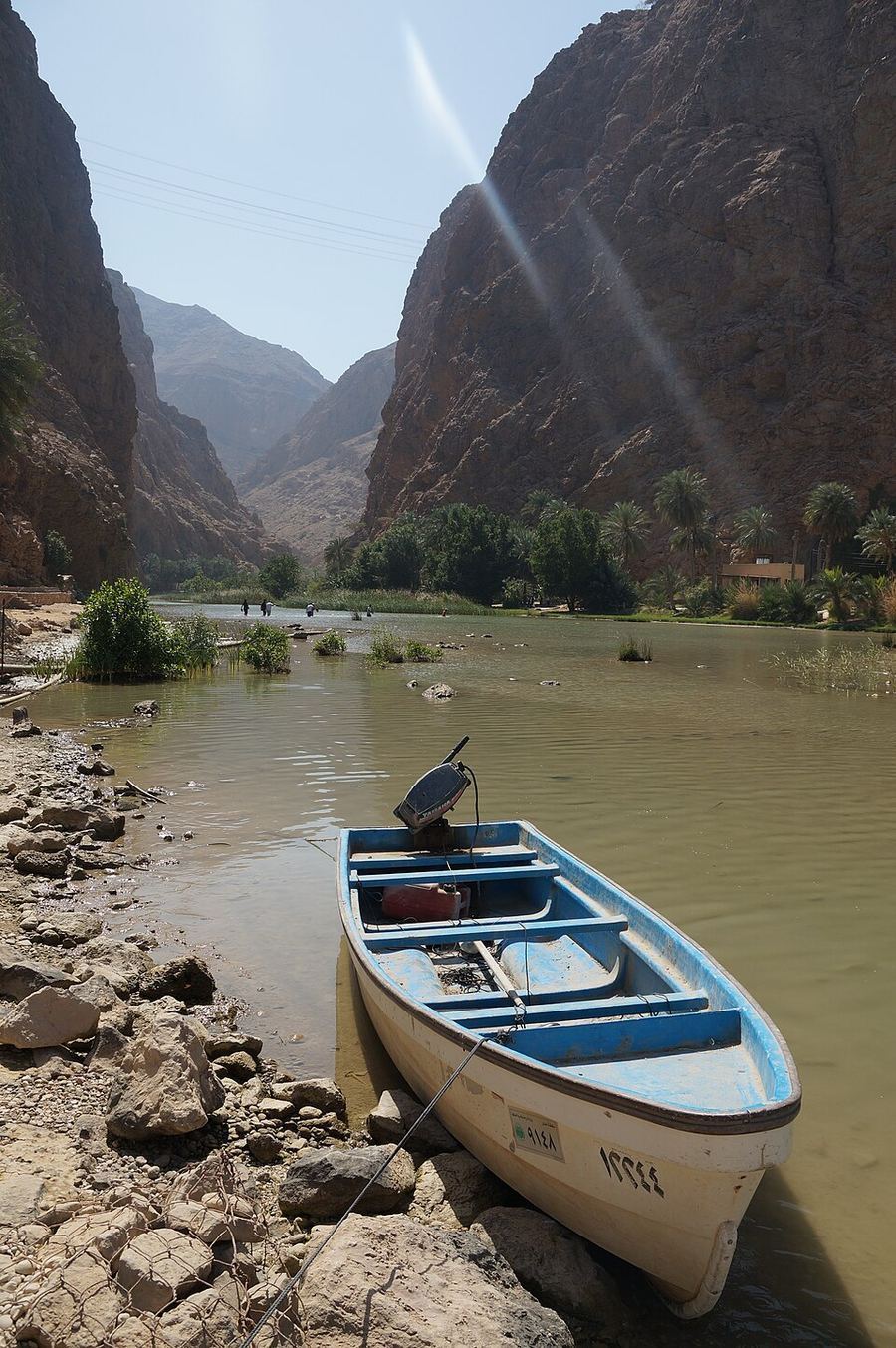
Oman divides into sharply distinct regions. The Hajar Mountains arc across the north, rising to about 3,000 metres at Jebel Shams above a deep canyon, and separate the fertile Batinah coastal plain from the interior oasis towns of Nizwa, Bahla and Ibri. Beyond the mountains the land falls away to gravel plain and then to the sands — the Sharqiya or Wahiba dunes, and further west the edge of the Rub' al Khali, the Empty Quarter. In the far south, Dhofar is geographically and climatically separate: its escarpment catches the south-west monsoon, and the khareef between roughly June and September wraps the hills in cloud and mist and turns them green, a phenomenon found nowhere else in Arabia and the basis of a substantial summer tourism season around Salalah. The Musandam peninsula is an exclave separated from the rest of the country by United Arab Emirates territory, a drowned limestone coastline of steep inlets overlooking the Strait of Hormuz. Oman also holds the small enclave of Madha, itself containing a UAE counter-enclave. The climate elsewhere is hot and arid, extreme in summer along the Gulf coast, and cyclones from the Arabian Sea occasionally make landfall with severe flooding.

Entertainment

Omani leisure follows the seasons and the terrain. The cooler months bring camping, which is close to a national pastime — families drive into the wadis, the dunes of the Sharqiya sands or up into the Hajar Mountains and set up for the weekend — and wadi swimming in the pools of Wadi Shab, Wadi Bani Khalid and Wadi Tiwi is a summer staple. The coast supports fishing, snorkelling and diving, and the beaches at Ras al Jinz are known for nesting green turtles, protected and viewable under supervision. In summer the whole flow reverses and Gulf visitors and Omanis alike travel south to Salalah for the khareef, when the Dhofar hills are green and cool. Traditional sports remain popular in the countryside: camel racing in the Sharqiya, horse racing, and the bull-butting contests of the Batinah coast, in which two bulls push against each other without bloodshed. Social life centres on the majlis, on family visiting, and on the souq — Matrah's covered market in Muscat being the best known. Football fills evenings on every open patch of ground, and Muscat's cafés, malls and the Royal Opera House provide the urban alternative.

Art & Museums

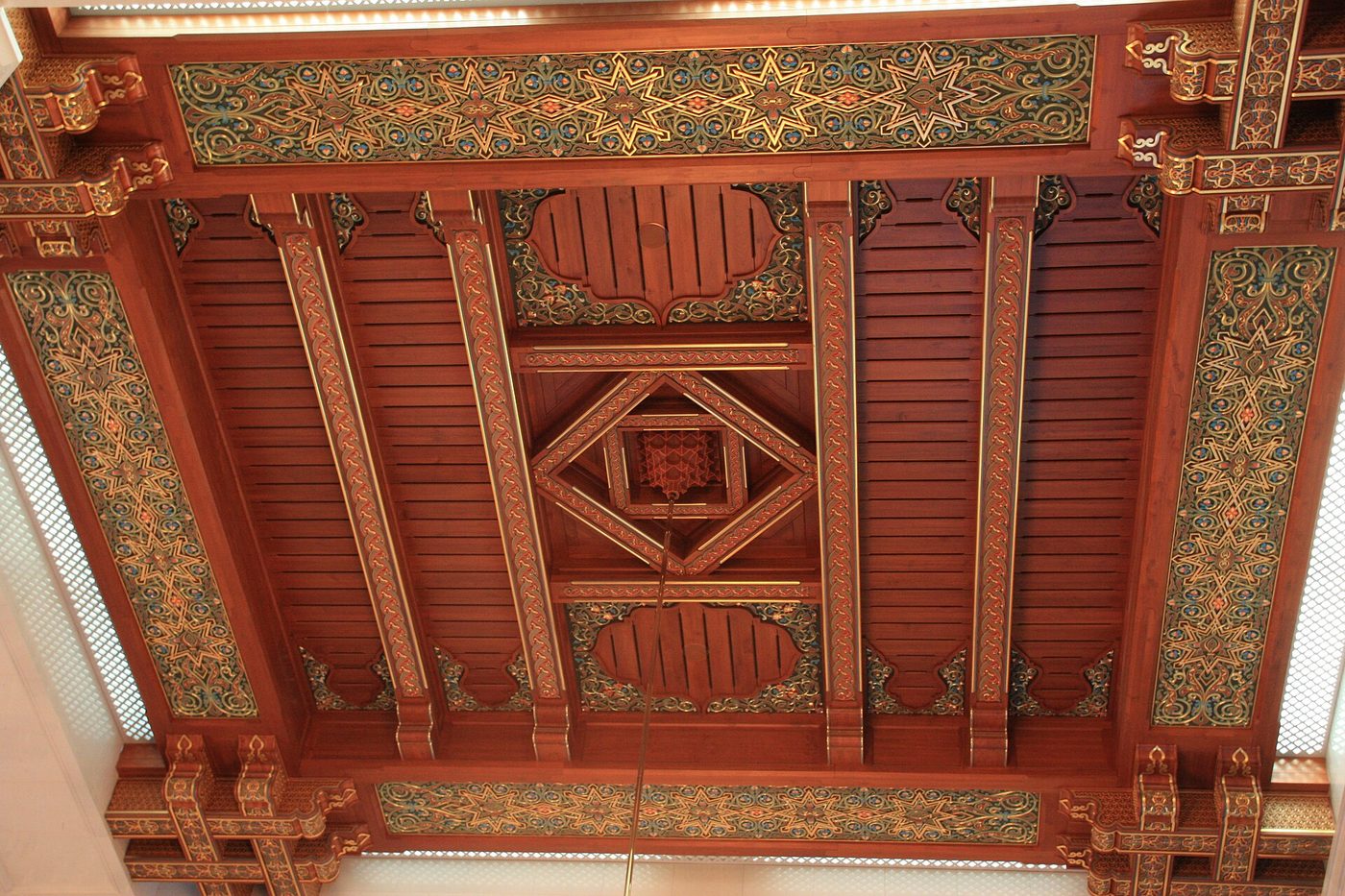
Oman's traditional arts are architectural and metalworking rather than pictorial. Silversmithing is the pre-eminent craft: the khanjar, with its silver-worked sheath and decorated hilt, is the object on which Omani metalworkers concentrated their skill, and Omani silver jewellery — heavy necklaces, hair ornaments, amulet cases and anklets, much of it made in Nizwa and the interior towns — is collected internationally. Building is the other great tradition. Mud-brick and stone forts and watchtowers, numbering in the hundreds, are the country's dominant built form, and Bahla Fort with its surrounding oasis wall is inscribed as a World Heritage site; Nizwa's massive round cannon tower and the ceiling paintings of Jabrin Castle are the finest interiors. Carved wooden doors, chests bound in brass, Bahla pottery, and weaving in wool and palm frond complete the craft repertoire. Frankincense links craft to commerce: the resin tapped from Boswellia trees in Dhofar has been traded for millennia and now supports a modern Omani perfumery industry. Modern painting emerged in the later twentieth century, with Anwar Sonya among its pioneers, and the Royal Opera House and the National Museum in Muscat now anchor a small institutional art scene.

Notable People

The dominant modern figure is Sultan Qaboos bin Said, who took power in 1970 and ruled until his death in January 2020 — a reign that transformed a country with almost no schools, hospitals or paved roads into a modern state, and which also established Oman's role as a regional mediator; he was succeeded by his cousin Sultan Haitham bin Tariq. Ahmad bin Said Al Said, who founded the ruling dynasty in 1744 after expelling Persian forces, and Said bin Sultan, who moved the court to Zanzibar in 1840 and presided over the empire at its height, are the historical figures most invoked. In religion and letters, Abu Muslim al-Bahlani, the late nineteenth- and early twentieth-century Ibadi scholar and poet who worked in Zanzibar, is among the most significant Omani writers. Oman claims Sohar as the home port of the legendary Sindbad, a tradition the country embraces enthusiastically. In modern culture Anwar Sonya is regarded as a pioneer of Omani painting. In sport, the goalkeeper Ali Al-Habsi became the first Omani to play in the English Premier League, with Bolton Wanderers and Wigan Athletic, and remains the country's most internationally recognised athlete.

Inventions & Breakthroughs

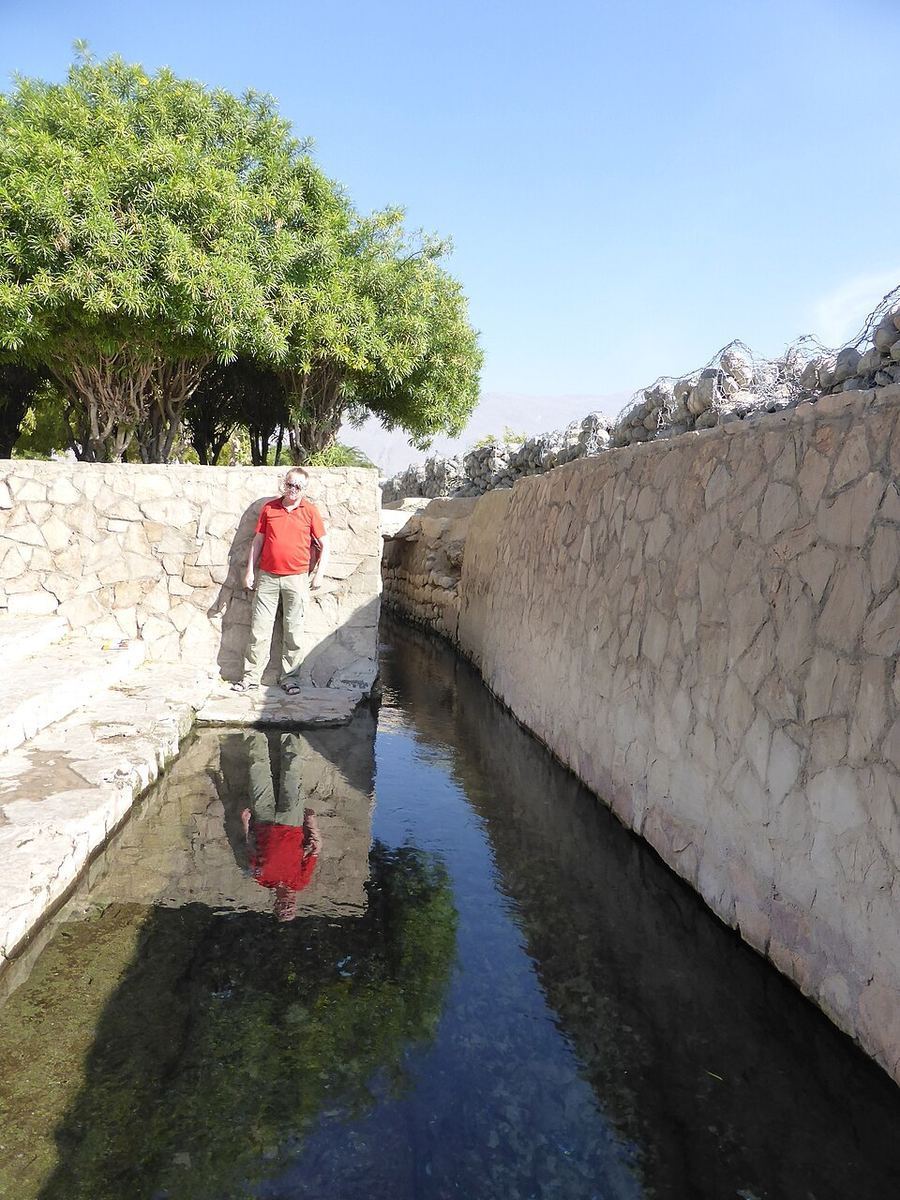
Oman's most significant technical achievement is ancient and still in daily use: the falaj, a gravity-fed irrigation channel that taps groundwater at a mother well and carries it for kilometres, sometimes underground, to fields and settlements, distributing water by timed shares under a customary law administered locally. Thousands of aflaj remain operational, some believed to date back well over a thousand years, and five are inscribed by UNESCO as a World Heritage site; the system made permanent agriculture possible in an arid interior and represents a genuinely Omani solution refined over centuries. The second is maritime. Omani shipwrights at Sur built the sewn and later nailed dhows that carried the Indian Ocean trade, and Omani navigators mastered the monsoon cycle that governed sailing between Arabia, India and East Africa — knowledge that underpinned an empire rather than a single voyage. In the Bronze Age the copper smelting of Magan supplied Mesopotamia, an early industrial capability whose slag heaps survive. Frankincense harvesting and processing in Dhofar is a third traditional technology of long standing. Modern Omani innovation is concentrated in energy engineering, particularly enhanced oil recovery and, more recently, very large green hydrogen projects.

Science & Technology

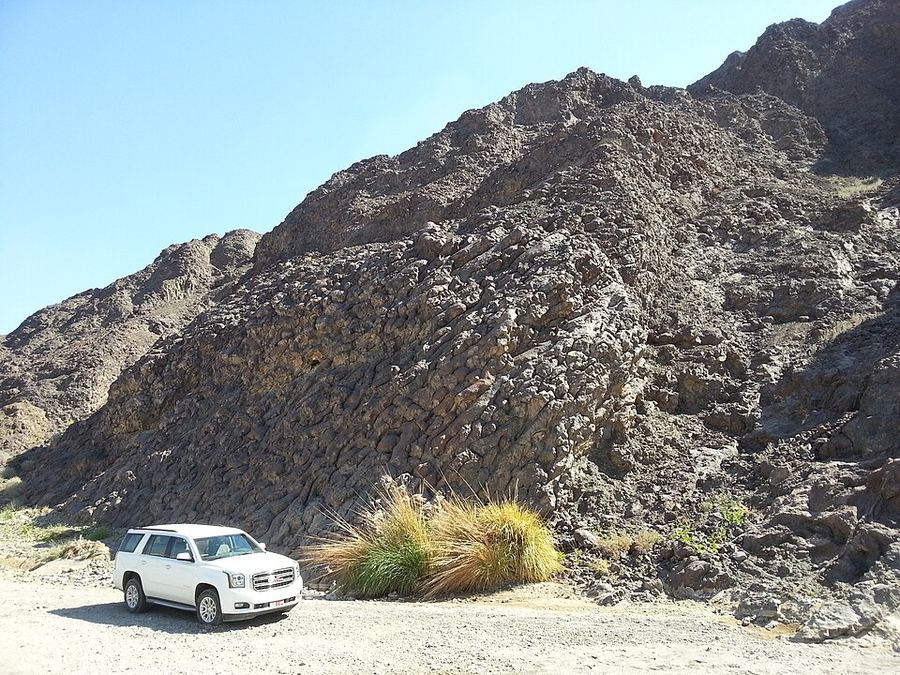
Oman's most distinctive scientific asset is geological. The Semail ophiolite in the Hajar Mountains is the largest and best-exposed slab of oceanic crust and upper mantle thrust onto land anywhere on earth, and it has been a destination for international earth scientists for decades; drilling projects there have examined how the mantle rock reacts with water and carbon dioxide, making Oman a leading natural laboratory for research into permanent carbon mineralisation. Energy research dominates applied science. Enhanced oil recovery in mature fields has driven substantial engineering effort, including one of the region's largest solar-thermal installations built to generate steam for oil extraction, and Oman has committed to very large-scale green hydrogen production in Duqm and Dhofar, allocating extensive land blocks to international developers and positioning hydrogen and ammonia export as a successor to hydrocarbons under the Vision 2040 framework. Water science is a standing national concern: desalination supplies most urban demand, while aquifer management and the maintenance of the ancient aflaj networks remain live technical questions. Sultan Qaboos University anchors research in medicine, marine science and agriculture, and Oman's Arabian Sea fisheries and turtle nesting sites support significant marine biology work.
NatureScienceIEAEncyclopaedia Britannica
On The World Stage

Champions & Defining Moments

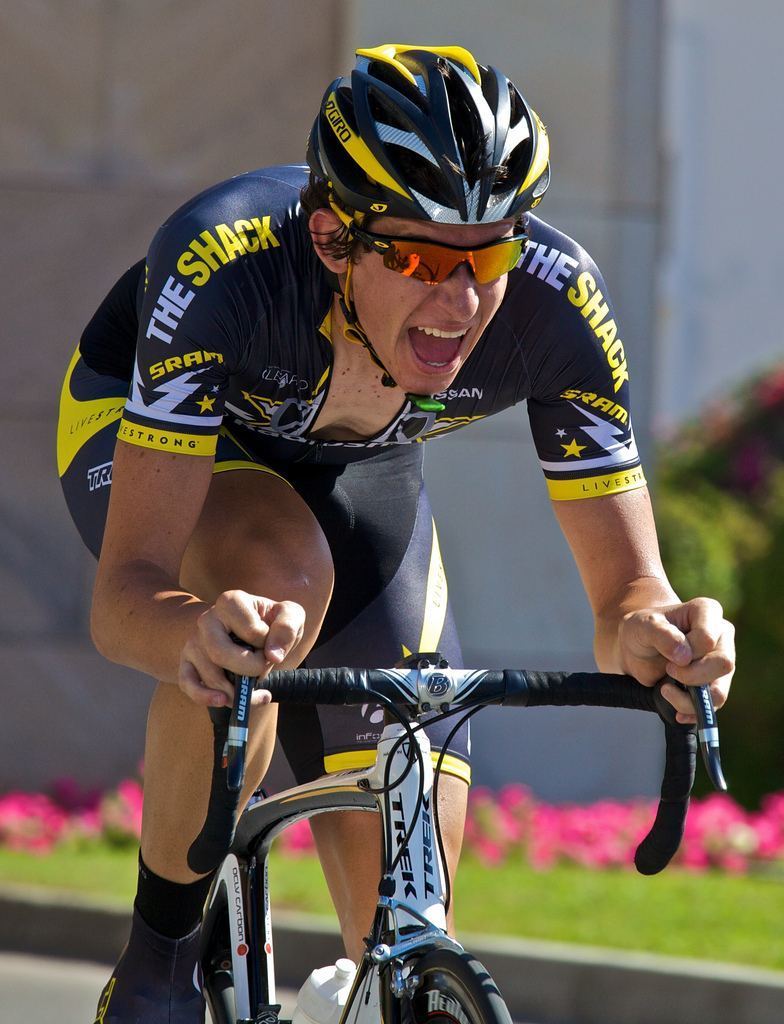
Oman's clearest international sporting successes are regional rather than global. The national football team's two Arabian Gulf Cup titles, in 2009 and at the turn of 2017–18, are the country's most celebrated results, and Omani players have occasionally moved into European football — Ali Al-Habsi's years as a Premier League goalkeeper with Bolton Wanderers and Wigan Athletic being the outstanding case. In cricket Oman has established genuine international standing, holding Twenty20 international status, qualifying for men's T20 World Cups, and co-hosting the first round of the 2021 tournament, which made Muscat a global cricket venue for the first time. Sailing is the arena in which Oman has invested most deliberately in international visibility, with the state-backed Oman Sail programme entering crews in offshore and multihull circuits and using them to reconnect the country with its maritime past. Cycling's Tour of Oman, run since 2010 through the Hajar Mountains in February, brings World Tour teams to the country annually. At the Olympic Games Oman has competed since 1984 without winning a medal, entering athletes chiefly in athletics, shooting and swimming.

Economy, Trade & Government

Currency & GDP

Rial Omani — OMR (None)

GDP (PPP): $193.591 billion (2024 est.)

Per capita: $36,700 (2024 est.)

Exports

$64.749 billion (2023 est.)

crude petroleum, refined petroleum, natural gas, semi-finished iron, fertilizers (2023)

Partners: China 43%, India 6%, Saudi Arabia 5%, UAE 5%, South Africa 4% (2023)

Imports

$47.412 billion (2023 est.)

refined petroleum, cars, crude petroleum, iron ore, iron pipes (2023)

Partners: UAE 25%, Saudi Arabia 12%, India 8%, China 7%, Qatar 5% (2023)

Government

Type: absolute monarchy

Independence: 1650 (expulsion of the Portuguese)

Terrain → Where People Live

How mountains, coasts, and rivers shape settlement (LandScan).

Coming — data

Migration & Ethnic Settlement

Where groups settled and how people move (GeoEPR + UNHCR).

Coming — data

Universities

Notable institutions, mappable as points.

Coming — data
Economy & government facts: CIA World Factbook (public domain), via OpenFactBook / factbook.json.
Every fact and narrative claim will carry a visible source citation. Data-driven sections light up automatically wherever HERA has coverage.