HERA · Human Entity Reference Atlas by Masego Inc

← French Polynesia 🌐 3D View
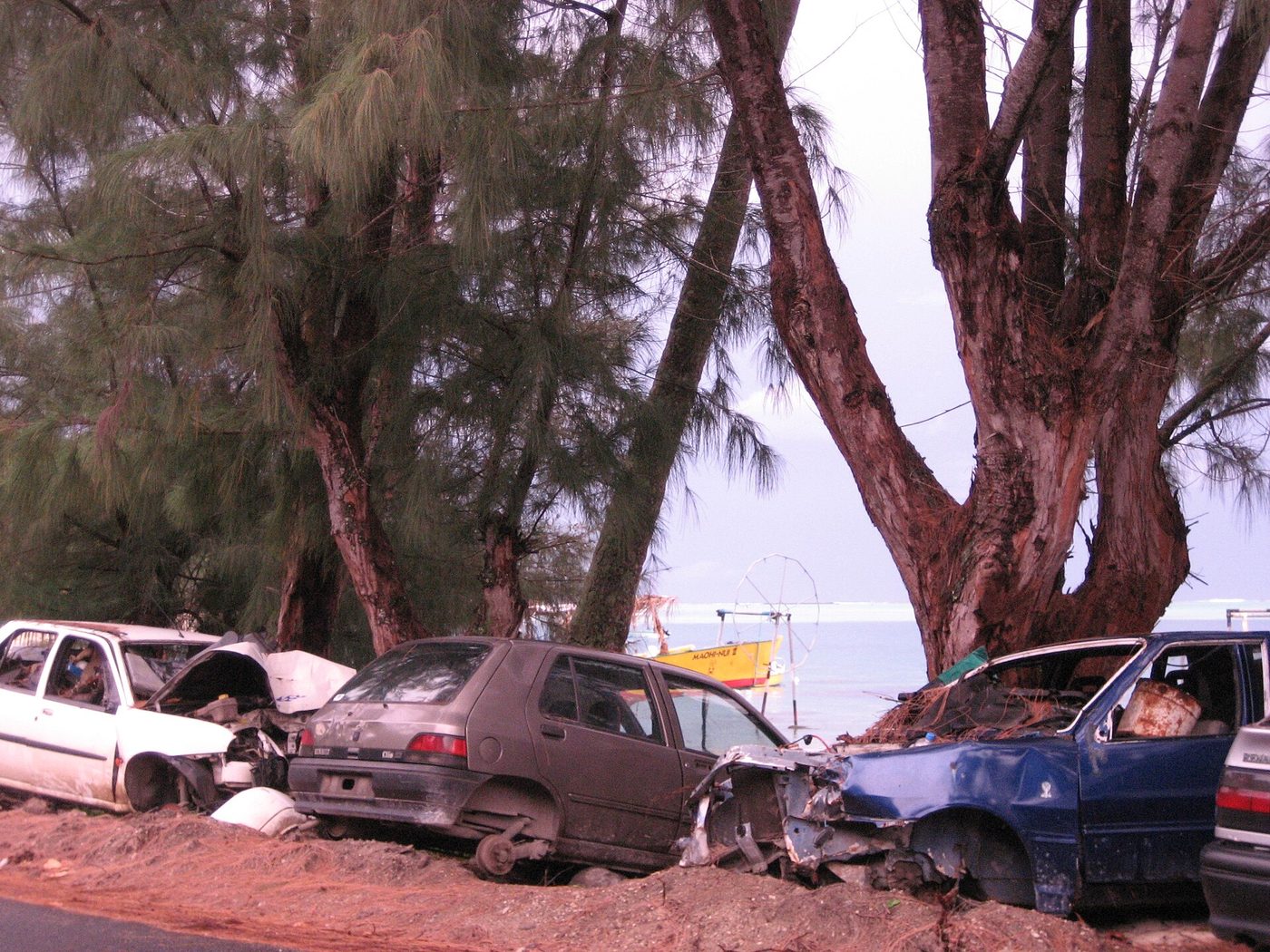
Bora Bora - junk cars alongside the lagoon - panoramio, French Polynesia
French Polynesia PYF
Bora Bora - junk cars alongside the lagoon - panoramio — Photo: Peter Gill / UK / CC BY 3.0 via Wikimedia Commons
Did You Know France conducted 193 nuclear tests at Moruroa and Fangataufa atolls between 1966 and 1996; a 2010 French law established compensation for radiation-linked illness, and the scope of that scheme is still contested. — Reuters

French Polynesia is an overseas collectivity of France scattered across roughly five million square kilometres of the South Pacific — an ocean area comparable to Western Europe — containing 118 islands and atolls with a combined land area of only about 3,500 square kilometres. Its 305,000 people are grouped into five archipelagos: the Society Islands, which include Tahiti and Bora Bora and hold about three-quarters of the population; the Tuamotu, the largest chain of coral atolls in the world; the Marquesas in the far northeast; the Austral Islands to the south; and the Gambier Islands. Papeete, on Tahiti, is the capital and the only substantial city. The population is around 78 percent Polynesian, with Chinese, local French and metropolitan French communities; French is the official language and Tahitian is spoken by about a fifth of the population as a first language, alongside Marquesan, Paumotu and the Austral languages. Protestantism, introduced by the London Missionary Society, is the largest religious affiliation at roughly 54 percent, ahead of Roman Catholicism. Under the 2004 statute of autonomy, the territory has its own president and Assembly with wide domestic powers, while France retains defence, justice, currency and foreign affairs. The economy rests on tourism, cultured black pearls and French transfers.

CIA World FactbookEncyclopaedia BritannicaWorld BankGlottolog
Population
305,507
Capital
Papeete (located on Tahiti)
Currency
None XPF
Time zones
Largest city
Papeete
Human Geography Themes
Loading national figures…
Largest Cities
Papeete109,747
In Perspective

Papeete's urban core is home to about 109,747 people.

Among the world's megacities, though, it's one of many — the giants of Asia and Latin America run larger still:

Papeete109,747
Jakarta40,545,126
Dhaka37,307,160
Tokyo33,244,670
Shanghai30,678,616
Cairo25,230,325
The Country & Its People

History

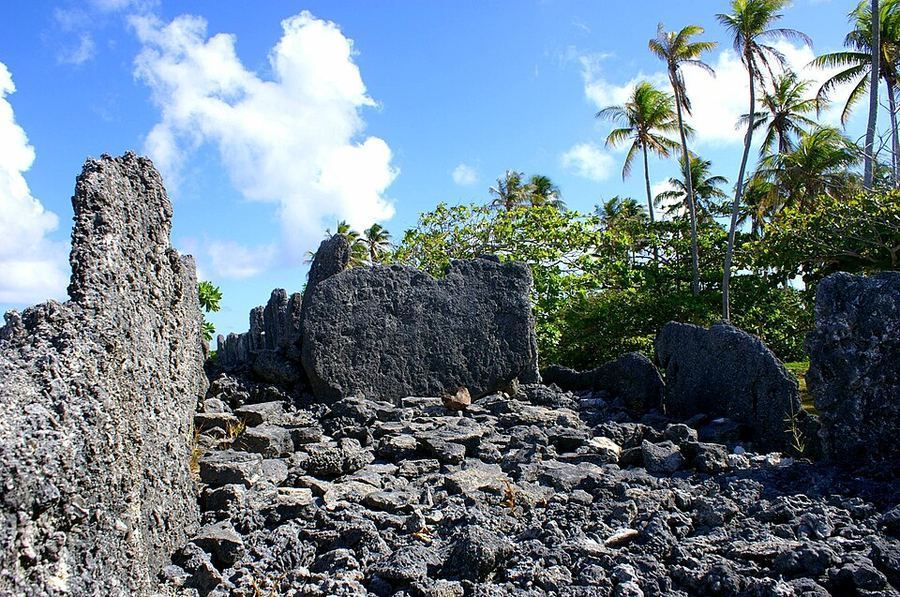
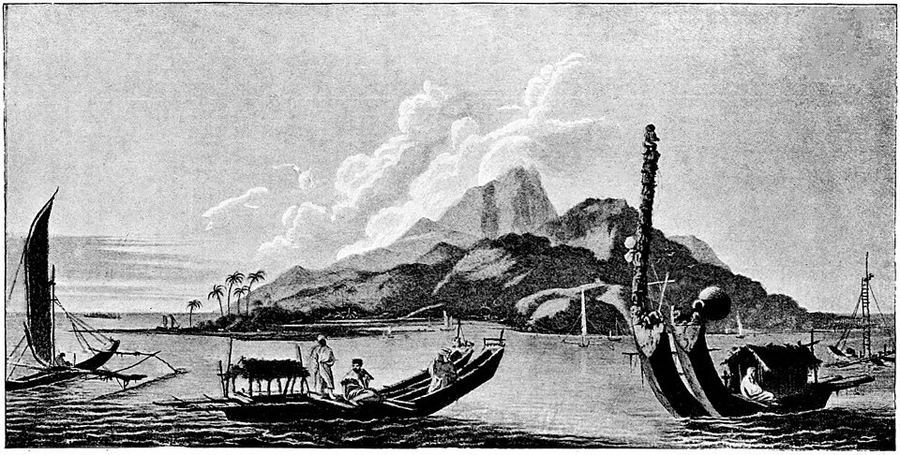
The islands were settled by Austronesian voyagers moving east through the Pacific, reaching the Marquesas by roughly the first millennium and the Society Islands soon after, in one of the great feats of open-ocean navigation; from this region seafarers went on to reach Hawaii, Rapa Nui and New Zealand, making central Polynesia the dispersal point for the wider Polynesian world. Complex chiefdoms developed around marae, the open-air stone temple platforms that served as religious and political centres. European contact began with Spanish and then British and French arrivals in the sixteenth to eighteenth centuries: Samuel Wallis reached Tahiti in 1767, Louis-Antoine de Bougainville the following year, and James Cook observed the transit of Venus from Tahiti in 1769. The Pomare dynasty unified Tahiti with British missionary and naval support, and the London Missionary Society, arriving in 1797, converted the islands and reshaped their law and dress. France declared a protectorate over Tahiti in 1842 after a confrontation with British missionary influence, and annexed the islands as a colony in 1880, extending control over the other archipelagos by the end of the century. The territory became an overseas territory in 1946 with French citizenship, gained internal autonomy in stages from 1977, and received its current wide-ranging autonomy statute in 2004. France conducted nuclear tests at Moruroa and Fangataufa from 1966 to 1996.
Culture

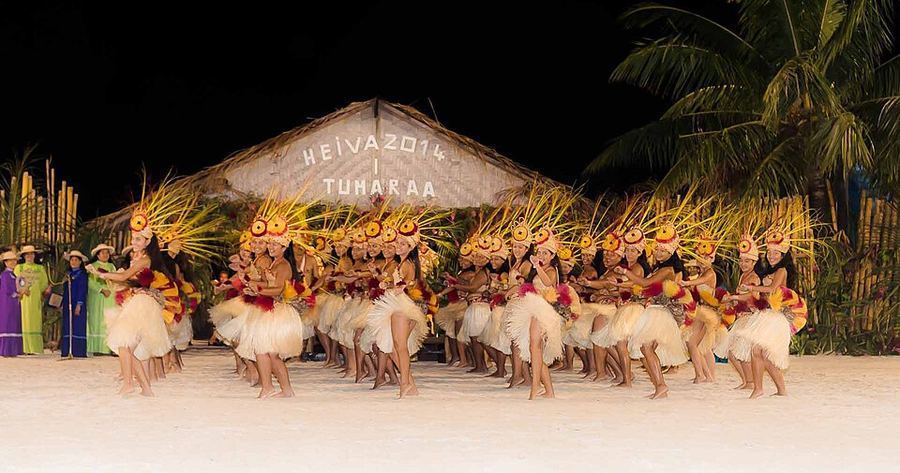
Mā'ohi culture — the term Polynesians here use for themselves — centres on genealogy, land and the sea, and on the extended family, the fetii, whose obligations of sharing and mutual aid remain strong. Christianity is deeply embedded after two centuries: Protestant churches descended from the London Missionary Society are the largest denomination, Sunday worship and hymn singing are central social events, and the powerful unaccompanied choral form himene tārava, sung in dense overlapping harmony with a distinctive grunted bass line, is the most characteristic sound of the islands. Alongside the church, a cultural revival that gathered force from the 1980s has restored practices the missionaries suppressed — tattooing, traditional dance, the Tahitian and Marquesan languages, and open-ocean sailing by star navigation. Tattoo is the clearest case: the English word derives from the Tahitian tatau, the practice was banned in the nineteenth century, and it has returned as a major art form with revived Marquesan and Tahitian motif systems. The July Heiva festival in Papeete is the cultural centrepiece of the year, combining dance and singing competitions with outrigger canoe racing, javelin throwing, stone lifting and coconut husking. Food is cooked communally in the ahima'a earth oven for Sunday and feast days.

Points Of Pride

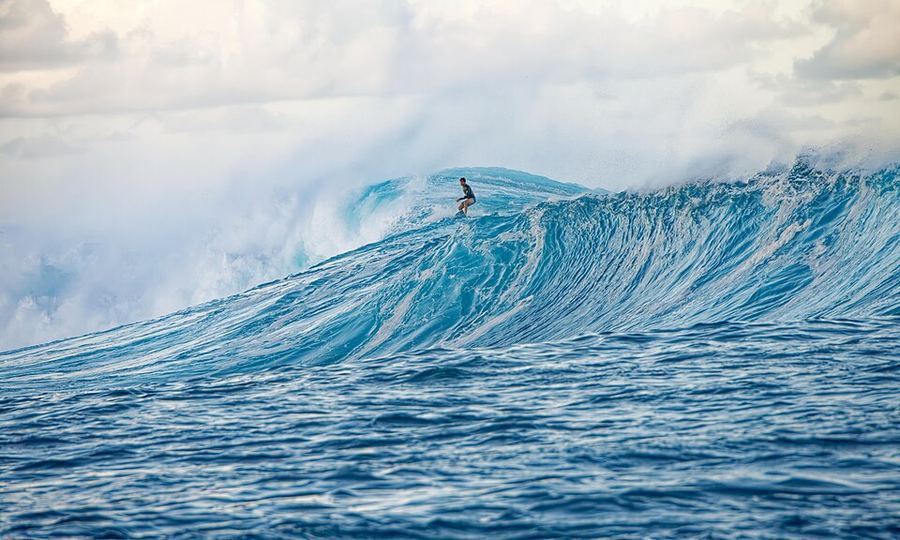
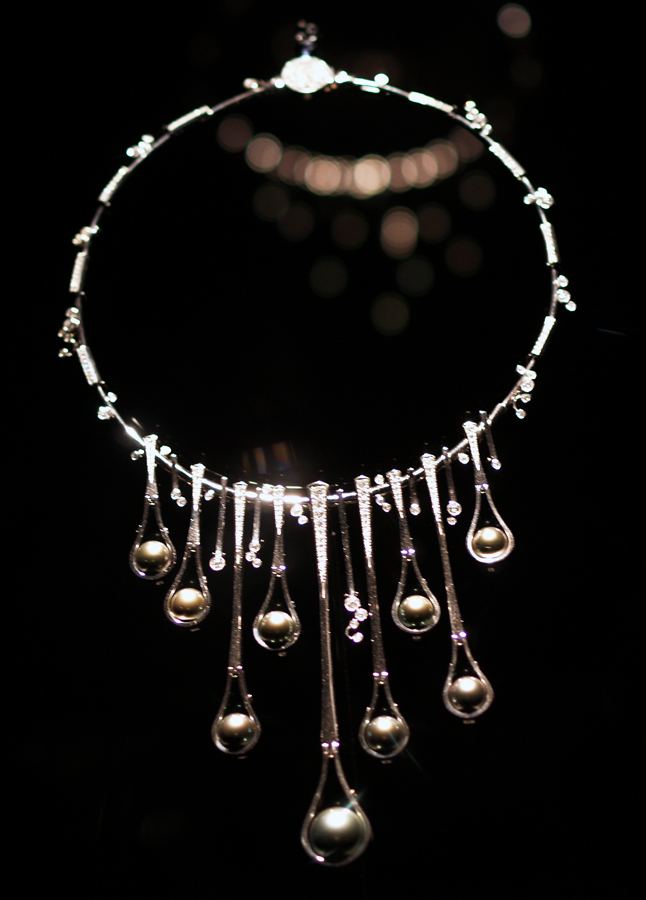
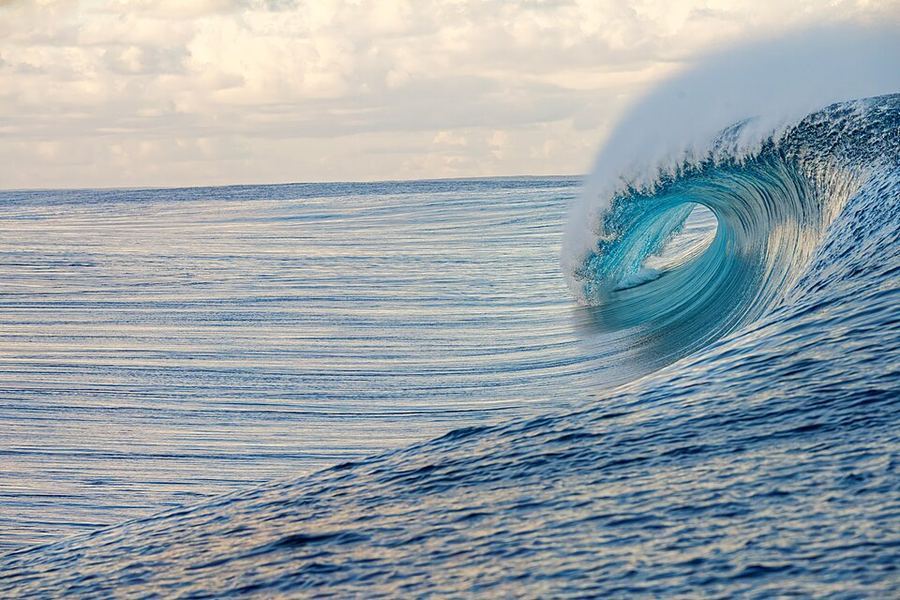
The Taputapuātea marae on Ra'iātea, inscribed by UNESCO as a World Heritage site in 2017, is the territory's outstanding cultural monument: a large stone temple complex on a promontory that was the political and religious centre of eastern Polynesia, the point from which voyaging canoes departed and to which chiefs from across the Polynesian triangle returned, and a site of continuing significance to Māori, Hawaiian and Cook Islands communities as well as to Mā'ohi people. In 2024 UNESCO inscribed the Marquesas Islands, Te Henua Enata, as a mixed natural and cultural World Heritage site, recognising both their steep volcanic landscapes and their archaeological remains. The territory's lagoons and reefs are among the most celebrated in the world, and the Fakarava atoll group forms a UNESCO biosphere reserve. French Polynesia produces almost all the world's cultured black pearls, grown from the black-lipped oyster in Tuamotu and Gambier lagoons. Its outrigger canoe racers are world champions in va'a, and its surfers ride Teahupo'o on Tahiti's south coast, a reef break so significant that it hosted the surfing events of the Paris 2024 Olympic Games — nearly 16,000 kilometres from the host city.

Cultural Fusion

The islands blend a Polynesian base with French institutions and a substantial Chinese community, and the result is distinctive even within the Pacific. French administration supplies the schools, the legal system, the health service and the currency — the CFP franc, pegged to the euro — and metropolitan French is the language of government and secondary education, while Tahitian remains the language of church, family and popular music. The Chinese community, about 12 percent of the population, descends largely from Hakka labourers recruited in the 1860s for a cotton plantation on Tahiti during the American Civil War; they stayed, moved into retail and commerce, and their descendants are prominent in business and politics, with Chinese New Year publicly celebrated and Cantonese and Hakka dishes fully absorbed into everyday eating — chow mein and ma'a tinito, a pork and red bean stew, are Tahitian staples. Christianity itself is a fusion: hymns arrived from England and were reworked into himene tārava, a harmonic form that sounds nothing like its source. The demi community of mixed Polynesian and European descent has long been socially and politically influential. Cuisine, tattoo revival and dance all show the same pattern of a Polynesian core that has absorbed rather than been displaced.

Music & Dance

Tahitian dance, 'ori tahiti, is the territory's most recognisable art. Its signature is the 'ōte'a, danced to percussion alone, in which women rotate the hips at high speed in the fa'arapu while men perform the scissoring pā'oti knee movement, arranged in disciplined formations by large troupes in costumes of plant fibre, shell and feathers; the slower aparima uses the hands to narrate a story to sung accompaniment. The percussion ensemble is built on the tō'ere, a hollowed log slit-drum struck with a stick, layered with the pahu bass drum and the fa'atete. Missionaries banned the dances in the nineteenth century as immoral, and their restoration is one of the central achievements of the cultural revival. Song runs on a separate track: himene tārava is unaccompanied polyphonic choral singing in which many voices enter on overlapping lines above a rhythmic bass grunt, performed by village and church choirs in competition. The ukulele, in a small, thin-bodied, eight-string Tahitian form tuned and strummed quite differently from the Hawaiian instrument, is the everyday accompaniment along with the guitar. The Heiva i Tahiti festival each July is the competitive stage where troupes present new choreography and new compositions before large audiences.
UNESCOEncyclopaedia BritannicaSmithsonianOxford Reference

Cuisine & Misattributed Foods

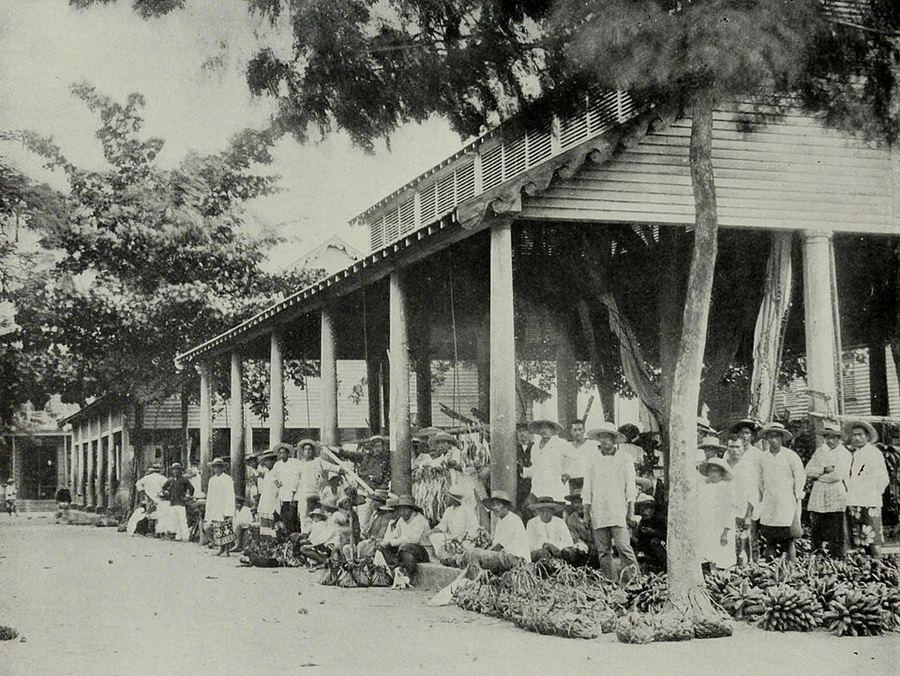
The defining dish is poisson cru, called i'a ota in Tahitian — raw tuna cut into cubes, marinated briefly in lime juice and then dressed with coconut milk, cucumber, tomato and onion, eaten daily and served everywhere from roadside stalls to hotel restaurants. Fish dominates generally, given the lagoons and the ocean: tuna, mahi-mahi, parrotfish and reef fish grilled, raw or in coconut milk, along with lobster, and in the Tuamotu the fermented and salted preparations that suited atoll life. The starches are Pacific staples — uru, the breadfruit, roasted or baked; taro and its leaves; cassava; sweet potato; and the fe'i, a distinctive orange cooking banana eaten cooked. The great communal cooking method is the ahima'a, an earth oven of hot volcanic stones covered with banana leaves in which suckling pig, chicken, breadfruit, taro and po'e are steamed for hours and opened for Sunday lunch or a feast. Po'e is the classic dessert, a pudding of mashed banana, papaya or pumpkin thickened with starch and served with coconut cream. Chinese cooking is fully naturalised, with chow mein and ma'a tinito eaten as local food, and French bread, cheese and wine are equally everyday. Papeete's roulottes, the vans that fill the waterfront at dusk, are the territory's characteristic dining scene.

National Dress

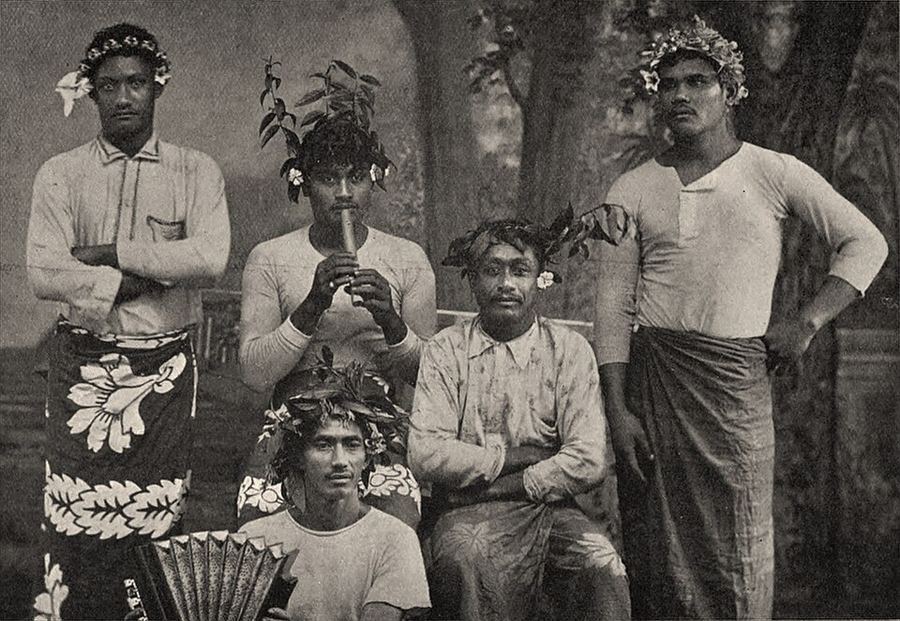
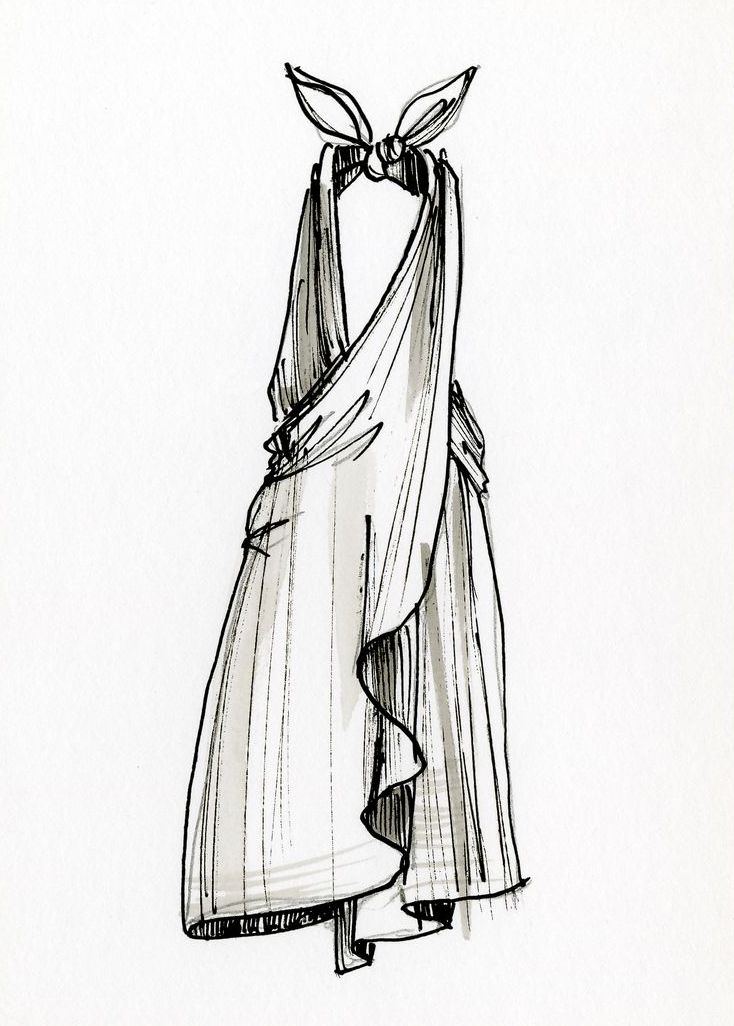
Everyday dress is light and tropical, built around the pāreu — a rectangle of printed cotton, typically about two metres by one, wrapped and knotted in many ways and worn by both men and women as a skirt, dress or wrap. Its bold floral and tapa-inspired prints in strong colours are the territory's most exported visual signature. Missionary influence produced the other common garment, the loose full-length mother hubbard dress introduced in the nineteenth century to cover Polynesian bodies, which was absorbed and reworked locally into a comfortable printed daily dress. Flowers are worn constantly rather than ceremonially: the tiare Tahiti, a fragrant white gardenia, is tucked behind the ear — traditionally on the left if the wearer is attached and the right if available — and the woven flower crown, the hei, and the shell or seed necklace are given as greeting and farewell. Formal and performance dress is entirely different: dance costume, the more, is built from bleached and shredded hibiscus bast or coconut fibre into thick swaying skirts, worn with headdresses, shell breastplates and feather ornaments. Tattooing functions almost as clothing, with revived Marquesan and Tahitian motif systems covering shoulder, thigh or torso and marking genealogy and identity.
Encyclopaedia BritannicaSmithsonianBritish MuseumUNESCO

Sports & Inspiring Athletes

Outrigger canoe racing, va'a, is the national sport in every practical sense: clubs exist in almost every coastal community, crews train before and after work, and the sport carries a cultural weight that football does not. The Hawaiki Nui Va'a, run each November over three days and about 120 kilometres of open water between Huahine, Ra'iātea, Taha'a and Bora Bora in six-man canoes, is the territory's biggest sporting event and one of the toughest ocean races anywhere. Surfing is the second pillar, centred on Teahupo'o, whose thick, hollow wave breaking over a shallow reef is regarded as one of the most dangerous and most spectacular in the world, and which has hosted a professional world tour event for years. Football is the most played team sport, run by the Fédération Tahitienne de Football, which competes in the Oceania confederation; Tahiti won the OFC Nations Cup in 2012. Beach soccer is a genuine speciality — Tahiti reached the final of the FIFA Beach Soccer World Cup it hosted in 2013 and has been among the leading nations in the sport since. Kitesurfing, sailing, and traditional Heiva sports including stone lifting, javelin throwing at a coconut target and fruit-carrier racing complete the picture.

Notable Educational Programs

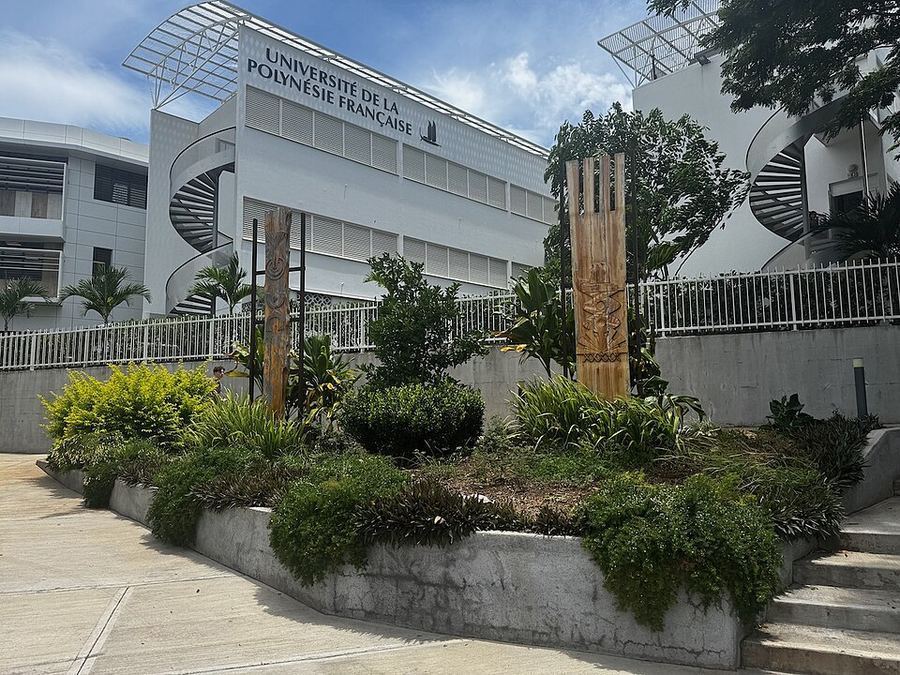
Education follows the French national system, is compulsory from ages three to sixteen, and leads to the baccalauréat, with curricula and diplomas equivalent to those in metropolitan France, though the territory has had responsibility for primary and secondary schooling since its autonomy statutes. Delivering it across an ocean-sized territory is the central challenge: many outer islands in the Tuamotu, Austral and Marquesas groups have only primary schools, so secondary students board on Tahiti or in regional centres from adolescence, a long-standing source of social strain. Teaching in Tahitian and the other Polynesian languages has been progressively introduced alongside French after a long period in which their use in school was discouraged, and language transmission is a live policy question given that Tahitian is a first language for only about a fifth of the population. The Université de la Polynésie française, established at Punaauia on Tahiti in 1999 when the former University of the French Pacific split from its New Caledonian counterpart, is the only university, teaching law, economics, letters, languages and sciences and hosting research on Pacific ecosystems and Polynesian languages and societies. Many students continue their studies in France, and vocational training is oriented toward tourism, maritime trades and pearl farming.

Wars & Conflicts

French Polynesia has experienced no armed conflict in the modern era, and the defining confrontation of its recent history was over nuclear testing rather than war. From 1966 to 1996 France conducted 193 nuclear tests at the Moruroa and Fangataufa atolls in the Tuamotu group — atmospheric until 1974 and underground thereafter — an operation that reshaped the territory's economy through military employment and transfers, and that became the central grievance of Polynesian politics. Testing provoked sustained protest locally and across the Pacific, and the announcement of a final series in 1995 set off riots in Papeete that damaged the airport and parts of the city. France ended testing in 1996, signed the Comprehensive Nuclear-Test-Ban Treaty and closed the sites, and has since acknowledged health consequences: a 2010 law established a compensation mechanism for radiation-linked illnesses, whose scope and eligibility criteria remain contested by veterans' and Polynesian associations, and the French president acknowledged a debt owed to the territory during a visit in 2021. The United Nations General Assembly reinscribed French Polynesia on its list of non-self-governing territories in 2013 at the request of pro-independence parties, a move France opposed. Political competition between autonomist and pro-independence parties is conducted entirely through elections.
Current as of 2026-08-07

Land & Border Disputes

French Polynesia has no territorial dispute with any neighbouring state; its boundaries with the Cook Islands and Kiribati are settled by agreement, and its vast exclusive economic zone is uncontested. Its disputes are internal and constitutional. The central one is the question of independence from France, contested peacefully between autonomist parties, which favour the current statute or an enhanced version of it, and pro-independence parties, which seek sovereignty; the balance has shifted back and forth over decades, with the pro-independence Tavini Huiraatira winning the territorial assembly election in 2023. On the initiative of pro-independence representatives, the United Nations General Assembly voted in 2013 to reinscribe French Polynesia on the list of non-self-governing territories eligible for decolonisation, a decision France rejects and does not cooperate with, and the item remains before the Special Committee on Decolonization. A second running dispute concerns the legacy of the nuclear tests: the terms of the 2010 compensation law, the disclosure of testing records, the long-term monitoring of Moruroa and Fangataufa, and demands for a fuller accounting of contamination and health effects. Questions of land tenure, where undivided customary inheritance leaves many properties with hundreds of co-owners, generate a large share of domestic litigation.
Land, Life & Legacy

Land & Climate

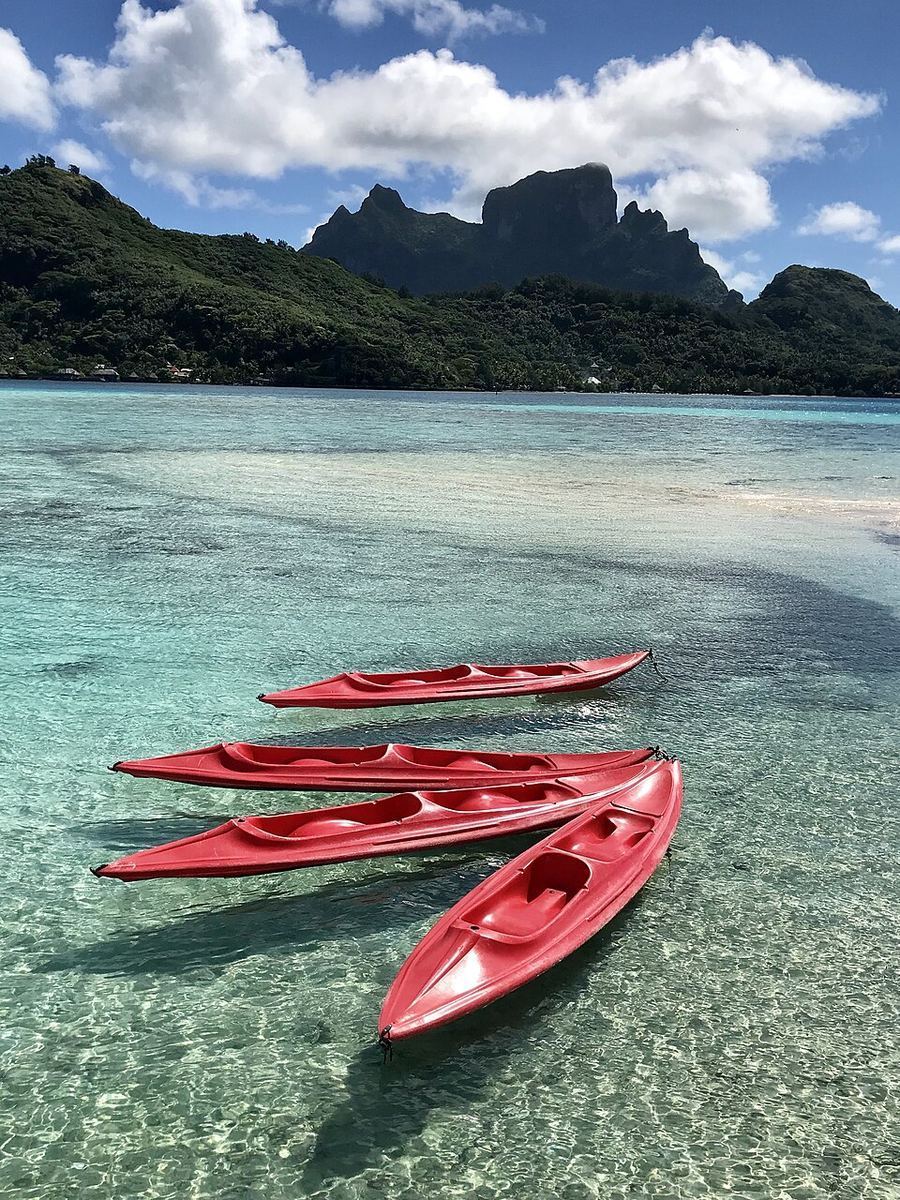
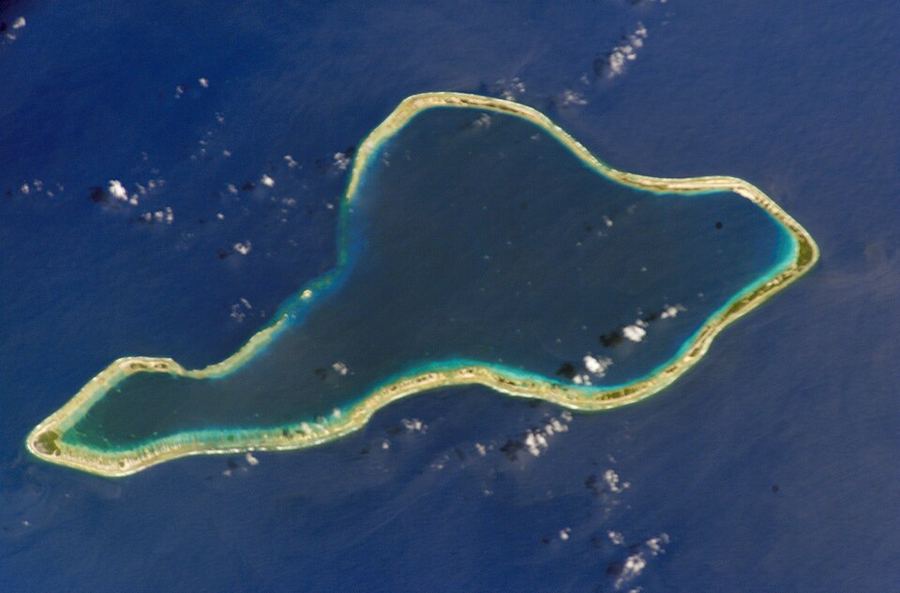
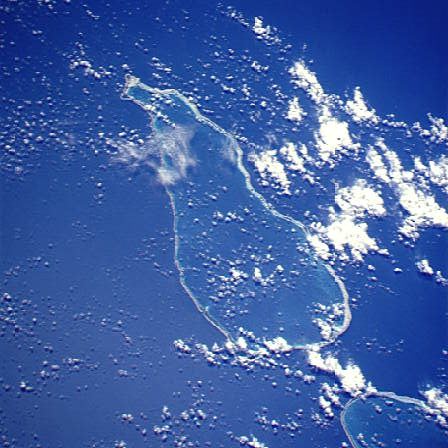
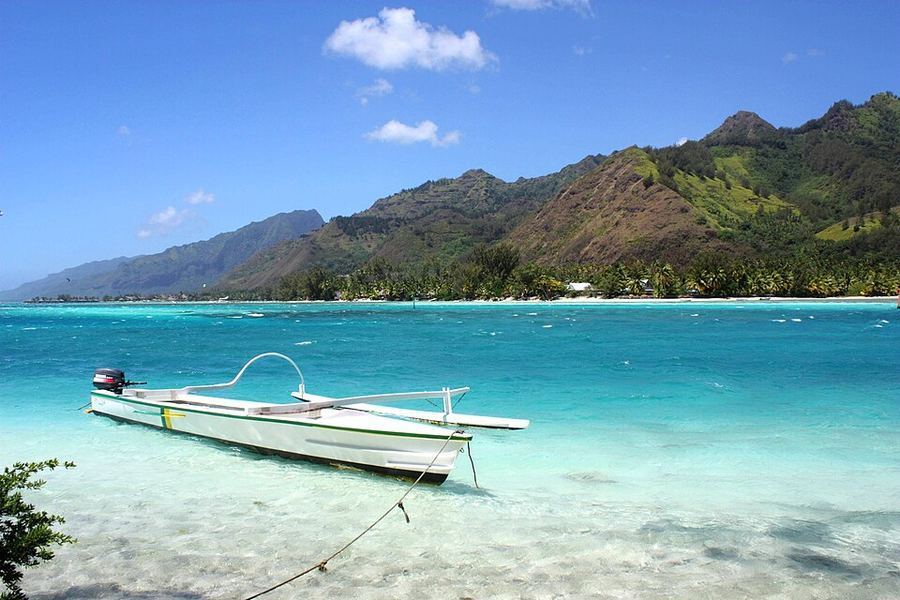
French Polynesia's defining statistic is the ratio of sea to land: 118 islands with about 3,500 square kilometres of land spread over roughly five million square kilometres of ocean, giving France one of the largest exclusive economic zones in the world. The islands come in two geological forms. The high islands — Tahiti, Mo'orea, Bora Bora, Ra'iātea and the Marquesas — are volcanic, with sharply eroded basalt peaks, deep valleys and waterfalls; Mont Orohena on Tahiti is the highest point at 2,241 metres. The low islands are coral atolls, above all in the Tuamotu chain, the largest atoll group on Earth, where narrow rings of reef and motu enclose vast lagoons and land rises only a few metres above sea level. Most high islands are ringed by barrier reefs enclosing their own lagoons. The climate is tropical maritime, moderated by the southeast trade winds, with a warmer and wetter season from November to April and a drier, cooler season from May to October. Cyclones occur in the wet season, most damagingly in 1983 and 2010. Sea-level rise is an existential rather than an abstract risk for the atolls, and coral bleaching from ocean warming threatens the reef systems on which both fisheries and tourism depend.

Entertainment

Life is organised around the lagoon. Swimming, reef fishing, spearfishing and picnicking on motu islets are ordinary weekend activity rather than tourist experience, and outrigger canoe paddling — va'a — is the mass participation sport, with clubs in nearly every coastal village training in the early morning and evening. Surfing has deep local roots and world-class waves, at Teahupo'o on Tahiti Iti and along the black-sand beaches of Tahiti's north coast. Diving and free-diving in the Tuamotu passes, particularly Fakarava and Rangiroa, draw both locals and visitors for the concentrations of sharks and rays. On land, hiking through the interior valleys of Tahiti and Mo'orea, and the horse riding and hunting culture of the Marquesas, fill out the calendar. Church attendance and the singing that goes with it are a major weekly social occasion, and Sunday centres on the family meal from the earth oven. The Heiva in July dominates the winter, with weeks of dance and sport competition. Football and, distinctively, beach soccer are widely played, and the roulottes on the Papeete waterfront are the standard evening gathering point. Bringing home fish and sharing it through the extended family remains a normal part of the week.

Art & Museums

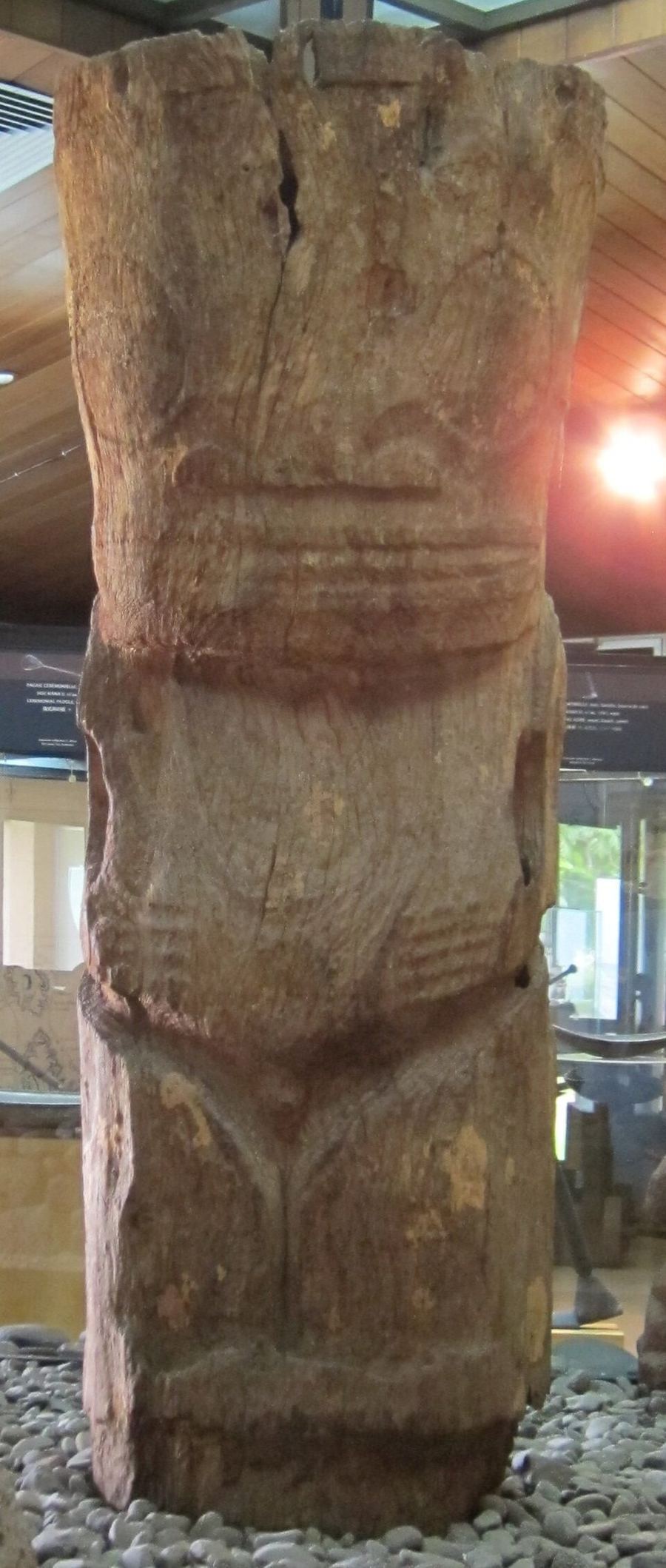
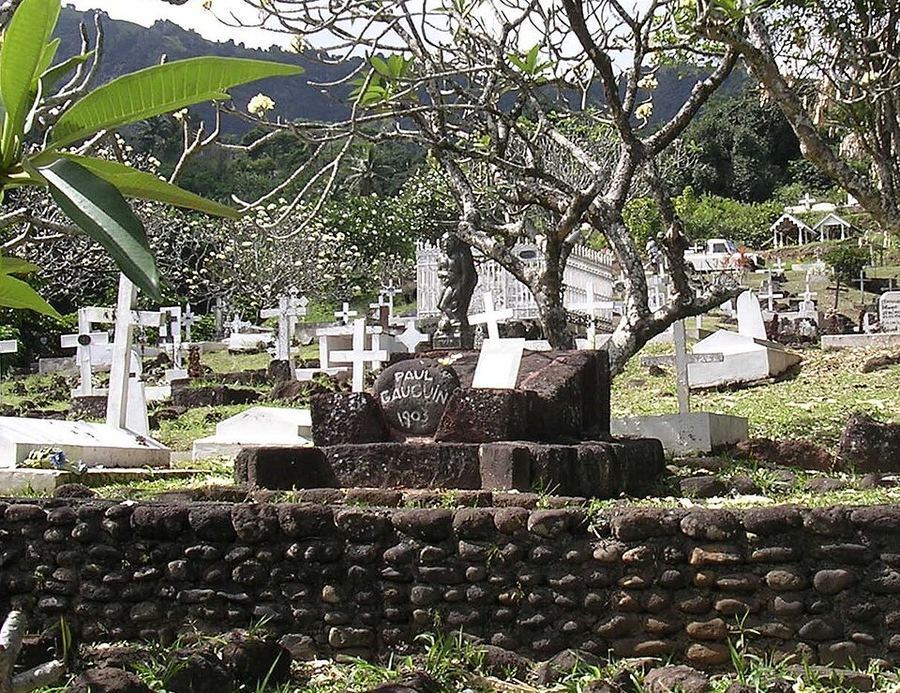
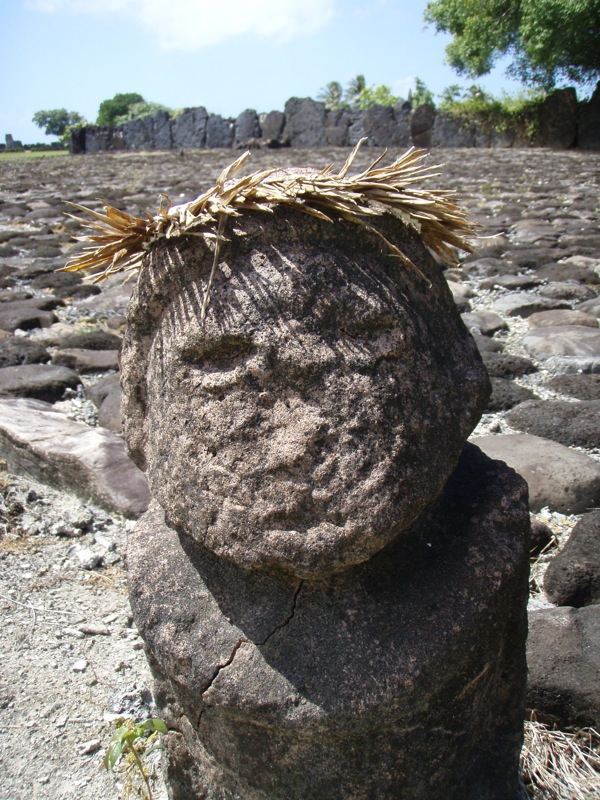
Polynesian art here is above all sculptural and corporeal. Marquesan carving in wood, stone and bone is among the most densely patterned in the Pacific, covering tiki figures, bowls, war clubs and stilt steps with intricate surface designs, and the large stone tiki at Puamau on Hiva Oa are the biggest in Polynesia outside Rapa Nui. Tattoo is the region's most influential art form and its most successfully revived; the Marquesan system, which could cover a man's entire body in graded motif bands, was reconstructed from missionary-era drawings and museum collections and now supports a working generation of practitioners whose designs circulate worldwide. Tapa, bark cloth beaten from paper mulberry, and the plaited pandanus mats and hats of the Austral Islands, particularly Rurutu, are the major fibre traditions. Mother-of-pearl shell is carved and engraved as a local medium. The territory's European artistic association is inescapably Paul Gauguin, who lived in Tahiti from 1891 and died at Atuona on Hiva Oa in 1903, and whose paintings shaped how the world imagined these islands — an image Polynesian artists and writers have spent decades complicating. The writer Chantal Spitz and the ethnographer and activist Henri Hiro were central to the modern Mā'ohi cultural movement.
Encyclopaedia BritannicaBritish MuseumSmithsonianMetropolitan Museum of Art

Notable People

Pōmare I unified Tahiti at the turn of the nineteenth century with British help, founding the dynasty that ruled until the French annexation, and Queen Pōmare IV resisted the imposition of the French protectorate through a long reign from 1827 to 1877. Tupaia, the Ra'iātean priest and navigator who joined James Cook's Endeavour in 1769, was able to name and locate scores of islands across thousands of kilometres of ocean from memory and drew a chart that remains a landmark document of Polynesian geographic knowledge. In the modern era, Pouvanaa a Oopa was the founding figure of Tahitian nationalism, elected to the French National Assembly in 1949 and later convicted on charges widely regarded as politically motivated; his sentence was annulled posthumously by a French court in 2018. Oscar Temaru led the pro-independence movement and served repeatedly as president of French Polynesia, while Gaston Flosse dominated autonomist politics for decades. Henri Hiro, poet and film-maker, was the leading voice of the Mā'ohi cultural renaissance, and Chantal Spitz became the first Tahitian novelist published in French. In sport, the surfer Michel Bourez and the sailor and canoe crews of the va'a world championships are the best-known competitors internationally.
Encyclopaedia BritannicaOxford ReferenceReutersBritish Museum

Inventions & Breakthroughs

Central Polynesia's outstanding technical achievement is the double-hulled voyaging canoe and the wayfinding system that went with it. Without instruments, navigators held a mental star compass of rising and setting points, read swell direction through the hull, tracked cloud formations, bird flight and the reflected green of lagoons on the underside of clouds, and used a form of dead reckoning to hold a course across thousands of kilometres of empty ocean and to return — the capability that settled the Polynesian triangle from these islands. Tupaia's demonstration of that knowledge to Cook is its best-documented single instance, and the practice was revived from the 1970s by long-distance voyages sailed on traditional principles. The outrigger canoe itself, the va'a, is the enduring engineering form, now a competitive sport worldwide. Local subsistence technology included breadfruit fermentation in leaf-lined pits to store a seasonal crop for years, and reef fish traps built as stone weirs in the lagoon. The territory's one major modern industry is a cultivated one: black pearl farming, developed from the 1960s by grafting the black-lipped oyster Pinctada margaritifera in Tuamotu and Gambier lagoons, turned a rare natural product into the world's main supply of cultured black pearls.
Encyclopaedia BritannicaSmithsonianFAOScience

Science & Technology

Research in French Polynesia is shaped by what the territory has: ocean, reefs and isolation. The CRIOBE laboratory on Mo'orea, run with French national research bodies, is one of the longest-established coral reef research stations in the world and, together with the neighbouring University of California Berkeley field station, has made Mo'orea among the most intensively studied tropical islands anywhere, generating decades of continuous data on reef response to bleaching, cyclones and crown-of-thorns starfish outbreaks. The Institut Louis Malardé in Papeete conducts public health research and was central to the international response to the Zika epidemic that swept the territory in 2013 and 2014, where the association between Zika infection and Guillain-Barré syndrome was first identified in a published study — a finding that shaped how the much larger Latin American outbreak was understood. The Ifremer marine institute and the territorial pearl-farming service support research into oyster genetics and lagoon carrying capacity, the technical basis of the pearl industry. The Université de la Polynésie française hosts work on Pacific biodiversity, geology and Polynesian languages. Submarine fibre-optic cables, the Honotua link commissioned in 2010 and the domestic Natitua cables, connected the territory and then the outer archipelagos to broadband, and solar generation has grown on the atolls.
On The World Stage

Champions & Defining Moments

French Polynesia's athletes compete at the Olympic Games as part of the French team, since the territory has no separate national Olympic committee, but it competes independently in Pacific and world competition in several sports. Its highest-profile international moment came in 2024, when the surfing events of the Paris Olympic Games were held not in France but at Teahupo'o on Tahiti — roughly 15,700 kilometres from the host city, the most distant venue from a host city in Olympic history — a decision that put the wave and the village on the world's screens and also prompted local protest over the construction of a new aluminium judging tower on the reef. In football, Tahiti's victory in the 2012 OFC Nations Cup qualified it for the FIFA Confederations Cup in Brazil in 2013, where the amateur squad lost heavily to Spain, Nigeria and Uruguay but was adopted by Brazilian crowds and became one of the tournament's defining stories. Tahiti hosted the FIFA Beach Soccer World Cup in 2013 and reached the final, and has remained a leading nation in the sport. In va'a, Tahitian crews are consistently world champions, and the territory is a dominant force at the Pacific Games.

Economy, Trade & Government

Currency & GDP

CFP Franc — XPF (None)

GDP (PPP): $6.007 billion (2024 est.)

Per capita: $23,300 (2024 est.)

Exports

$162 million (2021 est.)

pearls, fish, aircraft parts, gas turbines, vanilla (2023)

Partners: Japan 44%, USA 15%, France 12%, Netherlands 9%, China 5% (2023)

Imports

$1.66 billion (2021 est.)

cars, packaged medicine, refined petroleum, poultry, broadcasting equipment (2023)

Partners: France 26%, China 11%, USA 10%, NZ 7%, Malaysia 4% (2023)

Government

Type: parliamentary democracy (Assembly of French Polynesia); an overseas collectivity of France

Independence: none (overseas land of France)

Terrain → Where People Live

How mountains, coasts, and rivers shape settlement (LandScan).

Coming — data

Migration & Ethnic Settlement

Where groups settled and how people move (GeoEPR + UNHCR).

Coming — data

Universities

Notable institutions, mappable as points.

Coming — data
Economy & government facts: CIA World Factbook (public domain), via OpenFactBook / factbook.json.
Every fact and narrative claim will carry a visible source citation. Data-driven sections light up automatically wherever HERA has coverage.