History
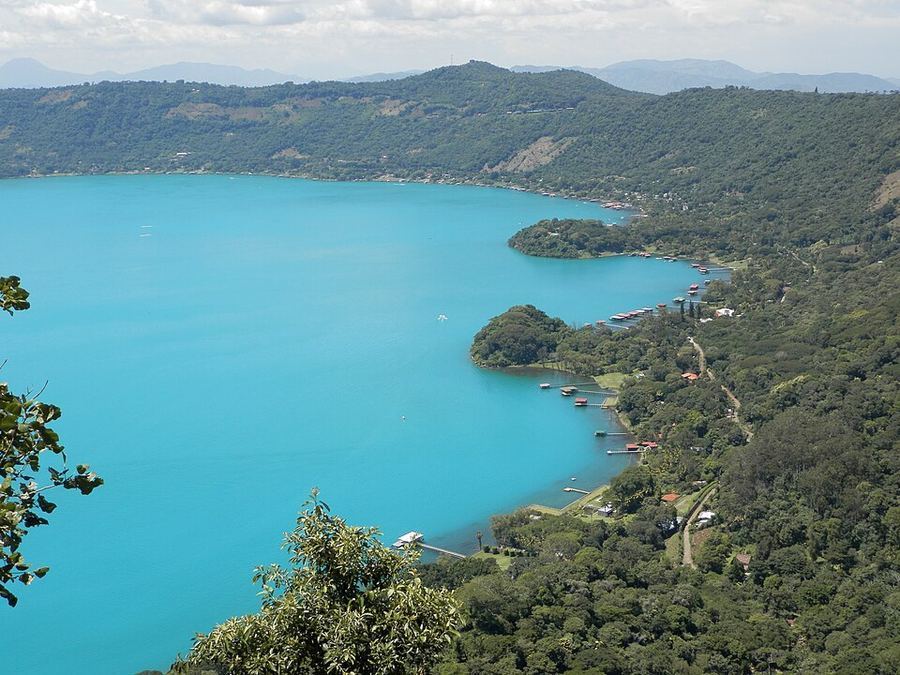
El Salvador is the smallest country in continental Central America and the only one with no Caribbean coastline, packing roughly 6.3 million people onto a Pacific-facing strip of volcanic highland between Guatemala and Honduras. Its landscape is defined by the two parallel ranges of cones that give it the nickname 'the land of volcanoes', and by the crater lakes, coffee slopes and black-sand beaches that come with them. The population is overwhelmingly mestizo — about 86% by the last count — with Spanish universal and the indigenous Nawat language reduced to a few hundred elderly speakers. Roman Catholicism, at roughly 44%, no longer holds a majority: evangelical Protestantism has grown to nearly 40%, one of the sharpest religious realignments in Latin America. The country has used the US dollar as its currency since 2001, and in 2021 became the first state anywhere to make bitcoin legal tender. Its economy runs on garment assembly, sugar, coffee and, above all, remittances from a diaspora of roughly two million people in the United States, which are equivalent to close to a quarter of GDP. A twelve-year civil war ended in 1992; the gang violence that followed, and the sweeping state of exception imposed against it in 2022, dominate contemporary politics.
San Salvador's urban core is home to about 1,643,648 people.
That's bigger than Amsterdam — each a great world city in its own right.
Among the world's megacities, though, it's one of many — the giants of Asia and Latin America run larger still:
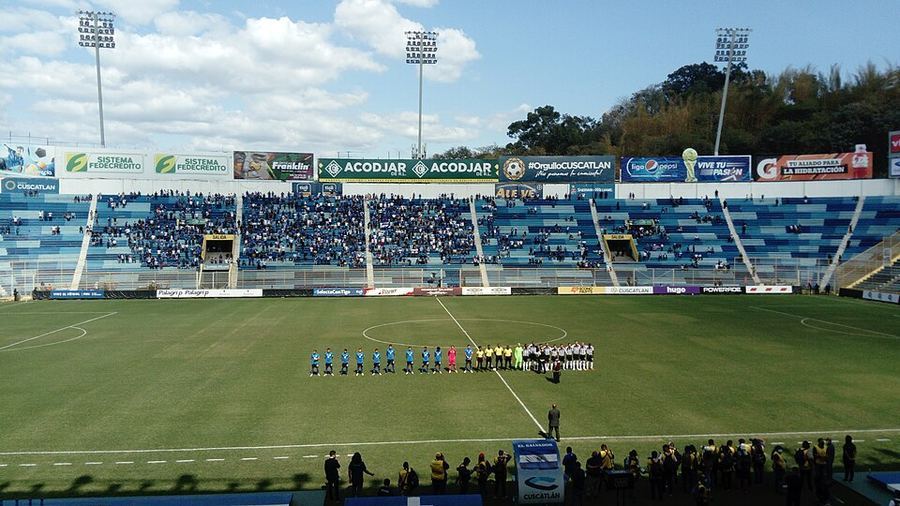
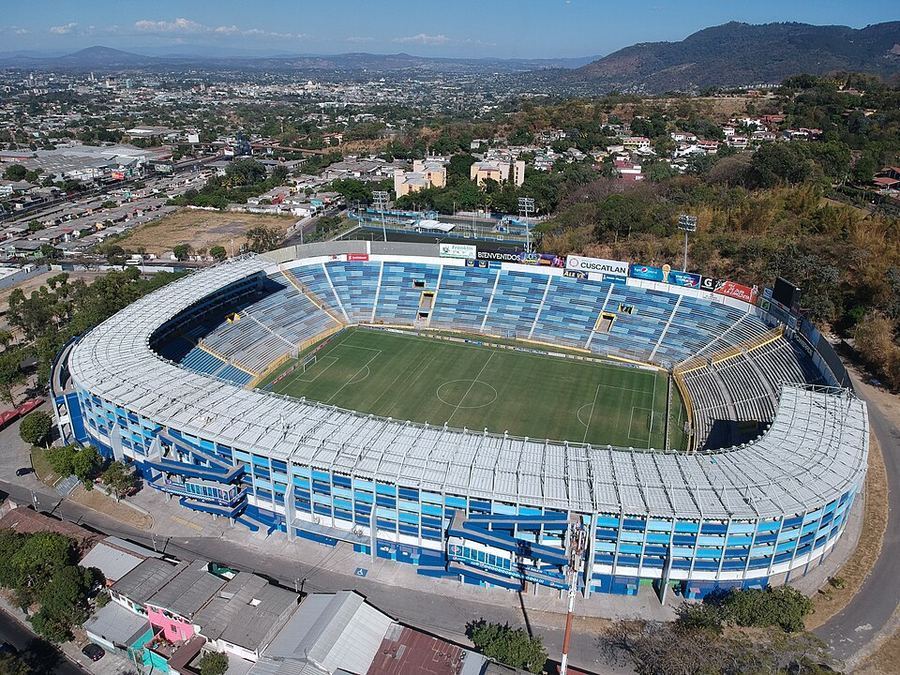
El Salvador has reached the FIFA World Cup twice, in Mexico in 1970 and in Spain in 1982, and both campaigns ended without a point. The 1982 tournament produced the record the country cannot escape: a 10–1 defeat to Hungary in Elche, still the largest margin of victory in World Cup finals history, though the same squad contained Jorge 'Mágico' González, whose performances against Belgium and Argentina made his reputation in Europe. The qualifying series for the 1970 finals was entangled with the brief June–July 1969 war with Honduras, which is still widely, if misleadingly, called the Football War. Since then the national team has been a Gold Cup regular without progressing far. At the Olympic Games, where El Salvador has competed since 1968, no Salvadoran has won a medal. The country's clearest international sporting success is in surfing, hosting World Surfing Games at La Libertad and using the sport as national branding; and in 2023 San Salvador staged the Central American and Caribbean Games, the largest multi-sport event the country has hosted.
Presidential republic
Nayib Armando Bukele Ortez — President
In office since 1 June 2019
Unicameral
Composition — N majority
N 54 · Other 6
Last election 2/4/2024 · 31.7% women
consists of 15 judges, including its president, and 15 substitute judges organized into Constitutional, Civil, Penal, and Administrative Conflict Chambers
GDP (PPP): $73.961 billion (2024 est.)
Per capita: $11,700 (2024 est.)
$11.586 billion (2024 est.)
garments, plastic products, electrical capacitors, raw sugar, toilet paper (2023)
Partners: USA 36%, Guatemala 17%, Honduras 15%, Nicaragua 8%, Costa Rica 5% (2023)
$18.354 billion (2024 est.)
refined petroleum, natural gas, garments, packaged medicine, plastics (2023)
Partners: USA 28%, China 15%, Guatemala 11%, Mexico 8%, Honduras 5% (2023)
Type: presidential republic
Independence: 15 September 1821 (from Spain)
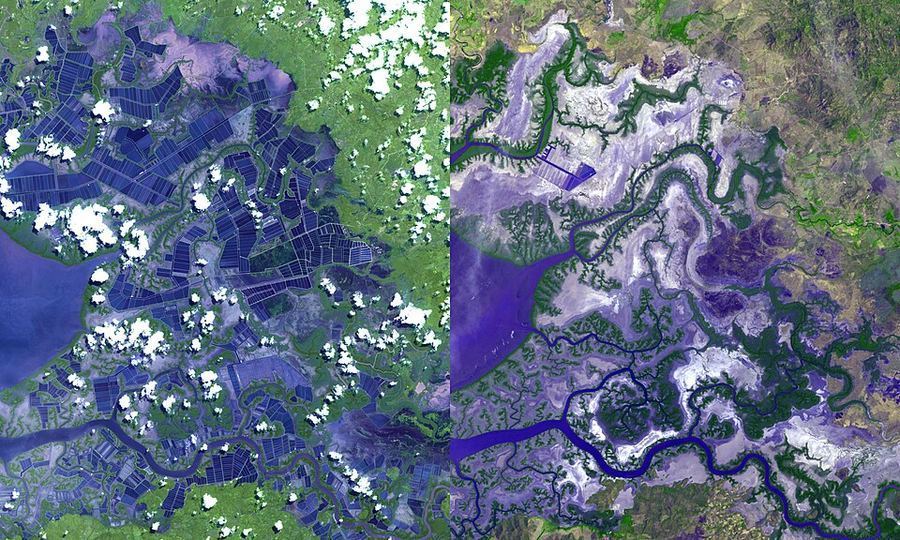
How mountains, coasts, and rivers shape settlement (LandScan).
Coming — dataWhere groups settled and how people move (GeoEPR + UNHCR).
Coming — dataNotable institutions, mappable as points.
Coming — data