HERA · Human Entity Reference Atlas by Masego Inc

← S. Sudan 🌐 3D View
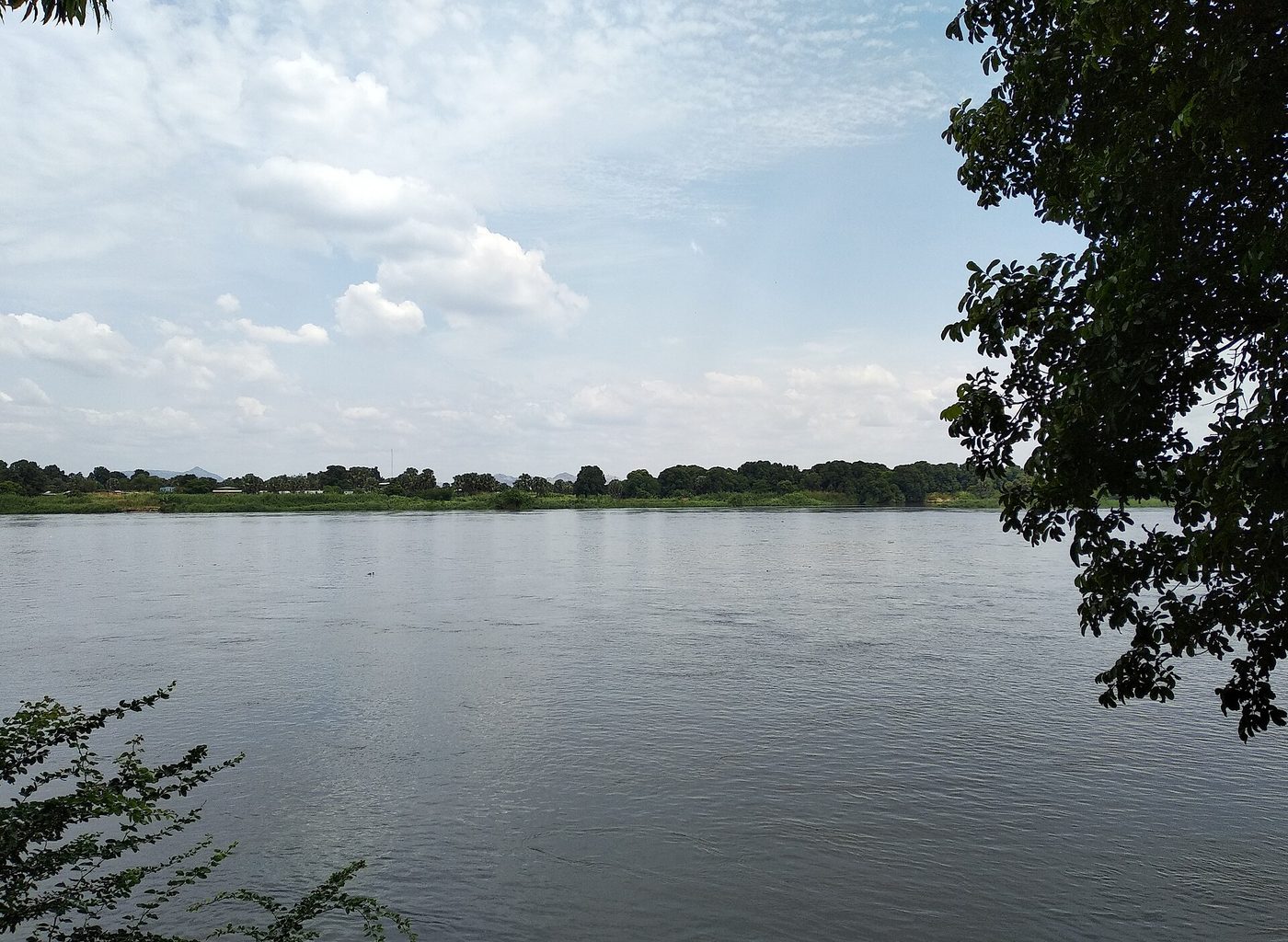
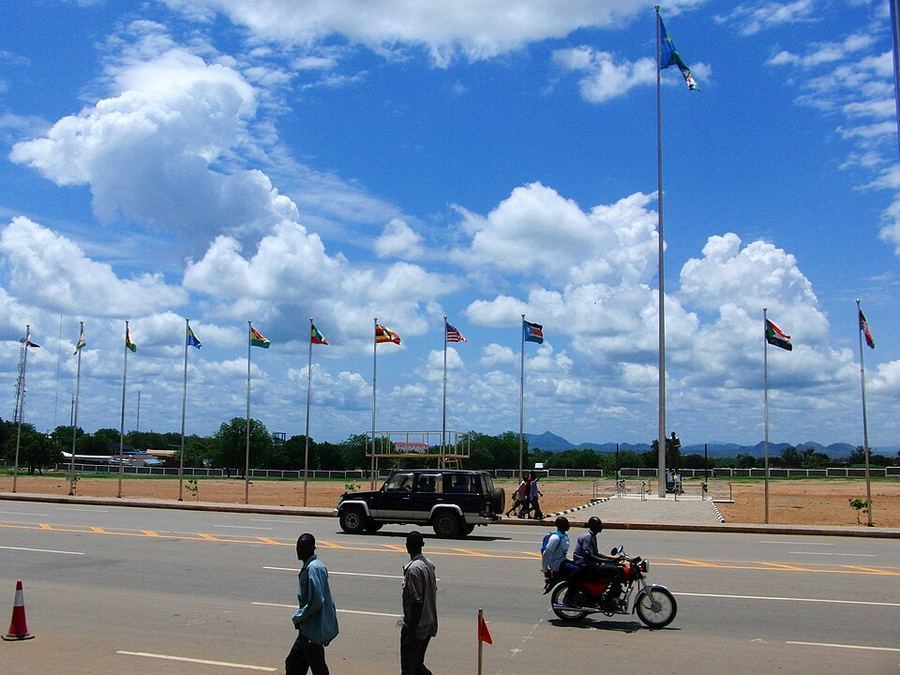
MAJESTIC VIEW OF WHITE NILE , JUBA, SOUTH SUDAN, S. Sudan
S. Sudan SSD
MAJESTIC VIEW OF WHITE NILE , JUBA, SOUTH SUDAN — Photo: Umar sheriff habibullah / CC BY-SA 4.0 via Wikimedia Commons
Did You Know South Sudan is the world's newest widely recognised sovereign state, declaring independence on 9 July 2011 and joining the United Nations five days later. — UN

South Sudan is the world's youngest sovereign state, having separated from Sudan on 9 July 2011 after a referendum in which an overwhelming majority voted for independence. It is landlocked, roughly the size of France, and holds about 12.7 million people whose median age of under nineteen makes it one of the youngest populations on earth. The capital, Juba, sits on the White Nile in the far south near the Ugandan border, and the river is the country's organising feature: north of Juba it spreads into the Sudd, one of the largest freshwater wetlands in the world, which historically blocked navigation and insulated the region from the Arabic-speaking north. Society is overwhelmingly rural and pastoral, dominated numerically by the Dinka and Nuer, with dozens of other groups including the Shilluk, Azande, Bari and Murle. English is the official language, Juba Arabic the everyday lingua franca of the capital and the trade routes. About 60% of the population is Christian and a third practises folk religions. Crude petroleum supplies the overwhelming share of exports and government revenue, but must cross Sudanese territory by pipeline to reach the Red Sea, a dependency that has repeatedly become a political lever. Independence was followed within thirty months by civil war, and recovery from it still defines national life.

CIA World FactbookEncyclopaedia BritannicaWorld Bank
Population
12,703,714
Capital
Juba
Currency
None SSP
Time zones
Largest city
Nimule
Human Geography Themes
Loading national figures…
Largest Cities
Nimule665,398
Torit526,257
Juba480,828
Riwoto432,310
Kapoeta345,377
Narus274,881
Wau169,561
Yei166,143
In Perspective

Nimule's urban core is home to about 665,398 people.

Among the world's megacities, though, it's one of many — the giants of Asia and Latin America run larger still:

Nimule665,398
Jakarta40,545,126
Dhaka37,307,160
Tokyo33,244,670
Shanghai30,678,616
Cairo25,230,325
The Country & Its People

History

The peoples of the southern Nile basin were drawn into external politics in the nineteenth century through the ivory and slave trade that pushed up the river from Khartoum, and the Sudd's floating vegetation was the barrier that had kept earlier expeditions out. Turco-Egyptian and then Anglo-Egyptian rule followed, and under the Condominium the British administered the southern provinces separately from the north, restricting northern traders and encouraging Christian missions — a policy that hardened the divide the country later inherited. Sudan became independent in 1956, but a southern mutiny at Torit in 1955 had already begun the first civil war, which ran until the Addis Ababa Agreement of 1972 granted the south regional autonomy. That settlement collapsed in 1983 when the autonomy was revoked and Islamic law extended nationwide; John Garang's Sudan People's Liberation Movement/Army took up arms in a second war that lasted twenty-two years and cost an estimated two million lives, mostly to famine and disease. The Comprehensive Peace Agreement signed in Nairobi in January 2005 ended it and promised a referendum; Garang died in a helicopter crash six months later. The referendum was held in January 2011 and independence declared on 9 July that year under President Salva Kiir Mayardit.
History, S. Sudan
Jens Klinzing / CC BY-SA 3.0

Culture

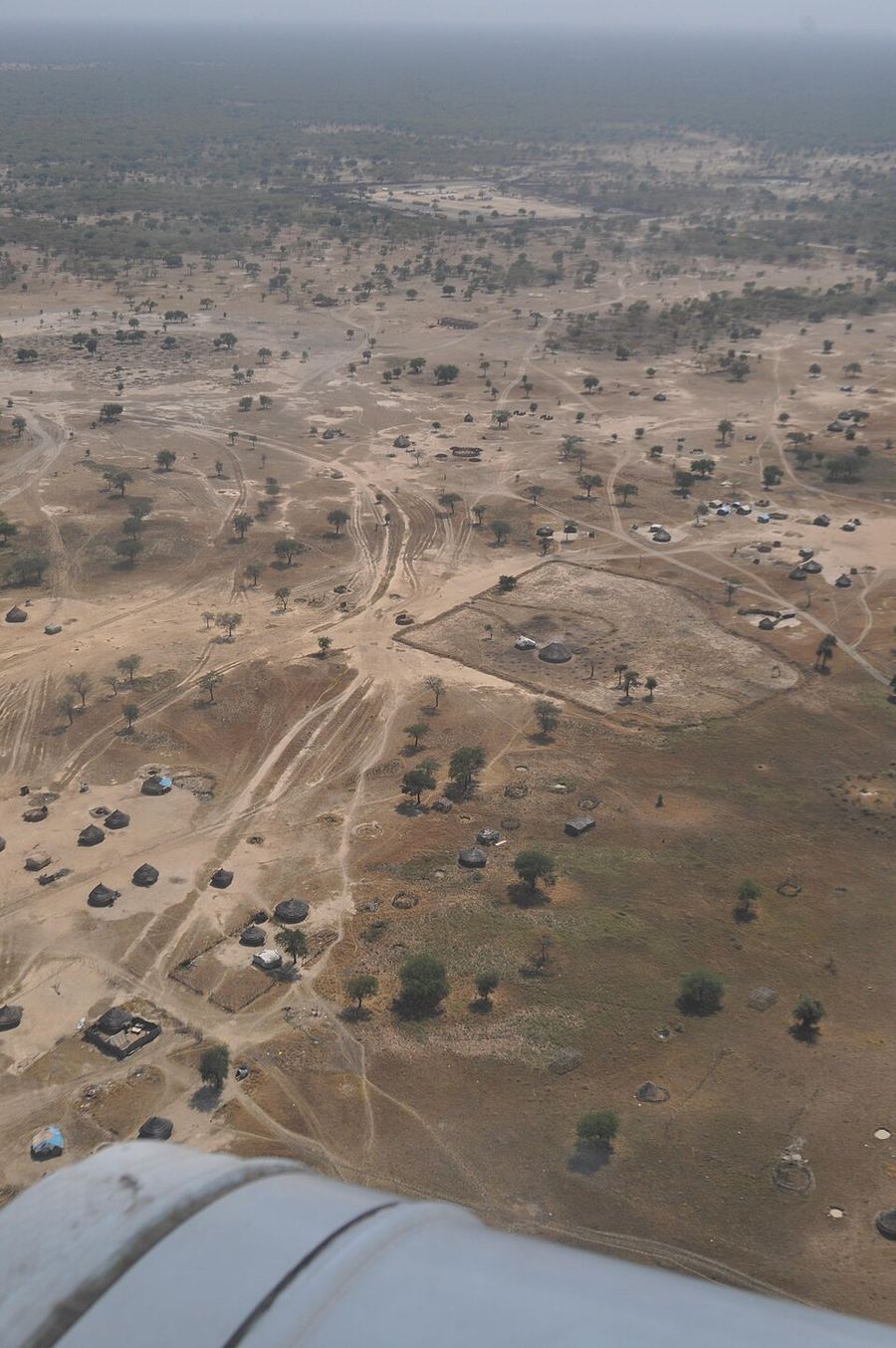
Cattle are the axis of South Sudanese culture among the Nilotic majority, and they are far more than livestock. Among the Dinka and Nuer a herd is wealth, bridewealth, insurance and genealogy at once; young men take praise-names from a favourite ox, compose songs in its honour, and shape its horns as it grows. Dry-season cattle camps draw families to the riverine grazing lands, where the smoke of burning dung keeps insects off the animals and gives herders the pale ash that dusts their skin in photographs seen worldwide. Age-sets structure male life, with initiation marking the passage into adult responsibility, and among the Dinka this was traditionally accompanied by gaar, patterned forehead scarification, now much less common among the young. Kinship is patrilineal and marriage negotiated between families rather than individuals. Beyond the Nilotic groups the picture changes markedly: the Azande of the southwest were a centralised kingdom with a court tradition and are farmers rather than herders, the Shilluk retain a divine kingship in the person of the reth, and the Bari-speaking peoples around Juba are agriculturalists. Christianity, spread by missions under the Condominium, is now woven through all of these alongside older practice.
Culture, S. Sudan
颜邯 / CC BY-SA 4.0

Points Of Pride

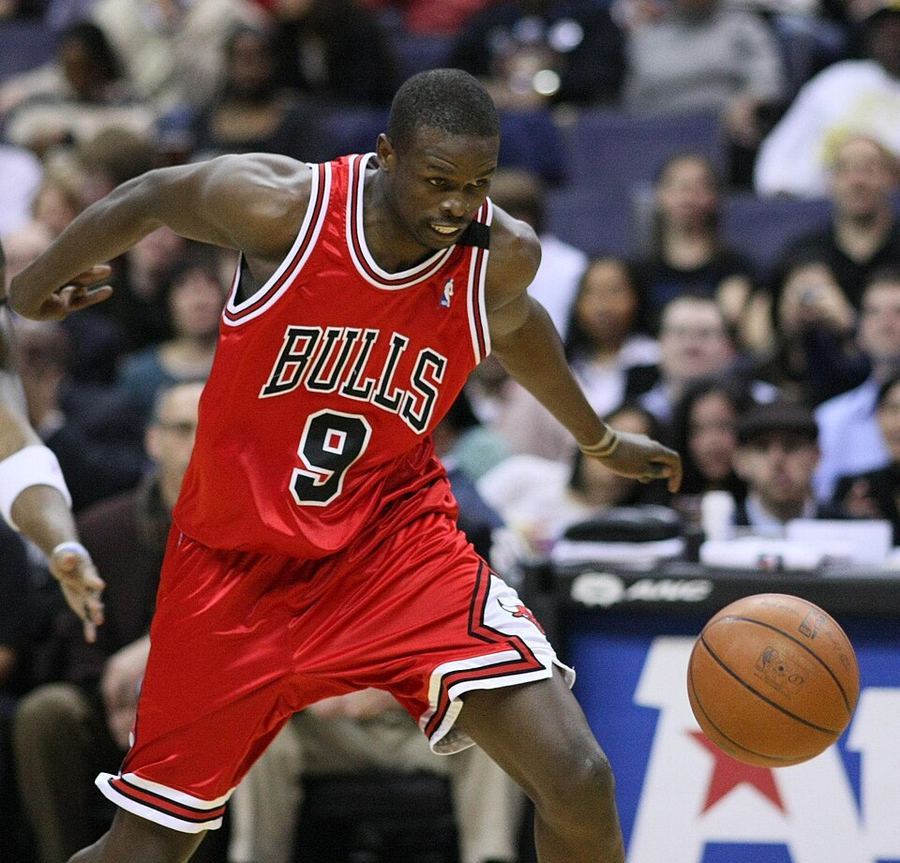
The most obvious source of pride is independence itself: after two civil wars spanning most of the period since 1955, South Sudan became a member state of the United Nations on 14 July 2011, five days after declaring statehood, and remains the newest country to have done so. The natural inheritance is a second. The Sudd is among the largest wetlands on the planet and is designated a Wetland of International Importance; the grasslands east of the Nile carry an antelope migration — white-eared kob, tiang and Mongalla gazelle moving between Boma and Bandingilo — that surveys have placed among the largest terrestrial mammal migrations anywhere, and which survived the war years better than anyone expected. Mount Kinyeti in the Imatong range, at 3,187 metres, gives the country a genuine highland. A third and more recent source of pride is sporting: the national basketball team, built largely from the diaspora and led as federation president by the former NBA player Luol Deng, qualified for the FIBA World Cup in 2023 at its first attempt and went on to the Paris Olympics in 2024. For a country whose international coverage is otherwise almost entirely about conflict, that has carried disproportionate weight at home.
Points Of Pride, S. Sudan
Ninkiibooqashu2 / Public domain

Cultural Fusion

The clearest product of fusion in South Sudan is a language. Juba Arabic is an Arabic-based creole that grew out of the nineteenth-century military and trading camps on the upper Nile, where speakers of many Nilotic and Central Sudanic languages needed a common medium; it has a simplified grammar quite unlike standard Arabic and is now the working speech of Juba's markets, buses and barracks, spoken by people who are not Arabs and mostly not Muslims. English sits above it as the official language of government, courts and schools, chosen at independence in deliberate contrast to Arabic and reinforced by the decades many South Sudanese spent as refugees and students in Kenya, Uganda and Ethiopia — which is also why East African trade goods, music and school curricula travel so easily into the country. Christianity arrived with Catholic and Anglican missions under Anglo-Egyptian rule and has been thoroughly localised, with hymns in Dinka and Bari and church structures that carried moral authority through the war when the state had none. Meanwhile the older layer persists: rainmaking, ancestral shrines and diviners operate alongside the churches rather than beneath them, and many families see no contradiction in both.
Cultural Fusion, S. Sudan
Oxfam East Africa / CC BY 2.0

Music & Dance

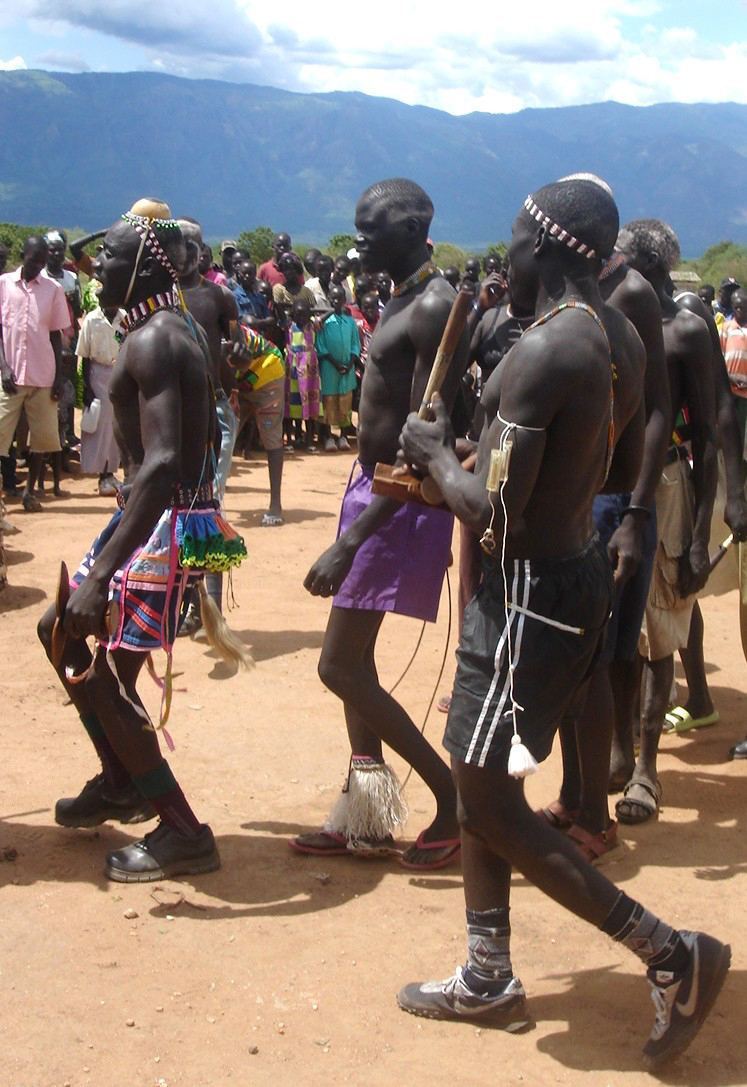
Music in South Sudan begins with the voice and the herd. Cattle praise-songs, composed by young men for their named oxen and performed solo or answered by a chorus, are the best-documented Nilotic genre, and alongside them sit initiation songs, war songs, funeral dirges and the ox-dances in which dancers raise their arms to mimic the sweep of horns. Percussion carries the rhythm — hollowed log drums and gourd rattles — while the lyre family supplies melody, played across the region under names such as the thom. Dances are communal and often competitive between age-sets or neighbouring villages, and among the Dinka and Nuer the tall, vertical leap is the signature movement. In the southwest the Azande have a distinct tradition built on xylophones and harps, closer to Central African forms than to those of the Nile grasslands. The modern popular scene developed largely in exile and in the refugee camps of Kenya and Uganda, absorbing East African benga, reggae and hip-hop; its most internationally known figure is Emmanuel Jal, a former child soldier who built a rap career in Britain and used it to campaign on the war's consequences. Church choirs, ubiquitous and often accompanied by drums, are the other mass musical institution.
Music & Dance, S. Sudan
Unknown / USAID / Public domain

Cuisine & Misattributed Foods

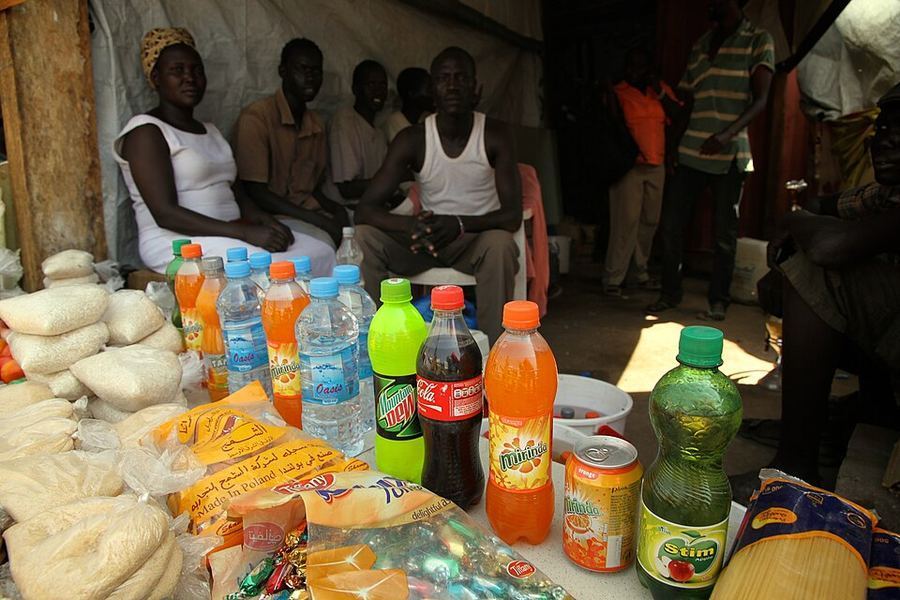
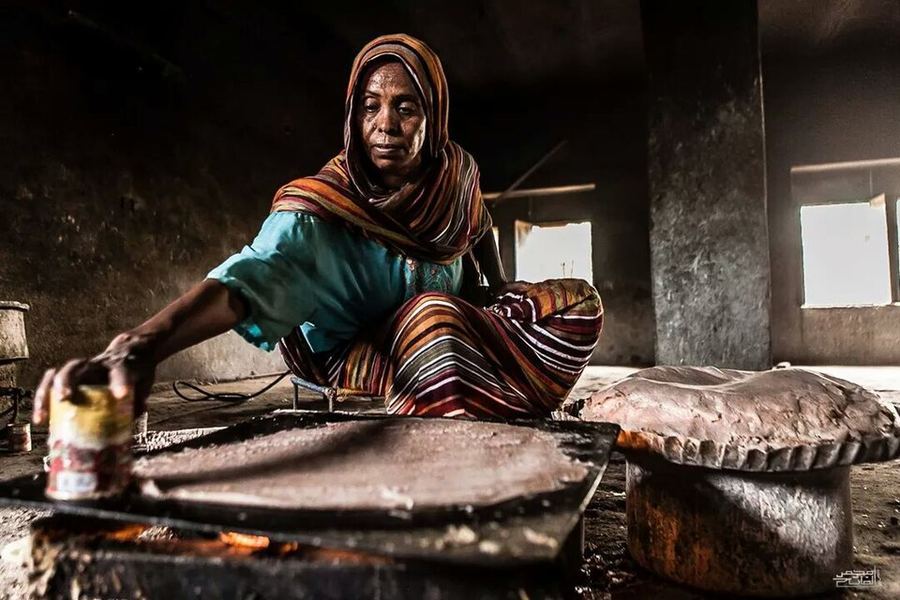
The staple grain is sorghum, ground and cooked into a stiff porridge — asida — or fermented and baked on a hot plate into the thin sour flatbread called kisra, both of which are eaten by hand with a stew spooned over them. Millet and, increasingly, maize serve the same purpose. The stews reflect what a household has: goat, beef on ceremonial occasions, groundnut sauces thickened to a rich paste, okra fresh or dried and powdered, and cowpea leaves and other greens. Along the Nile and in the Sudd, fish is central, and kajaik — a stew of Nile perch or catfish, usually sun-dried first and then simmered with groundnut paste or okra — is the dish most closely identified with the riverine communities. Northern and Middle Eastern influence, carried down the river with the Arabic-speaking trade, shows in ful medames, molokhia and the deep-fried dough of mandazi and doughnuts sold at roadsides. Milk, soured milk and butter matter enormously in the pastoral economy but are foods of the cattle camp more than of the restaurant. Tea, black and heavily sugared, and coffee spiced with ginger are the social drinks, and the tea stall is the standard meeting place in every town.
Cuisine & Misattributed Foods, S. Sudan
Mohamed Elfatih Hamadien / CC BY-SA 4.0

National Dress

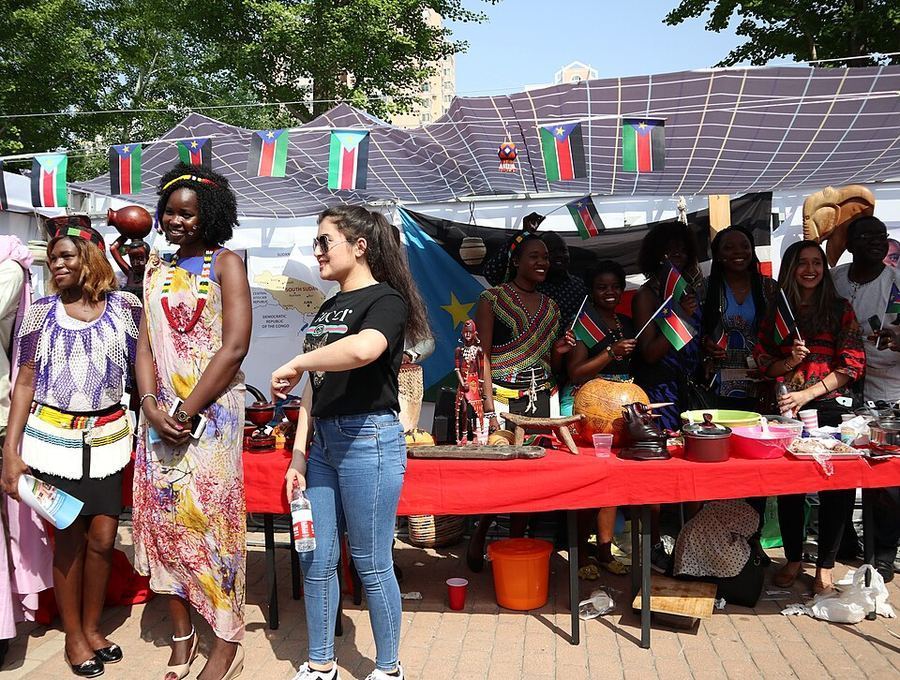
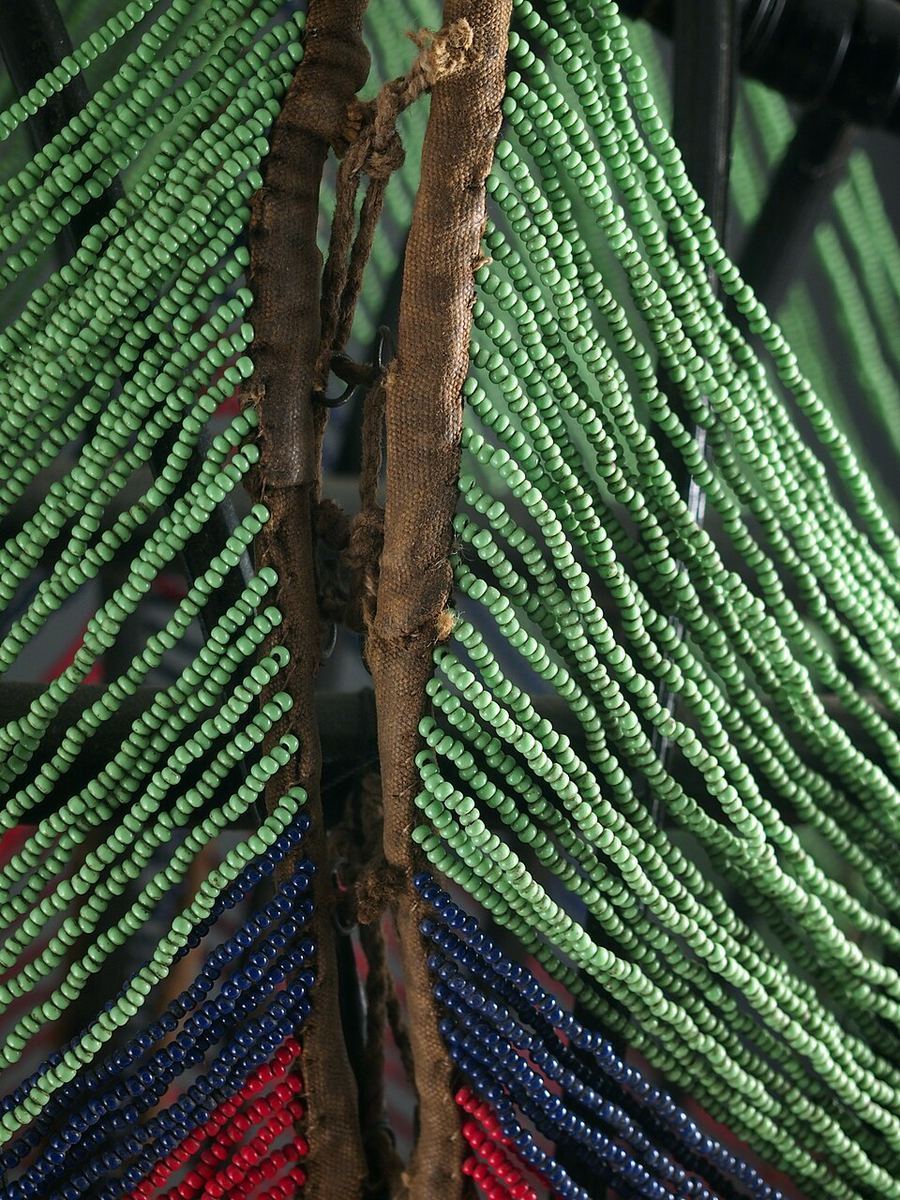
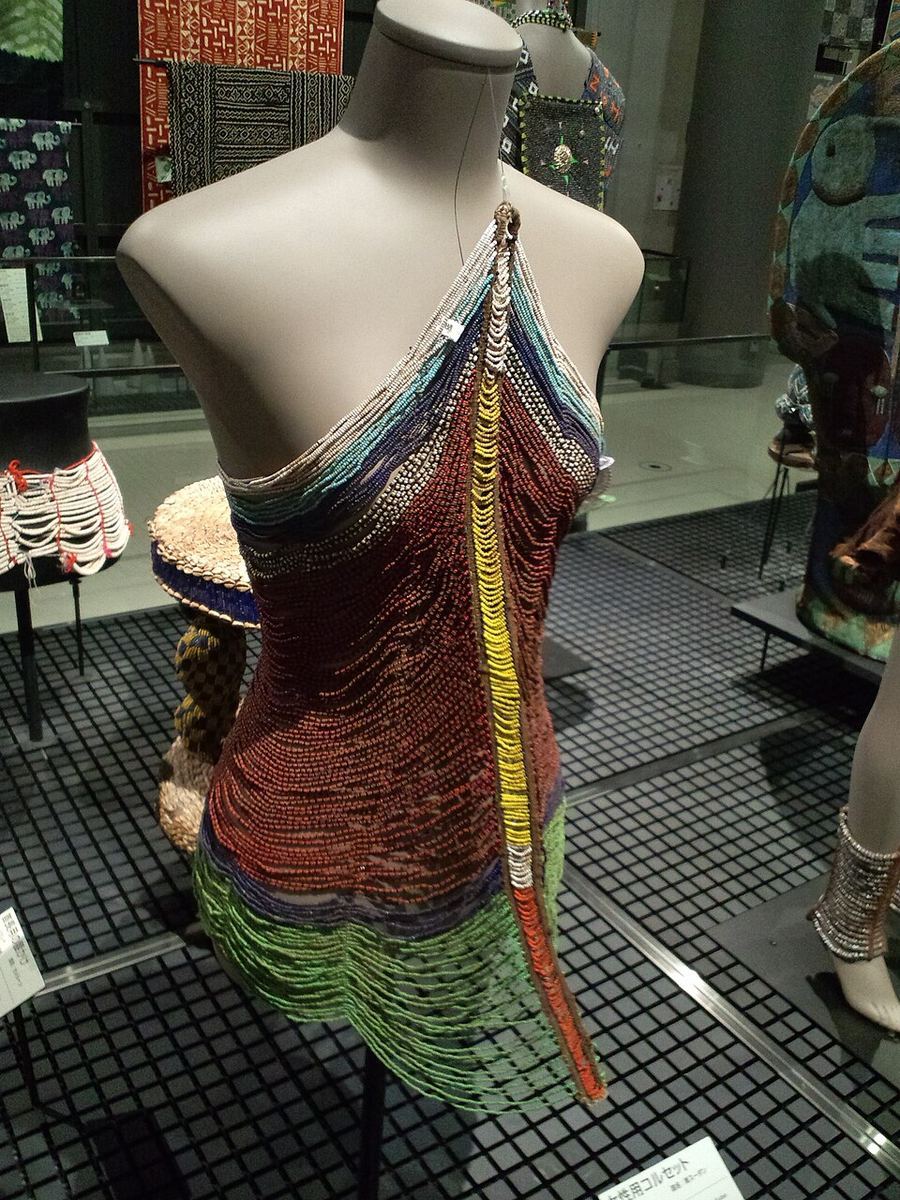
South Sudan has no single codified national costume, and what outsiders picture is usually the ceremonial dress of the cattle-keeping peoples rather than everyday wear. The best-known item is the Dinka beaded corset, a tight bodice of thousands of glass beads stitched over a frame and worn by young unmarried men, in which the colours and the height of the projecting spine signalled age-grade and family wealth; examples are held in major ethnographic museum collections and the form is now largely ceremonial. Beadwork also dominates women's ornament — layered collars, bodices and waistbands — alongside ivory and metal bangles that were once markers of status. Elsewhere the picture differs: in the Azande southwest and the Bari lands around Juba, woven and bark-based textiles and, later, imported cotton prints predominated. Today ordinary clothing is Western or East African in cut, with second-hand imports and bright printed cotton wrappers both common, and Islamic dress including the jalabiya visible in the Muslim minority and in the Arabic-speaking commercial quarters. Since 2011 the national flag's colours have themselves become a dress idiom, printed onto cloth and worn at independence-day celebrations, football matches and diaspora events.
National Dress, S. Sudan
Ann Porteus from Tasmania, Australia / CC BY 2.0

Sports & Inspiring Athletes

Football is the most widely played sport, organised under a federation admitted to FIFA and the Confederation of African Football in 2012, with a national side nicknamed the Bright Stars that plays out of Juba Stadium and has yet to qualify for a major tournament; club football is hampered by the shortage of playable pitches and by the cost of travel between states. Basketball, however, has become the country's genuine international strength, drawing on a tall Nilotic population and a large diaspora that grew up in North American and European club systems. Traditional wrestling remains the sport with the widest rural following and the strongest ceremonial framing, with champions carried on shoulders and communities investing serious prestige in the outcome. Athletics has a foothold through distance running, helped by the highland border regions and by the training bases that South Sudanese refugees reached in Kenya. Volleyball and, in the towns, table tennis fill out school and youth programmes. The wider constraint is infrastructure: the country has very few enclosed sports facilities, and national teams have often had to prepare and even host qualifying fixtures outside the country, which makes the recent international results all the more conspicuous.
Sports & Inspiring Athletes, S. Sudan
The Rocket Knight / Public domain

Notable Educational Programs

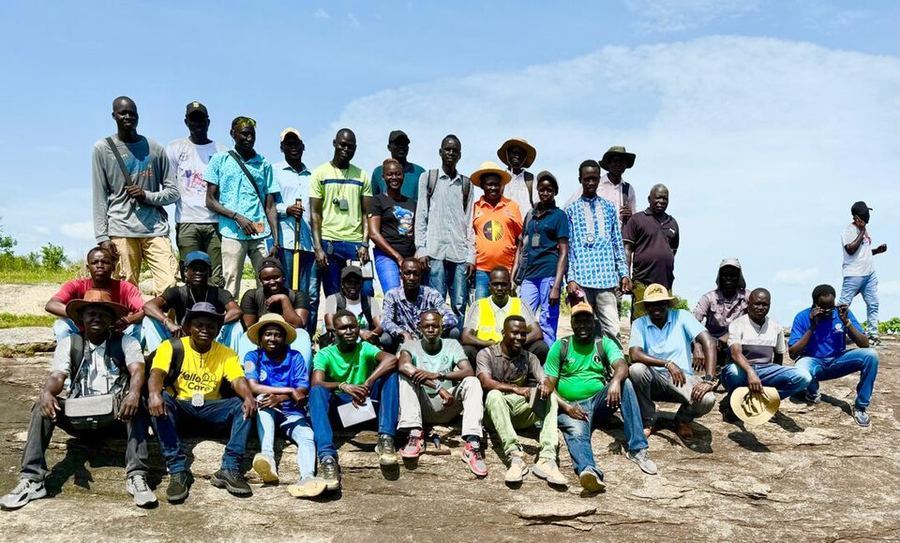
Education is the sector most damaged by fifty years of intermittent war, and South Sudan reports some of the lowest literacy and enrolment figures in the world, with the gap between boys and girls among the widest anywhere. Large numbers of school-age children are out of school entirely, many classes meet under trees or in temporary shelters, and a substantial share of teachers are untrained volunteers paid irregularly or not at all. The switch of the language of instruction from Arabic to English at independence, while politically deliberate, left many serving teachers teaching in a language they had not been trained in. The university system is headed by the University of Juba, founded in 1977, which spent the second civil war relocated to Khartoum and returned to its own campus after 2011; Upper Nile University at Malakal and the University of Bahr el Ghazal at Wau are the other public institutions, both repeatedly displaced by fighting. Alternative and accelerated learning programmes run by United Nations agencies and non-governmental organisations reach older children and demobilised youths who missed primary school. A large share of the educated professional class was schooled in Kenya, Uganda, Ethiopia or Sudan, and attracting that diaspora back is a standing policy problem.
Notable Educational Programs, S. Sudan
JAMES MAKUEI MAYEN / CC0

Wars & Conflicts

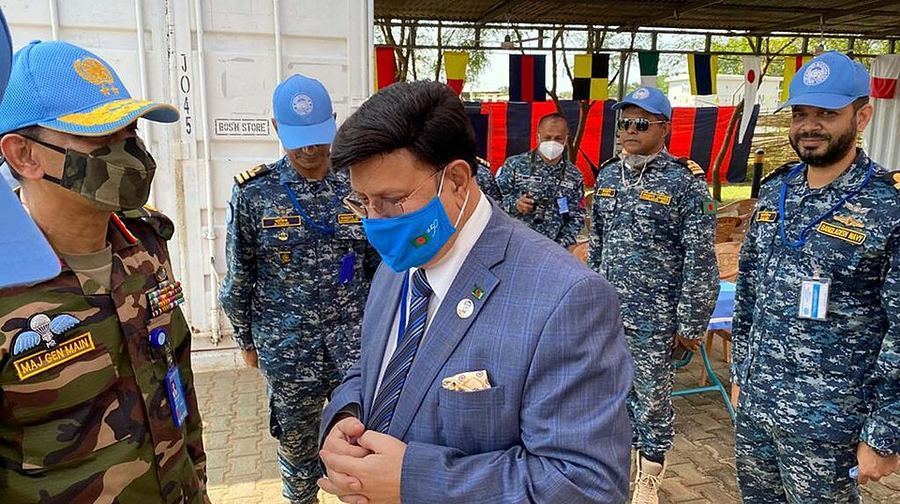
Independence in 2011 was followed in December 2013 by a political rupture inside the ruling party between President Salva Kiir and his dismissed deputy Riek Machar, which became a civil war fought largely along Dinka and Nuer lines and marked by massacres of civilians, mass displacement and famine conditions in parts of Unity state. A study published in 2018 estimated the excess death toll at around 400,000. Two peace agreements were signed, in 2015 and again — as the Revitalised Agreement — in September 2018, and a unity government was formed in February 2020 with Machar returning as first vice-president, but implementation of its security arrangements and the promised elections has repeatedly slipped. Even where the national war subsided, localised armed violence has not: cattle raiding and revenge killing in Jonglei, Warrap and the Equatorias have caused heavy casualties, and a separate insurgency has persisted in parts of the Equatoria region. The country hosts a large United Nations peacekeeping mission and, at Abyei on the Sudanese border, a separate interim force. Sudan's own war from 2023 sent hundreds of thousands of returnees and refugees south and damaged the export pipeline on which South Sudan's budget depends.
Current as of 2026-08-07
Wars & Conflicts, S. Sudan
Press Information Department / Public domain

Land & Border Disputes

The most consequential unresolved dispute is Abyei, an area on the border with Sudan claimed by both states and inhabited by the settled Ngok Dinka and seasonally by the Misseriya, whose herds move through it. A boundary defined by an arbitral tribunal in The Hague in 2009 was accepted by both governments, but the referendum on Abyei's final status promised alongside South Sudan's own has never been held, and the area is administered under an interim arrangement policed by a dedicated United Nations force. Other stretches of the 2,000-kilometre boundary with Sudan remain undemarcated, including the Kafia Kingi enclave in the west and areas along the oil-bearing frontier. In the far southeast the Ilemi Triangle, between South Sudan, Kenya and Ethiopia, has been effectively administered by Kenya for decades without an agreed delimitation. Beyond territory, the sharpest recurring quarrel with Sudan is economic rather than cartographic: South Sudan holds most of the former Sudan's oil reserves but none of the export infrastructure, and the transit fees, shutdowns and pipeline damage that follow from that arrangement have repeatedly brought the two governments into confrontation since 2012.
Land & Border Disputes, S. Sudan
Sudan Envoy / CC BY 2.0
Land, Life & Legacy

Land & Climate

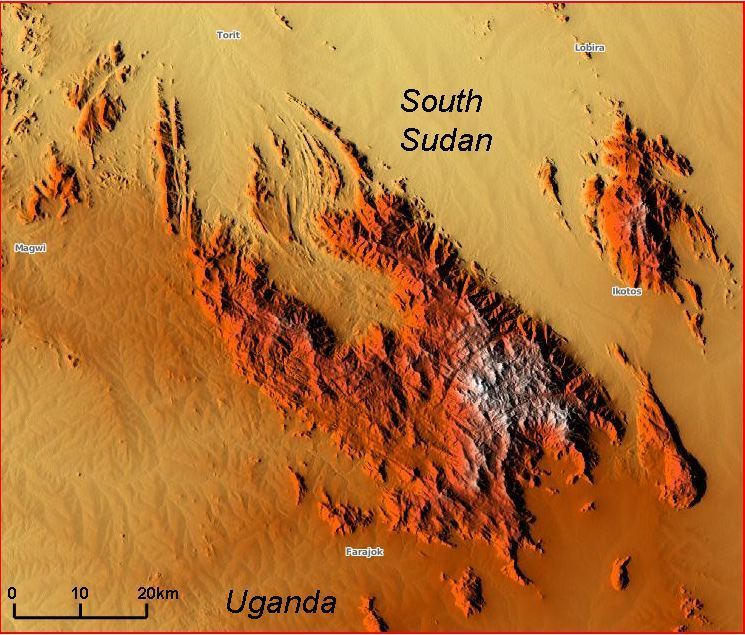
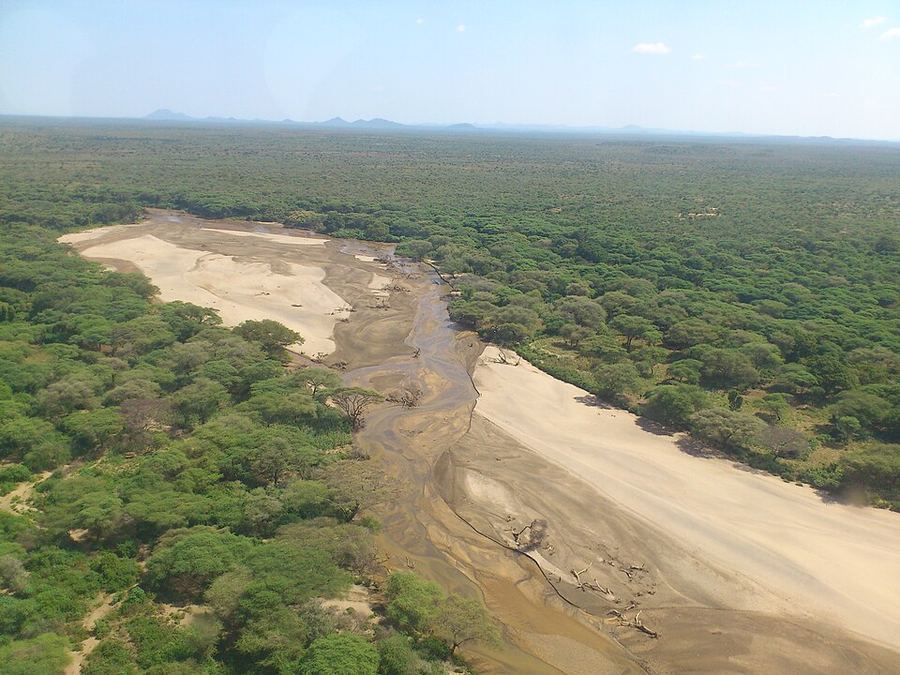
South Sudan is landlocked, bordered by Sudan, Ethiopia, Kenya, Uganda, the Democratic Republic of the Congo and the Central African Republic, and its terrain rises from a vast central basin toward highlands on the southern and eastern rims. The White Nile enters from Uganda and, in the flat clay plain north of Bor, loses its channel into the Sudd — a seasonally flooding papyrus and reed swamp so large that a great share of the river's water evaporates within it, and so impassable that nineteenth-century expeditions upriver repeatedly failed. An attempt to cut through this loss, the Jonglei Canal, was abandoned incomplete in 1984 when war reached the excavation. Around the basin lie the ironstone plateau of the southwest, the Boma plateau in the east, and the Imatong Mountains on the Ugandan border, where Mount Kinyeti reaches 3,187 metres and supports montane forest quite unlike the surrounding savanna. The climate is tropical with a single long wet season, roughly April to October in most of the country and shorter as one moves north, followed by a hot dry season that drives herders and their cattle toward the rivers. Flooding has become the dominant hazard: successive years of exceptional Nile levels since 2019 have inundated large areas of Unity and Jonglei states for months at a time.
Land & Climate, S. Sudan
Maps for free, Aymatth2 / CC BY 3.0

Entertainment

Traditional wrestling is the most distinctive South Sudanese pastime and the one with the deepest social meaning. Matches between neighbouring communities — the Mundari, Dinka and Nuer all have strong traditions — draw crowds in the hundreds or thousands, with drumming, chanting supporters and champions who become locally famous; since independence, wrestling tournaments have repeatedly been staged in Juba and in the states as deliberate peace-building events bringing rival communities into a controlled contest. Football is the mass participation game, played on cleared ground in every town, and the Sunday match plus the televised European leagues fill the video halls where a small fee buys a seat in front of a satellite feed. Tea and coffee stalls under mango trees serve as the ordinary social venue, and dominoes and cards are the usual accompaniment. In the cattle-keeping areas, life in the dry-season camp has its own rhythm of song, dance and display that is leisure and livelihood simultaneously. Church attendance and choir practice occupy a large share of weekend time. In Juba, riverside bars along the Nile, live music venues and a growing number of restaurants serving Ugandan, Ethiopian and Eritrean food make up the urban scene.
Entertainment, S. Sudan
Олег Сокол / CC BY-SA 3.0

Art & Museums

South Sudanese visual tradition is overwhelmingly an art of the body and of useful objects rather than of the framed picture. Scarification patterns — the parallel forehead lines of Dinka gaar, the dotted arcs of the Nuer, and distinct designs among the Shilluk and Murle — functioned as a permanent record of group, age-set and initiation, and are the most photographed of the country's aesthetic forms even as they fall out of practice. Beadwork is the great portable craft, worked into the male corsets and female collars already described, with colour vocabularies that carried real information about status and marriageability. Pastoral peoples also produce carved wooden headrests, milk gourds decorated with pokerwork, ivory and horn ornaments, and long-handled spears whose forms vary by group. The Azande of the southwest have a separate and older reputation for carving, harps with human-headed finials, and finely woven basketry and mats. A contemporary gallery scene barely existed before independence and remains small, centred on a handful of Juba spaces and on artists working in the diaspora, much of whose subject matter deals directly with war, displacement and return; several of them have exhibited abroad rather than at home, since the domestic art market is minimal.
Art & Museums, S. Sudan
Yanajin33 / CC BY-SA 3.0

Notable People

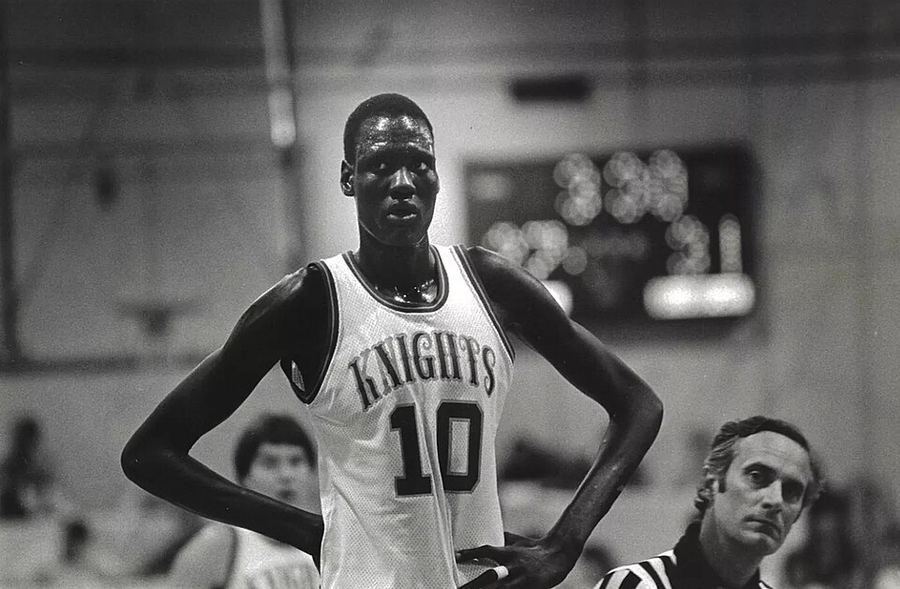
The founding political figure is John Garang de Mabior, who led the Sudan People's Liberation Movement/Army from 1983, negotiated the Comprehensive Peace Agreement of 2005, and died in a helicopter crash in July that year weeks after being sworn in as Sudan's first vice-president; his mausoleum in Juba is the site of national commemorations. Salva Kiir Mayardit succeeded him and became the country's first president at independence in 2011. In sport, Manute Bol — at 2.31 metres one of the tallest men ever to play in the NBA — became the first internationally famous South Sudanese athlete and spent his later years and much of his money on relief work in his home region; Luol Deng, born in Wau and raised partly in Britain, played more than a decade in the NBA and now presides over the national basketball federation. Alek Wek, also from Wau, reached the front rank of international fashion modelling in the late 1990s and has served as a UNHCR goodwill ambassador. Emmanuel Jal turned an childhood as a conscripted soldier into a music and advocacy career. Among religious figures, Bishop Paride Taban of Torit is widely known for the Holy Trinity Peace Village at Kuron, an inter-communal settlement founded in 2005.
Notable People, S. Sudan
University of Bridgeport - Uncredited photographer / Public domain

Inventions & Breakthroughs

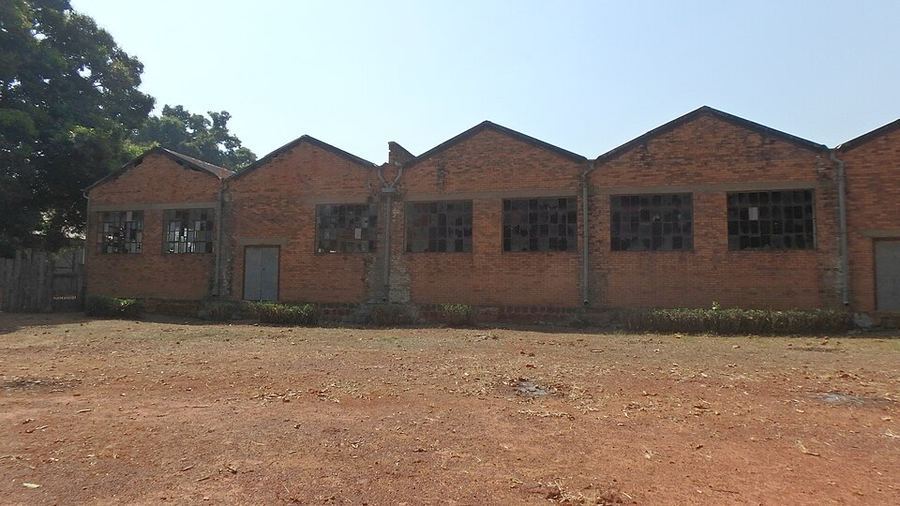
South Sudan has no industrial invention record to speak of — it entered independence with almost no manufacturing base, and what technical capacity exists is concentrated in the foreign-operated oilfields. Its distinctive technologies are pastoral and vernacular rather than patented. Cattle husbandry in the Sudd floodplain rests on an accumulated body of practice: transhumant movement calibrated to the flood pulse, the burning of dung to produce smoke against biting flies and the ash used as a hide dressing and body covering, selective breeding for horn shape, and the fistula and bleeding techniques used to draw blood as food without killing the animal. Housing is adapted to the same environment — the tukul, a circular mud-and-wattle dwelling with a conical thatched roof raised on a plinth against seasonal water, is built and rethatched by household labour and is thermally far better suited to the climate than the corrugated iron that has replaced it in towns. Fishing in the Sudd uses conical basket traps, spears and seasonal weirs keyed to receding water. The most consequential engineering project ever attempted in the territory, the Jonglei Canal, was a foreign design abandoned unfinished in 1984 and is remembered locally more as a grievance than an achievement.
Inventions & Breakthroughs, S. Sudan
Alanlemagne / CC BY-SA 4.0

Science & Technology

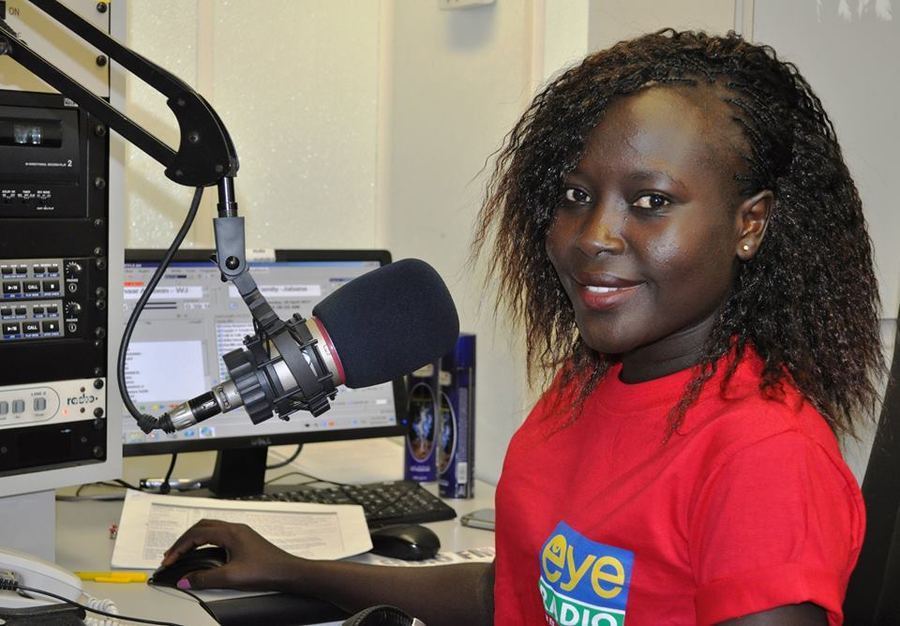
South Sudan's formal research capacity is very small, and the country's science is largely applied work carried out with international partners. Public health is the most active field: the country has been a focus of the global campaign against Guinea worm disease, whose near-elimination there is one of the clearest public-health successes in the region, and of long-running programmes against kala-azar, river blindness and sleeping sickness, alongside repeated cholera and measles responses. Hydrology and wetland ecology attract outside scientific attention because of the Sudd's role in the Nile system, and aerial wildlife surveys of the Boma-Badingilo migration, flown with international conservation organisations, have produced some of the most cited field data generated in the country. The extractive sector holds the bulk of the technical workforce, with oilfield operations in Unity and Upper Nile run by consortia in which Chinese, Malaysian and Indian companies hold the operating expertise. Digital connectivity has been the fastest-moving area of everyday technology: mobile networks reached the towns quickly after 2011 and mobile money and satellite internet have partially substituted for a banking and telecommunications infrastructure that was never built, though electricity supply remains among the least available in the world.
Science & Technology, S. Sudan
USAID in Africa / Public domain
On The World Stage
Champions of S. Sudan

Champions & Defining Moments

South Sudan's international sporting breakthrough came in basketball. The men's national team qualified for the 2023 FIBA World Cup at its first attempt, finished as the best-placed African side there, and thereby took the continent's berth at the 2024 Paris Olympic Games — the country's first appearance in a team sport at the Games. In a pre-Olympic exhibition in London the team lost to the United States by a single point, a result that made headlines far beyond the sport. Athletics provided the earlier chapters: at London 2012, before the new state had a recognised Olympic committee, the marathon runner Guor Marial competed as an Independent Olympic Athlete under the Olympic flag, and South Sudan's own committee was recognised in time for Rio 2016. Several of the athletes on the first Refugee Olympic Team at Rio — including Yiech Pur Biel, Paulo Amotun Lokoro, Rose Nathike Lokonyen and James Nyang Chiengjiek — were South Sudanese who had been raised in Kenya's Kakuma camp, and their participation gave the country a presence at the Games it could not yet field itself. The diaspora also supplies basketball talent to leagues in the United States, Australia and Europe well out of proportion to the country's population.

IOCOlympediaBBCReuters
Keith Allison / CC BY-SA 2.0
Government & Leadership

Presidential republic

Seat of the executive

Executive

Salva Kiir Mayardit — President

In office since 9 July 2011

Jenn Warren / Public domain
The legislature

Législature nationale (National Legislature)

Bicameral

Council of States (Al-Watani) — 100 seats

Last election 8/2/2021 · 32.1% women

Transitional National Legislative Assembly (Al-Majlis Al-Tachirii) — 550 seats

Last election 5/10/2021 · 32.4% women

Al-Qafilah magazine / Public domain

Supreme Court of South Sudan (consists of a chief justice, deputy chief justice, and 5 additional justices); the 2011 Transitional Constitution of South Sudan calls for 9, rather than 5 additional justices

Economy, Trade & Government

Currency & GDP

South Sudanese Pound — SSP (None)

GDP (PPP): $6.752 billion (2023 est.)

Per capita: $400 (2023 est.)

Exports

$4.499 billion (2023 est.)

crude petroleum, refined petroleum, forage crops, gold, scrap iron (2023)

Partners: China 51%, Singapore 29%, UAE 10%, Germany 4%, Uganda 3% (2023)

Imports

$4.443 billion (2023 est.)

garments, cement, other foods, iron bars, cereal flours (2023)

Partners: Uganda 33%, UAE 26%, Kenya 14%, China 10%, USA 3% (2023)

Government

Type: presidential republic

Independence: 9 July 2011 (from Sudan)

Terrain → Where People Live

How mountains, coasts, and rivers shape settlement (LandScan).

Coming — data

Migration & Ethnic Settlement

Where groups settled and how people move (GeoEPR + UNHCR).

Coming — data

Universities

Notable institutions, mappable as points.

Coming — data
Economy & government facts: CIA World Factbook (public domain), via OpenFactBook / factbook.json.
Every fact and narrative claim will carry a visible source citation. Data-driven sections light up automatically wherever HERA has coverage.