HERA · Human Entity Reference Atlas by Masego Inc

← Sao Tome and Principe 🌐 3D View
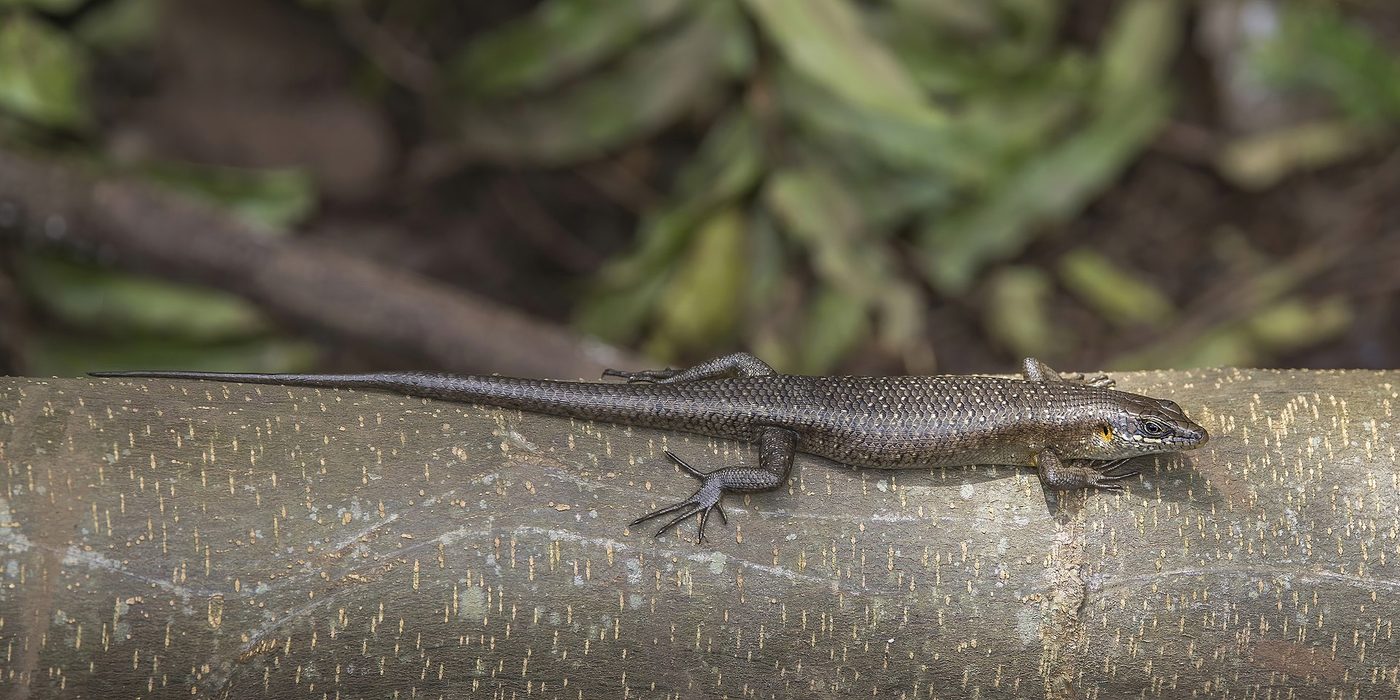
São Tomé skink (Trachylepis thomensis), Sao Tome and Principe
Sao Tome and Principe STP
São Tomé skink (Trachylepis thomensis) — Photo: Charles J. Sharp / CC BY-SA 4.0 via Wikimedia Commons
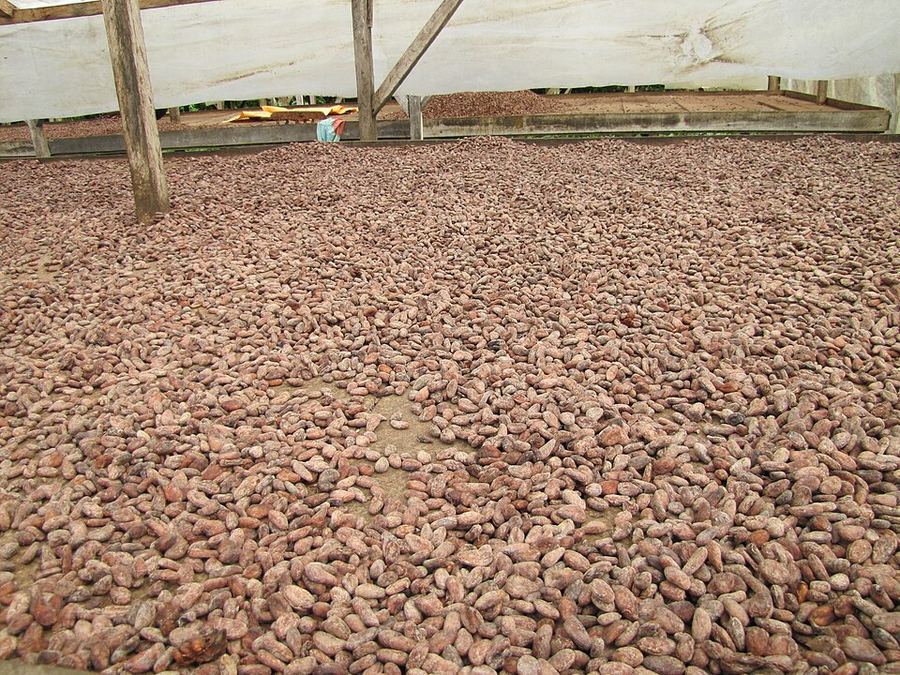
Did You Know In 1909 British and German chocolate makers led by Cadbury boycotted São Toméan cocoa after journalists documented that its contract labour was slavery in all but name. — Encyclopaedia Britannica

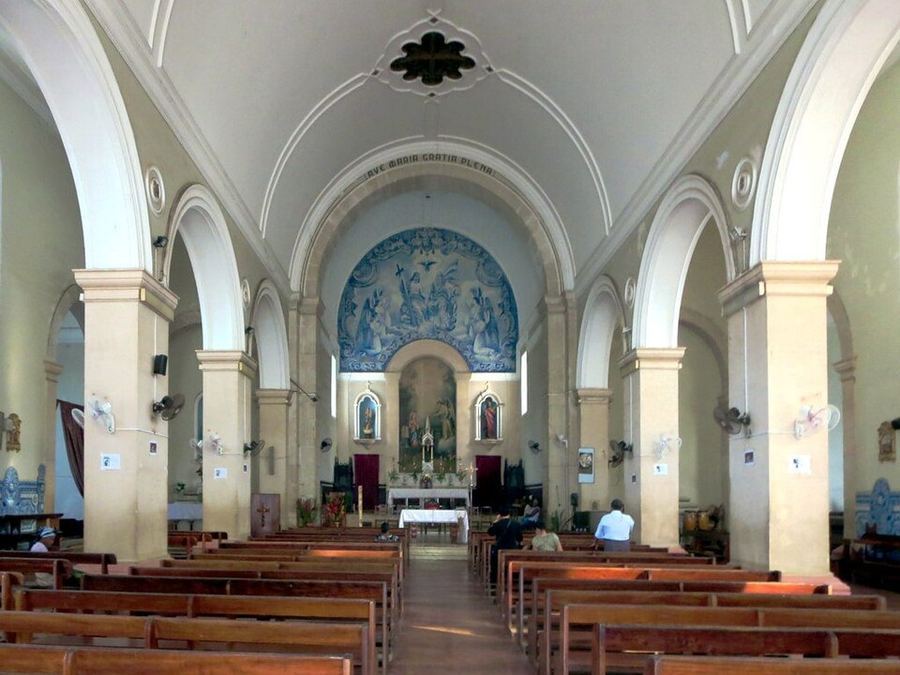
São Tomé and Príncipe is an archipelago republic in the Gulf of Guinea, about 220,000 people living on two principal volcanic islands and a scatter of islets some 250 kilometres off the coast of Central Africa. It is the second-smallest country in Africa by population and the smallest Portuguese-speaking state in the world. The islands were uninhabited when Portuguese navigators reached them in the 1470s, which makes the country unusual on the continent: its entire population descends from people brought there after 1493 — Portuguese settlers and, overwhelmingly, enslaved and later contracted Africans from Angola, Mozambique, Cabo Verde and the nearby mainland. That origin produced a creole society with its own Portuguese-based languages, of which Forro is the most widely spoken alongside Angolar and, on Príncipe, Lung'Ie. Portuguese is the official language and Roman Catholicism the largest religion. The economy was built on a single crop at a time — sugar first, then coffee, then cocoa, which made the islands one of the world's leading producers in the early twentieth century — and remains small, aid-dependent and increasingly oriented toward high-value organic cocoa and eco-tourism. Independence came on 12 July 1975, and since the constitutional reform of 1990 the country has held repeated multiparty elections with peaceful transfers of power.

CIA World FactbookEncyclopaedia BritannicaWorld Bank
Population
223,561
Capital
Sao Tome
Currency
None STD
Time zones
Largest city
São Tomé
Human Geography Themes
Loading national figures…
Largest Cities
São Tomé154,878
In Perspective

São Tomé's urban core is home to about 154,878 people.

Among the world's megacities, though, it's one of many — the giants of Asia and Latin America run larger still:

São Tomé154,878
Jakarta40,545,126
Dhaka37,307,160
Tokyo33,244,670
Shanghai30,678,616
Cairo25,230,325
The Country & Its People

History

Portuguese navigators sighted the uninhabited islands in the early 1470s, and permanent settlement began in 1493 with a colony of settlers, exiles and forcibly converted Jewish children. Within decades São Tomé had become the model for something new: a plantation island growing sugar with enslaved African labour and shipping the crop to Europe — the prototype that Portuguese and other European powers would carry to Brazil and the Caribbean. Slave revolts, competition from Brazilian sugar and Dutch raids broke that first economy by the seventeenth century, and the islands subsided into an entrepôt of the slave trade. A second boom came in the nineteenth century, when coffee and then cacao were planted on great estates known as roças, whose owners built hospitals, chapels and rail lines and whose workers, though slavery was formally abolished in 1875, were bound by a contract-labour system that was slavery in most respects. British and German chocolate manufacturers led by Cadbury boycotted São Toméan cocoa in 1909 after the journalist Henry Nevinson documented those conditions. On 3 February 1953 colonial forces killed a still-disputed number of Forro islanders in the Batepá massacre, an event now commemorated as a national day and treated as the birth of the independence movement. Portugal's 1974 revolution led to independence on 12 July 1975 under the MLSTP and President Manuel Pinto da Costa.
Culture

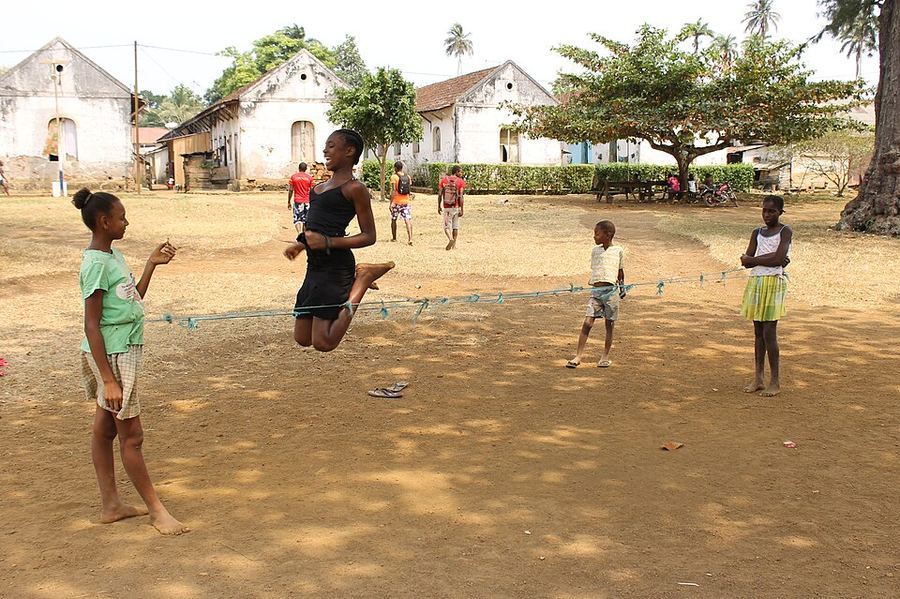
Because everyone on the islands arrived after 1493, São Toméan culture is creole in the strict sense — assembled from Portuguese and multiple African inheritances into something that belongs to neither. The main social distinctions are historical rather than ethnic in the usual sense: the Forros, descendants of those freed before or at abolition, long held the middle ground of island society; the Angolares, who live mainly in the south around São João dos Angolares and are traditionally fishers, trace themselves to escaped or shipwrecked Angolans and speak a markedly different creole; the serviçais were the contract workers brought from Angola, Mozambique and Cabo Verde for the cocoa estates, and Tongas their island-born children. Life is organised around the extended family and, in the countryside, around the roça — many of the old plantation compounds are still lived in, their sanzalas of workers' rooms now housing whole communities. Catholicism supplies the ceremonial year, with saints' days celebrated island by island, and coexists with older beliefs in ancestral influence and in the healing practice of curandeiros. The pace of life is famously unhurried, summarised in the local expression leve-leve — gently, gently — which islanders use about themselves with a mixture of pride and irony.

Points Of Pride

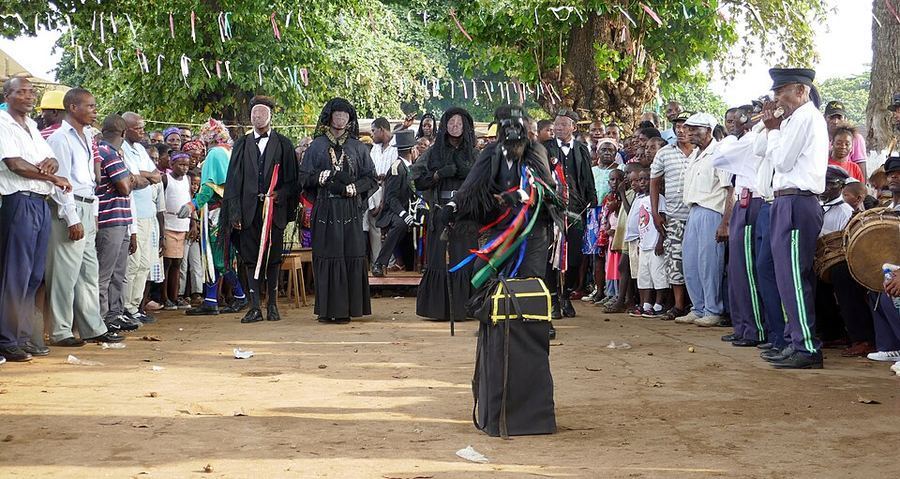
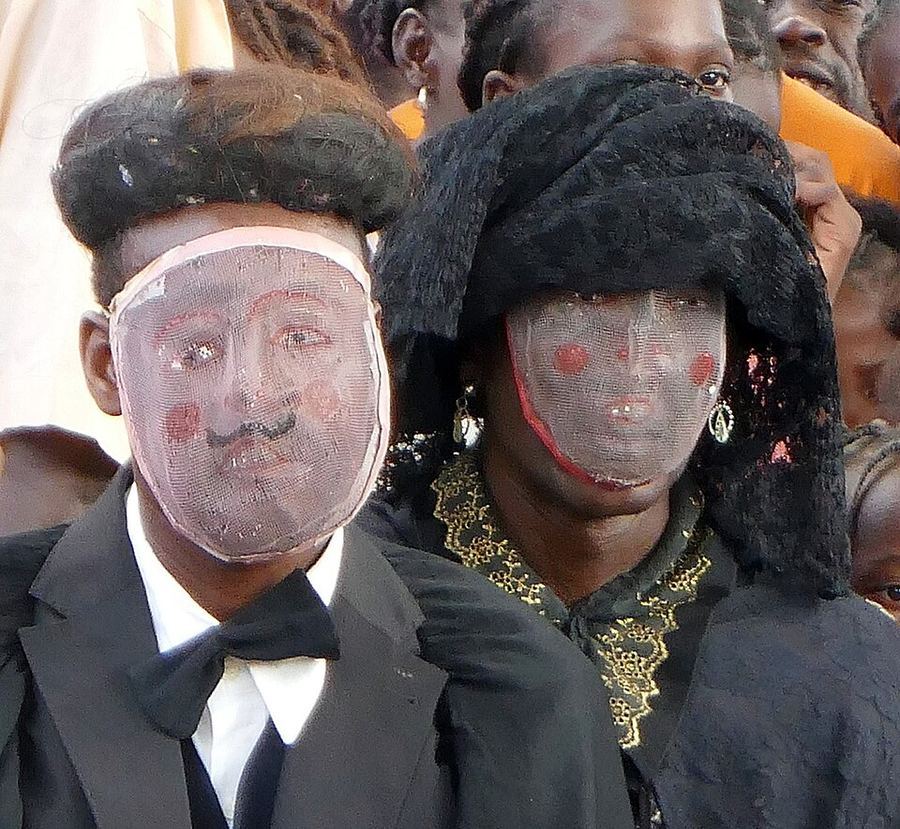
The first point of pride is political: a country of a couple of hundred thousand people has run competitive multiparty elections since 1991 with repeated peaceful handovers between rival parties, an unusual record in the region and one islanders cite readily. The second is the natural inheritance. The islands are among the most biologically distinctive places on earth for their size, with an exceptional density of species found nowhere else — the São Tomé grosbeak, the dwarf ibis and the giant sunbird among the birds alone — which has earned them a place on global conservation priority lists and the informal label of an African Galápagos. Príncipe in its entirety was designated a UNESCO Biosphere Reserve in 2012, and the Obô natural parks protect the rainforest core of both islands. A third is cocoa: after decades of decline the country has rebuilt a reputation at the fine-flavour end of the market, with organic and single-origin beans from smallholder cooperatives commanding premium prices in European chocolate. And a fourth is cultural — tchiloli, the masked street drama performed on São Tomé, is a form found nowhere else in the world, a five-centuries-old European chivalric play kept alive by African island communities long after it vanished from Europe.

Cultural Fusion

Fusion is not a feature of São Toméan culture; it is its entire construction. The languages make the point most clearly: Forro, Angolar and Lung'Ie are all Portuguese-lexified creoles, but their grammar and much of their vocabulary come from Edo, Kikongo and Kimbundu sources reflecting the different African origins and different eras of the populations that formed them, and they are distinct enough that speakers of one do not automatically understand another. Later arrivals added further layers — Cabo Verdean creole came with contract workers in the twentieth century and is still spoken in some communities. Tchiloli is the most vivid single artefact of the encounter: a Portuguese Renaissance play about a murder trial at the court of Charlemagne, performed in Portuguese by masked island actors to the accompaniment of African drums and flutes, its courtroom scenes widely read by islanders as a commentary on colonial justice. Príncipe's Auto de Floripes, staged each August around the feast of São Lourenço, works the same way with a different Carolingian story. Even the cuisine is a fusion record, with African leaf stews cooked in palm oil beside Portuguese bread, and cocoa and coffee — American and Ethiopian crops — that became the islands' economic identity.

Music & Dance

The islands' traditional dances carry Portuguese names and African rhythms. Ússua is the formal, courtly one — couples in European-style dress moving through figures that parody the manners of the plantation house — while socopé, whose name is glossed locally as the slow foot, is the more relaxed carnival dance, played by brass and percussion bands and long the standard music of island festivities. Dêxa is the freer, more improvisatory form, and puíta refers both to a friction drum and to the dance driven by it. All of these belong to a calendar of saints' days and community feasts rather than to a concert stage. The dramatic traditions are inseparable from their music: tchiloli performances run for hours accompanied by drums, shakers and transverse flutes, and Príncipe's Auto de Floripes has its own processional accompaniment. Popular music from the mid-twentieth century onward absorbed the wider Lusophone Atlantic — Angolan semba and kizomba, Cabo Verdean coladeira, Brazilian rhythms — and produced a local dance-band style that circulates through the small clubs of the capital. Because the domestic market is tiny, São Toméan musicians have generally built careers in Portugal, and Lisbon rather than São Tomé has been where most recordings were made.

Cuisine & Misattributed Foods

The national dish is calulu, a stew of smoked or dried fish — sometimes meat — simmered with okra, aubergine, tomato and a generous quantity of leaves, seasoned with palm oil and served with angú, a stiff porridge made from banana flour or maize. Palm oil is the defining fat, red and unrefined, and it colours much of the island table. Fish is the everyday protein, grilled or stewed, with flying fish, tuna and reef species landed by pirogue crews and sold on the beach; the Angolar communities of the south are especially associated with fishing. Starch comes from breadfruit, cooking banana, cassava, taro and yam more often than from rice, which is imported. The islands' fruit is prodigal — jackfruit, soursop, star fruit, papaya, and the fatty purple safú, or African pear, roasted or steamed until it softens and eaten with bread or maize. Portuguese inheritance shows in bread, in salt cod on feast days and in the pastry counter. To drink there is palm wine tapped fresh from the tree and a strong local cane spirit, alongside coffee and cocoa from the estates that shaped the whole economy — the latter increasingly consumed at home as chocolate rather than exported only as beans.

National Dress

São Tomé and Príncipe has no formally codified national costume, and everyday clothing is light, Western in cut, and adapted to a hot and humid equatorial climate. What functions as traditional dress is the women's pano — lengths of brightly printed cloth of the kind worn across West and Central Africa, wrapped as a skirt, tied as a shoulder or head cloth, or used to carry an infant on the back — combined with a blouse and, on feast days, with layered jewellery. The prints themselves arrive through the same Gulf of Guinea trade networks that supply the mainland, so the material culture is continuous with the coast even though the population's origins are more varied. The islands' most distinctive costume, however, is theatrical rather than everyday. Tchiloli players perform in wire-mesh or painted masks with impassive European features, dressed in dark suits, sashes, capes and hats that evoke a Portuguese court, and carry wooden swords; the Auto de Floripes on Príncipe similarly divides its cast into Christian and Moorish ranks with distinguishing colours and headgear. These costumes are maintained by the performing troupes and passed down within families.

Sports & Inspiring Athletes

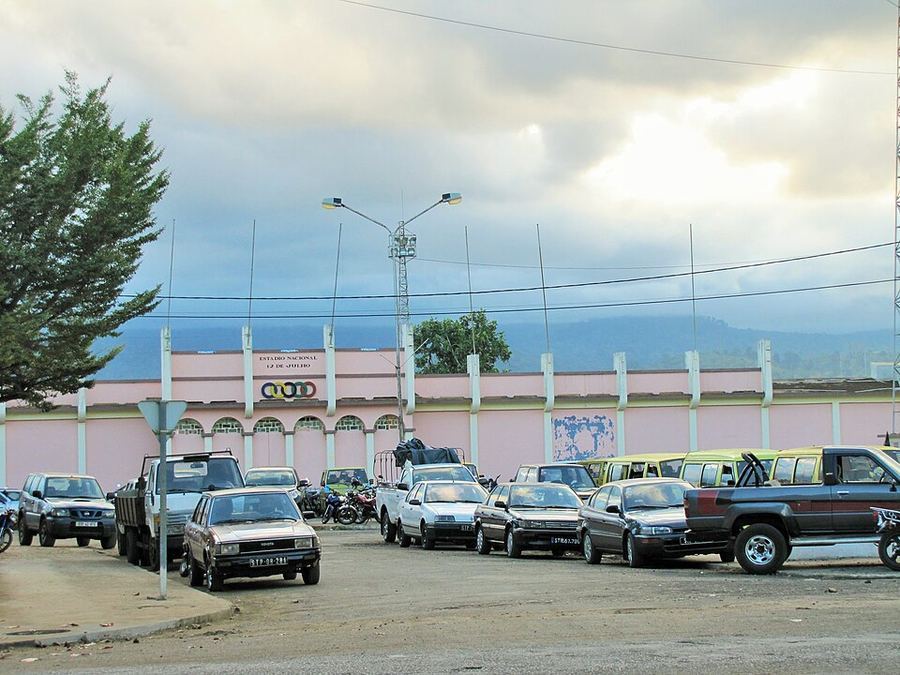
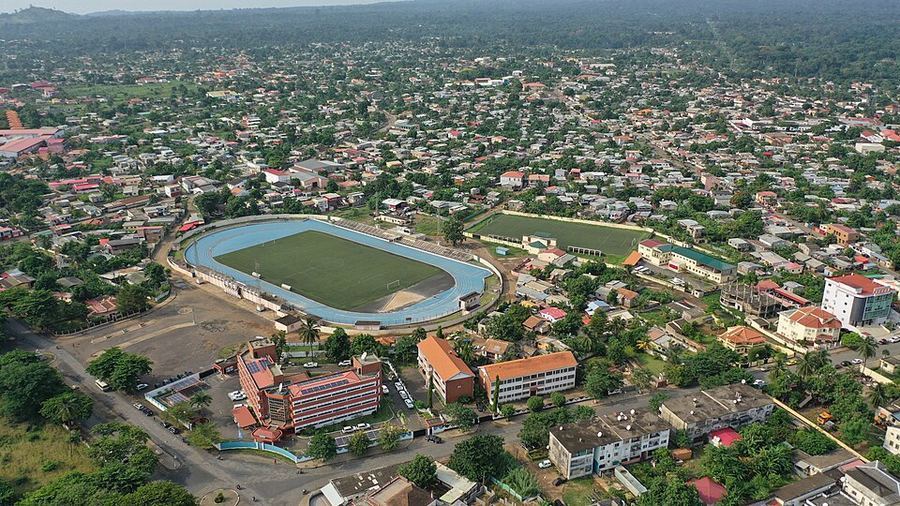
Football is the national sport by a wide margin. The federation runs separate island championships on São Tomé and Príncipe whose winners meet in a national play-off, matches are played mostly at the Estádio Nacional 12 de Julho in the capital, and the game's grip on public attention is out of all proportion to the standard of play, which is constrained by a tiny playing population and by pitches that are often bare earth. The national side, admitted to FIFA and the Confederation of African Football in 1986, has never reached the Africa Cup of Nations finals or a World Cup, and its results are frequently affected by the cost of travelling to away fixtures. Beyond football, participation sports are those the geography favours: swimming, beach volleyball, canoeing and fishing, with basketball and handball played in schools. Athletics has a small organised base, and boxing and taekwondo clubs operate in the capital. There is no professional sport in the country, and athletes with international ambitions almost invariably train and compete abroad, most often in Portugal, which also supplies the coaching and administrative links on which the national federations depend.

Notable Educational Programs

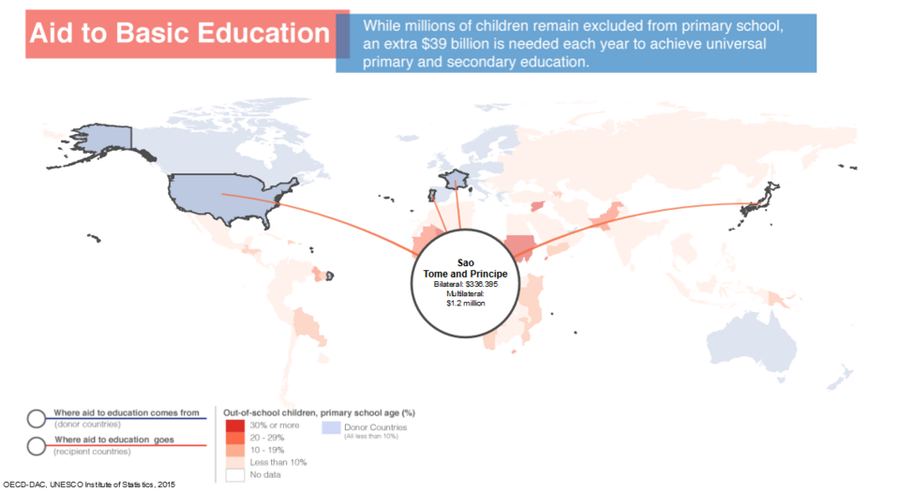
Education is free and compulsory at the basic level, and the country reports adult literacy well above the average for sub-Saharan Africa, a legacy of a strong post-independence push on schooling. The system is small, entirely public at the lower levels, and taught in Portuguese — a language most children do not speak as a first language at home, since the creoles remain the medium of family life, which is a recognised source of early-grade difficulty. The practical constraints are shortages of trained teachers, textbooks and laboratory equipment, and the difficulty of running full secondary provision on Príncipe, whose small population means older students often move to São Tomé. Higher education arrived late: for decades any degree required leaving the country, and cohorts of São Toméans were educated in Portugal, Cuba, Brazil, Angola and the Soviet bloc under scholarship agreements, several of which still operate and continue to shape the professional class. A national public university, the Universidade de São Tomé e Príncipe, was established in 2014 alongside a handful of private and church-linked institutes, teaching mainly education, health, law, business and agronomy. Technical training tied to agriculture, fisheries and tourism is the priority most often identified in national planning.

Wars & Conflicts

São Tomé and Príncipe has experienced no armed conflict since independence and has no insurgency, no separatist movement and no armed dispute with a neighbour — a record shared by very few African states. Its political violence has instead taken the form of brief, largely bloodless interventions by a small military. Troops seized power in August 1995 and returned it within a week after mediation by Angola and Portugal. In July 2003 officers took control while President Fradique de Menezes was abroad, in a coup connected to grievances over the anticipated division of oil revenues; international mediation restored the constitutional government within days under an amnesty agreement. In November 2022 an attack on the army headquarters in the capital was put down by the security forces, and the deaths of detainees in its aftermath prompted domestic and international calls for investigation. The historical event that dominates national memory is not a war but the Batepá massacre of February 1953, when colonial forces killed Forro islanders during a labour dispute; it is commemorated annually as Martyrs' Day and is treated as the origin point of the independence movement.
Current as of 2026-08-07

Land & Border Disputes

The country has no land borders and consequently no territorial disputes of the usual kind. Its one significant boundary question — an overlap between its exclusive economic zone and Nigeria's in the oil-bearing waters of the Gulf of Guinea — was settled by negotiation rather than litigation. Under a treaty signed in 2001 the two states created a Joint Development Zone in which resources are shared on a sixty-forty basis in Nigeria's favour and administered by a joint authority, an arrangement frequently cited as a constructive alternative to maritime arbitration. Exploration in the zone and in São Tomé's own waters has produced disappointing results relative to early expectations, and no commercial production has followed, which has taken much of the political heat out of the issue while also deflating the fiscal hopes that were built around it. Maritime boundaries with Equatorial Guinea and Gabon have been addressed through bilateral agreement. The country's most pressing external questions are practical rather than jurisdictional — illegal and unreported fishing in its exclusive economic zone by distant-water fleets, which it lacks the patrol capacity to police, and the management of shipping through the Gulf of Guinea.
Land, Life & Legacy

Land & Climate

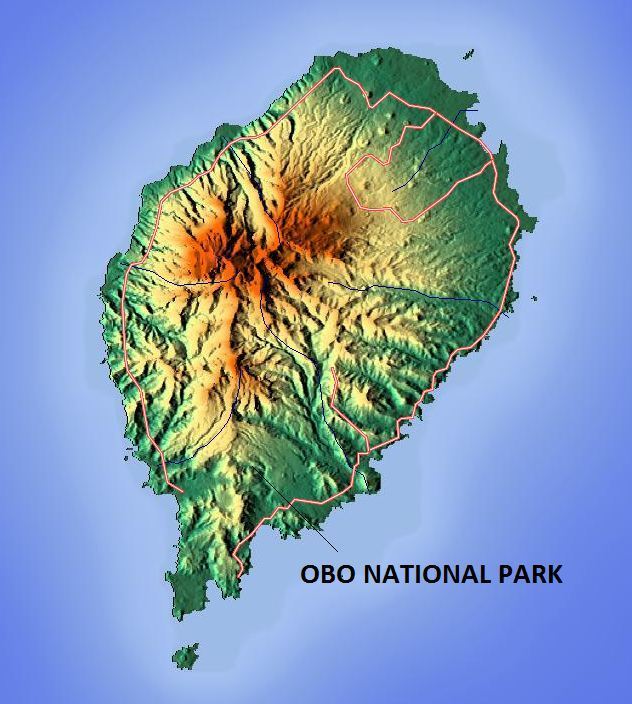
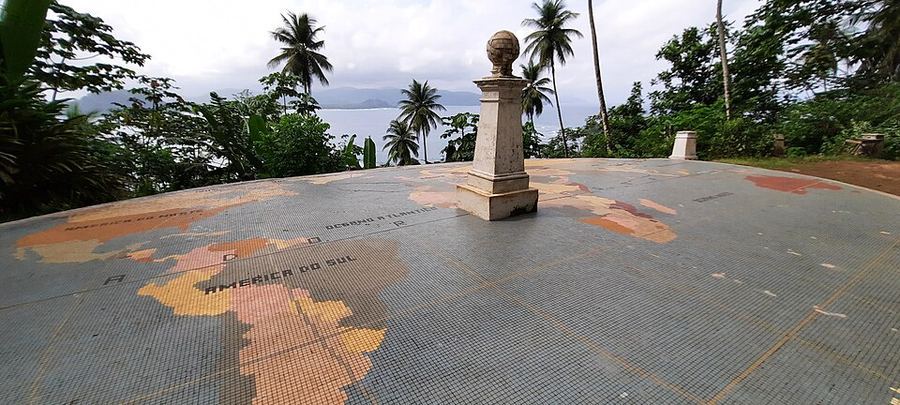
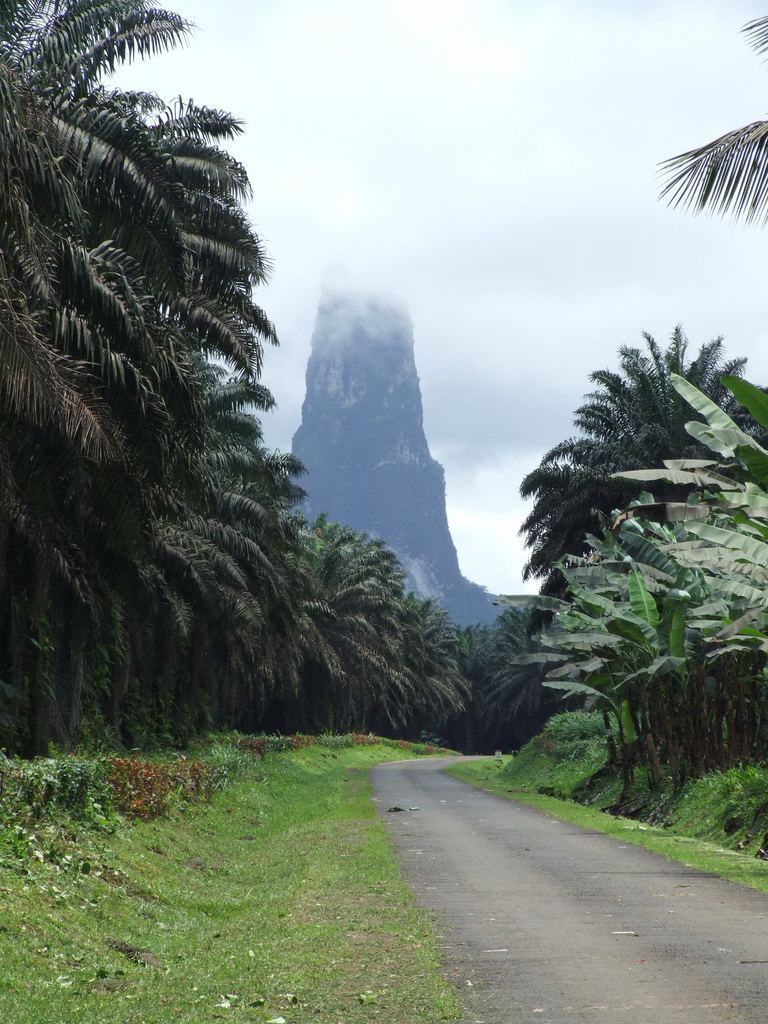
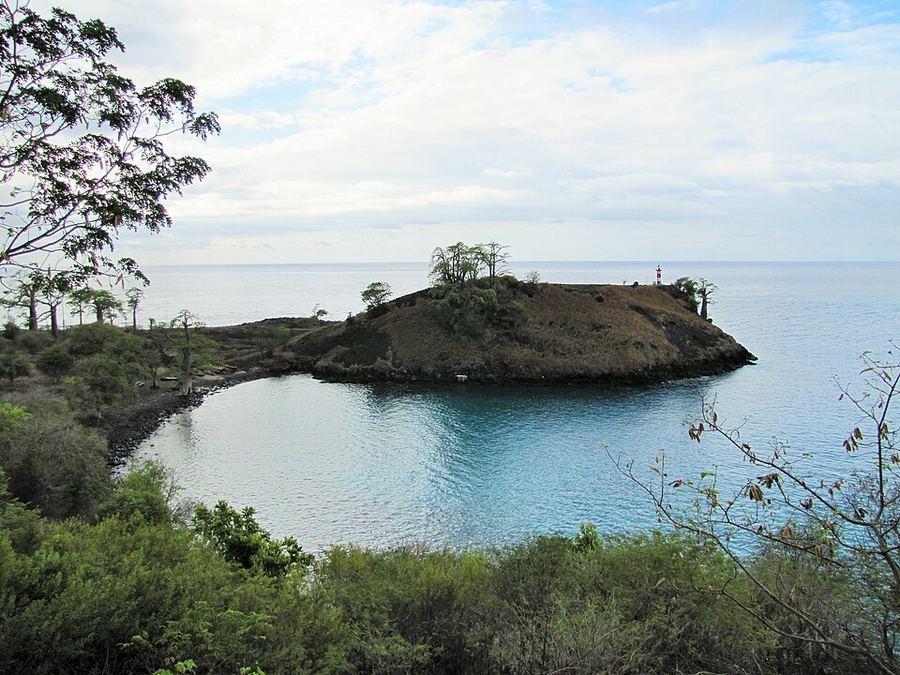
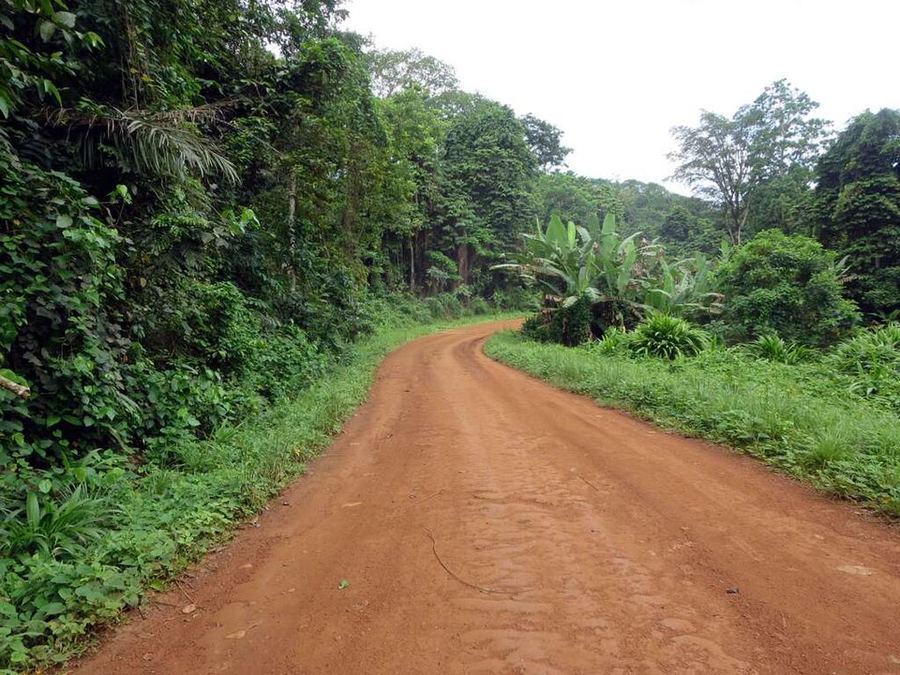
The two islands are volcanic peaks of the Cameroon Line, a chain of volcanoes running southwest from the African mainland, and they rise steeply out of deep water. São Tomé is the larger and younger, culminating in Pico de São Tomé at 2,024 metres, and is punctuated by extraordinary volcanic plugs left when softer cones eroded away — Pico Cão Grande, a near-vertical needle of rock in the south, is the most photographed feature in the country. Príncipe, about 150 kilometres to the northeast, is older, lower and even more deeply eroded, its interior a maze of forested spires. The equator itself crosses the archipelago at Ilhéu das Rolas off São Tomé's southern tip, where a marker stands. Climate is equatorial: hot, humid and wet, with a pronounced dry season known as the gravana from roughly June to September when cooler air and low cloud settle over the islands. Rainfall is strongly asymmetric — the southwestern slopes catch the monsoon and receive several metres a year, sustaining dense rainforest, while the northeast around the capital is dry enough for savanna. Steep terrain and heavy rain make landslides and flash flooding the main hazards, and coastal erosion is an increasing concern for fishing villages.

Entertainment

Leisure on the islands is outdoor, social and inexpensive. Beaches do most of the work: Sunday at Praia dos Tamarindos, Praia Jalé or the strands of the north is a family occasion, and swimming and beach football fill the late afternoon everywhere. Football is otherwise the organising pastime — pitches of packed earth in every village, a national championship followed closely for its size, and European league matches watched in bars. Fishing is livelihood and recreation at once, from pirogues that are still dugouts in many communities. In the interior, walking the old plantation roads between roças, bathing in river pools and climbing to viewpoints over the forest have become both a local habit and the basis of a small but growing eco-tourism sector; Príncipe in particular markets itself on quiet beaches, birdwatching and diving. The festival calendar supplies the year's high points, with each locality's saint's day bringing processions, brass bands, socopé dancing and long communal meals, and with tchiloli performances drawing crowds in the towns where troupes are based. Card games, dominoes and the endless conversation of the tea and beer stall complete an unhurried social life that islanders themselves describe as leve-leve.

Art & Museums

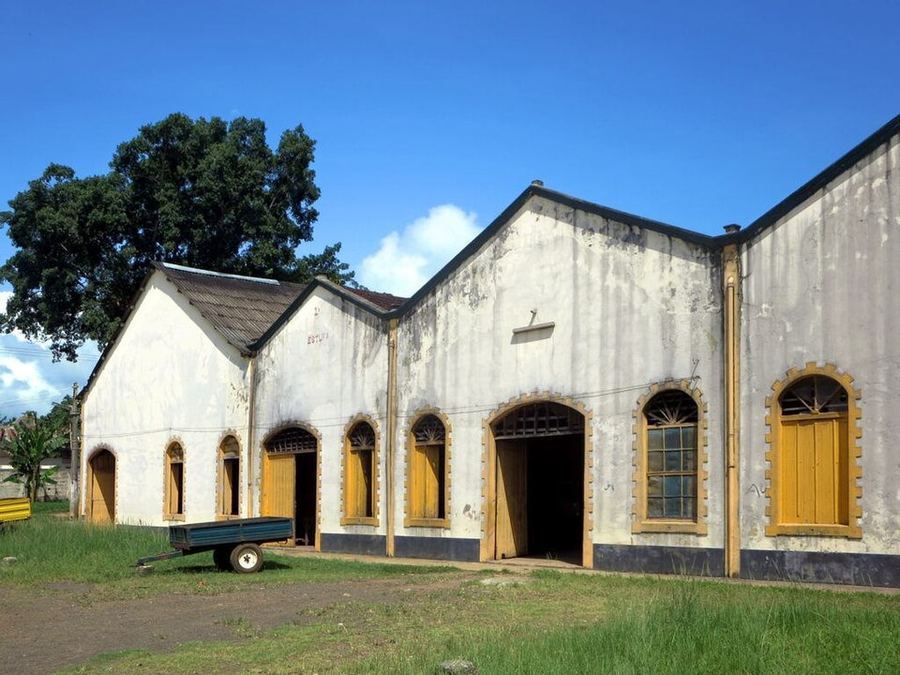
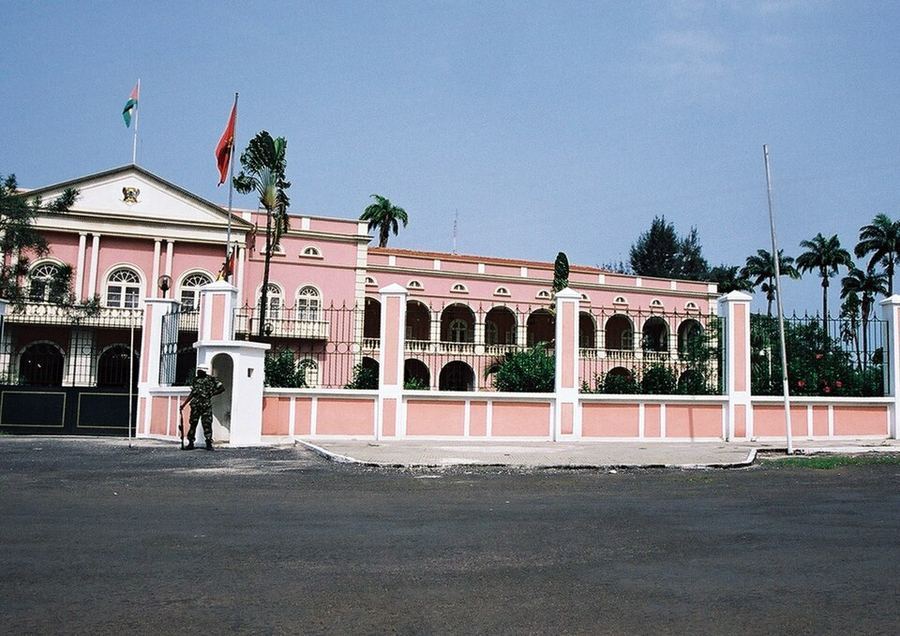
The islands' strongest artistic tradition is literary rather than visual, and it is written in Portuguese. Francisco José Tenreiro, born on São Tomé in 1921 and later a geographer in Lisbon, published Ilha de Nome Santo in 1942 and is counted among the founders of African poetry in Portuguese and a participant in the wider négritude current. Alda do Espírito Santo, poet and independence activist, wrote the words of the national anthem and remains the country's best-known woman of letters; Conceição Lima has carried the tradition into the present with collections that circulate widely in the Lusophone world. In the visual arts the country supports a small scene of painters and woodcarvers working largely for the tourist and diaspora market, with tropical landscape, fishing and plantation life the recurring subjects. The most significant built heritage is industrial and colonial: the great roças — Agostinho Neto, Sundy on Príncipe, Água-Izé and others — with their hospitals, chapels, drying yards and arcaded worker housing, now in varying states of ruin and restoration, and increasingly recognised as an architectural record of the plantation system rather than merely as decaying property.

Notable People

The national literary figures come first. Francisco José Tenreiro (1921–1963) was both a geographer at the University of Lisbon and a poet whose 1942 collection is treated as a foundational text of Lusophone African writing. Alda do Espírito Santo (1926–2010) combined poetry with a long political career, was imprisoned by the colonial authorities, served as a minister after independence and wrote the lyrics of the national anthem; Conceição Lima, born in 1961, is the most internationally translated contemporary São Toméan poet. In politics, Manuel Pinto da Costa led the MLSTP to independence and became the first president in 1975, ruling through the single-party period and then returning to office by election in 2011 — an unusual second act. Miguel Trovoada, a founder of the independence movement who fell out with the first government, served as president through the 1990s, and Fradique de Menezes led the country through the oil-exploration years after 2001. Among the islands' religious and civic figures, the Catholic diocese of São Tomé, one of the oldest in Africa, has supplied a line of bishops with significant public voice. The diaspora in Portugal has produced professional footballers who have represented both São Tomé and their adopted clubs.

Inventions & Breakthroughs

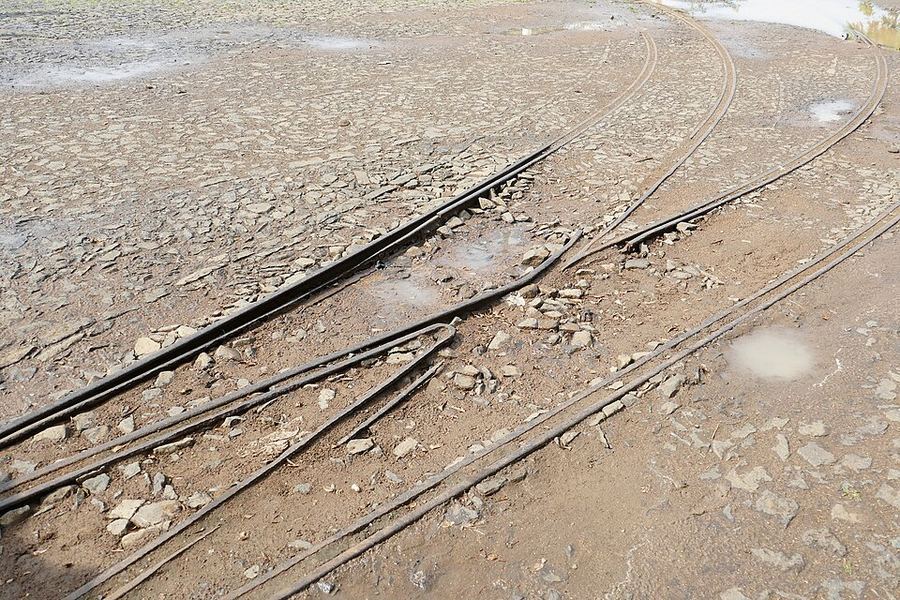
São Tomé and Príncipe has no record of technical invention in the industrial sense, and it would be dishonest to manufacture one for a country of this size and history. Its genuine contribution is a model rather than a machine, and a grim one: the sixteenth-century São Toméan sugar estate, combining a tropical island, a single export crop, enslaved African labour and European capital, was the working prototype of the Atlantic plantation complex that was subsequently transplanted to Brazil and the Caribbean, and economic historians treat the islands as the place where that system was first assembled. On the practical side, island agronomy developed real expertise in shade-grown cocoa and coffee under rainforest canopy, in the terracing and drainage of extremely steep, wet slopes, and in the roça as an integrated production settlement with its own hospital, chapel, drying yards and narrow-gauge rail. Fishing communities, especially the Angolares, build and handle dugout pirogues suited to launching through surf on beaches with no harbour. In the present the country's applied innovation is mostly agricultural and organisational — smallholder cooperatives that took over abandoned estate land and rebuilt it into certified organic single-origin cocoa production for European chocolate makers.

Science & Technology

Scientific activity on the islands is dominated by biology, because the archipelago is one of the world's more instructive natural laboratories. Its oceanic origin and long isolation produced an exceptional rate of endemism across birds, reptiles, amphibians, molluscs and plants, and international expeditions have repeatedly described species new to science there; several endemic birds are among the most range-restricted on earth, and their conservation status underpins the designation of Príncipe as a UNESCO Biosphere Reserve in 2012 and the creation of the Obô parks. Sea turtle monitoring and marine surveys run with international partners are the other established field programmes. Agricultural science focuses on cocoa — clone selection, post-harvest fermentation and drying, and disease control — supporting the country's move into certified organic and single-origin production. Petroleum geoscience had a brief prominence during the exploration campaigns in the Joint Development Zone with Nigeria after 2001, without leading to production. Everyday technology has changed most through connectivity: submarine fibre-optic landing has improved internet access substantially, mobile penetration is high, and off-grid solar has been deployed to reach settlements that the national grid, which is small and reliant on imported diesel, serves unreliably.
On The World Stage

Champions & Defining Moments

São Tomé and Príncipe made its Olympic debut at the Atlanta Games in 1996 and has sent a small team — usually two athletes, often in athletics and canoeing — to every Summer Games since, competing under universality places rather than by qualification. The country has not won an Olympic medal and has never competed at the Winter Games. Its athletes' most visible international appearances have come at the African Games and at world athletics and canoeing championships, where participation itself rather than placing is the objective for a national federation of this scale. In football the national team's international record is confined to World Cup and Africa Cup of Nations qualifying rounds, where occasional home wins over larger neighbours are celebrated as national events. The islands' clearest sporting export is instead through the diaspora: São Toméan-descended players have appeared in the Portuguese leagues and in other European competitions, and some have chosen to represent the country of their parents. The physical constraints are simple and unlikely to change — a population of around 220,000, no full-size indoor arena and no professional structure — so international presence rests on individual athletes supported from outside.

IOCOlympediaFIFA
Economy, Trade & Government

Currency & GDP

STD — STD (None)

GDP (PPP): $1.291 billion (2024 est.)

Per capita: $5,500 (2024 est.)

Exports

$96.977 million (2022 est.)

crude petroleum, cocoa beans, vehicle parts/accessories, palm oil, aircraft parts (2023)

Partners: Pakistan 54%, Germany 11%, Netherlands 7%, France 5%, UAE 3% (2023)

Imports

$219.322 million (2022 est.)

ships, refined petroleum, rice, electric generating sets, cars (2023)

Partners: Portugal 35%, Angola 13%, Gabon 11%, Japan 8%, China 6% (2023)

Government

Type: semi-presidential republic

Independence: 12 July 1975 (from Portugal)

Terrain → Where People Live

How mountains, coasts, and rivers shape settlement (LandScan).

Coming — data

Migration & Ethnic Settlement

Where groups settled and how people move (GeoEPR + UNHCR).

Coming — data

Universities

Notable institutions, mappable as points.

Coming — data
Economy & government facts: CIA World Factbook (public domain), via OpenFactBook / factbook.json.
Every fact and narrative claim will carry a visible source citation. Data-driven sections light up automatically wherever HERA has coverage.