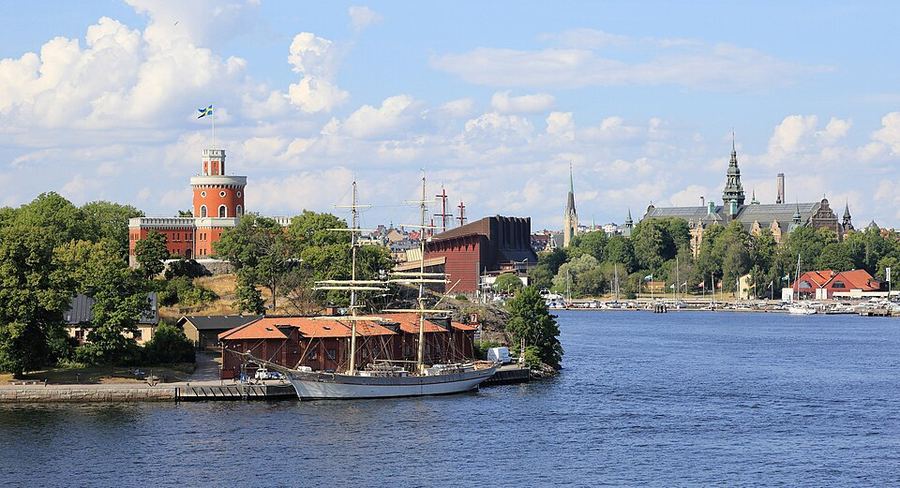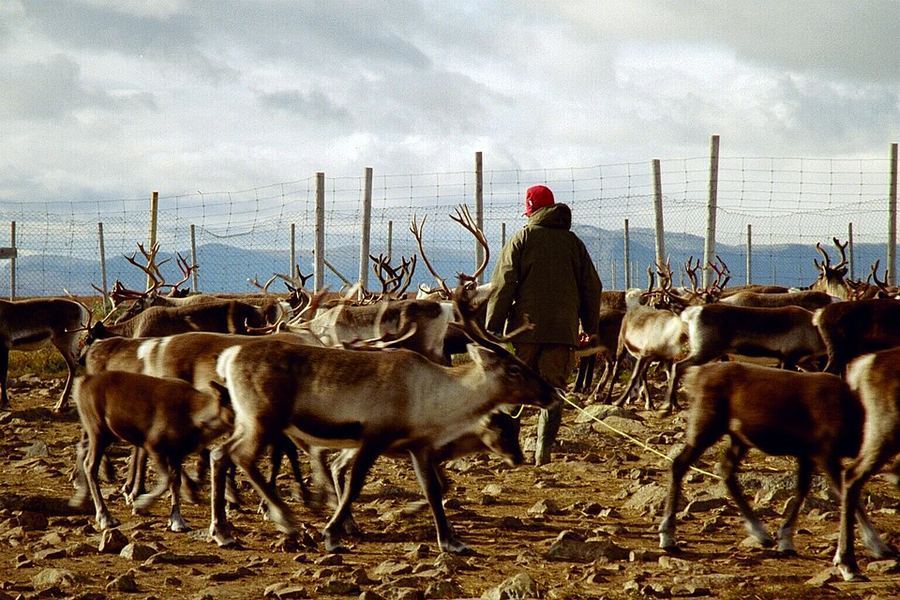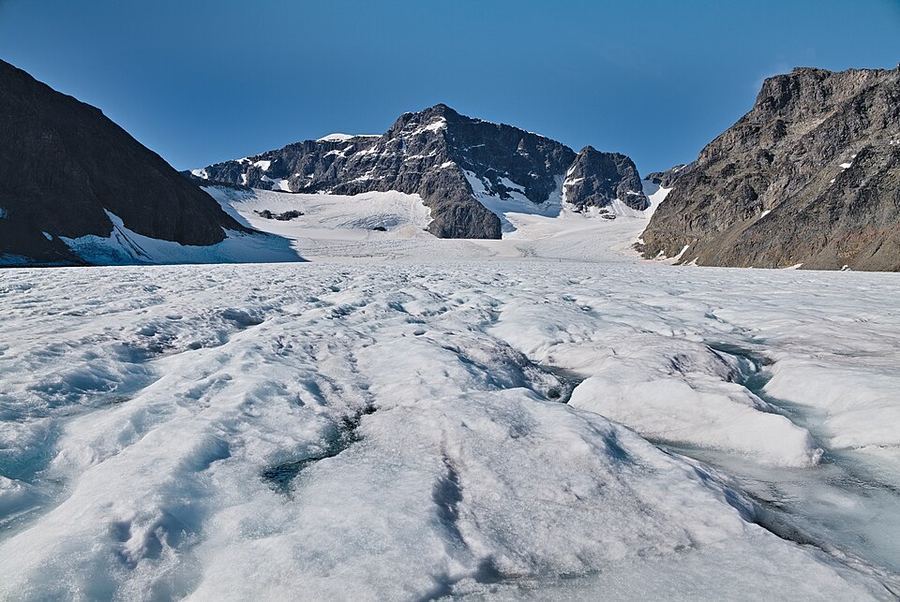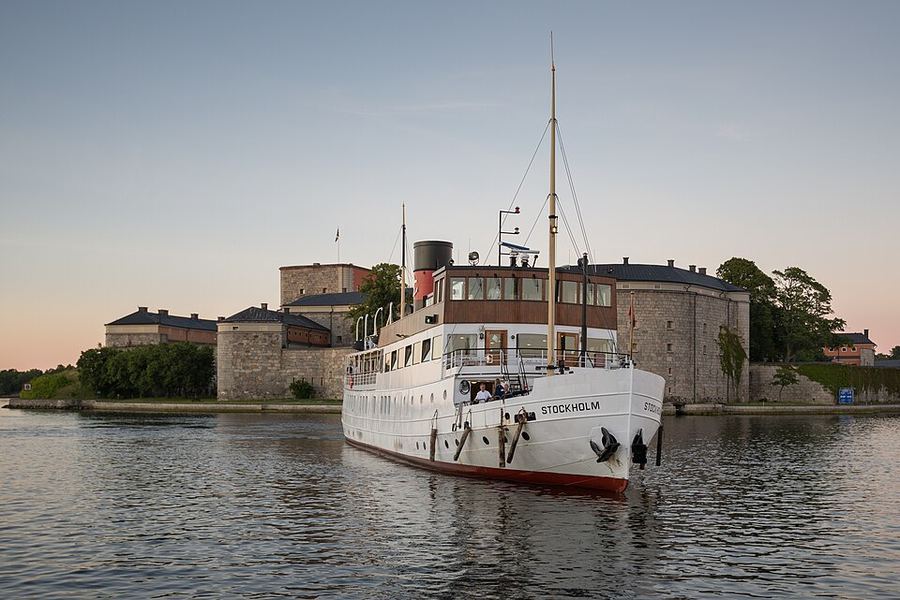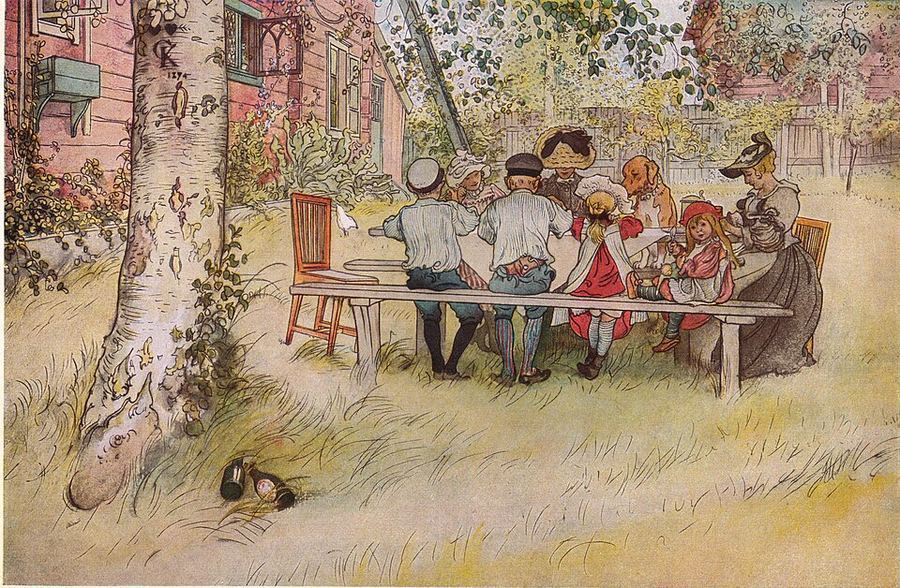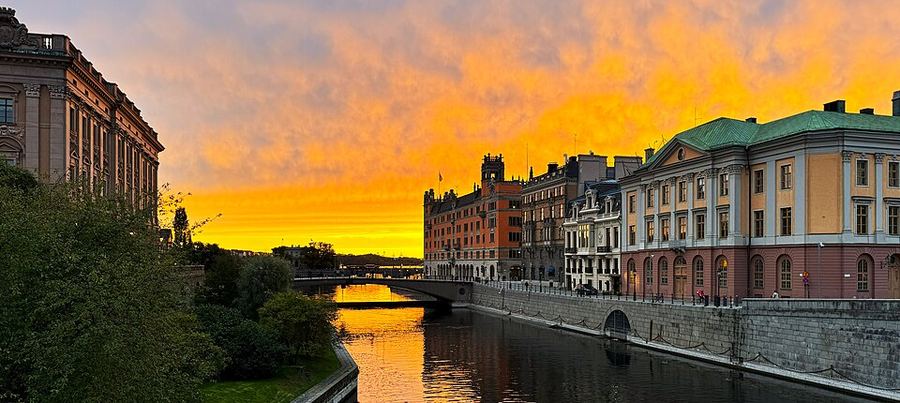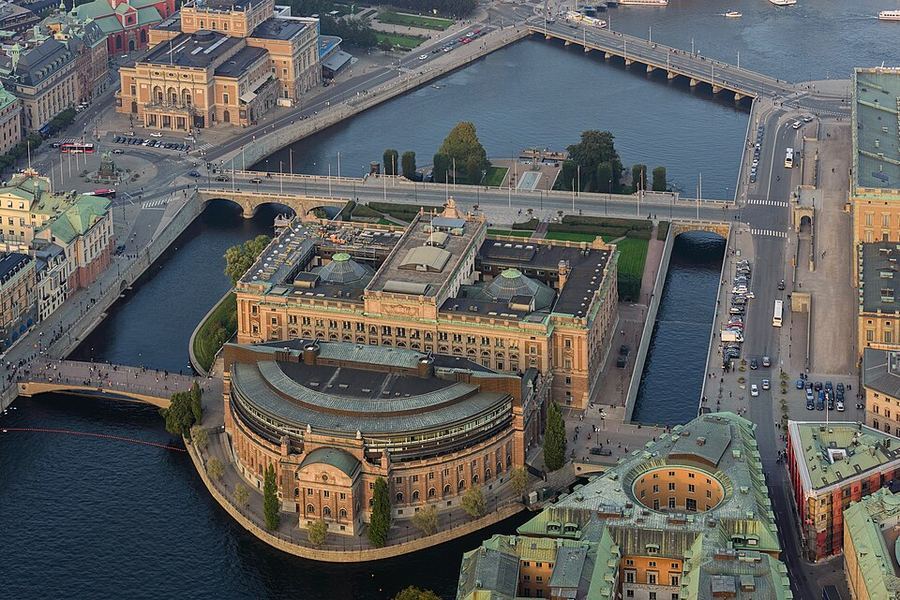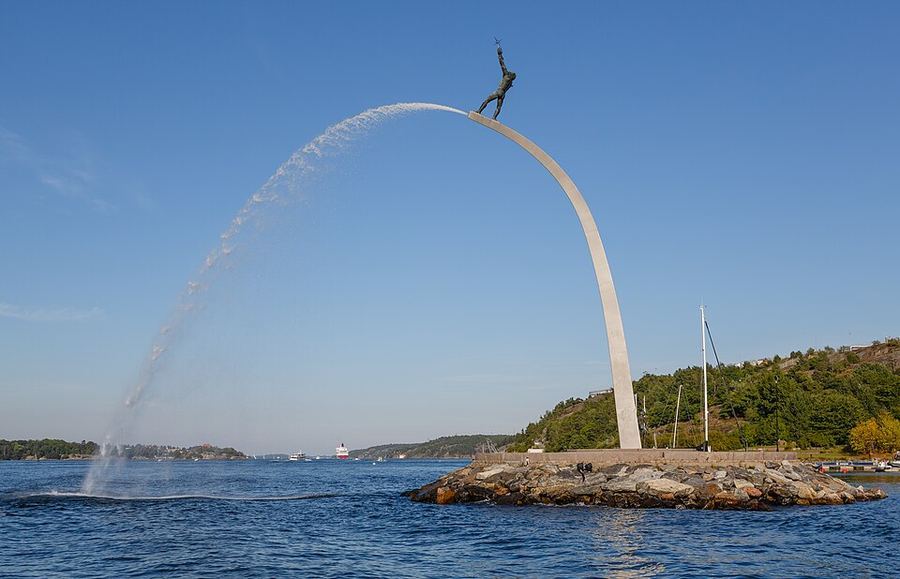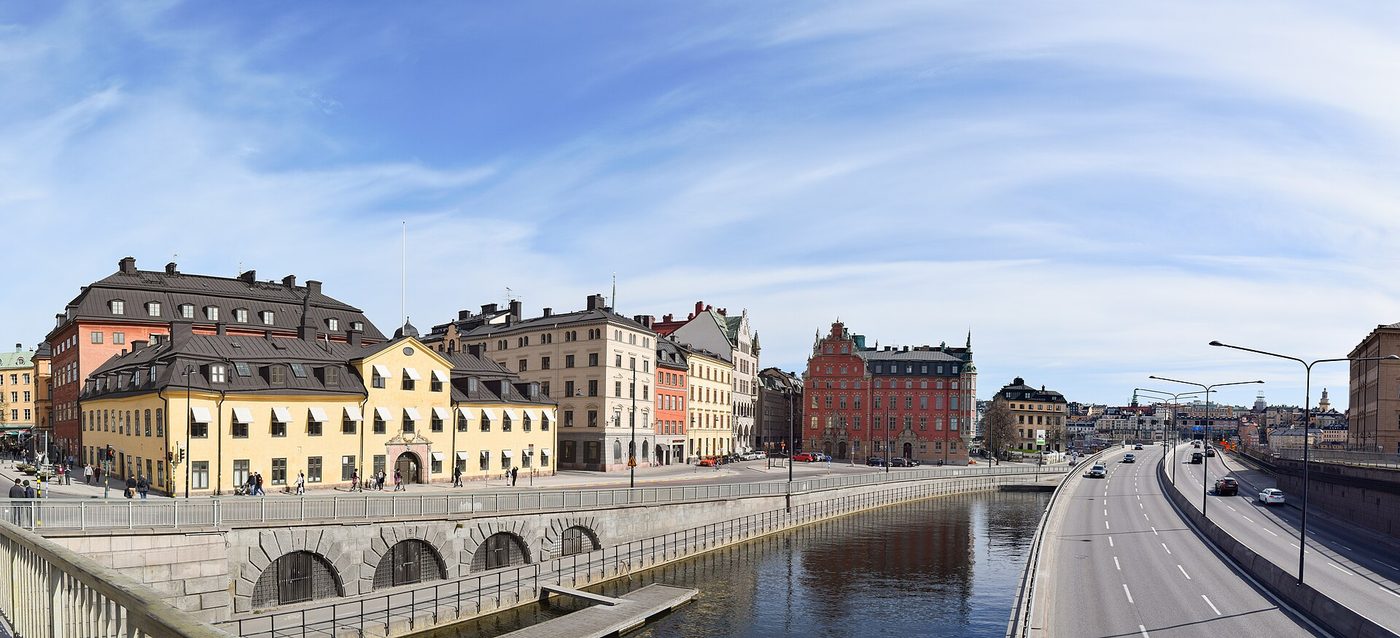
Sweden is a parliamentary constitutional monarchy of about 10.6 million people occupying the eastern half of the Scandinavian peninsula, the third-largest country in the European Union by area after France and Spain and one of the least densely settled. It stretches roughly 1,600 kilometres from the farmland of Skåne in the south to Lapland well above the Arctic Circle, and forest covers around two-thirds of it, broken by close to a hundred thousand lakes and by a Baltic coastline fringed with archipelagos. Stockholm, the capital, is built across fourteen islands where Lake Mälaren meets the sea. Swedish is the official language, with Finnish, Meänkieli, Sami, Romani and Yiddish recognised as national minority languages; the Sami are the country's Indigenous people. The Church of Sweden, Lutheran and disestablished in 2000, still claims a bare majority of formal membership in one of the world's most secular societies. Around a fifth of residents were born abroad, the result of post-war labour migration and of large refugee intakes from Chile, Iran, Iraq, Somalia and Syria. Sweden's economy is high-income, export-oriented and unusually concentrated in globally known firms, and it fought its last war in 1814 — a record of unbroken peace matched by no other European state, and one it set aside only in 2024 by joining NATO.
Stockholm's urban core is home to about 1,543,892 people.
That's bigger than Amsterdam — each a great world city in its own right.
Among the world's megacities, though, it's one of many — the giants of Asia and Latin America run larger still:
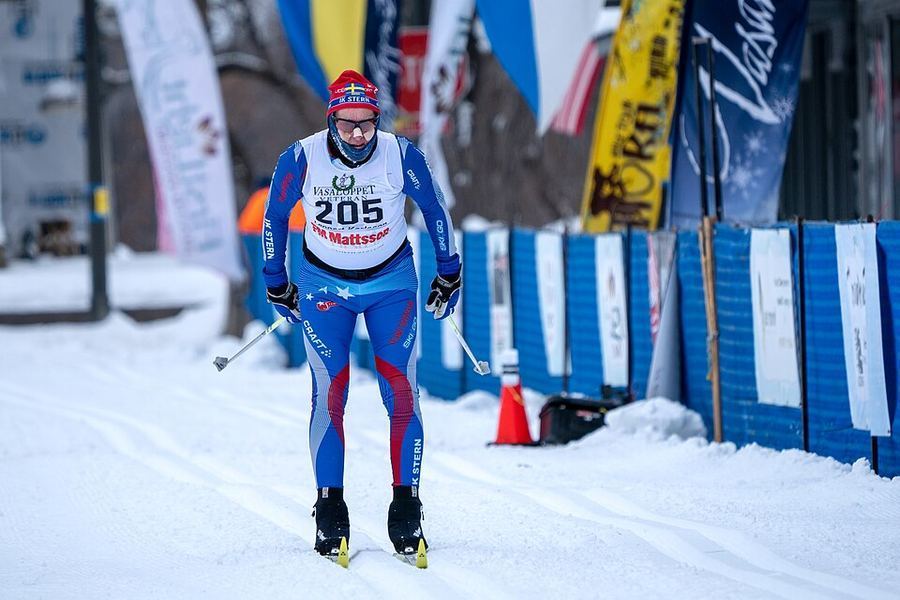
Sweden hosted the 1912 Olympic Games in Stockholm and has been a consistent medal-winning nation since. Its most famous individual careers include Björn Borg, who won five consecutive Wimbledon titles and six French Opens before retiring at twenty-six, followed by Mats Wilander and Stefan Edberg in a period when Sweden was among the dominant forces in world tennis; Ingemar Stenmark, whose eighty-six Alpine World Cup victories stood as the record for decades; and Annika Sörenstam, one of the most successful golfers in the history of the women's game. Armand Duplantis has repeatedly raised the pole vault world record and won Olympic gold in Tokyo and Paris. In team sport, the men's ice hockey side achieved the unique feat of winning the Olympic title and the world championship in the same year, 2006, and has taken numerous world championships besides. The men's football team reached the World Cup final as hosts in 1958, losing to Brazil, and finished third in 1950 and 1994; the women's team has won Olympic silver twice and been World Cup runners-up. Sweden also exports coaching, sports science and — through Zlatan Ibrahimović and a long line of others — players to Europe's biggest leagues.
Swedish Krona — SEK (kr)
GDP (PPP): $668.628 billion (2024 est.)
Per capita: $63,300 (2024 est.)
$338.852 billion (2024 est.)
cars, refined petroleum, packaged medicine, paper, vehicle parts/accessories (2023)
Partners: Germany 10%, USA 10%, Denmark 8%, Norway 6%, Netherlands 5% (2023)
$309.526 billion (2024 est.)
cars, crude petroleum, refined petroleum, vehicle parts/accessories, garments (2023)
Partners: Germany 17%, Netherlands 10%, Norway 9%, Denmark 6%, China 6% (2023)
Type: parliamentary constitutional monarchy
Independence: 6 June 1523 (Gustav VASA elected king of Sweden, marking the abolishment of the Kalmar Union of Denmark, Norway, and Sweden)
How mountains, coasts, and rivers shape settlement (LandScan).
Coming — dataWhere groups settled and how people move (GeoEPR + UNHCR).
Coming — dataNotable institutions, mappable as points.
Coming — data