History
Syria occupies the northern Levant, running from a short Mediterranean coast across two mountain ranges to the Euphrates valley and the steppe of the Syrian Desert, and bordering Turkey, Iraq, Jordan, Israel and Lebanon. Damascus, its capital, is among the longest continuously inhabited cities on earth and was the seat of the Umayyad Caliphate; Aleppo, the northern rival, was for centuries the great commercial terminus of the routes from Iran and Anatolia. Around 24 million people live there, overwhelmingly Arabic-speaking, with substantial Kurdish, Armenian, Turkmen, Assyrian and Circassian communities; some 87% are Muslim, about 10% Christian across a dozen ancient churches, and 3% Druze. Syria became independent from French mandatory rule on 17 April 1946, was governed by the Baʿath Party from 1963 and by the Assad family from 1970, and descended after 2011 into a civil war that produced the largest displacement crisis of its era. The Assad government fell in December 2024, and the country has since been governed by transitional authorities working under a constitutional declaration. Its economy, shattered by war and sanctions, is being rebuilt from a very low base.
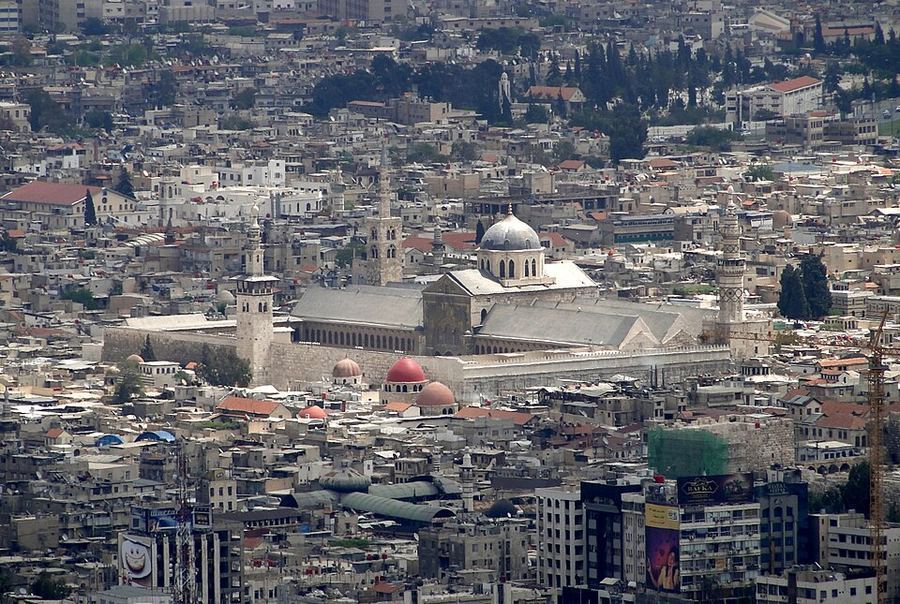
Damascus's urban core is home to about 3,771,638 people.
That's bigger than Berlin, Rome and Amsterdam — each a great world city in its own right.
Among the world's megacities, though, it's one of many — the giants of Asia and Latin America run larger still:
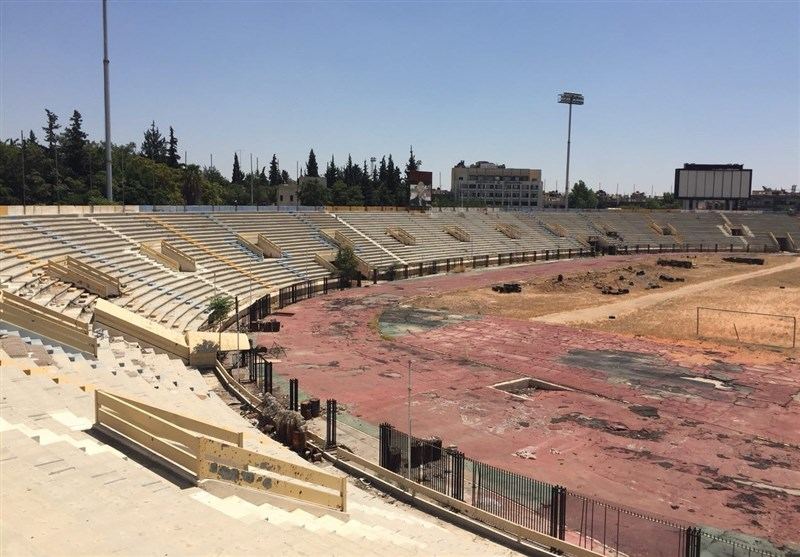
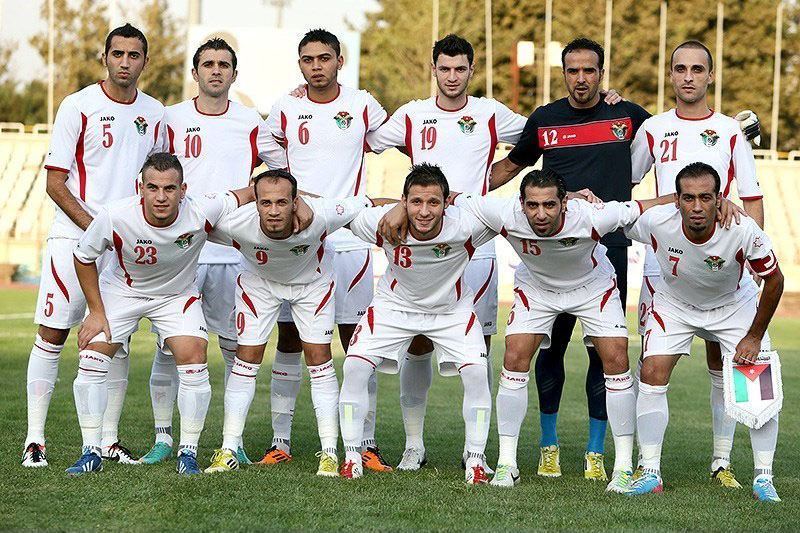
Syria's single Olympic gold came at Atlanta in 1996, when Ghada Shouaa won the heptathlon; the country's other Olympic medals are a wrestling silver taken by Joseph Atiyeh at Los Angeles in 1984 and a boxing bronze won by Naser Al-Shami at Athens in 2004. The high jumper Majd Eddin Ghazal added a world championship bronze in 2017, and Syrian weightlifters and wrestlers have medalled at Asian and Mediterranean level. In football the national team has never reached a World Cup finals but came remarkably close for a country at war: it advanced through Asian qualifying for the 2018 tournament to a two-legged intercontinental playoff against Australia in October 2017, losing in extra time in Sydney, and the campaign was followed intensely by Syrians at home and in exile. The diaspora has also carried Syrian sport onto the world stage in a different way, most visibly through the swimmer Yusra Mardini, who fled the country and competed at the Rio and Tokyo Games as a member of the Refugee Olympic Team.
Transitional presidential republic
Ahmad al-Shara' — Head of state
Muhammad al-Bashir — Prime Minister
Unicameral
Composition — 210 seats
Last election 10/5/2025 · 9.6% women
organized into civil, criminal, religious, and military divisions, each with 3 judges); Supreme Constitutional Court (consists of 7 members
Syrian Pound — SYP (None)
GDP (PPP): $98.858 billion (2023 est.)
Per capita: $4,200 (2023 est.)
$1.609 billion (2022 est.)
olive oil, phosphates, spice seeds, cotton, tomatoes (2023)
Partners: Turkey 29%, Saudi Arabia 16%, Lebanon 10%, India 10%, UAE 5% (2023)
$6.803 billion (2022 est.)
tobacco, plastics, wheat flours, plastic products, seed oils (2023)
Partners: Turkey 49%, UAE 11%, China 8%, Egypt 7%, Lebanon 3% (2023)
Type: transitional presidential republic
Independence: 17 April 1946 (from League of Nations mandate under French administration)
How mountains, coasts, and rivers shape settlement (LandScan).
Coming — dataWhere groups settled and how people move (GeoEPR + UNHCR).
Coming — dataNotable institutions, mappable as points.
Coming — data