HERA · Human Entity Reference Atlas by Masego Inc

← Tanzania 🌐 3D View
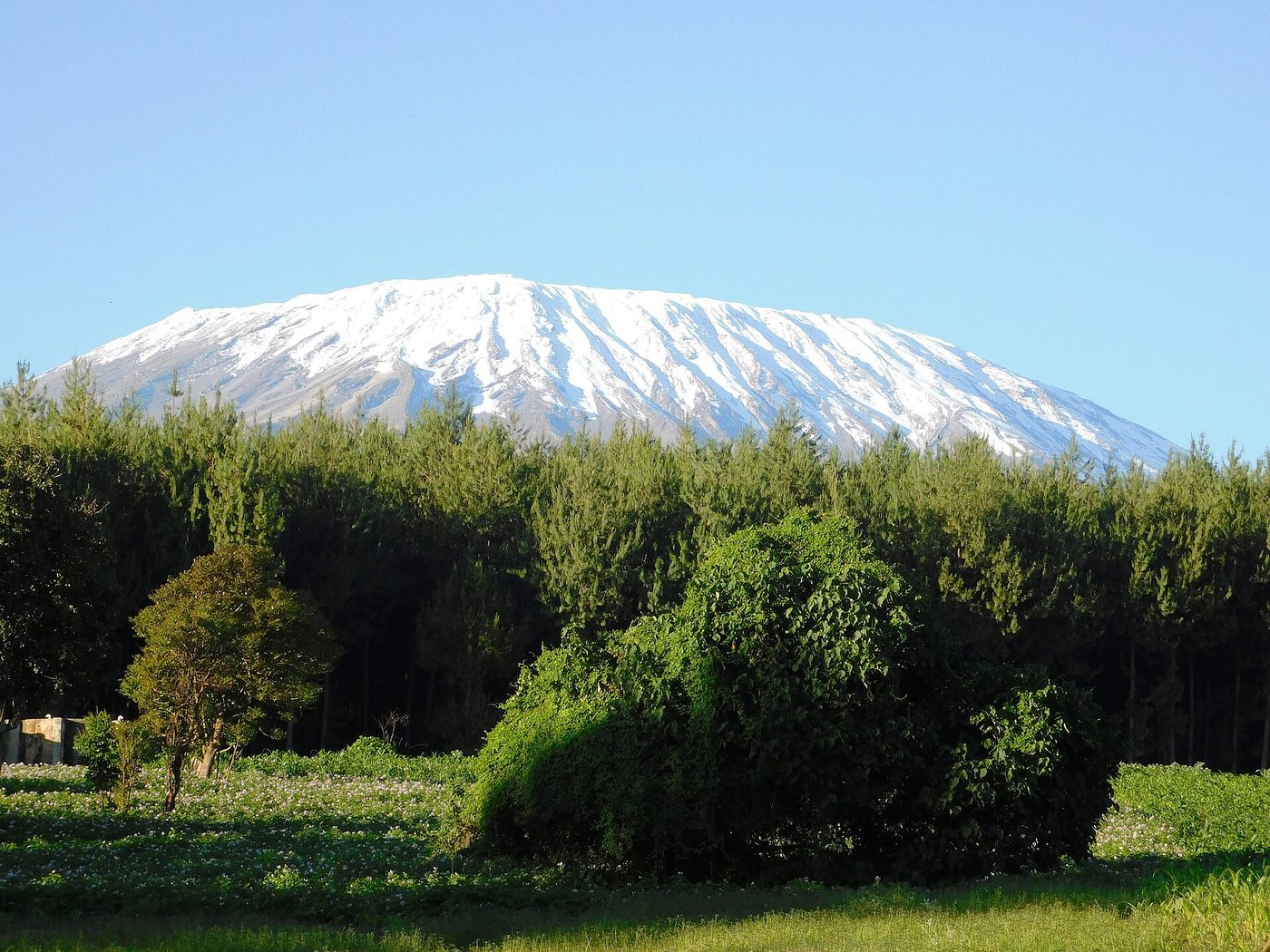
Mountain at the border of Kenya and Tanzania- Mount Kilimanjaro 10, Tanzania
Tanzania TZA
Mountain at the border of Kenya and Tanzania- Mount Kilimanjaro 10 — Photo: RVBS / CC BY-SA 4.0 via Wikimedia Commons
Did You Know Tanzanite, discovered near Kilimanjaro in 1967, is found nowhere else on Earth — a gemstone with a single source country. — Encyclopaedia Britannica

Tanzania is a presidential republic of roughly 69 million people on the East African coast, formed in 1964 by the union of mainland Tanganyika with the Indian Ocean archipelago of Zanzibar — a union that still shapes its politics, since Zanzibar retains its own president, parliament and distinct identity. The country holds Africa's highest point in Kilimanjaro and a share of its deepest and largest lakes in Tanganyika and Victoria, and its northern circuit of Serengeti and Ngorongoro is among the most visited wildlife landscapes on Earth. Its official languages are Kiswahili and English, and the deliberate promotion of Kiswahili as a national language after independence is widely credited with muting the ethnic politics that destabilised neighbours, in a country where mainland populations speak more than 130 Bantu languages. Christianity is professed by about 63% of the population and Islam by about 34%, with Zanzibar overwhelmingly Muslim. The economy is agricultural and extractive — gold is the leading export, alongside legumes, copper and coal — with tourism a major earner. The capital moved from the coastal commercial hub of Dar es Salaam to inland Dodoma, a relocation begun in the 1970s and only completed in recent years.

CIA World FactbookEncyclopaedia Britannica
Population
69,145,464
Capital
Dodoma
Currency
Sh TZS
Time zones
Largest city
Dar es-Salaam
Human Geography Themes
Loading national figures…
Largest Cities
Dar es-Salaam8,918,525
Zanzibar City1,026,755
Mwanza977,475
Arusha806,518
Mbeya587,388
Morogoro407,719
Kigoma347,892
Moshi317,890
In Perspective

Dar es-Salaam's urban core is home to about 8,918,525 people.

That's bigger than Madrid, Toronto, Chicago and Sydney — each a great world city in its own right.

Dar es-Salaam8,918,525
Madrid5,680,137
Toronto5,566,382
Chicago5,318,735
Sydney4,375,394

Among the world's megacities, though, it's one of many — the giants of Asia and Latin America run larger still:

Dar es-Salaam8,918,525
Jakarta40,545,126
Dhaka37,307,160
Tokyo33,244,670
Shanghai30,678,616
Cairo25,230,325

More people live in Dar es-Salaam than in the entire nation of Switzerland, Denmark, Singapore or Finland.

The Country & Its People

History

The Tanzanian coast has been part of Indian Ocean trade for two millennia, and by the medieval period Kilwa, Zanzibar and Pemba were nodes in a Swahili commercial world linking Africa to Arabia, Persia, India and China. Portuguese power displaced that order briefly in the sixteenth century before Omani Arabs took the coast, and in 1840 the Sultan of Oman moved his capital to Zanzibar, which became the centre of a clove economy and of the East African slave trade. The mainland was claimed by Germany as German East Africa in the 1880s; the Maji Maji rebellion of 1905-07 against German rule was crushed with a famine that killed on a mass scale. After the First World War the territory passed to Britain as the League of Nations mandate of Tanganyika. Independence came peacefully in December 1961 under Julius Nyerere, and Zanzibar's own independence in 1963 was followed within a month by a revolution that overthrew the sultanate. In April 1964 the two united to form what was renamed the United Republic of Tanzania. Nyerere's ujamaa programme of villagisation and self-reliance defined the next two decades; multi-party politics returned in 1992, and the ruling party has held power continuously since independence.
History, Tanzania
Karalyn Monteil / CC BY-SA 3.0 igo

Culture

Tanzanian culture is organised around Kiswahili, a Bantu language carrying substantial Arabic vocabulary that grew on the coast as a trade lingua franca and was made the national language after independence. Its promotion in schools, government and broadcasting was a deliberate nation-building act, and it gives a country of more than 130 ethnic groups a shared idiom in which no single group's language dominates. Social life places heavy weight on greeting and courtesy — the extended exchange of greetings before business is expected, and the respectful shikamoo to an elder is answered with marahaba. Heshima, meaning respect and dignity, and ujamaa, the familyhood invoked by Nyerere as a political philosophy, remain live cultural terms. The extended family and the community remain the primary unit of obligation, particularly in rural areas where most Tanzanians still live. Religious life is plural and largely peaceable: Christian and Muslim holidays are both public holidays, and mixed families are common on the mainland. Zanzibar's culture is distinctly Swahili and Islamic, with stone-built towns, carved doors and a musical and culinary inheritance from the Arab and Indian Ocean worlds.
Culture, Tanzania
William Warby from London, England / CC BY 2.0

Points Of Pride

Mount Kilimanjaro, at the northern border, is the highest mountain in Africa and the tallest free-standing mountain in the world, and it is inscribed on UNESCO's World Heritage list along with the Serengeti, the Ngorongoro Conservation Area, Kilwa Kisiwani, the Stone Town of Zanzibar, Kondoa rock art and Selous. The annual wildebeest migration across the Serengeti is among the largest terrestrial mammal movements on the planet. Olduvai Gorge in the Ngorongoro highlands is one of the most important palaeoanthropological sites in existence, where the Leakeys' excavations transformed understanding of early human evolution, and the Laetoli footprints preserve hominin tracks millions of years old. Politically, Tanzania is proud of a peaceful independence, of Nyerere's role in the liberation of southern Africa — Dar es Salaam hosted liberation movements from Mozambique, South Africa and Zimbabwe — and of a national unity that avoided the ethnic conflict experienced by several neighbours. Kiswahili's adoption as a working language of the African Union is a further point of pride.
Points Of Pride, Tanzania
Sergey Pesterev / CC BY-SA 4.0

Cultural Fusion

Tanzania is one of the clearest cases of Indian Ocean cultural fusion in Africa. Swahili civilisation itself is the product of centuries of exchange between Bantu-speaking coastal communities and Arab, Persian and Indian traders, visible in the language's Arabic loanwords, in the coral-stone architecture and carved doors of Zanzibar's Stone Town, and in a cuisine built on imported spices. Omani rule left an Arab elite and an enduring Islamic culture on the islands; Indian merchants, later joined by labourers brought under British rule, established communities whose businesses, temples and food remain part of urban life. German and then British administration layered European legal, educational and church institutions onto that. On the mainland, more than 130 Bantu-speaking groups coexist with Nilotic peoples such as the Maasai, whose pastoral culture is internationally recognisable, and with small Cushitic and Khoisan-speaking populations in the north, including the Hadza, one of the last hunter-gatherer societies in Africa. Kiswahili is the medium through which these populations meet.
Cultural Fusion, Tanzania
Richard Mortel from Riyadh, Saudi Arabia / CC BY 2.0

Music & Dance

Taarab is the signature music of the Tanzanian coast and Zanzibar — sung poetry in Kiswahili accompanied by an orchestra of oud, violin, qanun, accordion and percussion, its form owing much to Egyptian and Arab models absorbed through Indian Ocean contact. Its most celebrated voice was Siti binti Saad, who in the 1920s became the first East African woman to record commercially and who established Kiswahili as a language of recorded song. On the mainland, dansi — Swahili jazz — developed from Congolese rumba into a dance-band tradition that dominated urban nightlife for decades, with long-running orchestras in Dar es Salaam. Since the 1990s bongo flava, a Tanzanian fusion of hip-hop and R&B sung in Kiswahili, has become the dominant popular genre and one of East Africa's most successful musical exports. Traditional ngoma — the word covers drum, dance and the event itself — remains central to ceremony across the country, with each ethnic group maintaining distinct repertoires for initiation, harvest and celebration.
Music & Dance, Tanzania
Nicholas Calvin / CC BY-SA 4.0

Cuisine & Misattributed Foods

The staple of the Tanzanian mainland is ugali, a stiff maize porridge eaten by hand with a relish of beans, greens or stewed meat and fish. Coastal and island cooking is markedly different and richer, built on coconut milk, rice and the spices that made Zanzibar's name — cloves above all, but also cardamom, cinnamon, black pepper and nutmeg, grown on plantations established under Omani rule. Pilau and biryani reflect Arab and Indian influence, as do samosas and chapati, which are entirely ordinary street foods. Grilled meat, nyama choma, is the sociable food of choice countrywide, usually accompanied by kachumbari, a raw tomato and onion salad. Mishkaki skewers, fried cassava, and urojo — a tangy Zanzibari soup piled with fritters, potato and chutneys — anchor the street-food repertoire, and Zanzibar's Forodhani night market has become the best-known venue for it. Bananas and plantains are a staple in the northern highlands, where mtori, a cooked banana and meat soup, is a regional dish. Chai with milk, ginger and spices is drunk throughout the day.
Cuisine & Misattributed Foods, Tanzania
Hussein Simba / CC BY-SA 4.0

National Dress

The most recognisable Tanzanian garments are printed cotton cloths. The kanga is a rectangular cloth sold in pairs, block-printed with a border, a central motif and — uniquely — a Kiswahili proverb or aphorism along one edge, which allows the wearer to communicate a sentiment without speaking it. Women wear it wrapped as a skirt, shawl, headscarf or baby sling, and it is given at weddings, births and funerals. The kitenge is a heavier, larger printed cloth, generally without the proverb, used for tailored dresses and shirts. On the coast and in Zanzibar, Islamic dress predominates: women wear the buibui, a black outer garment, and men the kanzu, a long white robe, with an embroidered kofia cap for prayer and formal occasions. The Maasai shuka — the red-checked blanket worn wrapped and pinned, with beaded collars and ornaments — is internationally the most recognised Tanzanian dress image, though it belongs to one pastoral community rather than the nation. Western clothing is standard in offices and cities, with printed cloth reserved for ceremony, celebration and everyday domestic wear.
National Dress, Tanzania
Ethan Doyle White / CC BY-SA 4.0

Sports & Inspiring Athletes

Football is the national sport by a wide margin. The Tanzania Premier League is dominated by the two Dar es Salaam giants, Simba SC and Young Africans, whose rivalry structures the sporting calendar and whose matches fill the national stadium; both have competed in continental club competition. The national side, the Taifa Stars, has reached the Africa Cup of Nations only rarely and has never qualified for a World Cup, but support is fervent. Athletics is the second pillar and the source of the country's Olympic medals: Filbert Bayi took silver in the 3,000 metres steeplechase and Suleiman Nyambui silver in the 5,000 metres at the 1980 Games, and distance running retains a strong following. Boxing has a significant domestic tradition, and netball and volleyball are widely played, particularly in schools. Bao, the Swahili mancala game, is played competitively on the coast and in Zanzibar with recognised masters. Mountain running and trail events on Kilimanjaro's lower slopes have grown into an international fixture.
Sports & Inspiring Athletes, Tanzania
Caligula / CC BY 2.0

Notable Educational Programs

Education is delivered in Kiswahili at primary level and in English from secondary school onward — a transition that is the system's most debated feature, since many pupils meet an abrupt change in the language of instruction. Primary education was made free and universal in the post-independence drive that raised adult literacy dramatically under Nyerere, and fees for secondary schooling were removed in 2015, producing sharp enrolment growth and corresponding pressure on classrooms and teacher supply. The University of Dar es Salaam, founded in 1961, is the country's oldest and most prominent institution, followed by Sokoine University of Agriculture in Morogoro and the Muhimbili University of Health and Allied Sciences. The State University of Zanzibar serves the islands. Persistent challenges are the quality of learning outcomes rather than access, wide rural-urban disparities, and completion rates for girls. Vocational training through VETA colleges supports the trades, tourism and mining sectors, and Tanzania participates in regional higher-education frameworks through the East African Community.
Notable Educational Programs, Tanzania
Jeff Knezovich / CC BY-SA 2.0

Wars & Conflicts

Tanzania has been notably free of civil war since independence, a record that distinguishes it in the region. Its principal armed conflict was external: the 1978-79 war with Uganda, provoked by Idi Amin's invasion and annexation of the Kagera salient, which ended with Tanzanian forces and Ugandan exiles taking Kampala and removing Amin from power. Internally, the most serious violence has been political rather than insurgent, concentrated in Zanzibar, where disputed elections in 1995, 2000 and 2001 produced deadly clashes between security forces and opposition supporters before a power-sharing accord in 2010 reduced tensions. The 1964 army mutiny shortly after the union was suppressed with British assistance. Tanzania has been shaped more by other countries' wars than its own: it hosted liberation movements fighting Portuguese rule and apartheid, and it has sheltered very large refugee populations from Burundi, Rwanda and the Democratic Republic of the Congo over successive decades, at times hosting one of the largest refugee populations in Africa. It has also contributed troops to United Nations peacekeeping operations in the region.
Current as of 2026-08-06
Wars & Conflicts, Tanzania
Bertin wekaza / CC BY-SA 4.0

Land & Border Disputes

Tanzania's most active boundary dispute is with Malawi over Lake Malawi, which Tanzania calls Lake Nyasa. Malawi asserts the 1890 Anglo-German treaty placed the entire lake surface within its territory up to the Tanzanian shoreline; Tanzania maintains the boundary runs down the median line. The disagreement sharpened after hydrocarbon exploration licences were issued in the lake, and mediation has been pursued through the Southern African Development Community without a final settlement. The land and maritime boundary with Kenya and the border with Uganda are settled, the latter since the 1979 war restored the pre-war line in the Kagera salient. Tanzania's maritime boundaries in the Indian Ocean with Kenya and Mozambique have been the subject of delimitation agreements, though the Kenya boundary alignment has at times been contested. Internally, the constitutional relationship between the mainland and Zanzibar — the balance of powers within the union and periodic demands for greater autonomy or a three-government structure — is a live political question rather than a territorial dispute, and has been a recurring subject of constitutional review.
Land & Border Disputes, Tanzania
NASA Hubble Space Telescope / Public domain
Land, Life & Legacy

Land & Climate

Tanzania spans the East African plateau between the Indian Ocean and the great lakes, and its landscape is defined by the two arms of the East African Rift. The western arm holds Lake Tanganyika, the world's second-deepest lake, and the eastern arm the soda lakes of Natron and Manyara; between them lies Lake Victoria, the largest lake in Africa, whose southern shore is Tanzanian. Kilimanjaro and Meru rise as volcanic massifs in the north, Kilimanjaro reaching about 5,895 metres and carrying glaciers that have retreated sharply. The Ngorongoro Crater is the world's largest intact volcanic caldera. The coastal strip is hot and humid, giving way to a semi-arid central plateau and to cool, wet highlands in the north and south. The Eastern Arc mountains are an ancient forested chain of exceptional endemism. Climate follows the monsoon: the north and east have two rainy seasons — the long masika rains from March to May and the short vuli rains in November and December — while the south and west have a single long wet season. Drought, and increasingly erratic rainfall, are the principal climate hazards for a largely rain-fed agricultural economy.
Land & Climate, Tanzania
Giles Laurent / CC BY-SA 4.0

Entertainment

Football dominates leisure time: the Dar es Salaam derby between Simba and Young Africans is the country's biggest recurring social event, and English Premier League matches fill bars and viewing halls. Watching and playing takes place on any available ground, and the national team's rare qualifications are occasions of national celebration. Beyond sport, leisure is sociable and outdoors — nyama choma grills and bars serve as the main gathering places, and coastal towns fill the beaches at weekends. Bongo flava concerts and church and mosque life structure much of the social calendar, and the Sauti za Busara music festival in Stone Town and the Zanzibar International Film Festival draw both domestic and international audiences. Board and street games, particularly bao, a mancala game with a long Swahili pedigree and a serious competitive following on the coast, are played in public. Domestic tourism is growing but the national parks remain expensive for most Tanzanians; visits to relatives in home villages during holidays are the more common form of travel.
Entertainment, Tanzania
Víktor Bautista i Roca / CC BY-SA 2.5

Art & Museums

Tanzania has produced two internationally recognised modern art movements. Makonde sculpture, carved from dense black ebony by artists of the Makonde people of the southeast and adjacent Mozambique, moved in the twentieth century from ritual figures and masks to the intricate interlocking human forms known as ujamaa or 'tree of life' pieces, and to the spirit figures called shetani. Tingatinga painting, named for Edward Saidi Tingatinga who began it in Dar es Salaam in the 1960s, uses bicycle enamel on hardboard in flat, brilliant colour to depict animals, villages and folk tales; after his death the style was continued by a cooperative of followers and became the country's most widely reproduced visual idiom. Older traditions include the rock paintings of Kondoa, inscribed by UNESCO, whose images span thousands of years, and the carved wooden doors of Zanzibar's Stone Town, whose Indian and Arab motifs mark the status of the households behind them. Beadwork among the Maasai, basketry, and textile printing complete a craft economy closely tied to the tourist market.
Art & Museums, Tanzania
Bair175 / CC BY-SA 4.0

Notable People

Julius Nyerere, the country's first president and its defining political figure, is universally known as Mwalimu — teacher — and is remembered both for building a unified nation and language policy and for the contested economics of ujamaa; he stepped down voluntarily in 1985, a rarity on the continent at the time. Abeid Karume led the Zanzibar revolution and became the islands' first president and a partner in the union. Samia Suluhu Hassan, who took office in 2021, became Tanzania's first woman president. In literature Abdulrazak Gurnah, born in Zanzibar, was awarded the Nobel Prize in Literature in 2021 for work centred on displacement and the Indian Ocean world; Shaaban Robert is regarded as the father of modern Kiswahili literature. Siti binti Saad pioneered recorded taarab. In sport, the marathon runner Filbert Bayi set a world record in the 1,500 metres in 1974 and remains the country's best-known athlete, and Freddie Mercury, born Farrokh Bulsara in Zanzibar, is claimed by the islands as a native son.
Notable People, Tanzania
Eric Koch for Anefo / CC0

Inventions & Breakthroughs

Tanzania's distinctive contributions are less in patented technology than in institutions, crops and craft. Kiswahili's standardisation and elevation to a national and now continental working language is the most consequential: it is one of the few African languages to have displaced a colonial language in government, education and popular culture, and it has become a lingua franca across East and Central Africa. Ujamaa, Nyerere's articulation of African socialism set out in the 1967 Arusha Declaration, was an original political programme widely studied and widely debated. In craft and design, Tingatinga painting and the Makonde ujamaa carving style are original twentieth-century forms now imitated across the region. Tanzanite, discovered near Kilimanjaro in 1967 and found nowhere else on Earth, is a genuinely unique national resource that gave the world a new gemstone. In agriculture, Zanzibar's clove plantations made the islands the dominant world supplier for much of the nineteenth century, and Tanzanian research institutions have contributed to cassava and maize breeding for drought and disease resistance.
Inventions & Breakthroughs, Tanzania
Didier Descouens / CC BY 3.0

Science & Technology

Tanzania's scientific profile is strongest where its landscape is unique. Olduvai Gorge and Laetoli in the Ngorongoro highlands are foundational sites in palaeoanthropology, where the Leakey excavations produced hominin fossils and the Laetoli footprints that reshaped the account of early bipedalism, and research continues there under Tanzanian and international teams. Conservation biology is a second strength, with long-running research in the Serengeti ecosystem and Jane Goodall's chimpanzee study at Gombe Stream, begun in 1960 and among the longest continuous studies of a wild primate population anywhere. Public health research is substantial: the Ifakara Health Institute and the National Institute for Medical Research have contributed to malaria control, vector biology and vaccine trials, and Tanzanian sites have hosted major work on bed-net efficacy. In technology, mobile money has transformed financial access, with mobile network platforms giving a largely unbanked population payment and savings services — a change frequently cited as one of East Africa's most significant technological shifts. The Nelson Mandela African Institution of Science and Technology in Arusha was established as a postgraduate research institution, and tanzanite mining supports domestic gemmology expertise.
Science & Technology, Tanzania
Kufundisha / CC BY-SA 4.0
On The World Stage
Champions of Tanzania

Champions & Defining Moments

Tanzania's international sporting presence rests principally on distance running and on Kilimanjaro as a global endurance destination. Its two Olympic medals both came at the 1980 Moscow Games, through Filbert Bayi and Suleiman Nyambui, and Bayi's 1974 Commonwealth Games 1,500 metres world record — set from the front in Christchurch — remains one of the celebrated races in athletics history. Tanzanian runners compete on the international road and cross-country circuits, and the country has sent athletes to every summer Games since independence. In football the national team is a minor power regionally, though Simba and Young Africans have raised their profile through CAF club competition and have drawn international attention to the domestic league. The Kilimanjaro Marathon and the mountain's climbing economy bring tens of thousands of foreign visitors annually, making the peak a globally recognised sporting objective in its own right. Tanzania also competes at the Commonwealth Games, where its medals have come in athletics and boxing.
IOCFIFACommonwealth Games Federation
Roryjm0 / CC BY-SA 4.0
Economy, Trade & Government

Currency & GDP

Tanzanian Shilling — TZS (Sh)

GDP (PPP): $246.706 billion (2024 est.)

Per capita: $3,700 (2024 est.)

Exports

$13.98 billion (2023 est.)

gold, refined petroleum, dried legumes, refined copper, coal (2023)

Partners: India 15%, UAE 14%, Uganda 12%, South Africa 10%, China 6% (2023)

Imports

$16.059 billion (2023 est.)

refined petroleum, plastics, garments, fertilizers, wheat (2023)

Partners: China 32%, India 13%, UAE 9%, Saudi Arabia 5%, Japan 4% (2023)

Government

Type: presidential republic

Independence: 26 April 1964 (Tanganyika united with Zanzibar to form the United Republic of Tanganyika and Zanzibar); 29 October 1964 (renamed United Republic of Tanzania); notable earlier dates: 9 December 1961 (Tanganyika became independent from UK-administered UN trusteeship); 10 December 1963 (Zanzibar became independent from UK)

Terrain → Where People Live

How mountains, coasts, and rivers shape settlement (LandScan).

Coming — data

Migration & Ethnic Settlement

Where groups settled and how people move (GeoEPR + UNHCR).

Coming — data

Universities

Notable institutions, mappable as points.

Coming — data
Economy & government facts: CIA World Factbook (public domain), via OpenFactBook / factbook.json.
Every fact and narrative claim will carry a visible source citation. Data-driven sections light up automatically wherever HERA has coverage.