HERA · Human Entity Reference Atlas by Masego Inc

← Uganda 🌐 3D View
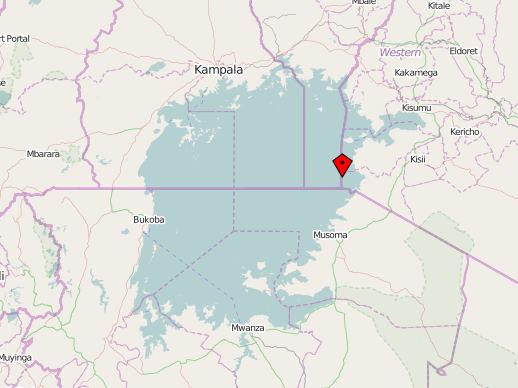
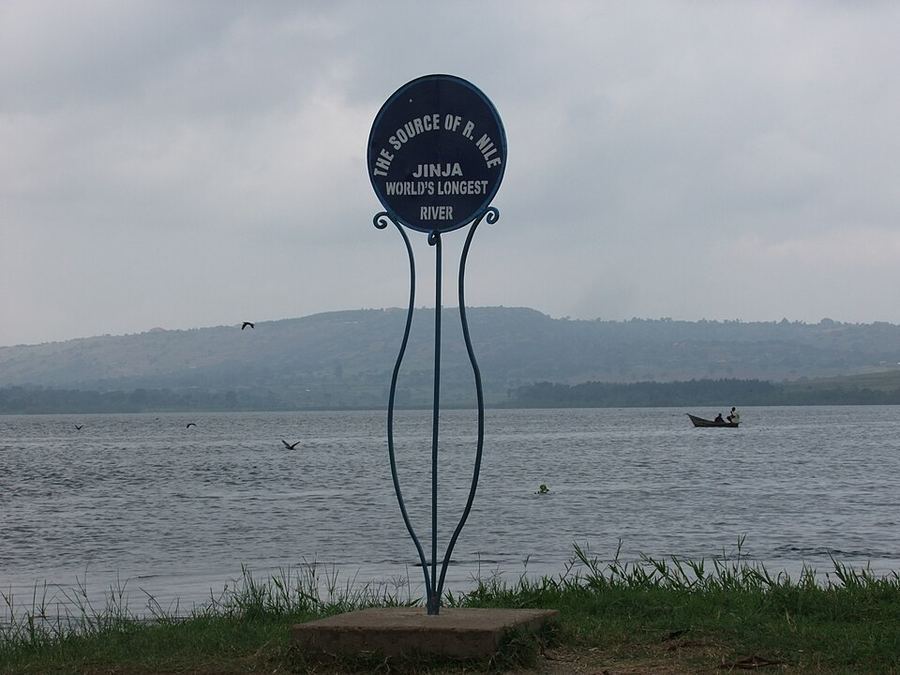
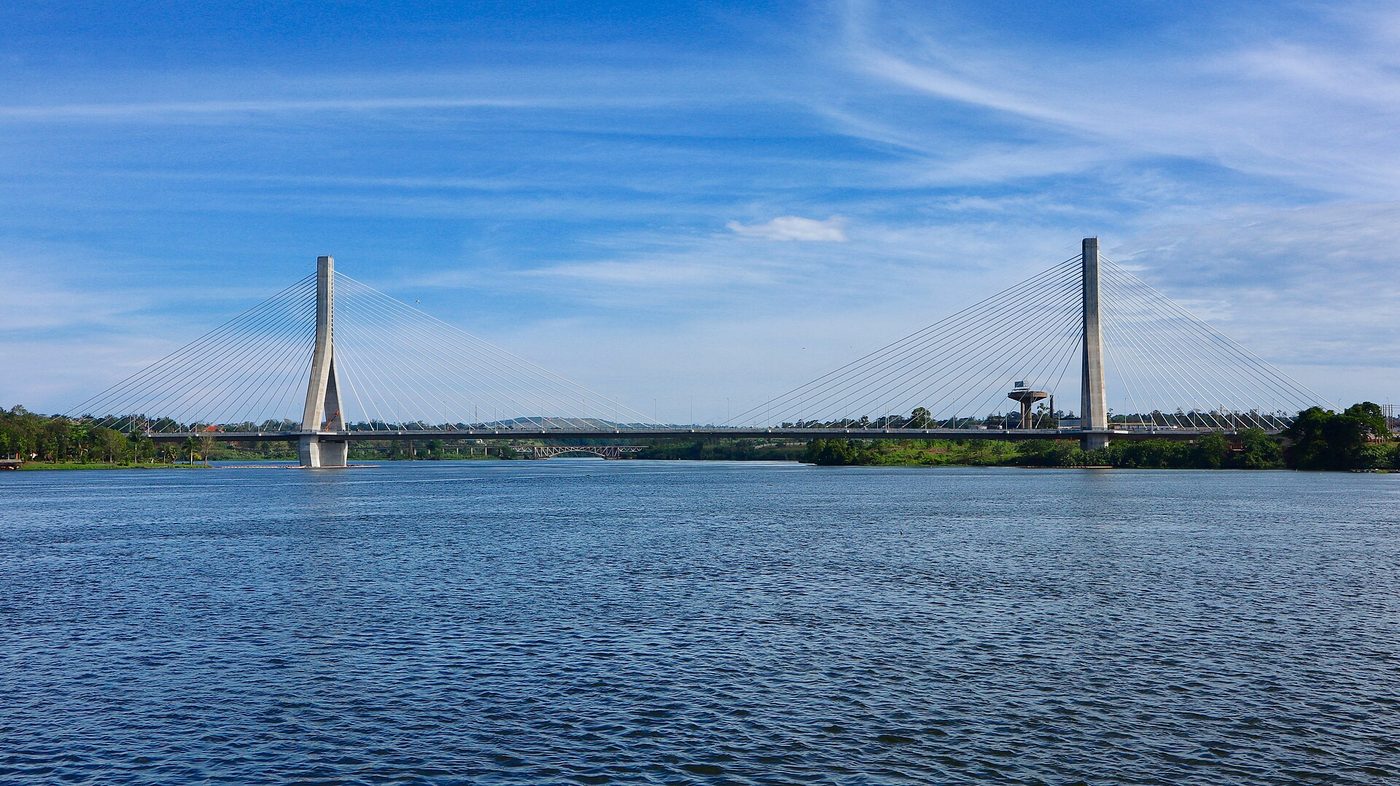
Source of the Nile Bridge profile, Uganda
Uganda UGA
Source of the Nile Bridge profile — Photo: Bridge engineer / CC BY-SA 4.0 via Wikimedia Commons
Did You Know The Rwenzori range on Uganda's western border carries some of the last glaciers in Africa — ice fields sitting almost exactly on the equator, and shrinking fast. — IPCC

Uganda is a landlocked East African republic of about 50.9 million people, straddling the equator on the northern shore of Lake Victoria and bounded by Kenya, South Sudan, the Democratic Republic of the Congo, Rwanda and Tanzania. It is one of the youngest countries in the world by age structure, with a median age of roughly 16.4 years, and one of the fastest-growing by population. The capital, Kampala, spreads over hills above the lake. Uganda became independent from Britain on 9 October 1962 and is a presidential republic; Yoweri Museveni has been president since his National Resistance Army took Kampala in January 1986, the longest tenure of any Ugandan leader. English and Swahili are the official languages, while Luganda is the most widely used language of the capital and the south, and dozens of Bantu, Nilotic and Central Sudanic languages are spoken across the country. Around eighty-five per cent of Ugandans are Christian, split between Anglicans, Pentecostals and Roman Catholics, with a Muslim minority of about fourteen per cent. Agriculture employs most of the workforce; coffee, gold, fish and tobacco lead exports. Uganda hosts more refugees than any other African country — approaching 1.8 million, chiefly from South Sudan and the Congo — under a policy that grants them land, movement and the right to work.

CIA World FactbookWorld BankUNHCREncyclopaedia Britannica
Population
50,863,850
Capital
Kampala
Currency
None UGX
Time zones
Largest city
Kampala
Human Geography Themes
Loading national figures…
Largest Cities
Kampala5,177,878
Mbale City380,225
Bukalasi374,528
Mbarara285,352
Jinja246,228
Arua215,726
Gulu211,463
Iganga199,768
In Perspective

Kampala's urban core is home to about 5,177,878 people.

That's bigger than Sydney, Barcelona, Berlin and Rome — each a great world city in its own right.

Kampala5,177,878
Sydney4,375,394
Barcelona3,908,362
Berlin3,601,776
Rome2,556,354

Among the world's megacities, though, it's one of many — the giants of Asia and Latin America run larger still:

Kampala5,177,878
Jakarta40,545,126
Dhaka37,307,160
Tokyo33,244,670
Shanghai30,678,616
Cairo25,230,325
The Country & Its People

History

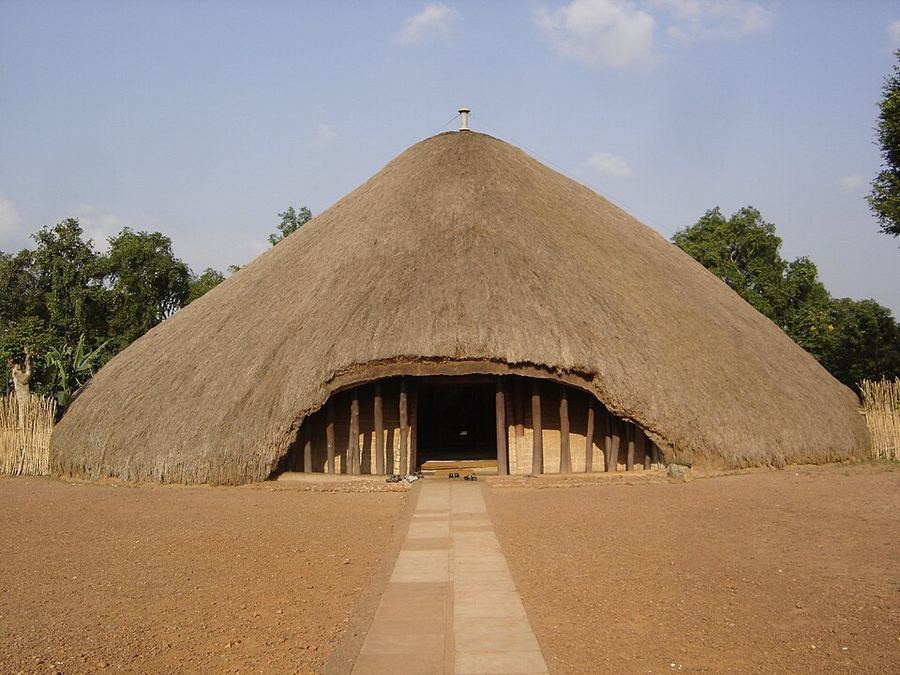
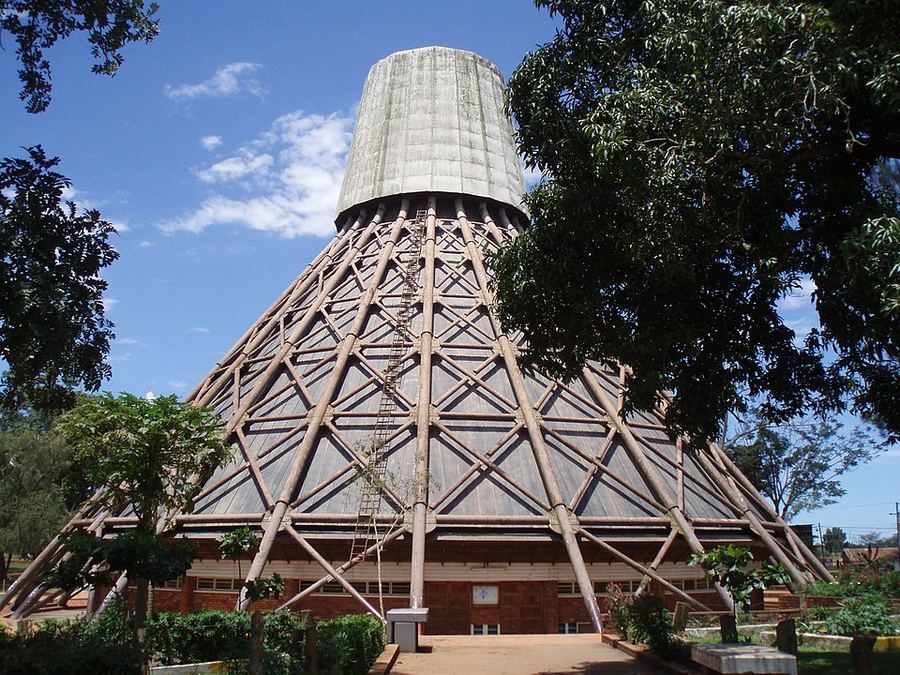
The interlacustrine region of present-day Uganda developed powerful centralised kingdoms — Bunyoro-Kitara, Buganda, Toro, Ankole and the Busoga chiefdoms — whose courts, clan systems and cattle-and-banana economies structured society for centuries before European contact. Arab traders from the coast reached Buganda by the 1840s, and John Hanning Speke arrived at the outflow of Lake Victoria in 1862 and identified it as a source of the Nile. Anglican missionaries came in 1877 and Catholic missionaries in 1879, and religious rivalry at the Buganda court turned violent: the young Christian pages executed at Namugongo between 1885 and 1887 were canonised in 1964 as the Uganda Martyrs. Britain declared a protectorate in 1894 and, through the 1900 Buganda Agreement, ruled much of the country indirectly through Buganda's institutions and chiefs — a bargain that gave Buganda privileges resented elsewhere. Independence came in 1962 with Milton Obote as prime minister and the Kabaka of Buganda as head of state, an arrangement that collapsed in 1966 when Obote stormed the palace and abolished the kingdoms. Idi Amin seized power in 1971, expelled the Asian community in 1972 and presided over eight years of killing and economic ruin before being driven out in 1979 by Tanzanian forces and Ugandan exiles. A second Obote government and a brutal bush war followed, ending when Museveni's National Resistance Army took Kampala in 1986. The kingdoms were restored as cultural institutions in 1993.
Culture

Ugandan society is organised around clan and extended family, and among the Baganda more than fifty exogamous clans, each with its totem animal or plant, govern identity, marriage and burial regardless of where a person lives. The restored kingdoms — Buganda under its Kabaka, Bunyoro, Toro, Busoga — hold no political power but retain enormous cultural authority, and royal ceremonies, coronation anniversaries and the Kabaka's birthday run draw very large participation. Marriage is a negotiated matter between families, with the Baganda kwanjula introduction ceremony a major social event at which the groom's party formally presents itself and bridewealth is agreed. Age and seniority govern forms of address, and kneeling in greeting is still practised by women in parts of the south. Religion is pervasive and public: Anglican and Catholic hierarchies date from the nineteenth-century missions, Pentecostal churches have grown rapidly since the 1980s, and the Namugongo shrine to the Uganda Martyrs draws hundreds of thousands of pilgrims from across Africa every 3 June. Northern and eastern societies — Acholi, Langi, Iteso, Karamojong, Lugbara — are organised differently, historically without centralised kingship, with lineage elders, cattle wealth and age-set systems shaping authority.

Points Of Pride

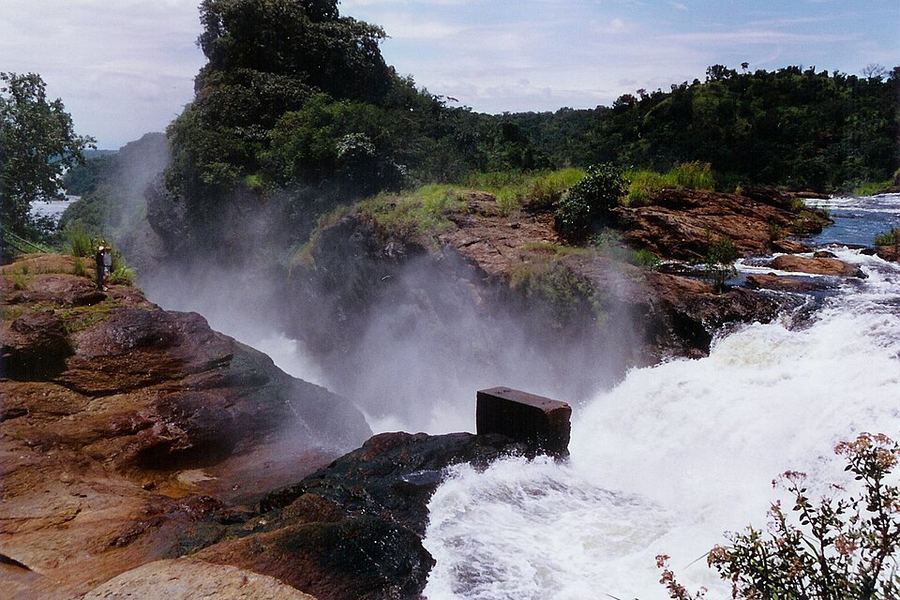
Ugandans commonly quote Winston Churchill's description of the country as the 'pearl of Africa', written after his 1907 journey, and the landscape justifies it: the Rwenzori Mountains, glaciated on the equator; Murchison Falls, where the Nile is forced through a gap barely seven metres wide; Lake Victoria; and the point at Jinja where the Nile leaves the lake. Bwindi Impenetrable National Park and the Rwenzori Mountains National Park are both UNESCO World Heritage sites, and Bwindi shelters roughly half the world's remaining mountain gorillas, whose recovery is one of the great conservation successes of recent decades. The Kasubi Tombs, burial place of the Buganda kings, are a World Heritage site whose destruction by fire in 2010 and subsequent reconstruction became a national cause. Uganda's bird list exceeds a thousand species, among the richest in Africa relative to area. The country's refugee policy — granting land, freedom of movement and the right to work to nearly 1.8 million people — is held up internationally as among the most generous anywhere. And Ugandan distance runners, from John Akii-Bua onward, have made a small athletics programme into a world power.

Cultural Fusion

Uganda sits on one of Africa's principal cultural fault lines. The south and west are Bantu-speaking — Baganda, Banyankole, Basoga, Bakiga, Bagisu — with banana-based agriculture, centralised kingship and cattle-keeping traditions; the north and east are Nilotic and Central Sudanic — Acholi, Langi, Iteso, Karamojong, Lugbara — historically pastoral and organised without kings. That division was hardened by colonial recruitment patterns that drew soldiers from the north and civil servants from the south, and it has shaped Ugandan politics ever since. Swahili and Islam arrived along the caravan routes from the Indian Ocean coast in the nineteenth century, leaving the kanzu robe, vocabulary and a Muslim community concentrated in parts of the centre and east. The British brought Christianity in two competing forms, the English language, common law and cricket. Indentured and commercial migration from South Asia built a substantial Ugandan Asian community that dominated commerce until Amin's 1972 expulsion order; many returned from the 1990s and the community is again economically significant. Congolese and South Sudanese refugee populations, and Somali and Eritrean traders, have added new layers to Kampala's neighbourhoods and to the settlement districts of the north and west.

Music & Dance

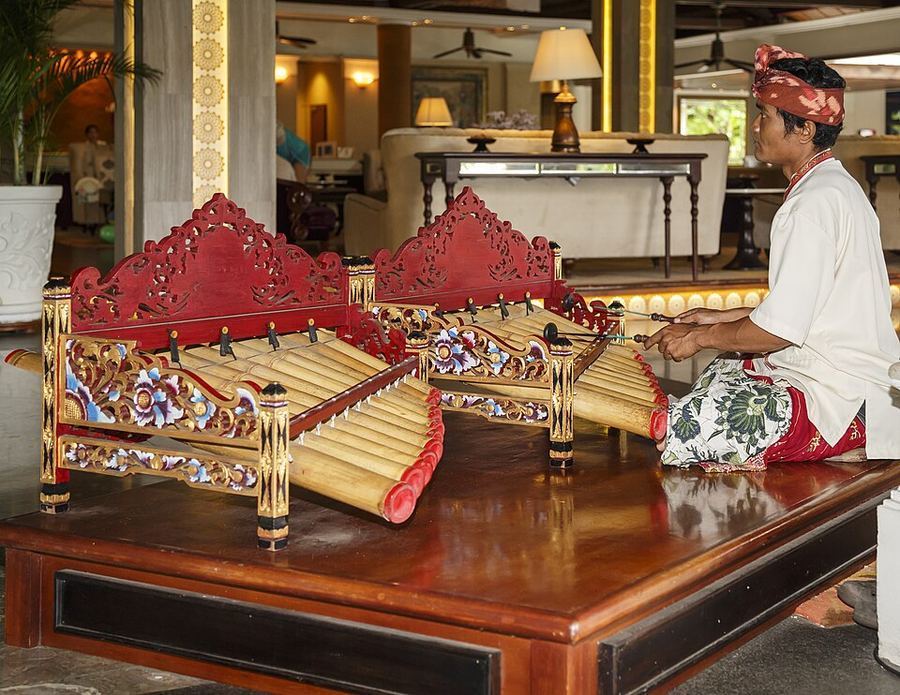
Court music of Buganda is the most studied Ugandan tradition: the amadinda and akadinda log xylophones, played by two or three musicians striking interlocking parts that produce a resultant melody no single player performs, use an equal-step pentatonic tuning that has drawn sustained interest from ethnomusicologists. Alongside them the royal ensembles use the endongo bowl lyre, the endingidi tube fiddle, long trumpets and sets of drums whose rhythms are named and hereditary. Dance is regional and highly distinct: bakisimba from Buganda, with its rolling hip movement said to imitate a king's unsteady walk after banana beer; ekitaguriro of the Banyankole, evoking cattle; the vigorous larakaraka courtship dance of the Acholi, danced around calabash gourds; and the Bagisu imbalu circumcision dance. In popular music, kadongo kamu — a storytelling style built on a single guitar — gave way from the 1990s to Kampala's dancehall-inflected kidandali. Philly Bongoley Lutaaya, who in 1989 became one of the first prominent Africans to declare publicly that he was living with HIV, remains a national figure. Geoffrey Oryema carried Acholi song into exile and international audiences; Eddy Kenzo won a BET award and a Grammy nomination; and Bobi Wine turned a music career into a national political movement.

Cuisine & Misattributed Foods

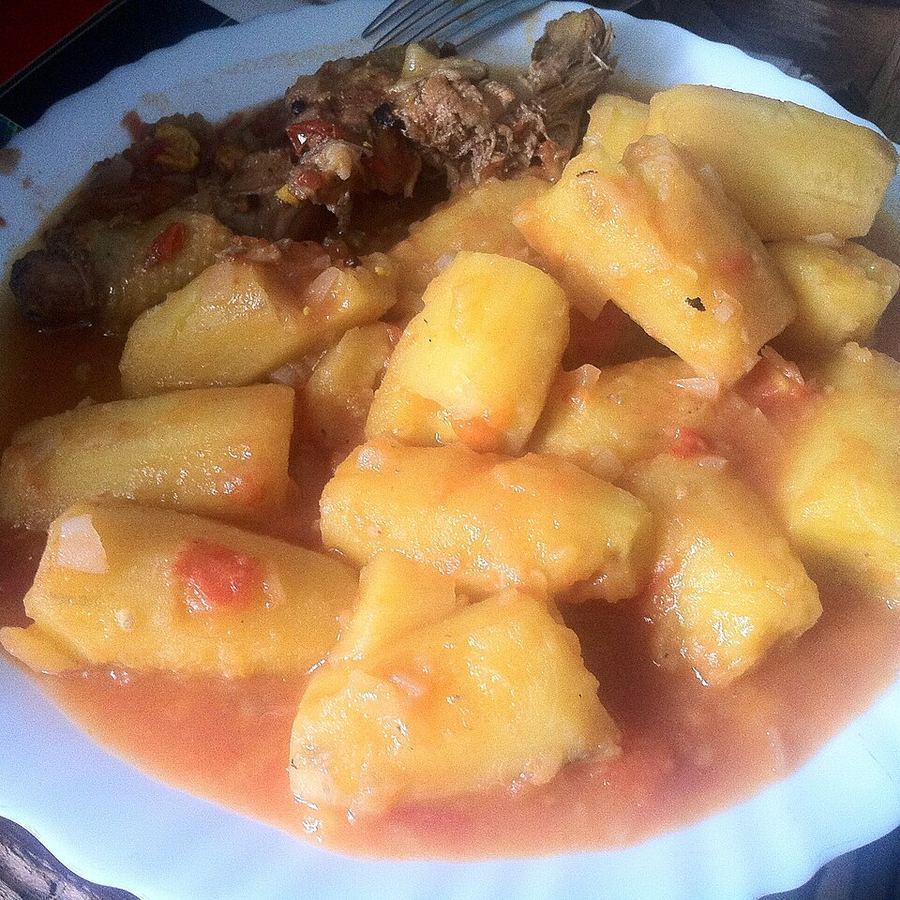
The central Ugandan staple is matoke, green cooking bananas peeled, wrapped in their own leaves and steamed to a soft yellow mash, eaten across the south and west with sauces of groundnut, beans, beef or smoked fish. Posho, a stiff maize meal, and millet bread serve the same role in the north and east, and sweet potato, cassava and yam fill out the starches. The great ceremonial dish of Buganda is luwombo, in which meat, chicken or groundnut stew is tied into individual banana-leaf parcels and steamed slowly — a preparation attributed to the court of Kabaka Mwanga. Lake Victoria and Lake Albert supply tilapia and Nile perch, smoked, fried or stewed. Uganda's most famous modern food is the rolex, a chapati rolled around a fried egg with tomato, onion and cabbage, invented at street stalls near Makerere University and now sold nationwide. Seasonal delicacies include nsenene, the long-horned grasshoppers that swarm twice a year and are fried with onion, and white ants. Bugisu on the slopes of Mount Elgon produces malewa, smoked bamboo shoots. Uganda grows both robusta, native to its forests, and high-grown arabica; waragi, a distilled spirit, is the national drink.

National Dress

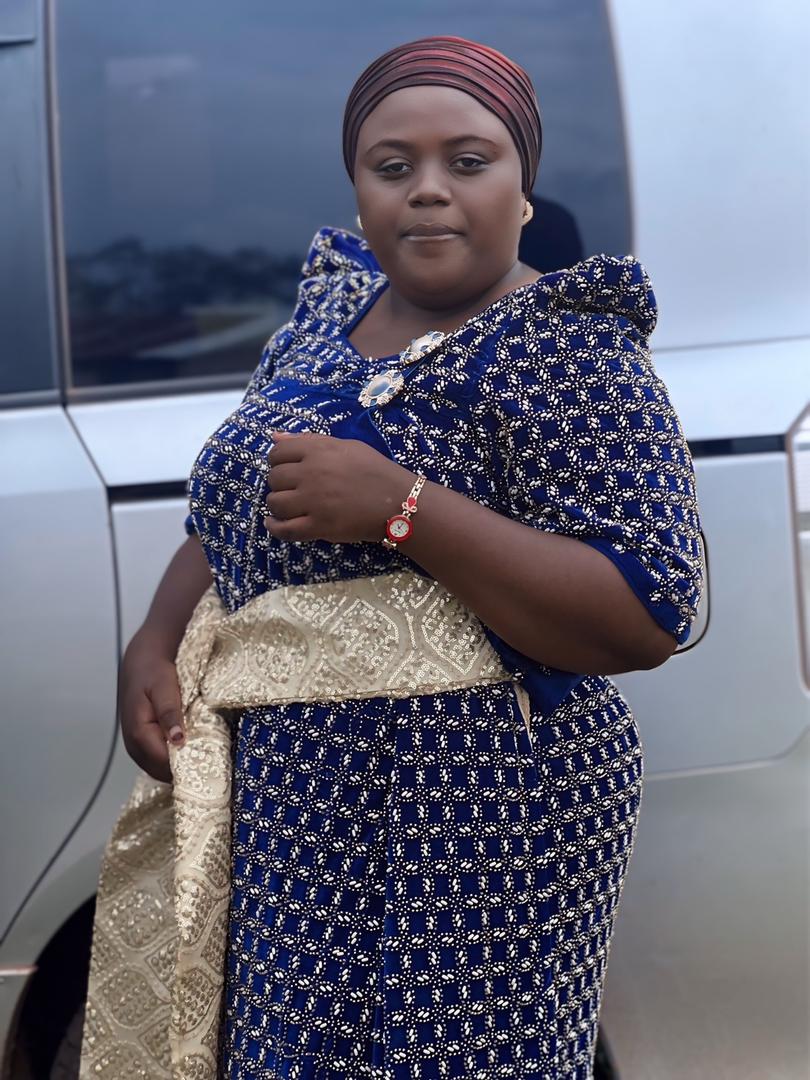
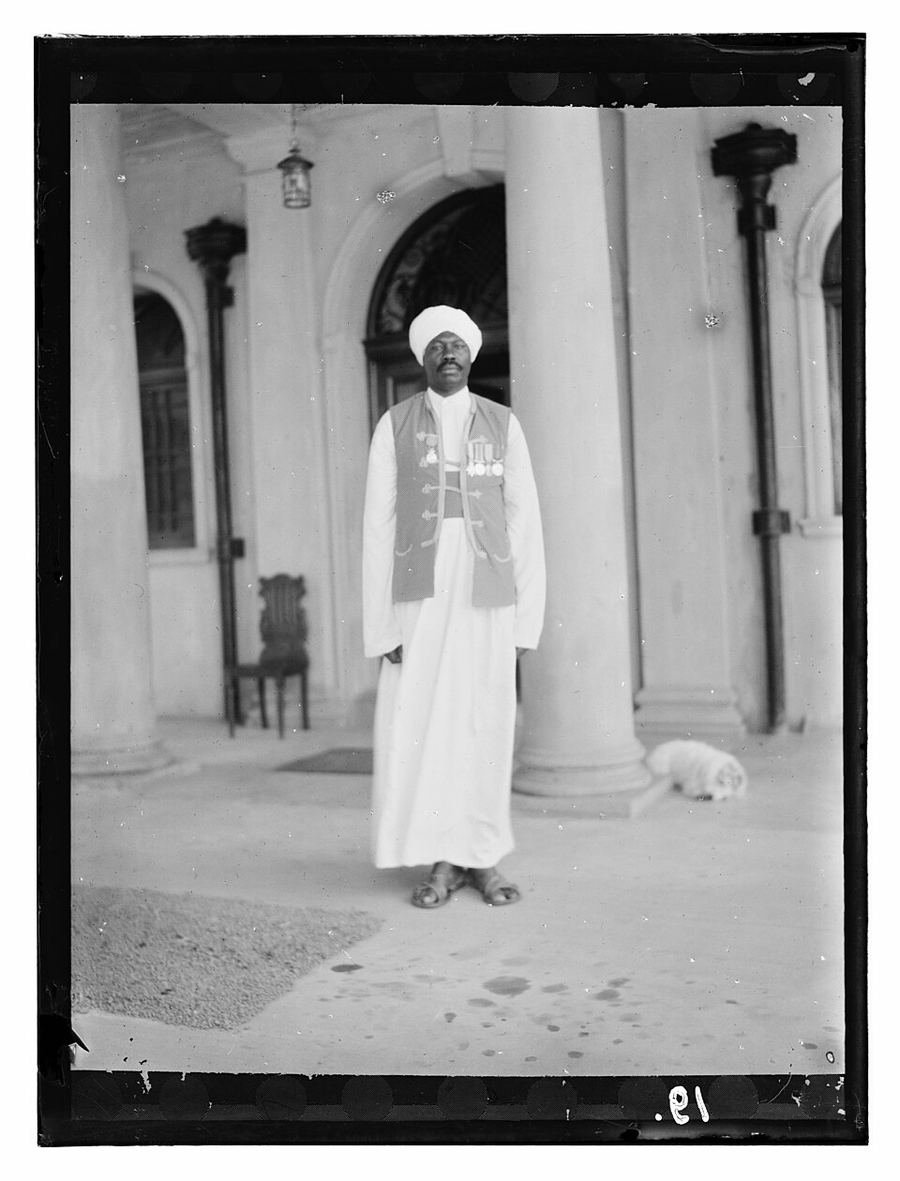
Two garments function as national dress. For men it is the kanzu, a long white or cream cotton robe of Swahili and Arab origin brought inland by coastal traders in the nineteenth century, adopted by the Buganda court and worn today with a jacket for weddings, funerals, church and formal occasions across much of the country. For women it is the gomesi, also called the busuuti, a floor-length dress with a square neckline, short puffed and pointed shoulders and a wide sash tied at the waist, made in bright silks and cottons — a garment developed in the colonial period from earlier barkcloth and cloth wraps, and the standard formal dress of Baganda and Basoga women at every ceremony. In the west, Banyankole and Bahima women wear the mushanana, a long wrapped skirt with a sash draped over one shoulder. Northern and eastern dress traditions differ again: Karamojong men and women are known for dense multicoloured beaded collars, and Acholi ceremonial dress uses animal skins and ostrich-feather headpieces for dance. Barkcloth, the beaten fig-tree fabric that preceded woven cloth in Buganda, survives in ceremonial and funeral use and in contemporary design.

Sports & Inspiring Athletes

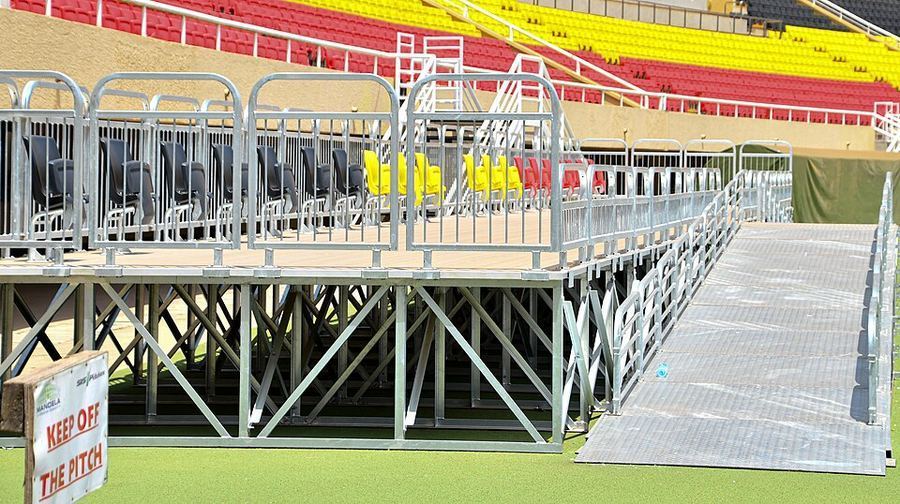
Football is Uganda's most popular sport by a wide margin. The national team, the Cranes, plays at the Mandela National Stadium at Namboole outside Kampala, and the domestic Uganda Premier League is contested by long-established clubs including SC Villa, KCCA FC, Express and Vipers. Athletics is where Uganda competes at the very top: distance running, based heavily in the highlands of the east around Kapchorwa and Bukwo, produces Olympic and world champions, and Ugandan runners now rival their Kenyan and Ethiopian neighbours over 5,000 and 10,000 metres and in cross country. Netball is the leading women's team sport, and the national side, the She Cranes, has qualified repeatedly for the Netball World Cup and reached the top ten in the world rankings. Boxing has a long tradition — the Bombers produced Olympic and Commonwealth medallists from the 1960s onward. Cricket, rugby union and basketball all have national leagues and growing followings, and Uganda's rugby sevens side competes across Africa. Motor rallying, centred on the Pearl of Africa Uganda Rally, has a devoted following. Physical education and school competition, particularly in athletics and netball, feed most of the national programmes.

Notable Educational Programs

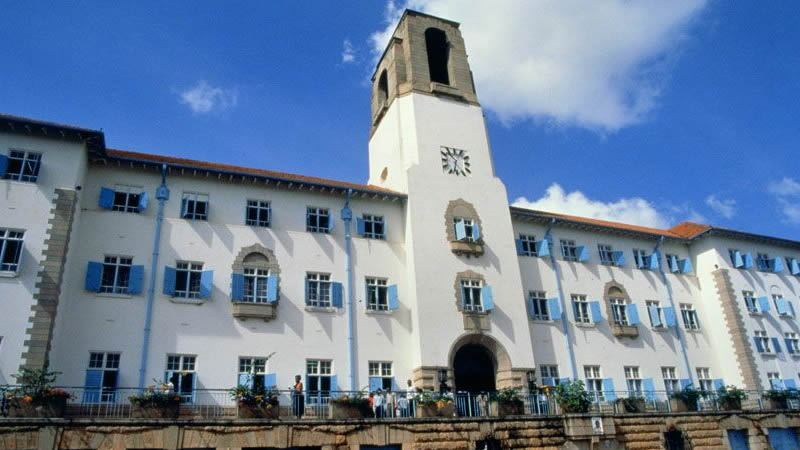
Makerere University in Kampala, founded in 1922 as a technical school and raised to university status in the 1940s, is one of Africa's oldest and most influential universities; it educated much of East Africa's post-independence leadership and remains the country's dominant research institution, with its medical school and its art school both historically important far beyond Uganda. Uganda introduced universal primary education in 1997 and universal secondary education in 2007, and enrolment expanded dramatically, though class sizes, teacher supply, dropout rates and learning outcomes remain serious problems, and the pandemic closure of schools — among the longest in the world, lasting close to two years — set attainment back further. The system runs seven years of primary, four of lower secondary and two of upper secondary, with national examinations at each transition. Public universities include Kyambogo, Mbarara University of Science and Technology, Gulu University in the north and Busitema, alongside a large private sector led by Uganda Christian University and Uganda Martyrs University. Vocational and technical training is a policy priority given the size of the youth cohort entering the labour market each year. Uganda also educates substantial numbers of refugee children within its national school system.

Wars & Conflicts

The longest of Uganda's conflicts was the insurgency of the Lord's Resistance Army, which fought in the Acholi north from 1987 under Joseph Kony, abducted tens of thousands of children as fighters and captives, and drove much of the northern population into displacement camps at its peak. Peace talks at Juba from 2006 ended the fighting in Uganda, and the group's remnants moved into the Congo, the Central African Republic and Sudan. The International Criminal Court issued warrants in 2005; the former commander Dominic Ongwen, himself abducted as a child, was convicted in 2021 and sentenced to twenty-five years. Uganda has also fought the Allied Democratic Forces, a group that took root in the Rwenzori borderlands and has since been linked to the Islamic State; it was blamed for bombings in Kampala in November 2021 and for the massacre at Lhubiriha Secondary School at Mpondwe in June 2023, and Ugandan forces have conducted joint operations with the Congolese army inside eastern Congo since late 2021. Uganda has been among the largest troop contributors to the African Union missions in Somalia. Its earlier interventions in the Congo led the International Court of Justice to find in 2005 that Uganda had violated Congolese sovereignty, and in 2022 the court fixed reparations at 325 million dollars.
ReutersBBCICCICJHuman Rights WatchUCDP
Current as of 2026-08-07

Land & Border Disputes

Uganda's most persistent bilateral dispute is over Migingo, a tiny rocky island in Lake Victoria near the Kenyan border whose surrounding waters are rich in Nile perch. Both countries claim it, police from both have been stationed there, and fishermen have complained of harassment by each side; a joint survey has been repeatedly announced and repeatedly delayed, and the island remains a recurring irritant in an otherwise close relationship. On the western border, sovereignty over Rukwanzi Island and the boundary through Lake Albert has been contested with the Democratic Republic of the Congo, a question given weight by the commercial oil discoveries in the Albertine Graben; a border incident there in 2007 caused deaths on both sides, and the two governments have since worked through joint commissions. The reparations awarded against Uganda by the International Court of Justice in 2022 for its intervention in the Congo remain a live matter between the two states. Internally, Uganda's most difficult territorial questions concern land: boundaries between the restored kingdoms and central government over the return of assets, and disputes over customary land in Acholiland and Karamoja following the return of displaced populations.
Land, Life & Legacy

Land & Climate

Uganda is a landlocked plateau country lying mostly between 900 and 1,500 metres above sea level, which moderates a climate that its equatorial latitude would otherwise make oppressive. It holds a large share of Lake Victoria, the second-largest freshwater lake in the world by area, and also Lakes Albert, Edward, George and Kyoga; open water and wetland cover roughly a sixth of the country. The White Nile leaves Lake Victoria at Jinja, flows north through Lake Kyoga, thunders through the seven-metre cleft of Murchison Falls and continues to Lake Albert and on toward South Sudan. On the Congolese border the Rwenzori range — Ptolemy's Mountains of the Moon — rises to Margherita Peak at 5,109 metres and carries the last equatorial glaciers in Africa, now shrinking rapidly. Mount Elgon, an enormous extinct volcano with one of the world's largest calderas, stands on the Kenyan border. Most of the country has two rainy seasons, in March to May and September to November, and supports intensive smallholder agriculture; the northeast, Karamoja, is semi-arid, hot and drought-prone. Deforestation, wetland reclamation, and the spread of water hyacinth on Lake Victoria are the principal environmental pressures.

Entertainment

Football is the national obsession, watched in crowded video halls where English Premier League matches draw larger audiences than domestic fixtures, and played on any available ground. Betting shops have proliferated in the cities. Kampala's nightlife — bars and music venues in Kabalagala, Kololo and Industrial Area — is famous in the region, and the Nyege Nyege festival, held on the banks of the Nile near Jinja, has grown into one of East Africa's largest electronic and traditional music gatherings. Jinja itself is the country's adventure-sports centre, with commercial white-water rafting and kayaking on the Nile rapids, bungee jumping and quad biking. Domestic tourism and weekend travel focus on the lakeshore beaches of Entebbe and the Ssese Islands, on the national parks, and on gorilla and chimpanzee tracking for those who can afford permits. Board and street games are widespread, above all omweso, the East African mancala game played on a four-row board with a fixed number of seeds, which has a national federation and organised tournaments. Church activity, choir practice and Sunday services occupy much of the weekend for most families, and communal events built around weddings, introductions and funerals structure the social calendar.

Art & Museums

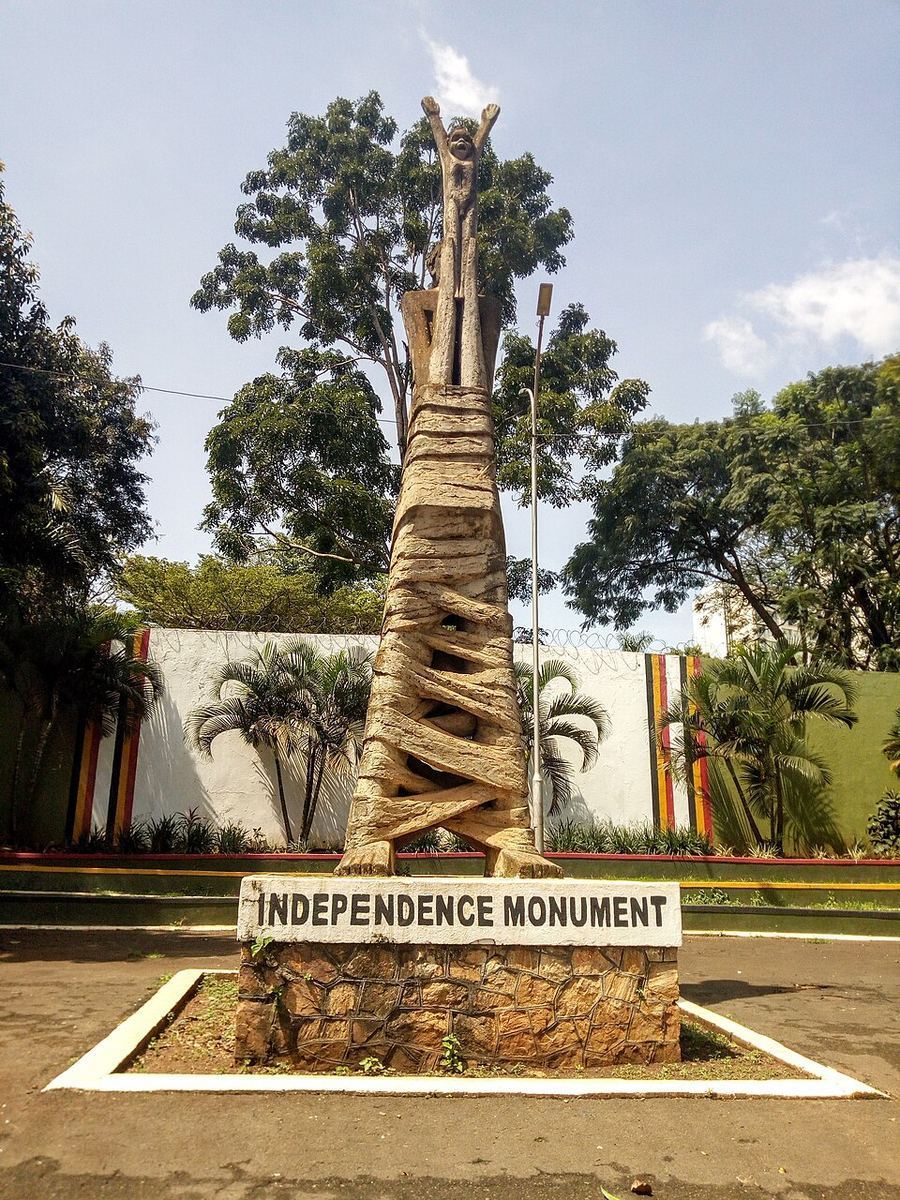
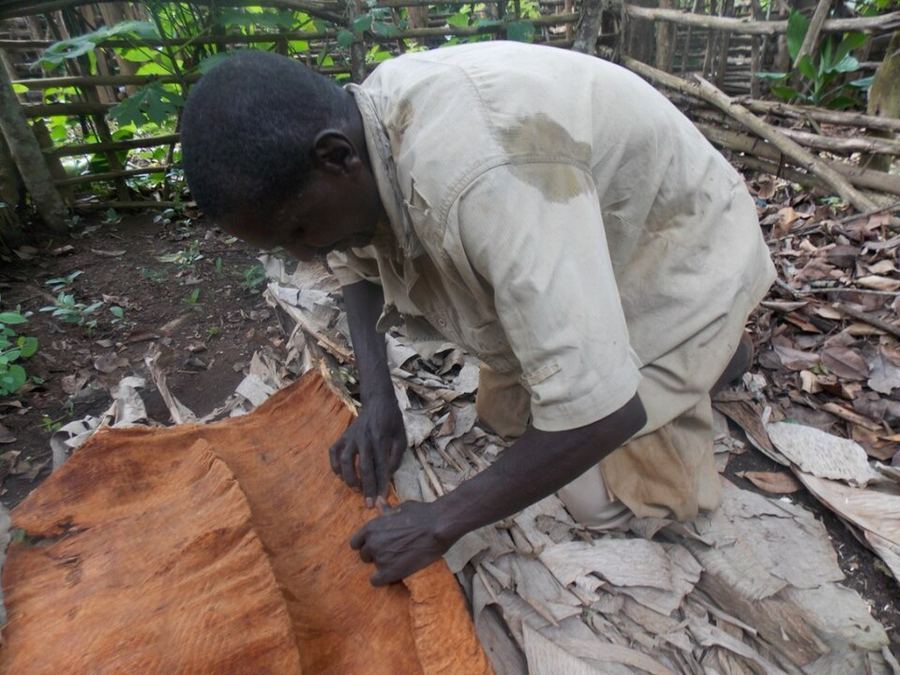
Uganda's modern art history runs through one institution: the art school founded at Makerere in 1937 by Margaret Trowell, later named for her, which trained several generations of East African artists and made Kampala the region's most important centre of art education. Gregory Maloba, who taught there, sculpted the Independence Monument that stands in central Kampala; Francis Nnaggenda became known for monumental carved and welded work confronting violence and endurance; Jak Katarikawe developed an unmistakable naive-expressionist painting style; and Ignatius Sserulyo, Theresa Musoke and later Fred Mutebi extended painting and printmaking traditions. Contemporary practice is served by the Uganda Museum, the Nommo Gallery, Afriart Gallery and the Kampala Art Biennale, and Ugandan artists show internationally. The oldest craft tradition is barkcloth — lubugo — made by beating the inner bark of the mutuba fig tree into a soft russet fabric, a technology older than weaving in the region, inscribed by UNESCO on its list of intangible cultural heritage and now used by designers and artists as well as in Buganda ritual. Basketry, banana-fibre work, pottery and the beadwork of Karamoja are the other principal craft forms, and rock paintings at Nyero in the east are among East Africa's notable prehistoric sites.
UNESCOEncyclopaedia BritannicaBritish MuseumSmithsonian

Notable People

Kabaka Mutesa II of Buganda, Uganda's first head of state at independence, was deposed and died in exile in London in 1969. Milton Obote led the country twice; Idi Amin, who overthrew him in 1971, became one of the most notorious rulers of the twentieth century, and his expulsion of Uganda's Asian community in 1972 scattered families who rebuilt businesses in Britain, Canada and India. Archbishop Janani Luwum, killed in 1977 after criticising Amin's government, is commemorated as a martyr and is one of the twentieth-century martyrs sculpted above the west door of Westminster Abbey. Yoweri Museveni has governed since 1986. Robert Kyagulanyi, the musician known as Bobi Wine, became the leading opposition figure of the last decade. In literature, the Acholi poet Okot p'Bitek's 'Song of Lawino', published in 1966, is a landmark of African writing, and Jennifer Nansubuga Makumbi has won international prizes for her novels. In sport, John Akii-Bua won Uganda's first Olympic gold in the 400 metres hurdles at Munich in 1972 in world record time; Stephen Kiprotich took the marathon at London in 2012; and Joshua Cheptegei holds world records at 5,000 and 10,000 metres.

Inventions & Breakthroughs

Uganda's oldest technical contribution is barkcloth, made by stripping the inner bark of the mutuba fig, steaming it and beating it with grooved wooden mallets until a narrow strip expands into a large sheet of soft fabric — a textile technology that predates weaving in the region, sustainable because the tree is wrapped and regrows its bark annually, and recognised by UNESCO as intangible cultural heritage. The tuning and interlocking technique of the Buganda amadinda xylophone, in which two players' parts combine to produce a melody neither is playing, is a genuine musical invention that has been analysed extensively by researchers. In agriculture, the elaborate banana cultivation of the lake region, with dozens of named cultivars selected for cooking, roasting, beer and dessert, represents centuries of plant breeding. Modern Ugandan engineering has centred on Makerere University: the Kiira Motors project developed an electric two-seater and went on to build the Kayoola solar-assisted electric buses now produced at a plant in Jinja, and a Makerere team's Matibabu device, which screens for malaria optically through a finger clip without drawing blood, won the Royal Academy of Engineering's Africa Prize for Engineering Innovation in 2018. Ugandan uptake of mobile money has made phone-based payment ordinary far beyond the banked population.

Science & Technology

Uganda holds an unusually prominent place in the history of virology. The Uganda Virus Research Institute at Entebbe, established in 1936 as a yellow fever research unit, is where Zika virus was first isolated in 1947 from a sentinel rhesus monkey in the Zika Forest, and where the mosquito-borne viruses of the region were characterised over decades; the institute remains a central node in East African outbreak response. The surgeon Denis Burkitt, working in Uganda in the late 1950s, described the childhood tumour now known as Burkitt lymphoma and traced its geographical distribution — work that led to the identification of the first human cancer virus. Uganda has faced repeated filovirus outbreaks, including Ebola and Marburg, and its outbreak response teams and the Uganda Cancer Institute in Kampala, a long-standing partner of American research centres, are internationally connected. Makerere University's college of health sciences and its infectious disease institute conduct large HIV and tuberculosis research programmes; Uganda's early and public response to HIV in the late 1980s was widely credited with reducing prevalence sharply. Engineering research at Makerere produced the Kiira electric vehicle programme and the Matibabu bloodless malaria test, and mobile money and national digital identity systems have spread widely.
NatureScienceWHOBBCUNICEF
On The World Stage

Champions & Defining Moments

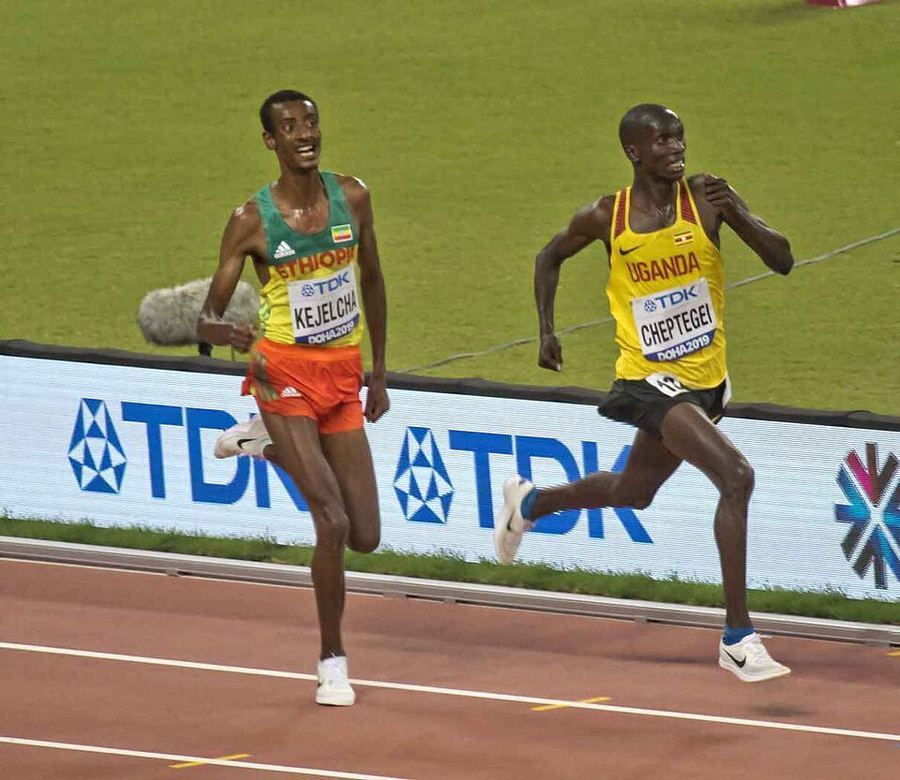
Uganda's Olympic history began spectacularly: John Akii-Bua won the 400 metres hurdles at Munich in 1972 in 47.82 seconds, a world record and the country's first gold medal. Forty years later Stephen Kiprotich won the marathon at London in 2012, an upset over a strong Kenyan and Ethiopian field, and followed it with the world title in 2013. The Tokyo Games held in 2021 produced Uganda's best haul: Joshua Cheptegei won the 5,000 metres and took silver over 10,000, and Peruth Chemutai won the women's 3,000 metres steeplechase to become Uganda's first female Olympic champion. Cheptegei went on to win the 10,000 metres at Paris in 2024 and holds the world records at both 5,000 and 10,000 metres, set in 2020; Jacob Kiplimo has set world records in the half marathon and won world cross country titles. In football, the Cranes reached the final of the Africa Cup of Nations in 1978 and returned to the tournament in 2017 and 2019 after a long absence. Uganda's cricketers qualified for the men's T20 World Cup for the first time in 2024, beating Papua New Guinea in the group stage. Uganda has competed at the Commonwealth Games since 1954, winning medals principally in athletics and boxing.

IOCOlympediaWorld AthleticsCommonwealth Games FederationBBC
Economy, Trade & Government

Currency & GDP

Uganda Shilling — UGX (None)

GDP (PPP): $144.137 billion (2024 est.)

Per capita: $2,900 (2024 est.)

Exports

$9.084 billion (2023 est.)

gold, coffee, fish, refined petroleum, tobacco (2023)

Partners: India 21%, UAE 16%, Hong Kong 10%, South Sudan 8%, Kenya 6% (2023)

Imports

$13.853 billion (2023 est.)

refined petroleum, gold, plastics, packaged medicine, palm oil (2023)

Partners: China 19%, UAE 12%, Tanzania 11%, India 10%, Kenya 7% (2023)

Government

Type: presidential republic

Independence: 9 October 1962 (from the UK)

Terrain → Where People Live

How mountains, coasts, and rivers shape settlement (LandScan).

Coming — data

Migration & Ethnic Settlement

Where groups settled and how people move (GeoEPR + UNHCR).

Coming — data

Universities

Notable institutions, mappable as points.

Coming — data
Economy & government facts: CIA World Factbook (public domain), via OpenFactBook / factbook.json.
Every fact and narrative claim will carry a visible source citation. Data-driven sections light up automatically wherever HERA has coverage.