Ukraine is the largest country lying wholly within Europe, a semi-presidential republic centred on Kyiv and spread across 603,550 square kilometres of steppe, forest-steppe, and Carpathian upland between Poland and Russia. It declared independence from the Soviet Union on 24 August 1991, a decision ratified that December by referendum, but Ukrainians date their statehood far earlier — to Volodymyr I's consolidation of Kyivan Rus around 982, to the Kingdom of Ruthenia formed in 1199, and to the Cossack Hetmanate established in 1648. The population stood at roughly 35.7 million in 2024, down from about 52 million at independence, a collapse driven by low fertility, sustained emigration, and the displacement and death caused by Russia's invasion. Its median age of 44.6 years is among the highest in the world. Ethnic and linguistic figures still in circulation come from the 2001 census, the last conducted: Ukrainians 77.8 percent and Russians 17.3 percent, with Ukrainian spoken by 67.5 percent and Russian by 29.6 percent. Religious life is predominantly Orthodox, split between the Orthodox Church of Ukraine and the Moscow Patriarchate, alongside a large Greek Catholic community in the west. GDP is $577.6 billion in purchasing-power terms, or $16,300 per head, and exports of corn, sunflower oil, wheat, and iron ore make Ukraine one of the world's decisive agricultural suppliers.
Kyiv's urban core is home to about 3,079,812 people.
That's bigger than Rome and Amsterdam — each a great world city in its own right.
Among the world's megacities, though, it's one of many — the giants of Asia and Latin America run larger still:
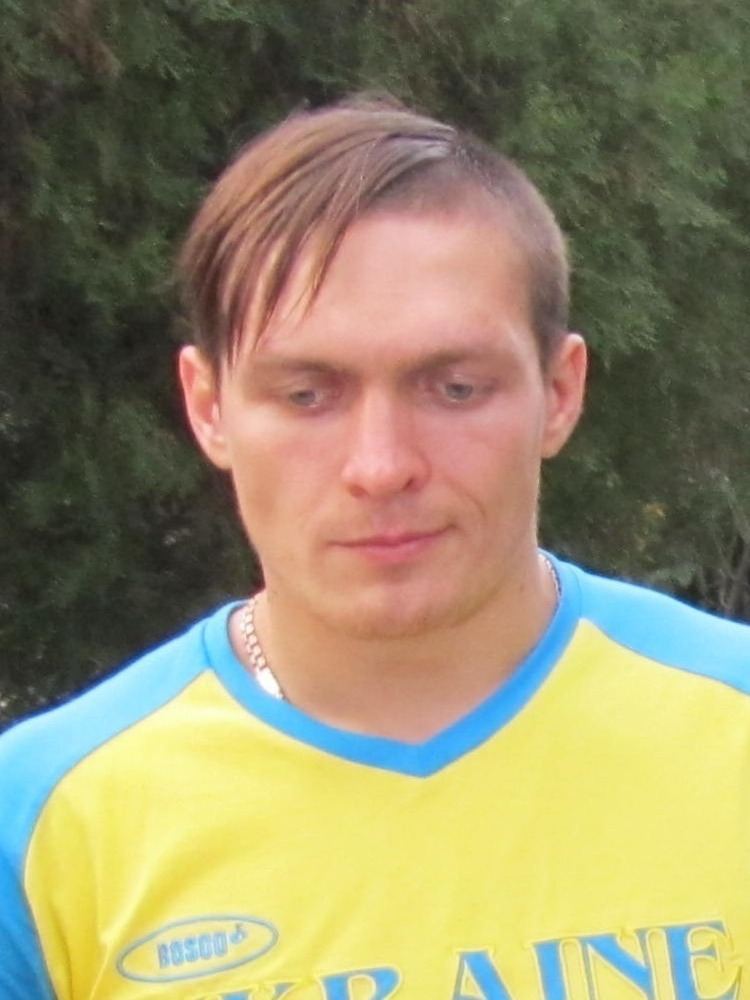
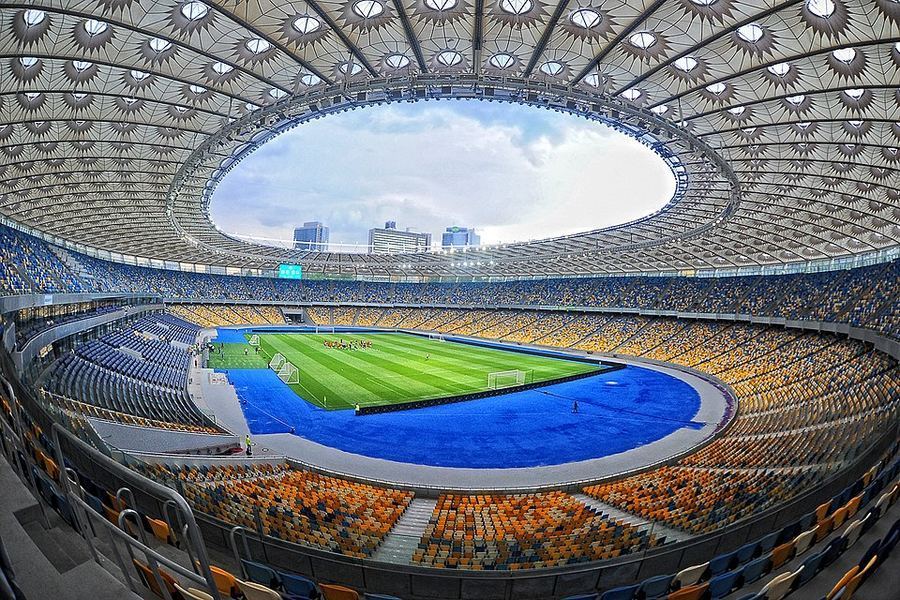
Ukraine co-hosted the UEFA European Championship with Poland in 2012, staging the final at Kyiv's Olimpiyskiy Stadium, and returned as host of the UEFA Champions League final in 2018. Ukrainian clubs have been fixtures in European competition — Dynamo Kyiv reached Champions League semi-finals in the late 1990s with Shevchenko and Serhiy Rebrov, and Shakhtar's UEFA Cup win in 2009 was the first major European trophy by a club from independent Ukraine. Since 2022 both clubs have played their continental home fixtures abroad, and Ukraine's national team has continued to qualify for major tournaments while playing in neutral venues. The country has competed at the Olympic Games as an independent nation since Lillehammer and Atlanta in 1994 and 1996, and has been consistently strong in gymnastics, fencing, athletics, weightlifting, and shooting; Paris 2024 brought golds including Yaroslava Mahuchikh's in the high jump. Ukrainian boxers headline professional cards worldwide, and Oleksandr Usyk's heavyweight unifications have been among the biggest global fight events of the decade. Ukraine also hosts rounds of international chess competition and has produced multiple world champions in that sport.
Hryvnia — UAH (₴)
GDP (PPP): $577.583 billion (2024 est.)
Per capita: $16,300 (2024 est.)
$56.114 billion (2024 est.)
corn, seed oils, wheat, iron ore, soybeans (2023)
Partners: Poland 12%, Romania 9%, Turkey 7%, China 6%, Spain 6% (2023)
$92.025 billion (2024 est.)
refined petroleum, cars, natural gas, packaged medicine, plastic products (2023)
Partners: China 16%, Poland 14%, Germany 8%, Turkey 6%, USA 4% (2023)
Type: semi-presidential republic
Independence: 24 August 1991 (from the Soviet Union); notable earlier dates: ca. 982 (VOLODYMYR I consolidates Kyivan Rus); 1199 (Principality (later Kingdom) of Ruthenia formed); 1648 (establishment of the Cossack Hetmanate); 22 January 1918 (from Soviet Russia)
How mountains, coasts, and rivers shape settlement (LandScan).
Coming — dataWhere groups settled and how people move (GeoEPR + UNHCR).
Coming — dataNotable institutions, mappable as points.
Coming — data