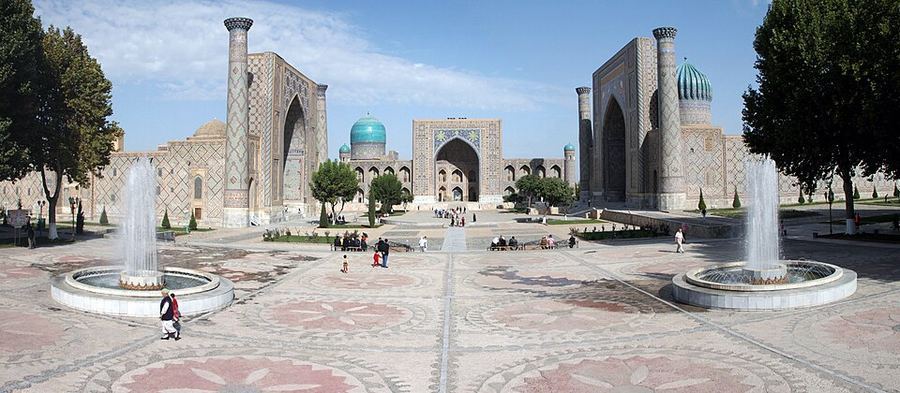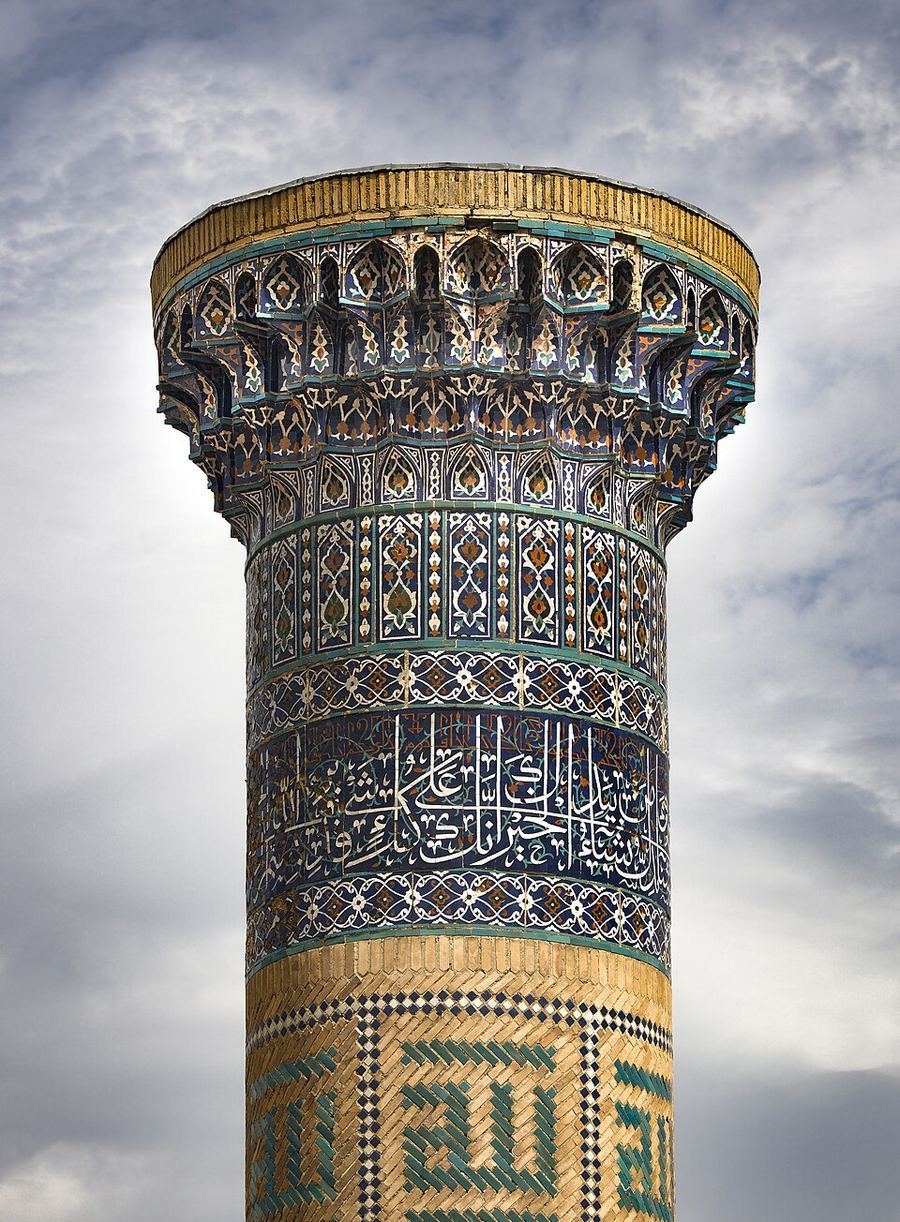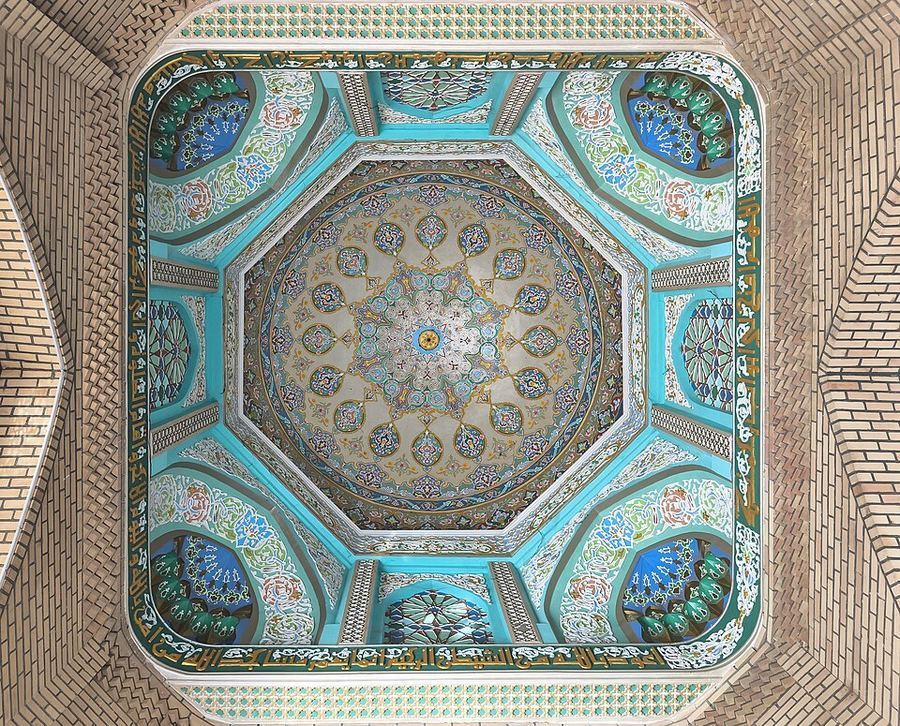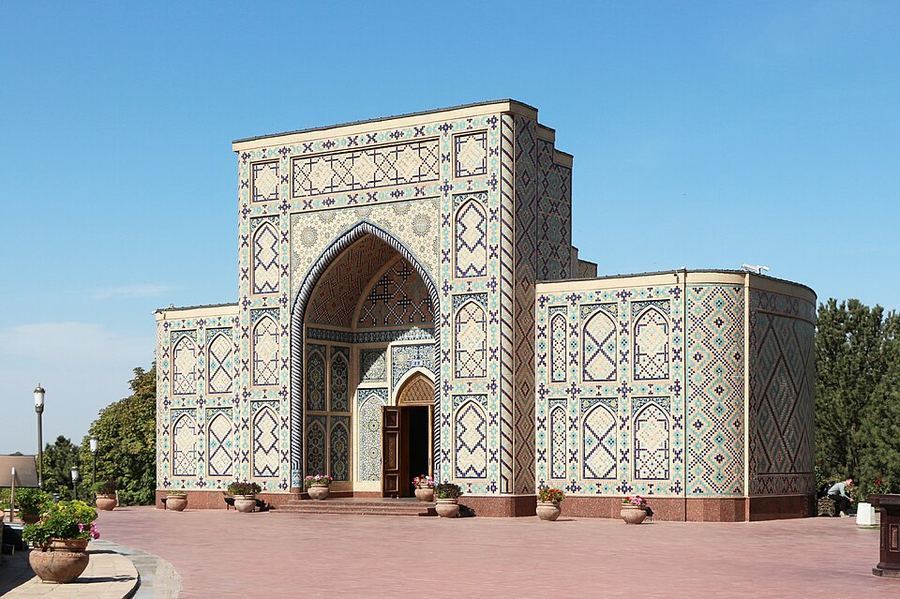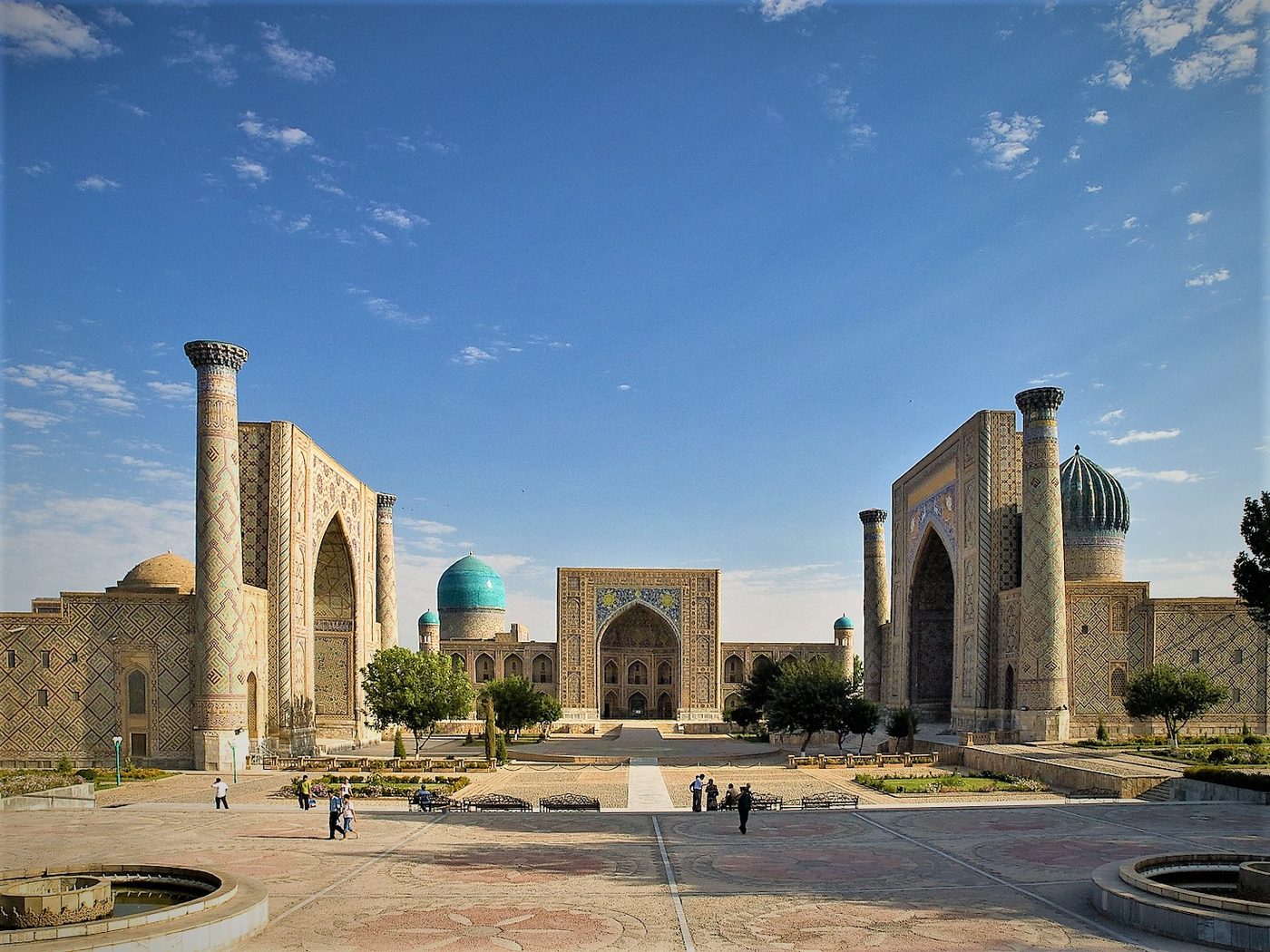
Uzbekistan is a Central Asian republic of about 37 million people, the most populous country in the region, occupying the land between the Amu Darya and Syr Darya rivers that classical geographers called Transoxiana. It is one of only two countries in the world that are double-landlocked, meaning every neighbour is itself landlocked. The capital, Tashkent, is Central Asia's largest city. Uzbekistan declared independence from the Soviet Union on 1 September 1991 and is a presidential republic with a strongly centralised executive; Islam Karimov governed from independence until his death in 2016, and Shavkat Mirziyoyev has since pursued an opening of the economy, the currency and the borders while political competition has remained tightly limited. Uzbeks make up roughly eighty-four per cent of the population, with Tajik, Kazakh, Russian and Karakalpak minorities; Uzbek is the official language and Russian remains widely used in cities. Around eighty-eight per cent of the population is Muslim, overwhelmingly Sunni of the Hanafi school, alongside an Orthodox Christian minority. The economy rests on gold — Uzbekistan is a major producer — together with natural gas, copper, cotton and textiles, and on remittances from a large labour migration to Russia and Kazakhstan. Samarkand, Bukhara and Khiva give the country one of the densest concentrations of Islamic architecture anywhere.
Tashkent's urban core is home to about 3,874,653 people.
That's bigger than Berlin, Rome and Amsterdam — each a great world city in its own right.
Among the world's megacities, though, it's one of many — the giants of Asia and Latin America run larger still:
Uzbekistan has competed independently at the Olympic Games since 1994 and has become one of the strongest boxing nations in the world. At the Tokyo Games held in 2021 it won three gold medals, through Bakhodir Jalolov in super-heavyweight boxing, Ulugbek Rashitov in taekwondo and Akbar Djuraev in weightlifting. At Paris in 2024 it produced the most successful Games in its history, with eight gold medals; Uzbek boxers won every men's boxing final they contested, Rashitov retained his taekwondo title, and Diyora Keldiyorova's judo gold made her the first Uzbek woman to become an Olympic champion. In chess, Uzbekistan's young team won the open section of the Chess Olympiad at Chennai in 2022, an upset over far more established federations, and Nodirbek Abdusattorov had already won the world rapid title in 2021 at seventeen. In football, the national team qualified for the FIFA World Cup for the first time in June 2025, securing a place at the 2026 tournament. The gymnast Oksana Chusovitina, who competed at eight Olympic Games and won a silver medal at Beijing in 2008 at thirty-three, is one of the most durable athletes in the sport's history.
Uzbekistan Sum — UZS (None)
GDP (PPP): $379.989 billion (2024 est.)
Per capita: $10,500 (2024 est.)
$26.173 billion (2024 est.)
gold, cotton yarn, garments, fertilizers, fabric (2023)
Partners: Switzerland 34%, Russia 12%, UK 11%, China 7%, Turkey 6% (2023)
$43.624 billion (2024 est.)
cars, vehicle parts/accessories, packaged medicine, refined petroleum, aircraft (2023)
Partners: China 32%, Russia 17%, Kazakhstan 8%, S. Korea 6%, Turkey 5% (2023)
Type: presidential republic; highly authoritarian
Independence: 1 September 1991 (from the Soviet Union)
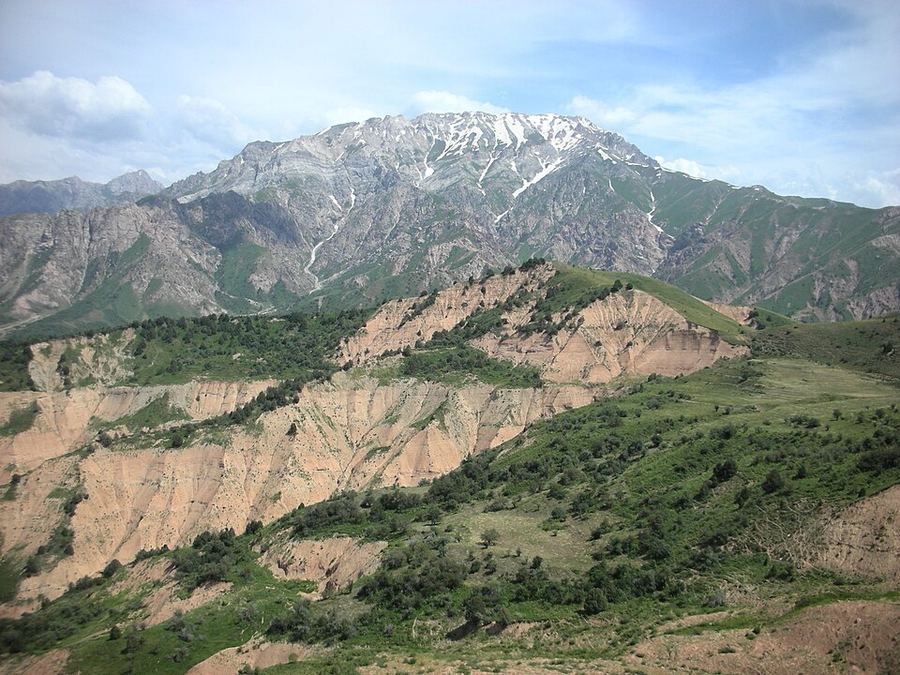
How mountains, coasts, and rivers shape settlement (LandScan).
Coming — dataWhere groups settled and how people move (GeoEPR + UNHCR).
Coming — dataNotable institutions, mappable as points.
Coming — data