HERA · Human Entity Reference Atlas by Masego Inc

← Vietnam 🌐 3D View
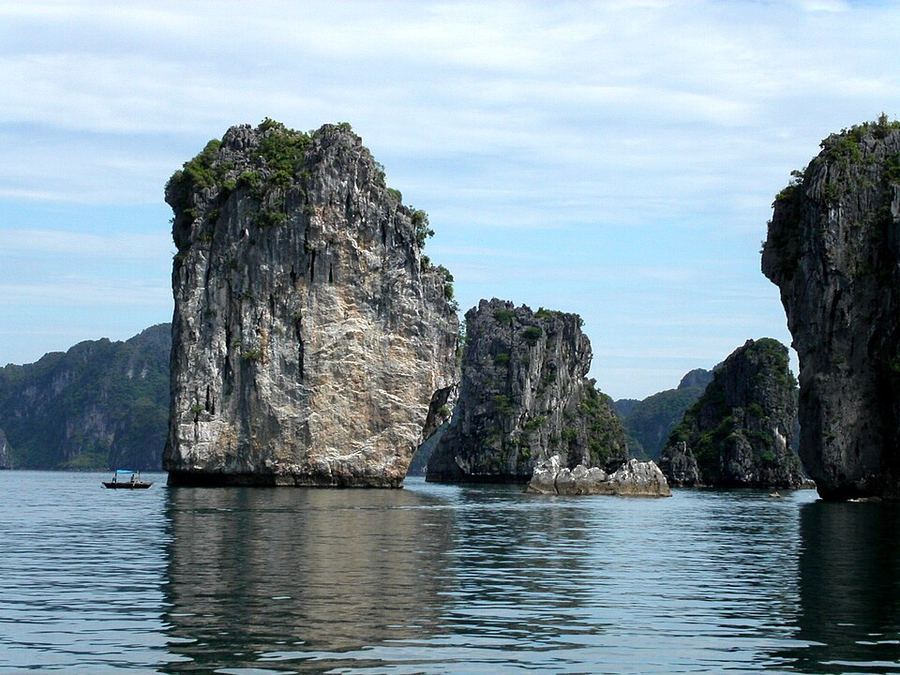
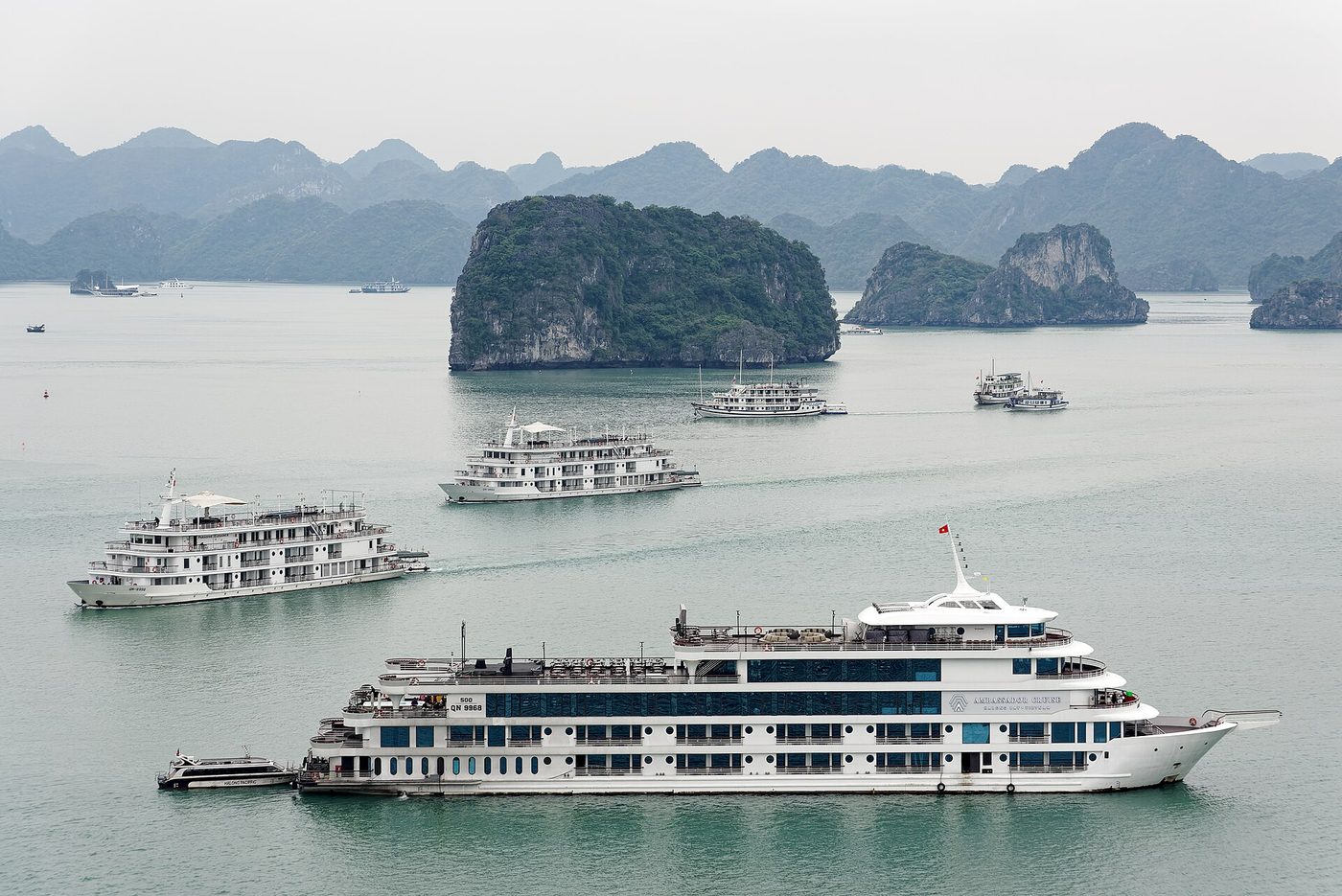
Ha Long Bay, Vietnam
Vietnam VNM
Ha Long Bay — Photo: Jakub Hałun / CC BY 4.0 via Wikimedia Commons
Did You Know Vietnam performs at or above the OECD average in the PISA assessments of fifteen-year-olds, despite a GDP per capita far below that of any other country achieving similar results — a gap so pronounced it has become its own field of study in development economics. — OECD

Vietnam is a communist party-led state of some 107 million people occupying the eastern edge of mainland Southeast Asia, an S-shaped country stretched over 1,600 kilometres from the Red River delta in the north to the Mekong delta in the south and pinched to barely fifty kilometres wide in the middle. Hanoi is the capital, Ho Chi Minh City the commercial engine. Independence from France was declared on 2 September 1945, though it took a further thirty years of war — against France, then the United States and the southern republic — before the country was reunified in 1976. The Kinh, or Viet, make up 85.3 percent of the population, with fifty-three recognised minority peoples, chiefly Tay, Thai, Muong, Khmer, Hmong, and Nung, concentrated in the northern highlands and the Mekong delta. The 2019 census recorded 86.3 percent of Vietnamese as having no religion, a figure that reflects how the census counts organised affiliation rather than the near-universal practice of ancestor veneration; Catholics are 6.1 percent and Buddhists 5.8 percent. Since the Doi Moi reforms of 1986 replaced central planning with a market economy under one-party rule, Vietnam has become one of the world's fastest-growing economies: GDP is $1.456 trillion in purchasing-power terms, and exports of $429 billion — electronics, garments, integrated circuits, footwear — now exceed those of far larger economies.

CIA World FactbookWorld BankEncyclopaedia Britannica
Population
106,688,169
Capital
Hanoi (Ha Noi)
Currency
₫ VND
Time zones
Largest city
Ho Chi Minh City
Human Geography Themes
Loading national figures…
Largest Cities
Ho Chi Minh City14,557,830
Hanoi5,837,149
Cần Thơ1,652,649
Đà Nẵng1,178,696
Hải Phòng1,099,682
Long Xuyên550,869
Vũng Tàu476,737
Mỹ Tho461,520
In Perspective

Ho Chi Minh City's urban core is home to about 14,557,830 people.

That's bigger than London, Paris, Madrid and Toronto — each a great world city in its own right.

Ho Chi Minh City14,557,830
London10,408,332
Paris9,366,654
Madrid5,680,137
Toronto5,566,382

Among the world's megacities, though, it's one of many — the giants of Asia and Latin America run larger still:

Ho Chi Minh City14,557,830
Jakarta40,545,126
Dhaka37,307,160
Tokyo33,244,670
Shanghai30,678,616
Cairo25,230,325

More people live in Ho Chi Minh City than in the entire nation of Sweden, Greece, Portugal or Israel.

The Country & Its People

History

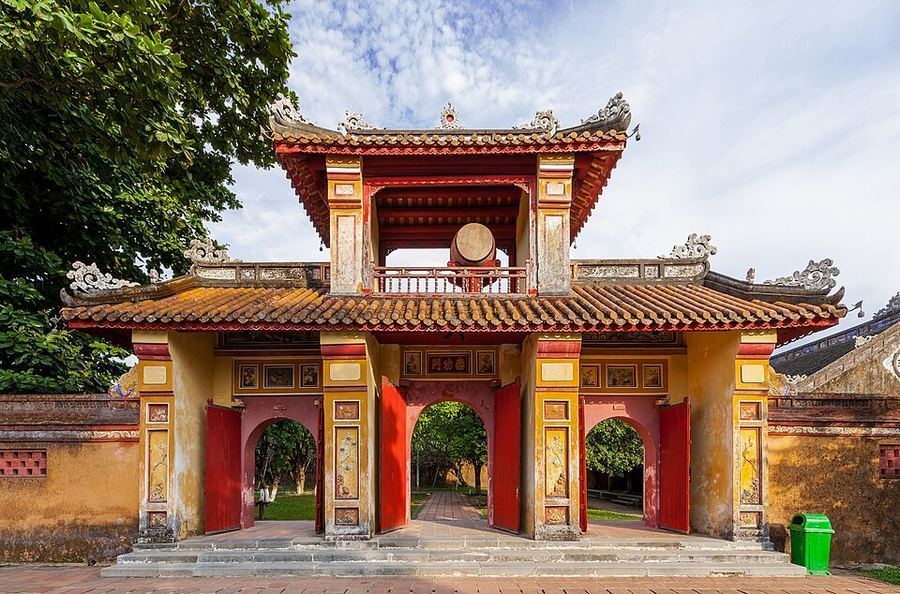
Vietnamese history is conventionally framed as a long assertion of independence from China. The Dong Son culture of the Red River delta was casting elaborate bronze drums by the first millennium BCE; Han China annexed the region in 111 BCE and ruled it for roughly a thousand years, in which time Confucian administration, the Chinese script, and Mahayana Buddhism took permanent root. The Trung sisters' revolt of 40 CE became the founding legend of resistance, but independence was won decisively in 938, when Ngo Quyen destroyed a Chinese fleet at the Bach Dang river using iron-tipped stakes planted to impale ships on the falling tide. The Ly dynasty moved the capital to Thang Long, today's Hanoi, in 1010; the Tran repelled three Mongol invasions, and Tran Hung Dao repeated the Bach Dang stake tactic in 1288. Le Loi expelled the Ming in 1428, and the Nguyen dynasty unified the country under Gia Long in 1802 with its capital at Hue. France conquered Vietnam between 1858 and 1885. Ho Chi Minh declared independence on 2 September 1945; the French were defeated at Dien Bien Phu on 7 May 1954, the country was partitioned at the seventeenth parallel, and the ensuing war ended with the fall of Saigon on 30 April 1975.
Culture

Vietnamese social life rests on the family and on obligation to those who came before. Nearly every household keeps an ancestral altar with photographs, incense, and offerings of fruit and rice wine, and death anniversaries are observed with more ceremony than birthdays. The proverb uong nuoc nho nguon — when you drink water, remember its source — condenses a whole ethic of gratitude and reciprocity. Confucian hierarchy survives in the elaborate system of kinship pronouns, which forces every speaker to place themselves relative to their interlocutor by age and generation before a sentence can even begin. Education carries extraordinary prestige, an inheritance of the imperial examination system that made scholarship the only reliable route to status. Village life historically centred on the dinh, the communal house that served as temple to the village's tutelary spirit and as assembly hall, and rural communities retain strong customary autonomy. Tet Nguyen Dan, the lunar new year, is the overwhelming event of the calendar: cities empty as tens of millions travel home, debts are settled, houses are cleaned, and the first visitor to cross a threshold is thought to set the household's fortune for the year.

Points Of Pride

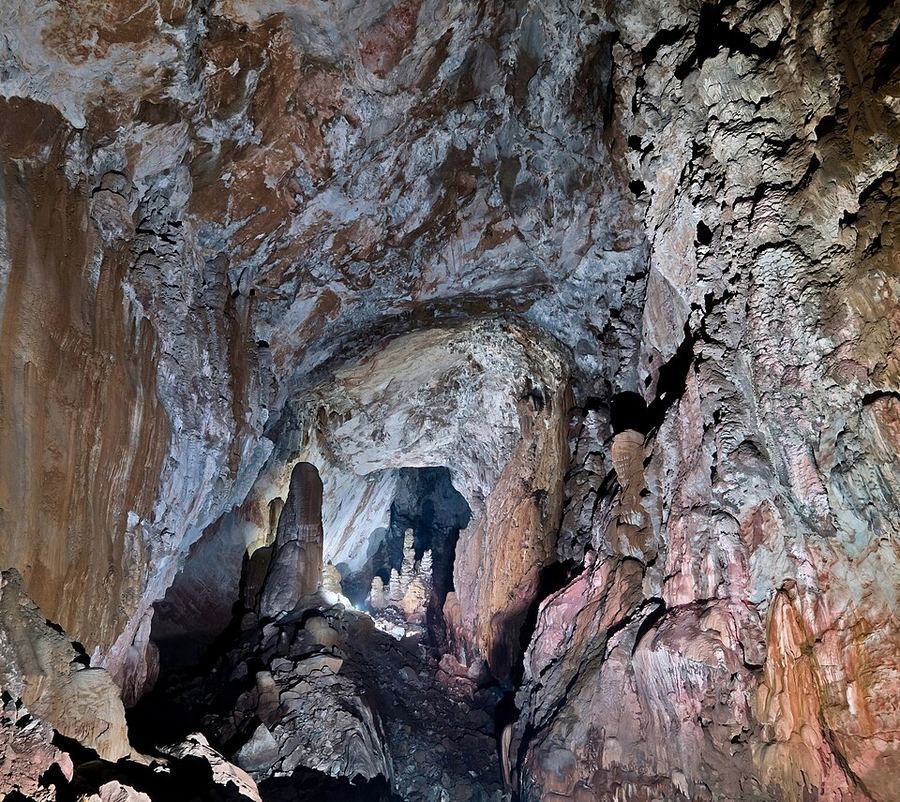
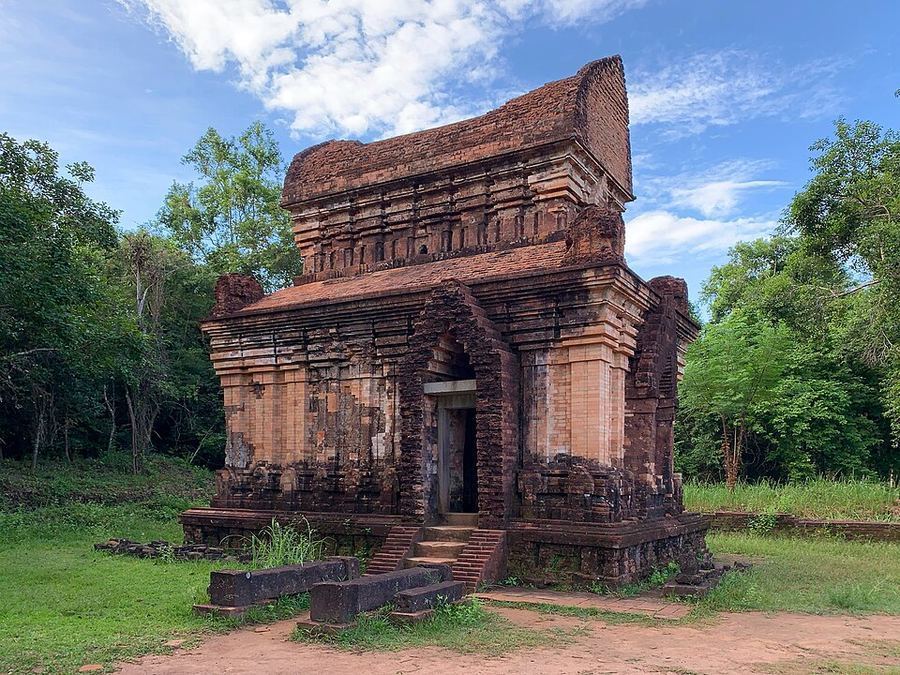
Vietnam holds eight UNESCO World Heritage sites: the karst seascape of Ha Long Bay, the imperial complex at Hue, the merchant town of Hoi An, the Cham sanctuary at My Son, the caves of Phong Nha-Ke Bang, the central sector of the Imperial Citadel of Thang Long in Hanoi, the Citadel of the Ho Dynasty, and the mixed natural-cultural Trang An landscape. Fifteen or more Vietnamese traditions appear on UNESCO's intangible heritage lists, among them the nha nhac court music of Hue, the gong culture of the Central Highlands, quan ho duet singing of Bac Ninh, ca tru chamber song, don ca tai tu of the south, and the worship of the Hung Kings. Phong Nha contains Son Doong, the largest known cave passage in the world, unmeasured until 2009. Beyond heritage, national pride rests heavily on the military record — the defeats of three Mongol invasions, of France at Dien Bien Phu, and of the United States — and on the economic transformation since Doi Moi, which took Vietnam from rice shortages in the 1980s to being one of the world's leading exporters of rice, coffee, and electronics within a single generation.

Cultural Fusion

Vietnam is where the Sinicized world meets Southeast Asia, and the boundary runs through the country rather than around it. The north absorbed a millennium of Chinese administration: Confucian statecraft, Mahayana Buddhism, Chinese characters used for Vietnamese writing until the twentieth century, and a scholar-official class recruited by examination. The south was built on conquered ground — the Indianized Hindu kingdom of Champa, whose brick towers still stand along the central coast at My Son and Po Nagar and whose descendants remain a distinct Muslim and Hindu Cham minority, and the Khmer lands of the Mekong delta, where Theravada Buddhist temples and a large Khmer Krom population persist. Chinese merchant communities gave Cho Lon in Ho Chi Minh City its character. French rule left the baguette, coffee, villa architecture, and — most consequentially — quoc ngu, the Latin-alphabet script devised by Jesuit missionaries that displaced Chinese characters entirely and is now the sole writing system, an almost unique case of a country switching scripts wholesale. In the highlands, dozens of Austroasiatic and Austronesian peoples maintain longhouse, gong, and animist traditions quite separate from lowland Kinh culture.

Music & Dance

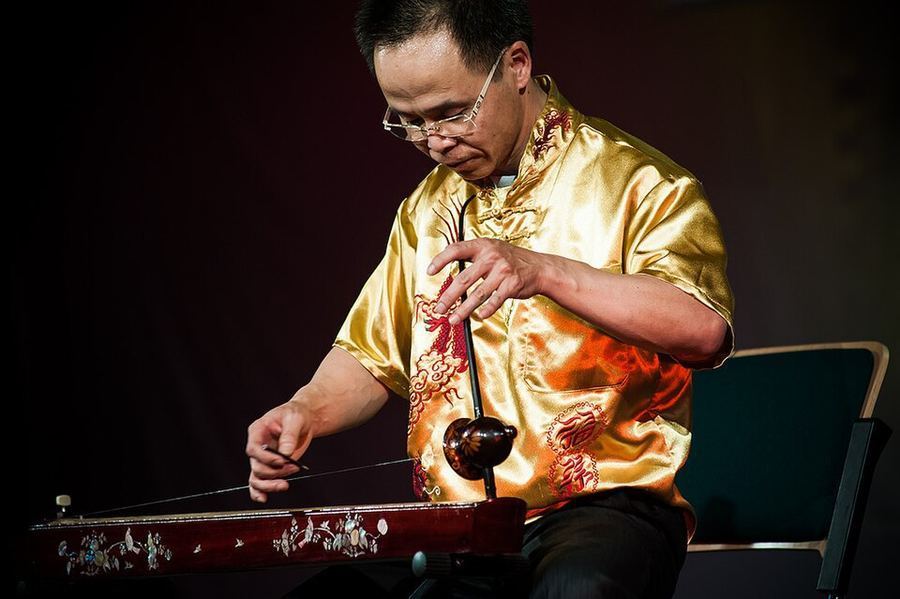
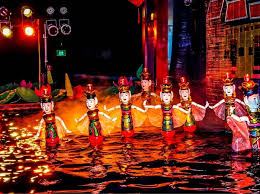
Vietnam's signature instrument is the dan bau, a monochord that produces a full melody from a single string: the player touches harmonic nodes with the edge of the hand while bending a flexible buffalo-horn rod to slide the pitch, giving it a vocal, keening quality unmatched by any other instrument. The dan tranh zither and dan nguyet moon lute complete the classical ensemble. Nha nhac, the elegant court music of the Nguyen emperors at Hue, was the first Vietnamese element inscribed by UNESCO, in 2003. Ca tru, a northern chamber form in which a female singer accompanies herself on wooden clappers against a three-stringed lute, was placed on the urgent safeguarding list in 2009 after nearly dying out. Quan ho, the alternating male and female love duets of Bac Ninh province, and the southern don ca tai tu amateur chamber tradition are both inscribed, as is the gong culture of the Central Highlands, where sets of flat and bossed gongs are played by whole communities. Vietnam's most distinctive performing art is mua roi nuoc, water puppetry, invented by Red River delta villagers who staged puppet dramas waist-deep in flooded paddy fields, with the puppeteers concealed behind a screen and the water itself as the stage.

Cuisine & Misattributed Foods

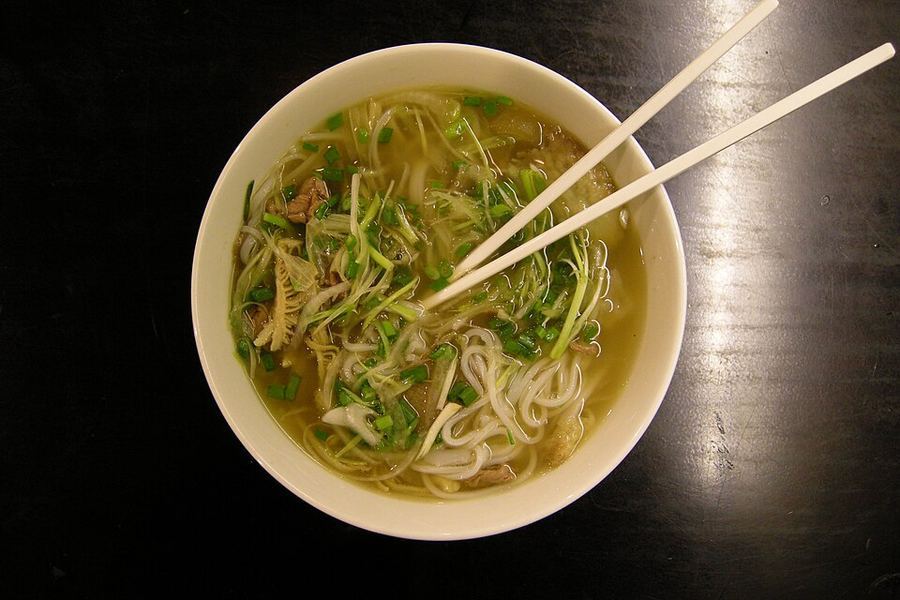
Vietnamese cooking is built on freshness, herbs, and restraint rather than heat, with nuoc mam — fermented anchovy fish sauce, at its most prized from Phu Quoc island — supplying the salt and depth that other cuisines get from soy or stock. Pho, a beef or chicken noodle soup whose broth is simmered for hours with charred ginger, onion, star anise, and cassia, is the national dish and originated in the north around the early twentieth century. Bun cha, grilled pork patties in a sweet-sour dipping broth with rice vermicelli and a mound of herbs, is Hanoi's other emblem. Southern food is sweeter and more abundantly herbed, with goi cuon fresh spring rolls, banh xeo turmeric crepes, and com tam broken rice with grilled pork. Hue, as the former imperial capital, has the most refined regional cuisine, including the fiercely spiced bun bo Hue. French influence produced banh mi, a baguette split and filled with pate, cold cuts, pickled daikon and carrot, coriander, and chilli — arguably the best sandwich to come out of colonialism. Vietnam is the world's second largest coffee exporter, and Hanoi's ca phe trung, coffee topped with whipped egg yolk and condensed milk, dates to a mid-century shortage of fresh milk.

National Dress

The ao dai is the Vietnamese national garment: a long tunic slit to the waist on both sides, worn over loose trousers, fitted closely through the bodice and falling in two panels front and back. Its modern form is a deliberate twentieth-century creation — the painter Nguyen Cat Tuong, working in Hanoi in the 1930s under the name Le Mur, redesigned the older loose ao ngu than into a tailored silhouette with European darts and set-in sleeves, and further refinements in Saigon in the late 1950s produced the raglan-sleeved and boat-necked versions still worn. It is standard uniform for female secondary students in white, for airline and hotel staff, and for weddings and Tet in brocade and silk. Men's ao dai, heavier and less fitted, appears at ceremonies and ancestral rites. The non la, the palm-leaf conical hat bound to a bamboo frame, remains genuinely functional field wear rather than a souvenir. In the south the ao ba ba, a simple buttoned shirt and trousers in black or printed cotton, is the everyday traditional dress of the Mekong delta. Highland minorities — Hmong, Dao, Thai, Tay — maintain elaborate indigo-dyed, batiked, and heavily embroidered costumes that identify group and subgroup precisely.

Sports & Inspiring Athletes

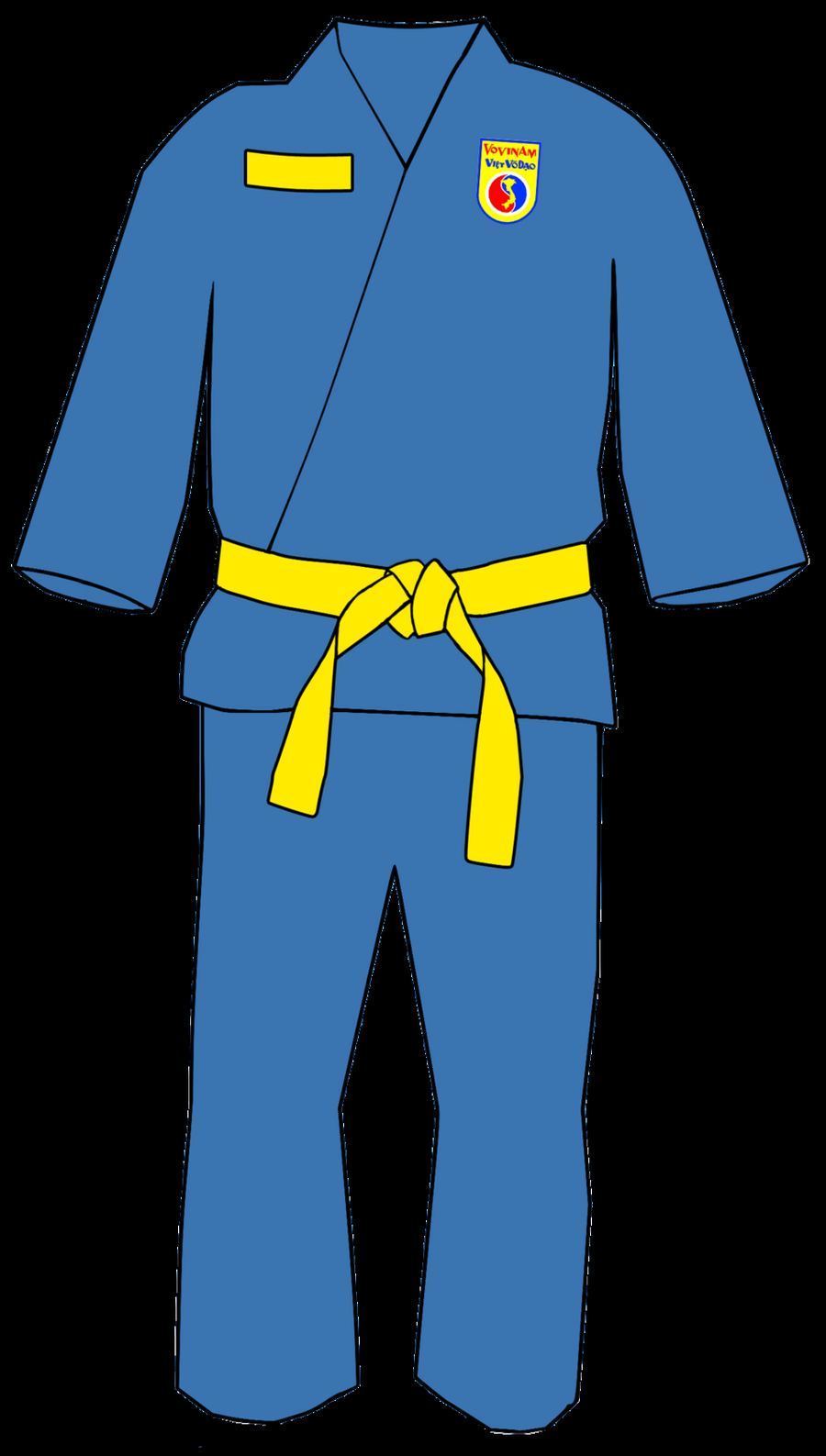
Football is overwhelmingly the national sport, and its recent rise has been dramatic. Under the South Korean coach Park Hang-seo, appointed in 2017, Vietnam reached the final of the AFC U-23 Championship in 2018, won the ASEAN Championship in 2018, and reached the quarter-finals of the Asian Cup in 2019, generating street celebrations on a scale normally reserved for national holidays; the senior team has won the regional title again since. The women's national team qualified for the FIFA Women's World Cup for the first time in 2023. Vietnam's Olympic record is slender but hard-won: Tran Hieu Ngan took taekwondo silver at Sydney in 2000, Hoang Anh Tuan weightlifting silver at Beijing in 2008, and Hoang Xuan Vinh won gold and silver in shooting at Rio in 2016, the country's first Olympic title. Traditional martial arts remain widely practised, particularly vovinam, a synthesised Vietnamese system founded by Nguyen Loc in 1938 that combines striking, wrestling, and its characteristic flying scissor takedowns, and is now competed at the Southeast Asian Games. Da cau shuttlecock kicking, chess, and badminton have deep participation bases.

Notable Educational Programs

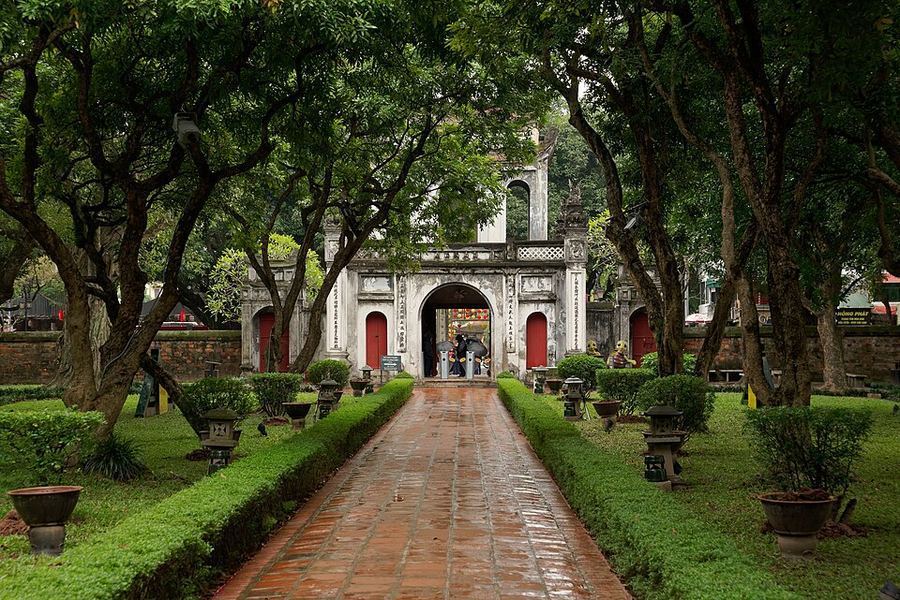
Reverence for schooling is unusually deep and unusually old. The Temple of Literature in Hanoi was founded in 1070 and its adjoining Quoc Tu Giam, established in 1076, is regarded as Vietnam's first university; the stone stelae mounted on tortoises in its courtyards record the names of doctoral laureates from the imperial examinations and are inscribed on UNESCO's Memory of the World register. That inheritance is visible in outcomes today. Vietnam has repeatedly performed at or above the OECD average in the PISA assessments of fifteen-year-olds in mathematics and science, despite a GDP per capita far below that of any other country achieving comparable results — a divergence that has made Vietnamese schooling one of the most closely studied systems in development economics, generally attributed to a focused curriculum, strong teacher accountability, and intense household investment. Adult literacy exceeds 95 percent. Vietnamese teams are consistent high scorers at the International Mathematical Olympiad. Higher education is led by the Vietnam National University campuses in Hanoi and Ho Chi Minh City, and private and foreign-partnered universities have expanded quickly, though the system's capacity remains the acknowledged bottleneck as the economy moves up the value chain.

Wars & Conflicts

Vietnam has no active internal armed conflict and has not fought a war since the frontier clashes with China ended around 1991, but its recent history is defined by three decades of continuous fighting. The First Indochina War against France ended at Dien Bien Phu in 1954; the war that followed, against the United States and the Republic of Vietnam, ended with the fall of Saigon in April 1975 and cost several million Vietnamese lives. Vietnam then invaded Cambodia in December 1978, removing the Khmer Rouge and occupying the country until 1989, which prompted China to launch a punitive invasion of Vietnam's northern provinces in February 1979 and a decade of intermittent border artillery duels afterwards. Two legacies of the American war remain active problems: unexploded ordnance, which still kills and maims in the central provinces, and dioxin contamination from Agent Orange, with major remediation programmes completed at Da Nang and continuing at Bien Hoa airbase. The country's live security friction is maritime rather than territorial, centred on Chinese pressure in the South China Sea — coastguard harassment of Vietnamese fishing and survey vessels, and standoffs such as the 2014 deployment of a Chinese drilling rig into waters Vietnam claims.
Current as of 2026-08-06

Land & Border Disputes

Vietnam's disputes are almost entirely maritime and almost entirely with China. It claims the Paracel Islands, which it calls Hoang Sa and which China has occupied outright since seizing them from South Vietnamese forces in a naval battle in 1974, and the Spratly Islands, or Truong Sa, where Vietnam holds the largest number of features of any claimant — some twenty-one, contested variously by China, the Philippines, Malaysia, Brunei, and Taiwan. Vietnam rejects China's expansive nine-dash line as incompatible with the UN Convention on the Law of the Sea. Since 2021 Vietnam has undertaken very large land reclamation in the Spratlys, adding over a thousand hectares of artificial land across its holdings and building port and airfield infrastructure, including a runway of roughly 2,400 metres at Barque Canada Reef nearing completion in 2026 — work that has drawn formal Chinese protest even as the two governments issued a joint statement in 2026 emphasising dispute management. China's annual unilateral fishing moratorium in the northern South China Sea is protested by Hanoi each year. Vietnam's land boundaries are settled: the China border was fixed by treaty in 1999 and the Gulf of Tonkin delimited in 2000, and the frontiers with Laos and Cambodia are largely demarcated.
Land, Life & Legacy

Land & Climate

Vietnam covers about 331,000 square kilometres in a narrow arc along the eastern side of the Indochinese peninsula, with a coastline of some 3,260 kilometres on the South China Sea. Two great deltas anchor it: the Red River delta in the north, densely settled and diked for a thousand years, and the far larger Mekong delta in the south, a maze of distributaries that produces most of the country's rice. Between them the country narrows dramatically, at one point to roughly fifty kilometres between the sea and the Lao border. The Annamite Range, or Truong Son, forms that western frontier, and the northern highlands rise to Fansipan at 3,143 metres, the highest peak in Indochina. Limestone karst produces two of the country's defining landscapes: the drowned towers of Ha Long Bay and the cave systems of Phong Nha-Ke Bang, which include Son Doong, the largest cave passage yet measured anywhere. The climate is tropical monsoon in the south, with distinct wet and dry seasons, and subtropical in the north, where winters in Hanoi are genuinely cool. Typhoons strike the central coast regularly, and the Mekong delta faces acute pressure from saltwater intrusion, land subsidence, and upstream damming.

Entertainment

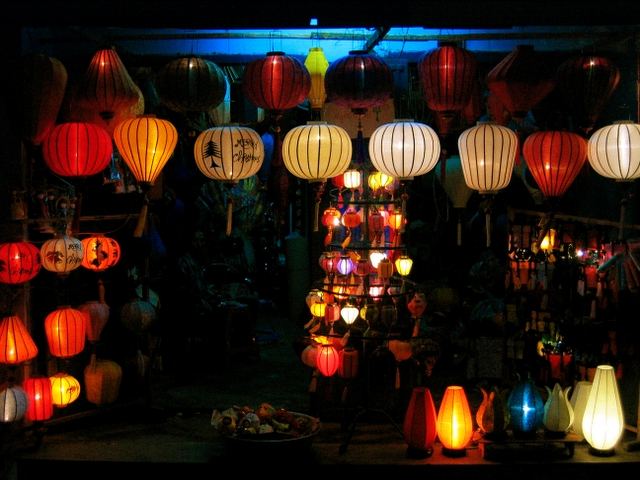
Vietnamese leisure is conducted outdoors and in public. Coffee culture is a genuine institution — pavement stools, iced condensed-milk coffee dripped slowly through a metal phin filter, and hours of conversation — and Hanoi's bia hoi corners serve fresh unpasteurised draught beer brewed that morning at some of the lowest prices in the world. The motorbike is the organising fact of daily life, with tens of millions in circulation, and evening rides around Hoan Kiem Lake or along the Saigon river are a social form in themselves. Karaoke is ubiquitous and unembarrassed. Da cau, a shuttlecock kept aloft with the feet, is played in parks and on pavements at all ages, as are Chinese chess and mass early-morning exercise sessions. Domestic tourism has expanded enormously with rising incomes: the beaches of Da Nang, Nha Trang, and Phu Quoc, the cool hill stations of Da Lat and Sapa, and the Ha Long Bay cruise circuit all draw far more Vietnamese than foreign visitors. Festivals cluster after Tet, with the Perfume Pagoda pilgrimage, the Hung Kings commemoration at Phu Tho, and the monthly full-moon lantern nights in Hoi An among the largest.

Art & Museums

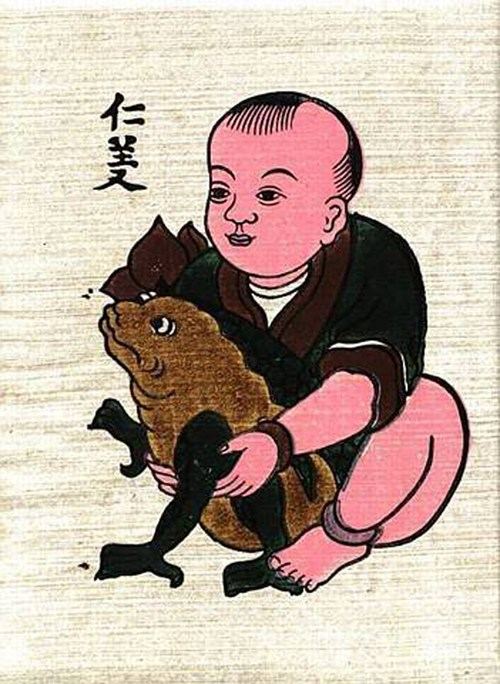
The oldest Vietnamese art is the Dong Son bronze drum, cast from the first millennium BCE with concentric bands of dancers, boats, houses, and a central sun, and adopted since independence as a national emblem. Cham sculpture from the Hindu kingdoms of the centre — sandstone dancers, Shiva figures, and temple pediments — is collected at the Museum of Cham Sculpture in Da Nang. Folk art centres on the Dong Ho woodblock print, produced in a Bac Ninh village on paper coated with crushed seashell and coloured with pigments from leaves, charcoal, and rust, its subjects auspicious animals and gently satirical scenes. Modern Vietnamese painting was largely formed at the Ecole des Beaux-Arts de l'Indochine, founded in Hanoi in 1925, whose graduates fused French training with Vietnamese materials — most importantly son mai, lacquer painting, in which layers of resin, eggshell, and gold leaf are built up and then sanded back, developed by Nguyen Gia Tri into a major fine-art medium. Le Pho and Nguyen Phan Chanh worked in silk; Bui Xuan Phai spent a career painting the old streets of Hanoi in muted ochres, and his name is now attached to the city's cultural prize.

Notable People

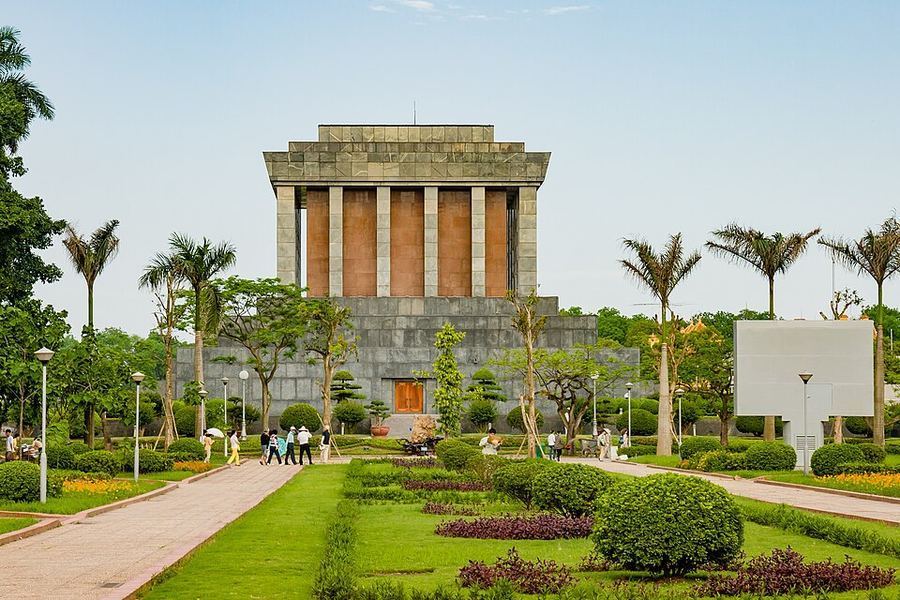
Ho Chi Minh, who declared independence in 1945 and led the struggle against France and the United States until his death in 1969, is the dominant figure of modern Vietnam and lends his name to its largest city. General Vo Nguyen Giap, a former history teacher, commanded the siege that broke the French at Dien Bien Phu and directed the war in the south. Le Duc Tho negotiated the 1973 Paris accords and was awarded the Nobel Peace Prize jointly with Henry Kissinger — and declined it, the only person ever to refuse that prize. Earlier figures remain vividly present: the Trung sisters, Tran Hung Dao, Le Loi, and the scholar-strategist Nguyen Trai. Nguyen Du's early nineteenth-century verse novel The Tale of Kieu is the national poem, quoted by ordinary Vietnamese from memory. Thich Nhat Hanh, the Zen monk exiled for his peace advocacy, became one of the most widely read Buddhist teachers in the world. Ngo Bao Chau won the Fields Medal in 2010 for proving the fundamental lemma of the Langlands programme, the first Vietnamese mathematician to do so. Dang Thai Son won the Chopin International Piano Competition in 1980, the first Asian pianist to take it, and Hoang Xuan Vinh won Vietnam's first Olympic gold in shooting at Rio in 2016.

Inventions & Breakthroughs

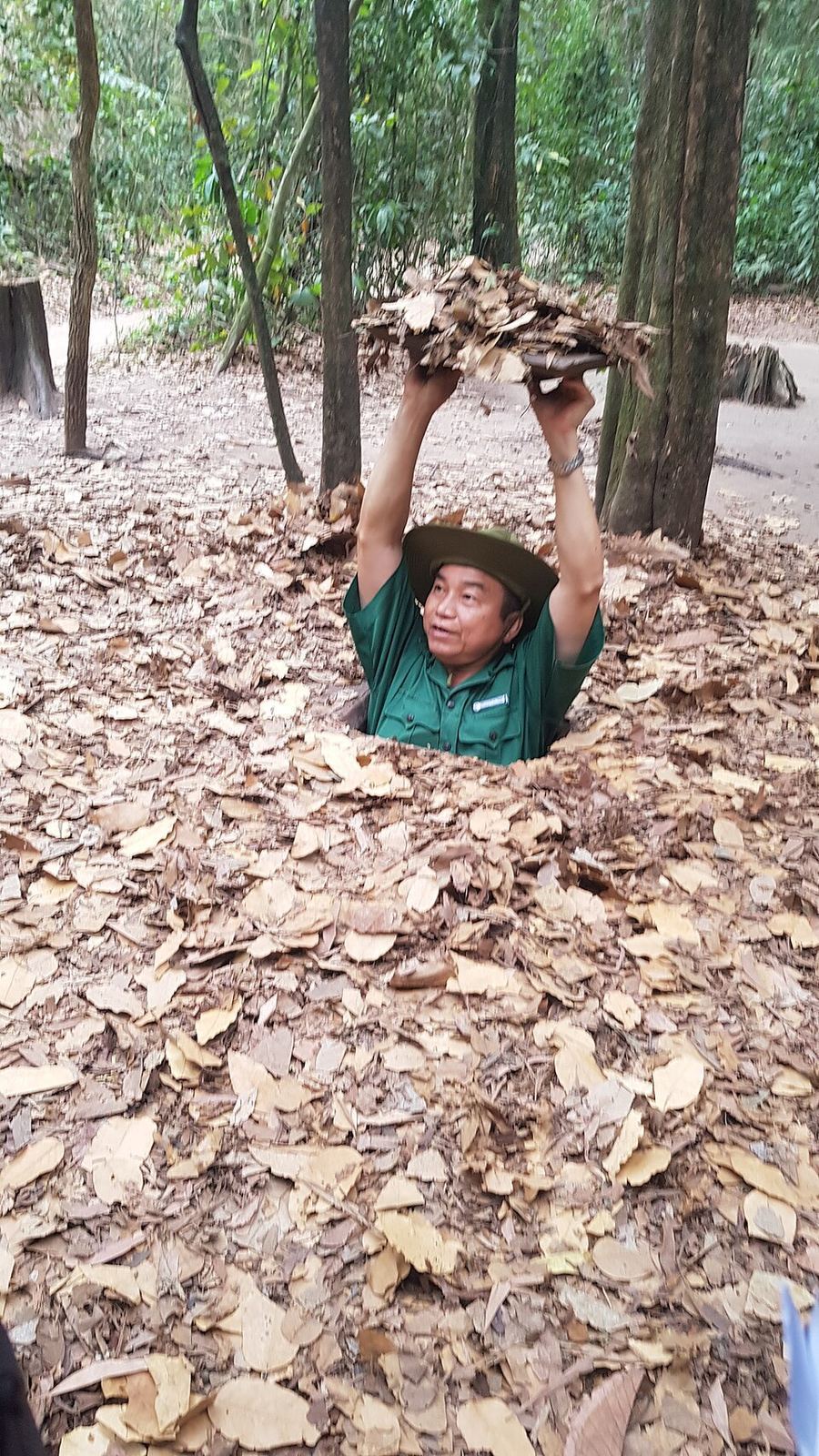
Vietnam's originality lies more in craft and adaptation than in patented technology, and the honest list is short but real. Water puppetry is a wholly Vietnamese theatrical invention, devised by Red River delta villagers who turned flooded rice fields into a stage with submerged rod mechanisms worked from behind a bamboo screen; nothing comparable developed anywhere else. The dan bau monochord is an equally distinctive instrument, extracting a complete chromatic melody from one string through harmonics and a pitch-bending rod. The Bach Dang tactic — planting iron-tipped stakes in a tidal estuary so that a retreating fleet impales itself as the water falls — was used successfully in 938 and again in 1288, and is studied as a classic of asymmetric warfare, as are the multi-level Cu Chi tunnel systems dug through laterite clay in the twentieth century. In agriculture, breeding and policy work following the 1986 Doi Moi reforms turned a country that had rationed rice into one of the world's largest rice and robusta coffee exporters within a decade. In mathematics, Ngo Bao Chau's proof of the fundamental lemma resolved a problem that had blocked the Langlands programme for three decades.

Science & Technology

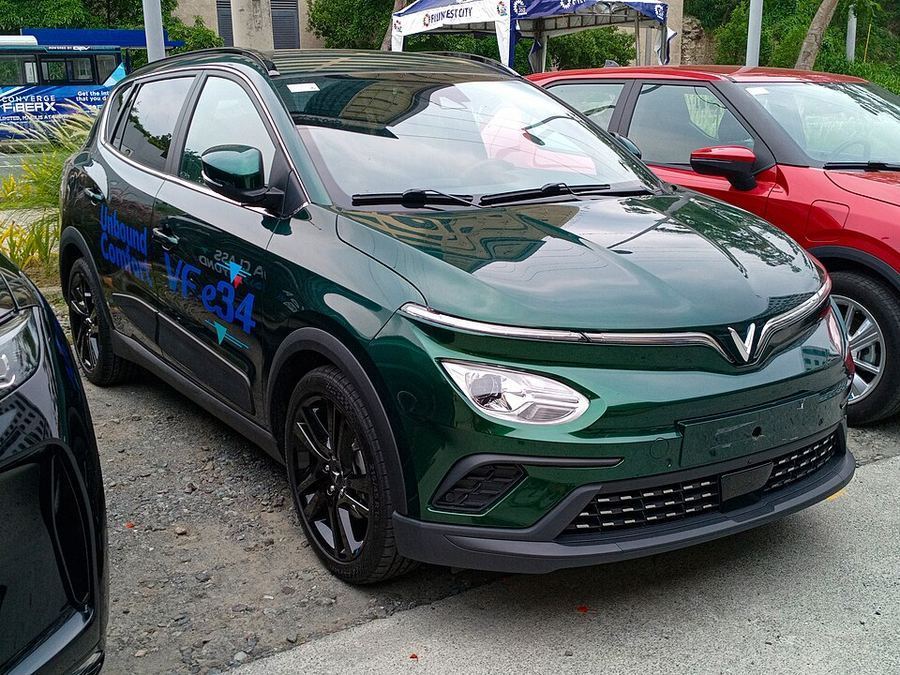
Vietnam has become one of the world's principal electronics manufacturing bases. Samsung's Vietnamese plants in Bac Ninh and Thai Nguyen assemble a large share of the company's global smartphone output, Intel operates one of its largest assembly and test facilities in Ho Chi Minh City, and broadcasting equipment and integrated circuits are now the country's leading exports by value — a structural shift from the garment and footwear model of the 1990s. Policy since 2023 has pushed toward semiconductor packaging and design, with government targets for training tens of thousands of chip engineers. Domestic industrial champions have emerged: Viettel, the military-owned telecommunications group, operates networks across Africa and Latin America, and VinFast began exporting electric vehicles and listed on Nasdaq in 2023. In space, Vietnam operates the VNREDSat-1 earth observation satellite launched in 2013 and has developed a series of small satellites through the Vietnam National Space Center. Research capacity is concentrated in the Vietnam Academy of Science and Technology, and mathematics is a national strength, anchored by Ngo Bao Chau's Fields Medal and the Vietnam Institute for Advanced Study in Mathematics established in its wake. Infrastructure investment is now dominated by a planned high-speed rail line the length of the country.
On The World Stage

Champions & Defining Moments

Vietnam's international sporting profile is regional rather than global, and it is built chiefly on football and the Southeast Asian Games, which the country hosted in Hanoi in 2003 and again in 2021, staged in 2022 after pandemic delay. The national football team's climb in the FIFA world rankings during the Park Hang-seo era, its appearance in the final round of Asian qualifying for the 2022 World Cup, and the women's team's World Cup debut in 2023 mark the clearest breakthroughs. The V.League draws substantial domestic attendance, and Vietnamese players have begun moving to Japanese and European clubs. In chess, Le Quang Liem won the World Blitz Championship in 2013 and has been a fixture of elite international competition since. Golf has expanded rapidly, with dozens of resort courses along the central coast and Vietnam repeatedly named a leading golf destination in Asia. The country is a growing venue for international marathons and triathlons, and Vietnamese shooters, weightlifters, and taekwondo athletes are consistent medallists at the Asian Games. Vietnam has competed at the Summer Olympic Games as a unified country since 1980 and now sends teams across a widening range of disciplines.

Economy, Trade & Government

Currency & GDP

Dong — VND (₫)

GDP (PPP): $1.456 trillion (2024 est.)

Per capita: $14,400 (2024 est.)

Exports

$429.383 billion (2024 est.)

broadcasting equipment, garments, integrated circuits, machine parts, footwear (2023)

Partners: USA 28%, China 20%, Japan 6%, Hong Kong 4%, Germany 3% (2023)

Imports

$398.672 billion (2024 est.)

integrated circuits, broadcasting equipment, fabric, plastics, telephones (2023)

Partners: China 49%, Singapore 6%, Japan 6%, Hong Kong 5%, Taiwan 4% (2023)

Government

Type: communist party-led state

Independence: 2 September 1945 (from France)

Terrain → Where People Live

How mountains, coasts, and rivers shape settlement (LandScan).

Coming — data

Migration & Ethnic Settlement

Where groups settled and how people move (GeoEPR + UNHCR).

Coming — data

Universities

Notable institutions, mappable as points.

Coming — data
Economy & government facts: CIA World Factbook (public domain), via OpenFactBook / factbook.json.
Every fact and narrative claim will carry a visible source citation. Data-driven sections light up automatically wherever HERA has coverage.