HERA · Human Entity Reference Atlas by Masego Inc

← Zambia 🌐 3D View
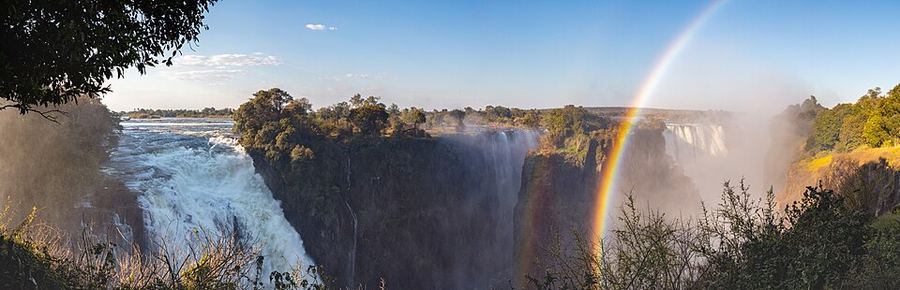
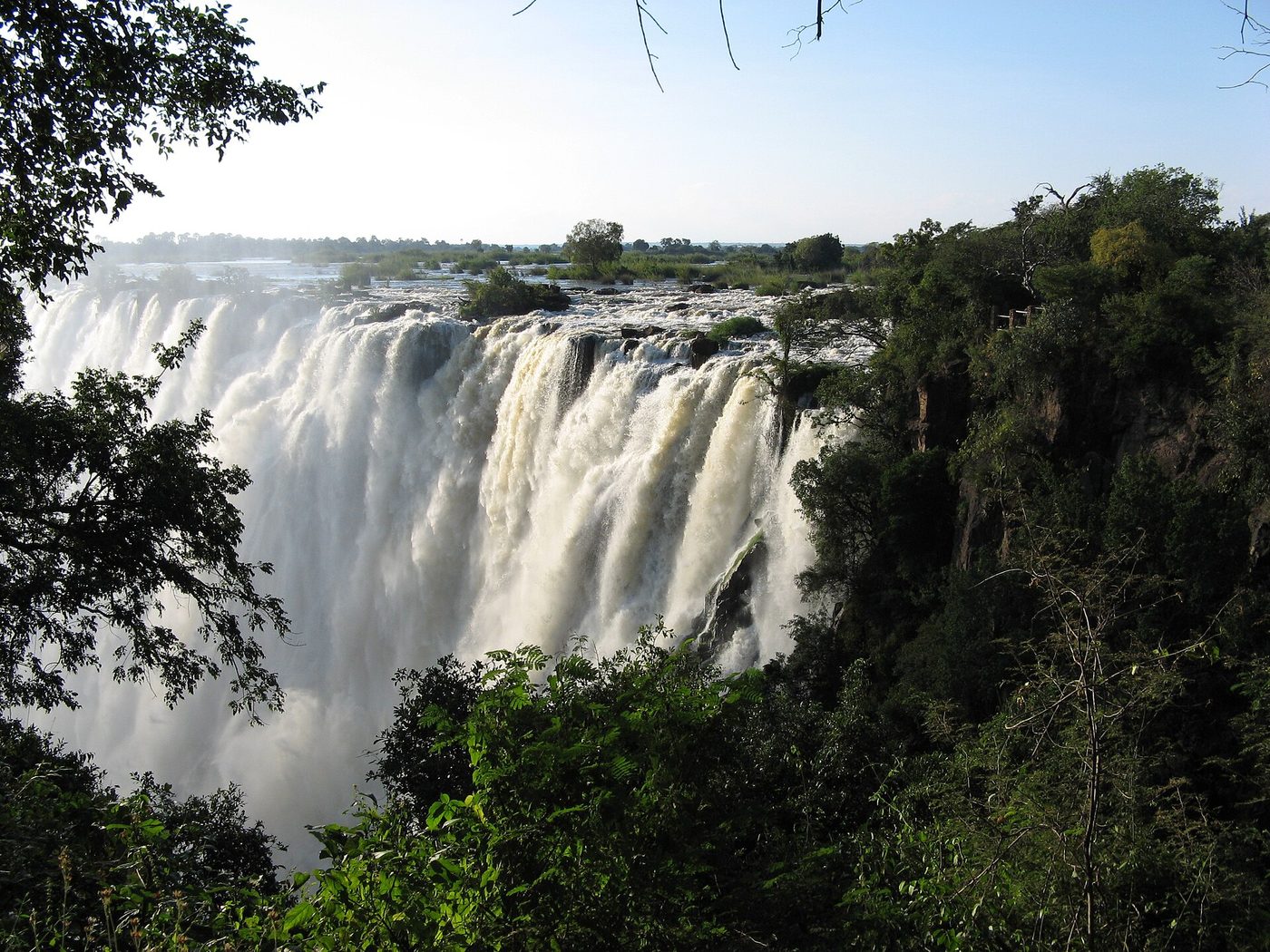
Victoria falls, zambia, Zambia
Zambia ZMB
Victoria falls, zambia — Photo: Someone35 / CC BY-SA 3.0 via Wikimedia Commons
Did You Know Researchers at Kalambo Falls recovered shaped and notched logs dated to around 476,000 years ago and reported them as the earliest known wooden structure anywhere in the world. — Nature

Zambia is a landlocked country of about 22 million people on the high plateau of south-central Africa, bordered by eight states — the Democratic Republic of the Congo, Tanzania, Malawi, Mozambique, Zimbabwe, Botswana, Namibia and Angola. It is a young country by age structure, with a median age of about nineteen, and an unusually plural one: more than seventy languages are spoken, with Bemba, Nyanja, Tonga and Lozi the largest, and English serving as the official language of government and schooling. Around ninety-five per cent of Zambians are Christian, and the constitution's preamble declares Zambia a Christian nation. Independence from Britain came on 24 October 1964, and Kenneth Kaunda governed for twenty-seven years, latterly under a one-party system, before losing a multiparty election in 1991 and handing over power — one of the first such transitions in Africa, and a pattern Zambia has since repeated, most recently in 2021. The economy has been built on copper since the 1920s, and Zambia remains one of the world's larger producers, with cobalt, gold, gemstones and exported hydroelectricity alongside it, though agriculture supports far more households. Zambia defaulted on its external debt in 2020 and spent several years restructuring it. Victoria Falls, shared with Zimbabwe, is its best-known landmark.

CIA World FactbookWorld BankEncyclopaedia BritannicaIMF
Population
22,021,971
Capital
Lusaka
Currency
None ZMK
Time zones
Largest city
Lusaka
Human Geography Themes
Loading national figures…
Largest Cities
Lusaka3,658,064
Kitwe731,813
Ndola711,124
Mansa427,110
Chingola269,187
Kabwe254,497
Kasama221,569
Livingstone207,975
In Perspective

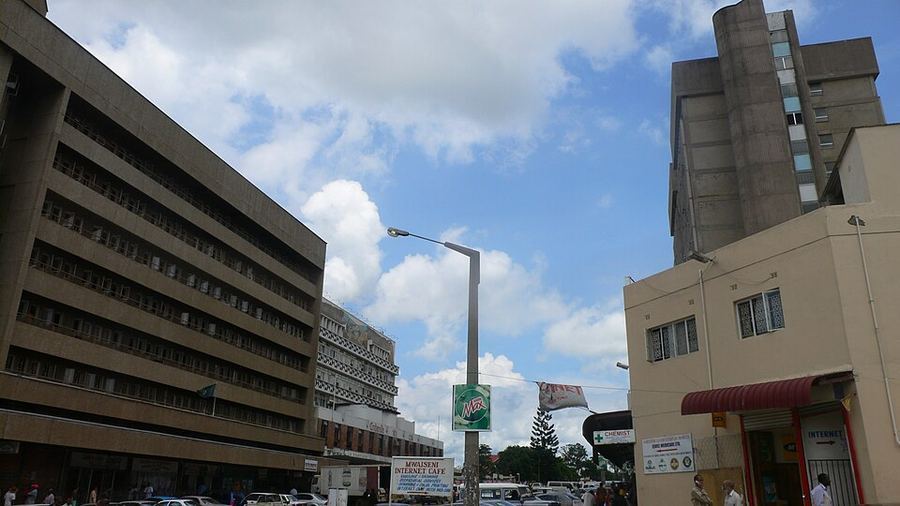
Lusaka's urban core is home to about 3,658,064 people.

That's bigger than Berlin, Rome and Amsterdam — each a great world city in its own right.

Lusaka3,658,064
Berlin3,601,776
Rome2,556,354
Amsterdam1,223,407

Among the world's megacities, though, it's one of many — the giants of Asia and Latin America run larger still:

Lusaka3,658,064
Jakarta40,545,126
Dhaka37,307,160
Tokyo33,244,670
Shanghai30,678,616
Cairo25,230,325
The Country & Its People

History

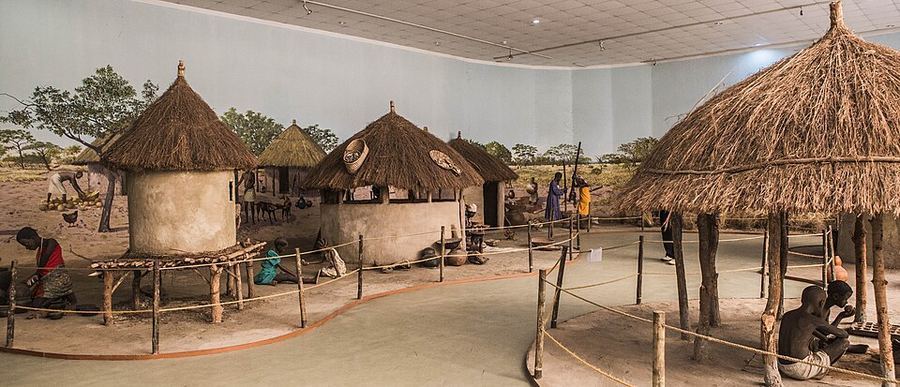
Bantu-speaking farmers and metalworkers settled the plateau over many centuries, and by the eighteenth century a set of substantial states had formed: the Eastern Lunda kingdom of Mwata Kazembe in the Luapula valley, the Bemba paramountcy under the Chitimukulu, and the Lozi kingdom of Barotseland on the Zambezi floodplain, whose annual cycle of flood and retreat shaped a distinctive political order. Ngoni groups fleeing the upheavals in southern Africa arrived in the 1830s, and the Kololo, also from the south, briefly conquered Barotseland and left their Sotho-derived speech behind as the Lozi language. Arab-Swahili and Portuguese traders drew the region into the ivory and slave trades. David Livingstone reached the falls the Kololo called Mosi-oa-Tunya in November 1855 and renamed them for Queen Victoria, and died in 1873 near Lake Bangweulu. Cecil Rhodes's British South Africa Company obtained concessions from Lewanika of Barotseland and others from 1890 and administered the territory as Northern Rhodesia until 1924. Copper mining transformed it from the late 1920s. Zambians opposed the Federation of Rhodesia and Nyasaland imposed in 1953, and independence followed on 24 October 1964 under Kenneth Kaunda, whose government made Zambia a frontline state supporting liberation movements across southern Africa at heavy economic and military cost.
Culture

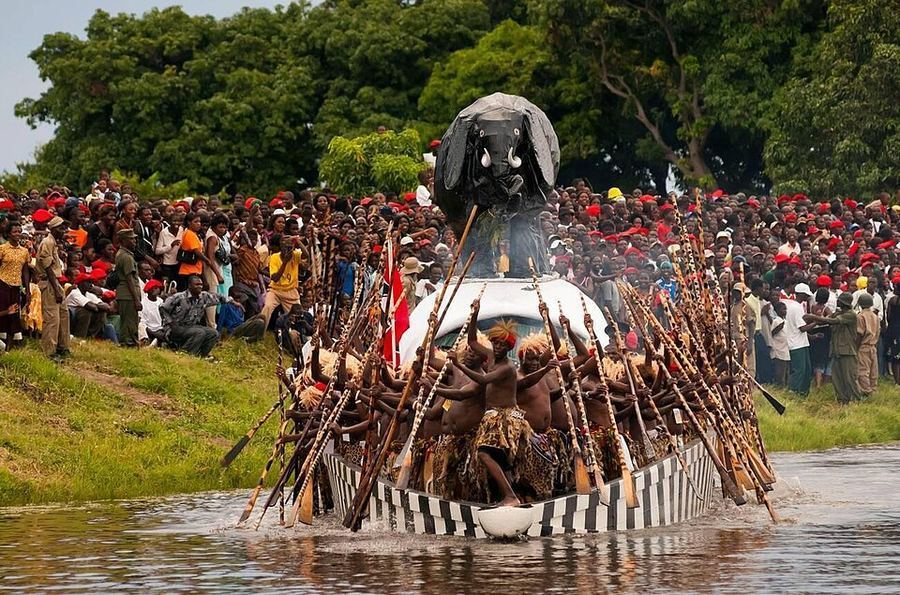
Zambia's national motto, 'One Zambia, One Nation', was Kaunda's deliberate answer to a country of more than seventy language groups, and the degree to which it worked is a genuine national achievement: ethnicity structures identity without having produced sustained political violence. Extended family obligation is strong, and descent is matrilineal among the Bemba, Chewa and several other groups of the north and east and patrilineal among the Lozi, Ngoni and Tonga. Lobola, bridewealth negotiated between families, remains standard, and initiation practices — mukanda for boys among the northwestern peoples, chisungu for girls among the Bemba — persist in varying forms. The country recognises more than twenty traditional ceremonies as national events, and they function as living political occasions as much as heritage displays: the Lozi Kuomboka, in which the Litunga is rowed from his flooded palace to higher ground in the great black-and-white barge Nalikwanda as the royal drums beat, is the most famous; the Ngoni Ncwala first-fruits ceremony at Chipata, the Lunda Umutomboko and the Luvale Likumbi Lya Mize follow closely. Christianity is pervasive and public, and church, funeral and kitchen-party obligations structure the social calendar in the towns as much as in the villages.

Points Of Pride

Victoria Falls, Mosi-oa-Tunya — the smoke that thunders — is a UNESCO World Heritage site shared with Zimbabwe and, at full flood, the largest single sheet of falling water in the world. Zambia's political record is a second source of pride: an orderly handover of power from Kaunda to the opposition in 1991, repeated in 2011 and again in 2021 when Hakainde Hichilema won after five previous defeats, in a region where incumbents rarely concede. Zambians point to the frontline state years, when the country sheltered the liberation movements of Rhodesia, South Africa, Namibia, Angola and Mozambique and absorbed the retaliation. The wildlife estate is exceptional — South Luangwa, Kafue, Lower Zambezi and Liuwa Plain, where one of Africa's great wildebeest migrations crosses the floodplain — and the walking safari, now practised across the continent, was developed in South Luangwa by the conservationist Norman Carr. The Makishi masquerade of the northwestern peoples and the Gule Wamkulu of the Chewa are both inscribed by UNESCO as intangible cultural heritage. And the national football team's Africa Cup of Nations victory in 2012 is remembered as a moment of collective vindication.

Cultural Fusion

Zambia sits at a junction of migration routes and shows it. Luba-Lunda political traditions arrived from the Congo basin, carrying titles, regalia and the office of Mwata Kazembe; Ngoni groups brought Zulu military organisation, praise poetry and the Ncwala ceremony from far to the south in the 1830s; and the Kololo left the Lozi kingdom speaking a Sotho-derived language, so that Silozi today is a southern African language spoken on the Zambezi by a people whose institutions are their own. Arab-Swahili trade reached the northeast, and Portuguese trade the west. Missionaries — Livingstone's successors, the Paris Evangelical Mission among the Lozi, the White Fathers in the north — brought Christianity, schools and orthographies. The Copperbelt created something new again: mining towns that drew workers from every part of the country and from the Congo, Malawi and Tanzania, where urban Bemba became a lingua franca and a distinct industrial working-class culture formed around unions, football clubs and brass and guitar music. Indian and Lebanese trading families, more recent Chinese investment communities, and long-settled refugee populations from Angola, the Congo, Rwanda and Burundi at Meheba and Mayukwayukwa add further layers.

Music & Dance

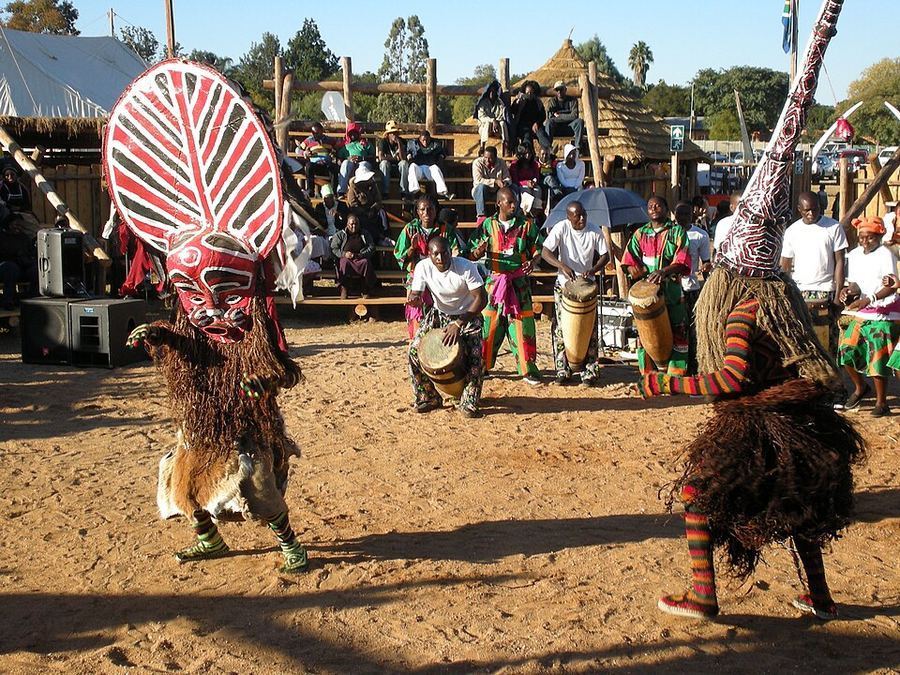
Traditional Zambian music is regionally distinct and tied to ceremony. Lozi royal music uses the silimba, a gourd-resonated xylophone, together with the great maoma drums that announce the Kuomboka; Tonga funeral rites employ the budima, a dance accompanied by sets of tuned side-blown horns; thumb pianos, ngoma drum ensembles and rattles are used everywhere. Masked dance is a major form: the makishi of the Luvale, Chokwe and Luchazi, associated with the mukanda initiation of boys, and the Chewa gule wamkulu, whose masked figures represent spirits and animals and enforce social norms, are both UNESCO-recognised. Zambia's most internationally celebrated popular music came from the 1970s, when Copperbelt and Lusaka bands fused psychedelic rock, fuzz guitar and local rhythms into what became known as Zamrock — WITCH, whose name stood for We Intend To Cause Havoc, Amanaz, Paul Ngozi and Rikki Ililonga made records that were largely lost after the copper crash and have since been reissued to international acclaim and a touring revival. Kalindula, a bass-driven guitar style, dominated the 1980s, and contemporary Zambian hip-hop, gospel and Afrobeats-influenced pop fill the airwaves today.

Cuisine & Misattributed Foods

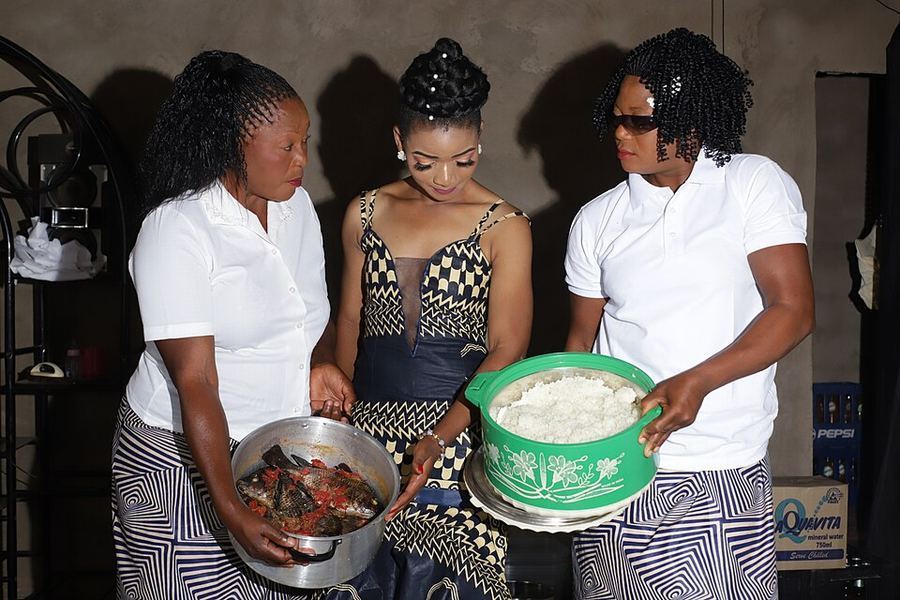
Nshima is the centre of every Zambian meal: white maize meal cooked to a stiff, smooth mass, torn off by hand, rolled into a ball and used to scoop the relish. The relish, ndiwo, is what varies — kapenta, the tiny dried fish netted on Lake Tanganyika and Lake Kariba and fried with tomato and onion; village chicken stewed slowly; beef or goat; bream from the Zambezi; and pumpkin leaves, sweet potato leaves, rape or okra, often cooked with groundnut powder to make ifisashi. Groundnuts appear in a great many dishes. Two Zambian specialities stand out: chikanda, a firm loaf made from the ground tubers of wild orchids with groundnut flour and chilli, sliced and eaten cold and often called African polony, and seasonal insects — ifinkubala, the mopane caterpillars gathered in the west, and inswa, the winged termites that emerge with the first rains and are fried in their own fat. Munkoyo and chibwantu, lightly fermented drinks made from maize with a wild root, are traditional and mildly sour. Beyond the staples, Zambian towns eat a great deal of grilled meat, and the country brews a well-known lager named for Victoria Falls.

National Dress

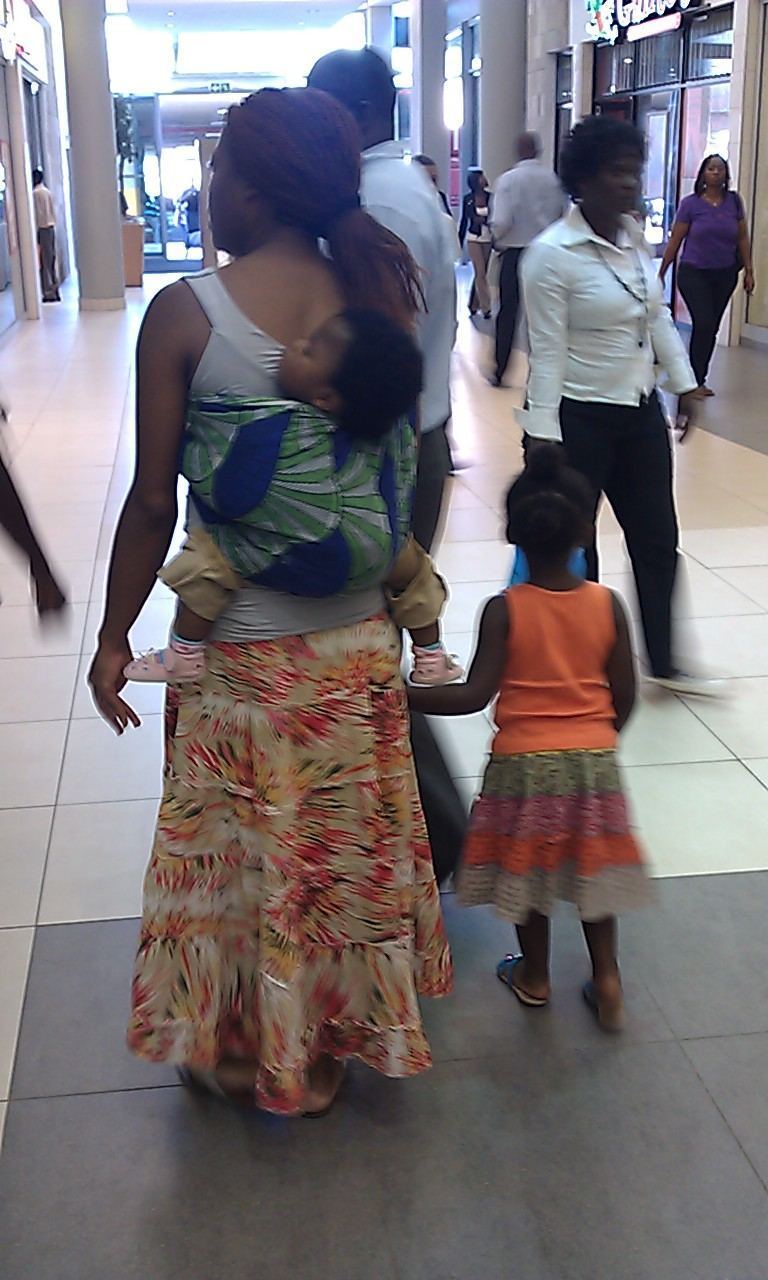
The garment that functions as Zambia's national dress is the chitenge, a rectangle of brightly printed cotton wrapped as a skirt over other clothes, tied as a sling to carry a baby on the back, folded as a head wrap or used as a shawl, sold in every market in a constantly changing repertoire of patterns that include commemorative prints for elections, church anniversaries and state visits. Tailored chitenge outfits — fitted dresses, jackets and men's shirts made from the same cloth — have become standard formal wear and are worn to weddings, to parliament and at official occasions as a statement of national identity. Traditional and ceremonial dress is regional. At the Kuomboka the Lozi Litunga wears, remarkably, a British admiral's uniform, presented to King Lewanika by Edward VII in 1902 and worn ever since, while his paddlers wear scarlet berets and animal-skin skirts and Lozi men wear the siziba, a wide pleated skirt. Ngoni men dance the Ncwala in animal skins with shields and headdresses in the Zulu-derived style, and the makishi appear in full-body costumes of knotted bark fibre with carved and resin-modelled masks.

Sports & Inspiring Athletes

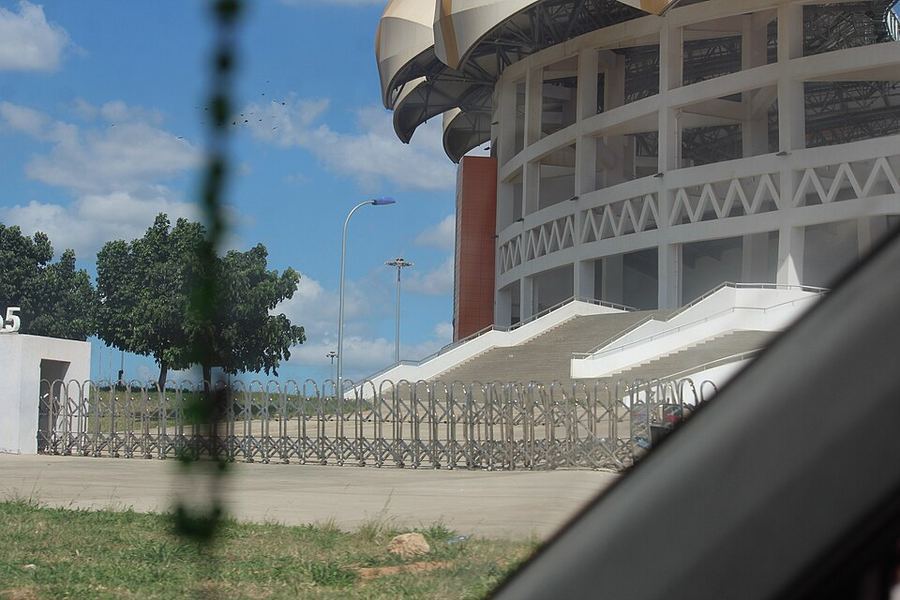
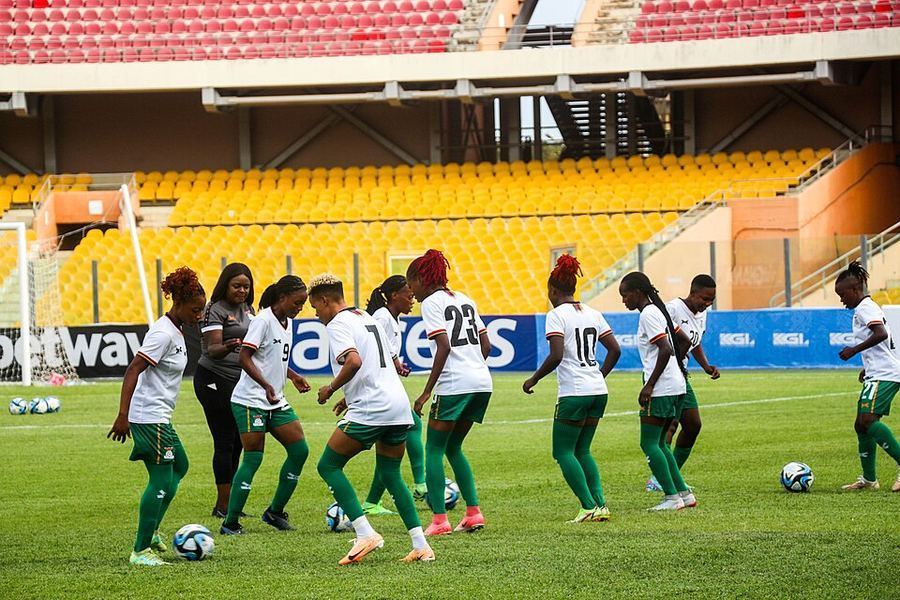
Football is Zambia's dominant sport by every measure. The men's national side, Chipolopolo — the Copper Bullets — and the women's Copper Queens carry national expectation, and the domestic Super League is contested by clubs with deep industrial roots, including Nkana and Power Dynamos from the Copperbelt mining towns, Zesco United from the electricity utility and Green Buffaloes from the army. Boxing has a strong tradition dating from the mining compounds and produced Zambia's first Olympic medallist. Athletics, particularly the sprints and 400 metres, has been the country's most successful Olympic discipline. Netball is the leading women's team sport with wide school participation, and basketball, volleyball and rugby union all have national leagues. Golf has a long history and the country hosts professional tournaments on the Sunshine Tour. Traditional wrestling and canoe racing feature at the traditional ceremonies. Zambia's sporting infrastructure improved substantially with the construction of new national stadiums in Ndola and Lusaka, and the school and provincial competition system remains the main pathway into national representation.

Notable Educational Programs

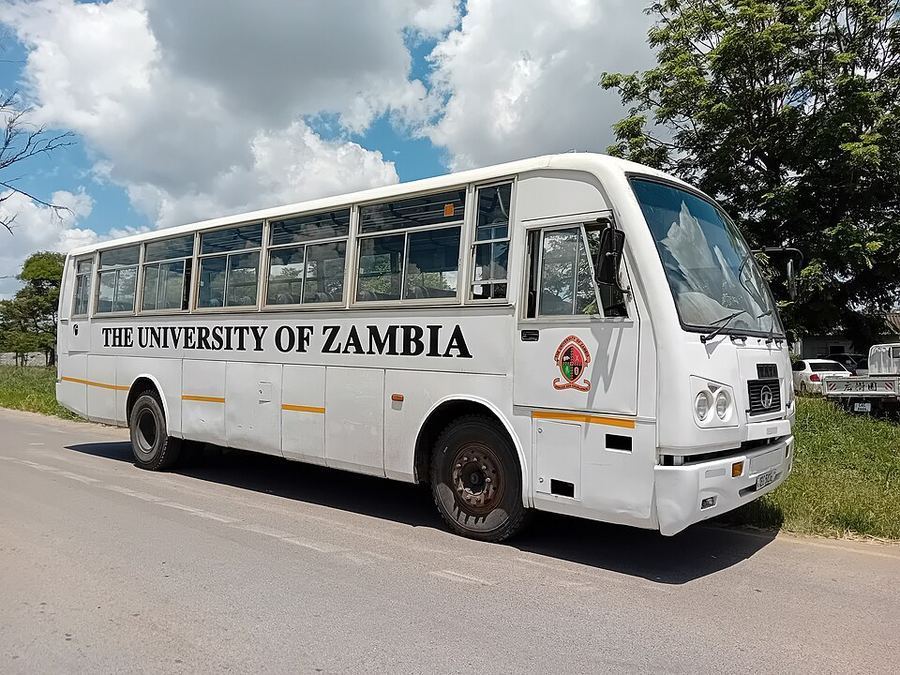
Zambia inherited a very thin education system at independence — the country had only a handful of university graduates in 1964 — and building one was among Kaunda's central projects. The University of Zambia opened in Lusaka in 1966, followed by the Copperbelt University at Kitwe and later Mulungushi University and a substantial private sector. Adult literacy is around the high eighties. Primary school fees were abolished in 2002, and in January 2022 the government extended free education through secondary school, removing fees at both levels; enrolment rose immediately by well over a million pupils, and the state responded by recruiting a very large cohort of new teachers, though class sizes, classroom shortages and the supply of trained teachers remain acute pressures. Instruction begins in one of seven regional languages in the early primary years before transitioning to English, a policy adopted to improve early reading. Technical and vocational training is delivered through a national network of colleges oriented toward mining, agriculture and construction, and Zambia sends and receives students across the region, hosting substantial numbers from neighbouring countries as well as educating the children of long-settled refugee communities within its national system.

Wars & Conflicts

Zambia has never fought a civil war and has not been at war with a neighbour, a record almost unmatched in the region. Its exposure to conflict came from its geography and its politics: as a frontline state Zambia hosted the exiled leaderships and military camps of the African National Congress, the Zimbabwe African People's Union, SWAPO of Namibia and Angolan and Mozambican movements, and paid for it. Rhodesian forces raided camps and infrastructure inside Zambia repeatedly in the late 1970s, striking targets near Lusaka and in the east with substantial loss of life, and South African forces attacked ANC targets in Lusaka in 1987. Closing the border with Rhodesia in 1973 cut Zambia's main trade route and inflicted lasting economic damage, part of the reason the Tanzania-Zambia railway was built to Dar es Salaam. Internally, an attempted coup in 1997 was suppressed quickly, and political violence has been confined to episodic clashes between party cadres around elections. Zambia continues to host large refugee populations — Angolan, Congolese, Rwandan and Burundian — at Meheba and Mayukwayukwa, the latter one of the oldest refugee settlements in Africa, and has offered local integration and land to long-staying refugees.
Current as of 2026-08-07

Land & Border Disputes

Zambia has no significant territorial dispute with any of its eight neighbours, though stretches of the long and remote border with the Democratic Republic of the Congo are imprecisely demarcated and have produced occasional local incidents and troop movements, particularly around the Pweto area and the Lake Mweru shoreline. Shared resources are managed cooperatively rather than contested: the Zambezi River Authority, jointly owned with Zimbabwe, operates the Kariba dam and the Victoria Falls hydro stations, and the Zambezi Watercourse Commission coordinates the eight basin states. Zambia's most sensitive internal question is the status of Barotseland. The Barotseland Agreement signed in 1964, which gave the Lozi kingdom a measure of autonomy within the new state, was abrogated by the Kaunda government in 1969, and the Barotse Royal Establishment and activist groups have since sought its restoration or, in some formulations, self-determination; a gathering in Mongu in 2011 was broken up with deaths and arrests, and the question remains unresolved. The other contested arena of recent years has been financial: Zambia's 2020 sovereign default and the protracted restructuring that followed under the G20 framework, involving Chinese, other official and private creditors.
Land, Life & Legacy

Land & Climate

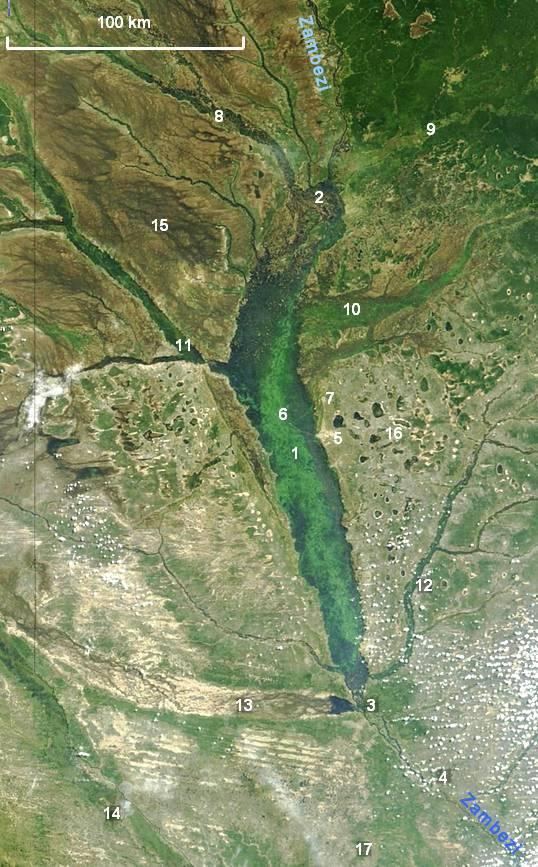
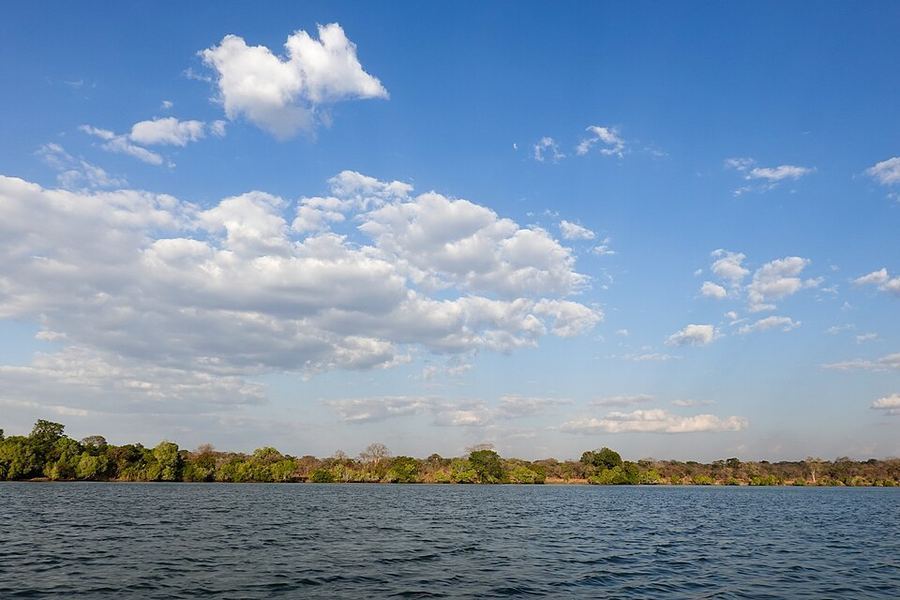
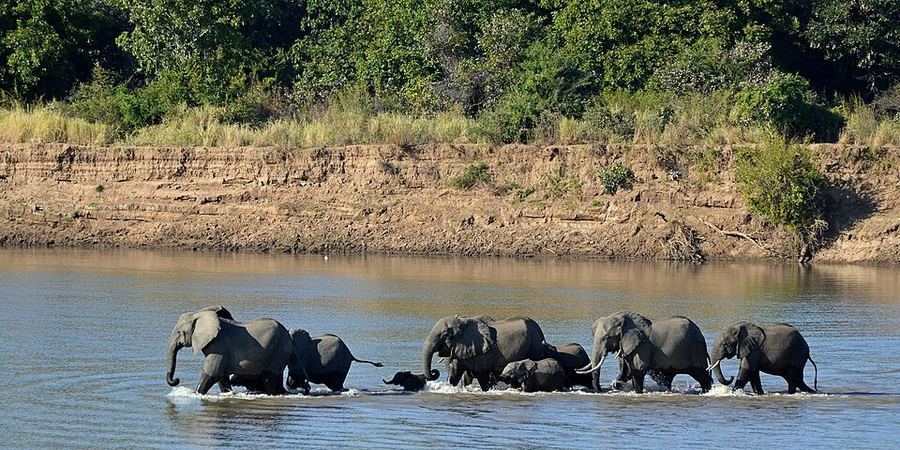
Zambia is a landlocked plateau country lying mostly between about 1,000 and 1,400 metres above sea level, which tempers a tropical latitude into a pleasant climate for much of the year; the Mafinga Hills on the Malawi border reach a little over 2,300 metres. It is defined by water. The Zambezi rises in the northwest at Mwinilunga, runs south and west through Barotseland's vast seasonal floodplain, plunges over Victoria Falls into the Batoka Gorge and is impounded behind the Kariba dam in one of the largest artificial lakes in the world. The Kafue and the Luangwa, whose valley is a southern extension of the Great Rift, are its main tributaries within the country. In the north lie Lake Tanganyika, the second deepest lake on earth, Lake Mweru, and the Bangweulu swamps, home to black lechwe and the shoebill. The year divides into three seasons: cool and dry from May to August, hot and dry from September to November, and the rains from December to April. That rainfall drives both agriculture and electricity, and its failure is severe: an El Niño drought in the 2023-24 season destroyed much of the maize harvest, drew Kariba down to critical levels and forced prolonged national power rationing.

Entertainment

Football is the national pastime, watched in bars and video halls and played on any level ground, with English Premier League allegiances as fiercely held as domestic ones. Church occupies Sunday and much of the week besides. Social life turns on gatherings — funerals, which draw very large attendance and long stays, weddings, and the kitchen party, a women's pre-wedding celebration that has become one of the most elaborate events in the Zambian calendar. The traditional ceremonies function as national holidays and draw tens of thousands, with the Kuomboka in particular filling the Barotse floodplain with spectators. Livingstone, at Victoria Falls, is the centre of adventure recreation: bungee jumping from the bridge over the Zambezi gorge, white-water rafting below the falls, and swimming in the Devil's Pool at the lip of the drop when the river is low. Fishing on the Zambezi, Kariba and the northern lakes is both livelihood and sport, and the national parks are increasingly visited by Zambians as well as by foreign tourists. Board games, draughts and nsolo, a mancala variant, are played in the shade, and Lusaka's music venues, malls and nightlife have grown quickly.

Art & Museums

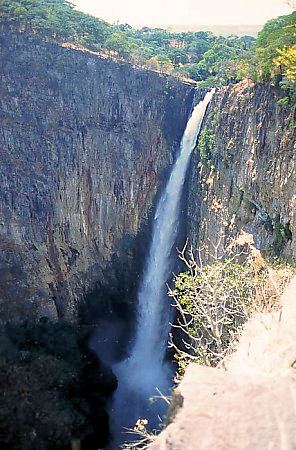
The oldest art in Zambia is very old indeed: rock paintings at Nsalu Cave and Nachikufu in the Central and Northern provinces record thousands of years of occupation, and the Stone Age site at Kalambo Falls on the Tanzanian border is one of the most important archaeological sequences in Africa. Masks are the strongest sculptural tradition — the makishi of the northwest, built on a frame of bark fibre with modelled resin features and worn in full costume, and the gule wamkulu masks of the Chewa, made of wood, cloth and basketry — both recognised by UNESCO. Barotse basketry from the Zambezi floodplain, coiled in tight geometric patterns, is among the finest in the region, and Tonga stools and carved headrests, Lozi wooden bowls with animal-form lids, and pottery from across the country fill out the craft traditions. Modern Zambian art is centred on Lusaka, where Henry Tayali, the pioneer of the country's contemporary painting and printmaking, is commemorated in the gallery that bears his name, and artists including Stary Mwaba and Victor Mutelekesha exhibit internationally. In literature, Namwali Serpell won the Caine Prize and then the Arthur C. Clarke Award for her novel of Zambian history and futures, 'The Old Drift'.

Notable People

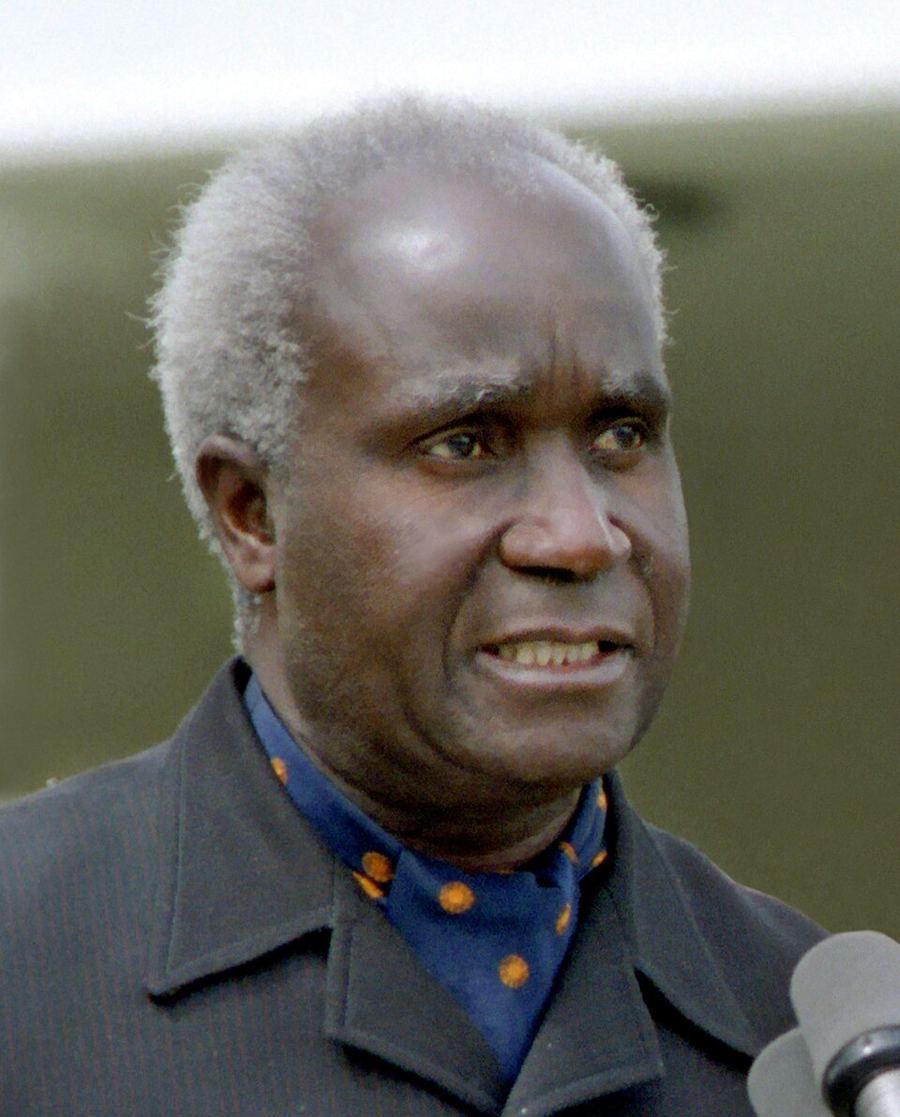
Kenneth Kaunda led Zambia to independence in 1964, governed for twenty-seven years, made the country a base for southern Africa's liberation movements and, having lost the 1991 election, accepted the result and left office; he died in 2021. Lewanika, Litunga of Barotseland at the turn of the twentieth century, negotiated with the British South Africa Company and secured the concessions that shaped Barotseland's distinct status. Frederick Chiluba led the trade union movement and then the government that replaced Kaunda; Levy Mwanawasa and Michael Sata followed; and Hakainde Hichilema, a businessman who had contested and lost five previous elections, won in 2021. Namwali Serpell is Zambia's most celebrated contemporary writer and Henry Tayali its foundational modern artist. In football, Kalusha Bwalya was named African Footballer of the Year in 1988 and survived the 1993 air disaster only because he travelled separately; Christopher Katongo captained the side that won the Africa Cup of Nations in 2012; and Barbra Banda has become one of the outstanding forwards in the women's game. In athletics, Samuel Matete was world champion over 400 metres hurdles in 1991 and Olympic silver medallist in 1996, and Muzala Samukonga took Olympic bronze over 400 metres at Paris in 2024.

Inventions & Breakthroughs

Zambia does not have a record of industrial invention, and its genuine contributions lie in metallurgy, land management and conservation practice. The Copperbelt region supported copper smelting long before European mining, and the cross-shaped copper ingots cast in central Africa circulated over great distances as a store of value and a form of currency — an early standardised commodity money. The Barotse floodplain supports an agricultural and political system built entirely around the annual flood, with drainage canals, raised mounds, fish weirs and the seasonal movement of an entire capital, a sophisticated adaptation to a landscape that is underwater for months each year. The best-known Zambian innovation in the modern era is the walking safari, developed by the conservationist Norman Carr in the Luangwa valley from the 1950s, which replaced the vehicle with a guided walk and became a standard of wildlife tourism across the continent, alongside early Zambian experiments in community-based wildlife management that shared revenue with the people living alongside the parks. Zambia also produced one of the twentieth century's most singular episodes in the history of aspiration: Edward Makuka Nkoloso's Zambia National Academy of Science, Space Research and Philosophy, which in 1964 announced a plan to send Zambians to the Moon and Mars.

Science & Technology

Zambia holds two sites of first-rank importance to the study of human origins. At Kabwe, then called Broken Hill, miners in 1921 uncovered a fossil skull now attributed to Homo heidelbergensis, one of the most complete archaic human crania known and the subject of a longstanding Zambian request for its return from London. At Kalambo Falls on the Tanzanian border, a site with an exceptionally long archaeological sequence, researchers recovered notched and shaped logs preserved in waterlogged sediment and dated them to roughly 476,000 years ago, reporting them as the earliest known wooden structure anywhere and evidence that hominins were building with wood far earlier than the record had suggested. Modern research capacity is concentrated in the University of Zambia and specialist institutes, with particular strength in health: Zambian centres have been central to large international HIV and tuberculosis trials, including community-wide testing and treatment studies that helped shape global prevention policy. Mining and metallurgical research supports the copper and cobalt industries. Energy is the country's most pressing technical problem: near-total dependence on hydropower left Zambia badly exposed when the 2024 drought drew Kariba down, and solar generation is being added rapidly in response.
NatureScienceWHOReutersIEA
On The World Stage

Champions & Defining Moments

Zambian football's defining story is one of catastrophe and vindication. On 27 April 1993 an aircraft carrying the national team to a World Cup qualifier crashed into the sea off Libreville, Gabon, killing eighteen players and the coaching staff. A rebuilt side reached the final of the Africa Cup of Nations the following year and lost narrowly to Nigeria. In 2012 Zambia won the tournament for the first time, beating Côte d'Ivoire on penalties — in Libreville, a short distance from where the aircraft went down, a coincidence that made the victory one of the most emotional in African football history. The Copper Queens qualified for the Olympic tournament in 2021 and the Women's World Cup in 2023, and Barbra Banda became the first player of either sex to score consecutive hat-tricks at an Olympic Games. At the Olympics, Zambia's medals are a boxing bronze won by Keith Mwila at Los Angeles in 1984, Samuel Matete's 400 metres hurdles silver at Atlanta in 1996, and Muzala Samukonga's 400 metres bronze at Paris in 2024. Zambia also holds a unique distinction: its team entered the Tokyo Games in 1964 as Northern Rhodesia and left as Zambia, independence falling on the day of the closing ceremony.

Economy, Trade & Government

Currency & GDP

ZMK — ZMK (None)

GDP (PPP): $79.207 billion (2024 est.)

Per capita: $3,700 (2024 est.)

Exports

$11.454 billion (2023 est.)

raw copper, refined copper, gold, precious stones, electricity (2023)

Partners: Switzerland 27%, China 15%, India 13%, UAE 12%, DRC 10% (2023)

Imports

$10.854 billion (2023 est.)

refined petroleum, fertilizers, trucks, sulphur, tractors (2023)

Partners: South Africa 25%, China 15%, UAE 10%, India 5%, Japan 5% (2023)

Government

Type: presidential republic

Independence: 24 October 1964 (from the UK)

Terrain → Where People Live

How mountains, coasts, and rivers shape settlement (LandScan).

Coming — data

Migration & Ethnic Settlement

Where groups settled and how people move (GeoEPR + UNHCR).

Coming — data

Universities

Notable institutions, mappable as points.

Coming — data
Economy & government facts: CIA World Factbook (public domain), via OpenFactBook / factbook.json.
Every fact and narrative claim will carry a visible source citation. Data-driven sections light up automatically wherever HERA has coverage.