HERA · Human Entity Reference Atlas by Masego Inc

← Turkmenistan 🌐 3D View
Independence Monument (2) (45993948702), Turkmenistan
Turkmenistan TKM
Independence Monument (2) (45993948702) — Photo: Hans Birger Nilsen / CC BY 2.0 via Wikimedia Commons
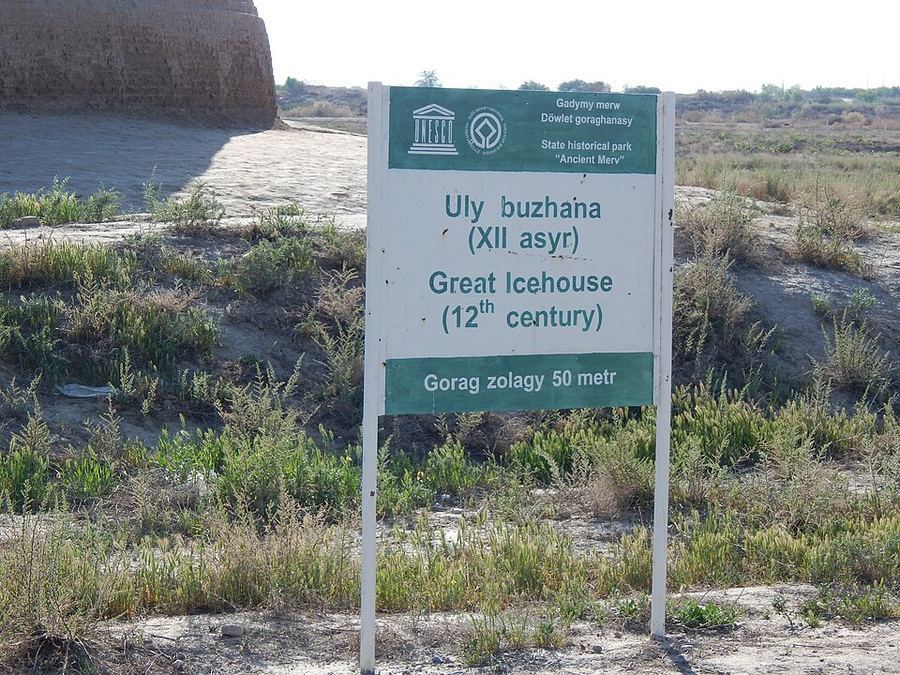
Did You Know Merv, on the Murgab oasis, was one of the largest cities on earth under the Seljuks before the Mongols destroyed it in 1221; its remains are inscribed on the UNESCO World Heritage List. — UNESCO World Heritage Centre

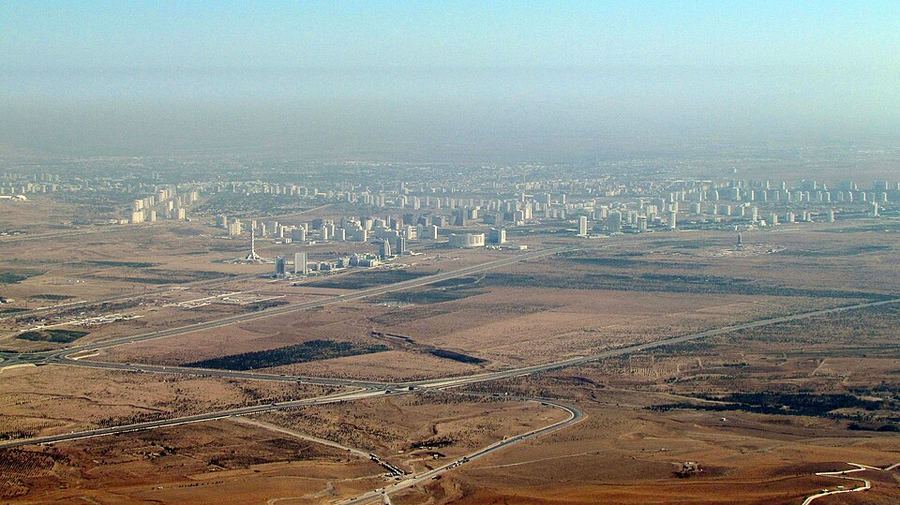
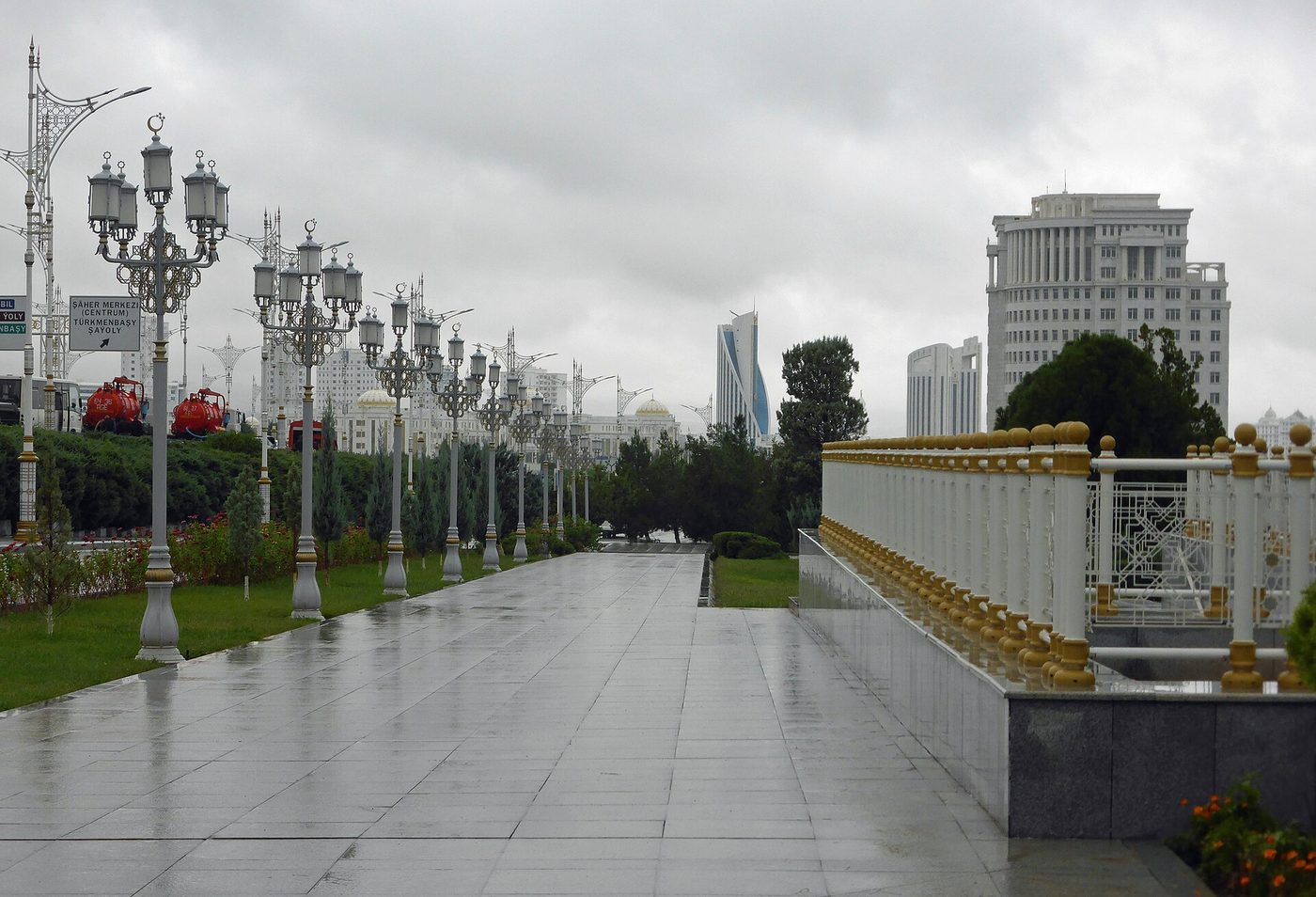
Turkmenistan is a Central Asian republic of roughly 5.7 million people, lying between the Caspian Sea and the Amu Darya, with Iran and Afghanistan to the south and Uzbekistan and Kazakhstan to the north. Around four-fifths of its territory is the Karakum, the black sand desert, and most of the population lives in a thin arc of oases along the Kopet Dag foothills, the Murgab and Tejen river fans, and the Amu Darya valley. It became independent from the Soviet Union on 27 October 1991 and has been governed since as a presidential republic with no effective opposition, first under Saparmurat Niyazov, then under Gurbanguly Berdimuhamedow, and since 2022 under his son Serdar Berdimuhamedow. In 1995 the United Nations General Assembly recognised Turkmenistan's status of permanent neutrality, a doctrine that has shaped its foreign policy ever since and keeps it outside military alliances. The economy rests almost entirely on natural gas: the country holds one of the largest proven reserves in the world, and the giant Galkynysh field in the southeast underpins pipeline exports that now run overwhelmingly to China. Ashgabat, the capital, was rebuilt after a catastrophic earthquake in 1948 and again on a monumental scale after independence, faced in white marble on a scale that has few parallels anywhere.

CIA World FactbookUNEncyclopaedia BritannicaWorld Bank
Population
5,744,151
Capital
Ashgabat (Ashkhabad)
Currency
None TMM
Time zones
Largest city
Ashgabat
Human Geography Themes
Loading national figures…
Largest Cities
Ashgabat1,078,867
Mary243,436
Turkmenabat215,520
Dashoguz182,056
Balkanabat85,515
Andalyp72,547
Konye-Urgench68,083
Yasmansalyk65,355
In Perspective

Ashgabat's urban core is home to about 1,078,867 people.

Among the world's megacities, though, it's one of many — the giants of Asia and Latin America run larger still:

Ashgabat1,078,867
Jakarta40,545,126
Dhaka37,307,160
Tokyo33,244,670
Shanghai30,678,616
Cairo25,230,325
The Country & Its People

History

The land was a corridor of empires long before it was a country. The Parthians built their early capital at Nisa near modern Ashgabat, and Merv, on the Murgab oasis, grew into one of the largest cities on earth under the Seljuks before the Mongols destroyed it in 1221; Kunya-Urgench in the north was the seat of the Khwarezmian shahs. Turkmen tribes — Tekke, Yomut, Ersari, Saryk, Salyr and others — settled these margins as pastoralists and raiders, organised by lineage rather than by state, which is why no single Turkmen polity emerged before the modern era. Russian conquest came late and violently: the storming of the fortress of Geok Tepe in 1881 broke Tekke resistance with heavy slaughter and remains a national day of remembrance. Soviet rule created the Turkmen Soviet Socialist Republic in 1924, imposed sedentarisation and collectivisation, suppressed the Basmachi revolts, and built the Karakum Canal to turn the desert over to cotton. In October 1948 an earthquake levelled Ashgabat and killed a large share of its inhabitants. Independence in 1991 brought Saparmurat Niyazov, who ruled as Türkmenbaşy until his death in 2006 behind an extraordinary personality cult; Gurbanguly Berdimuhamedow succeeded him and in 2022 handed the presidency to his son Serdar while retaining power as chairman of the People's Council.
History, Turkmenistan
13299achan / CC BY-SA 4.0

Culture

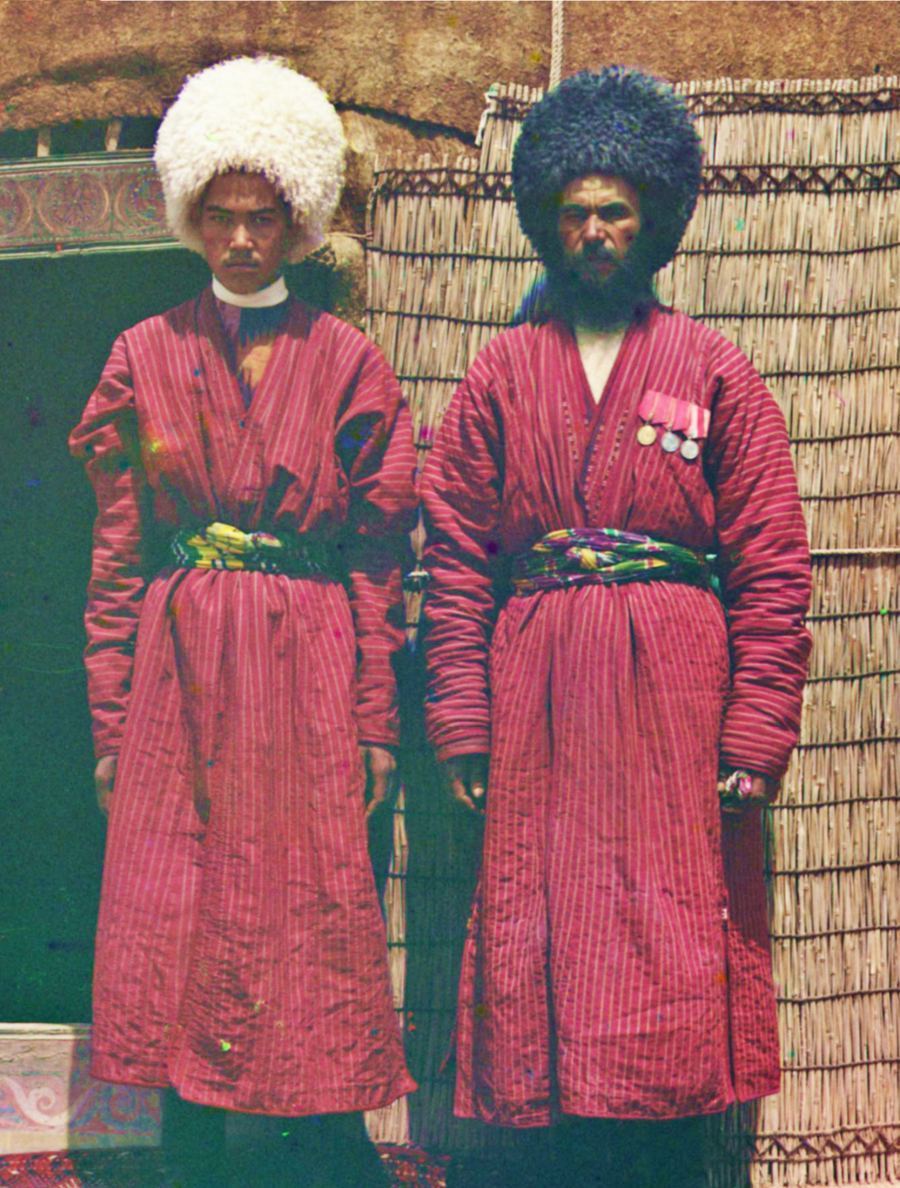
Turkmen identity is tribal in its foundations and national in its official expression. Descent groups — Tekke of the Akhal and Merv oases, Yomut of the Caspian and Dashoguz, Ersari of the Amu Darya, Saryk, Salyr, Chowdur — historically defined marriage, pasture rights and carpet design, and although the state promotes a single Turkmen nation, tribal origin still carries social meaning. Hospitality is close to obligatory: guests are seated on carpets, fed first, and refusal is a serious slight. Extended families remain the basic unit, weddings are enormous multi-day affairs with bride-price, and elders hold formal precedence in speech and seating. Islam is Sunni in the Hanafi school, layered over pre-Islamic and Sufi practice — pilgrimage to the tombs of saints and ancestors is widespread, and shrines with sacred trees, springs and cradles attract visitors seeking healing or children. Nowruz, the spring new year shared with Iran and the wider Persianate world, is a major public holiday alongside Independence Day and Neutrality Day. Two national symbols are treated with something close to reverence: the Akhal-Teke horse and the hand-knotted carpet, each with its own annual state holiday, and the carpet güls of the major tribes appear on the national flag itself.
Culture, Turkmenistan
Prokudin-Gorskii, Sergei Mikhailovich, 1863-1944 / Public domain

Points Of Pride

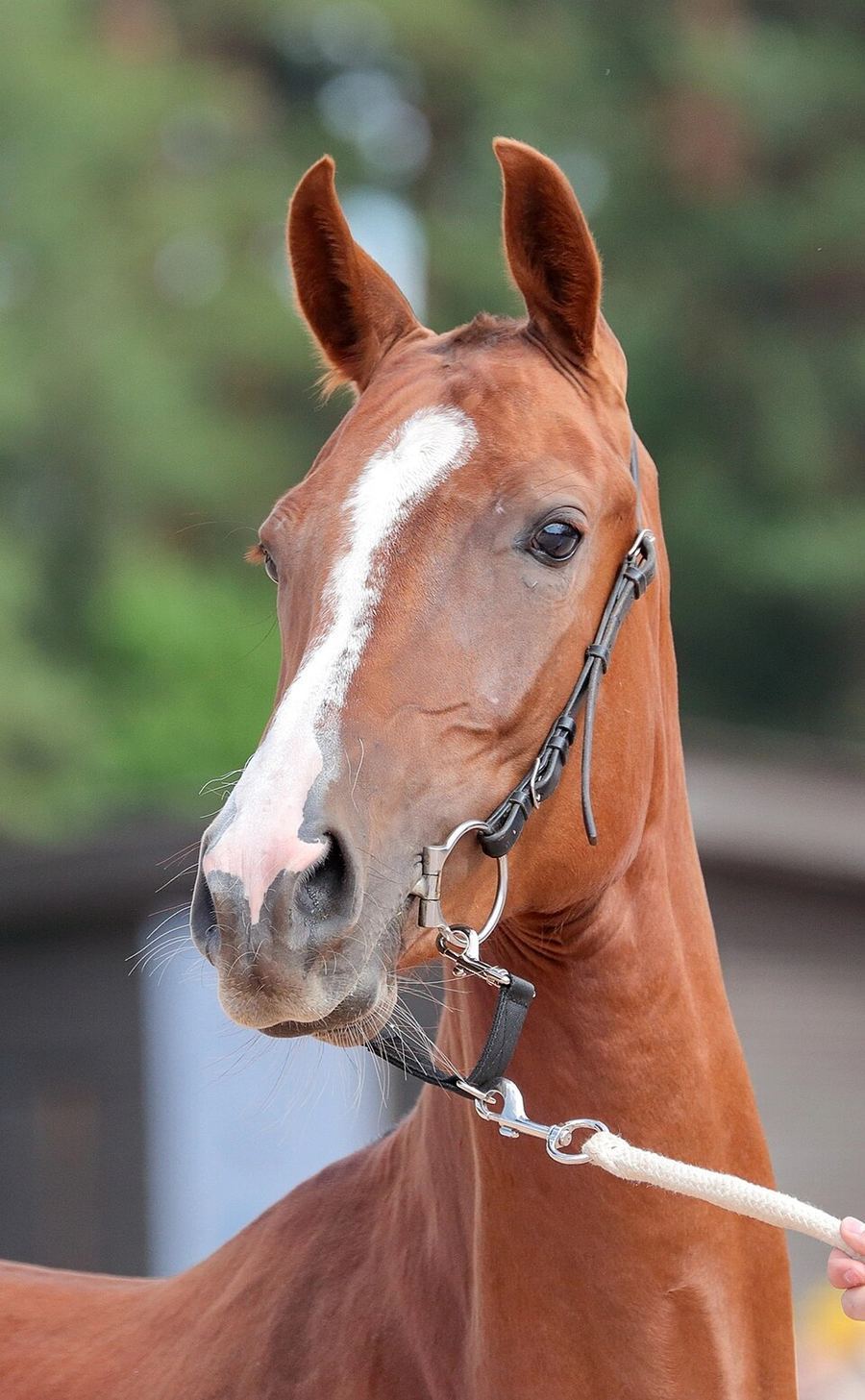
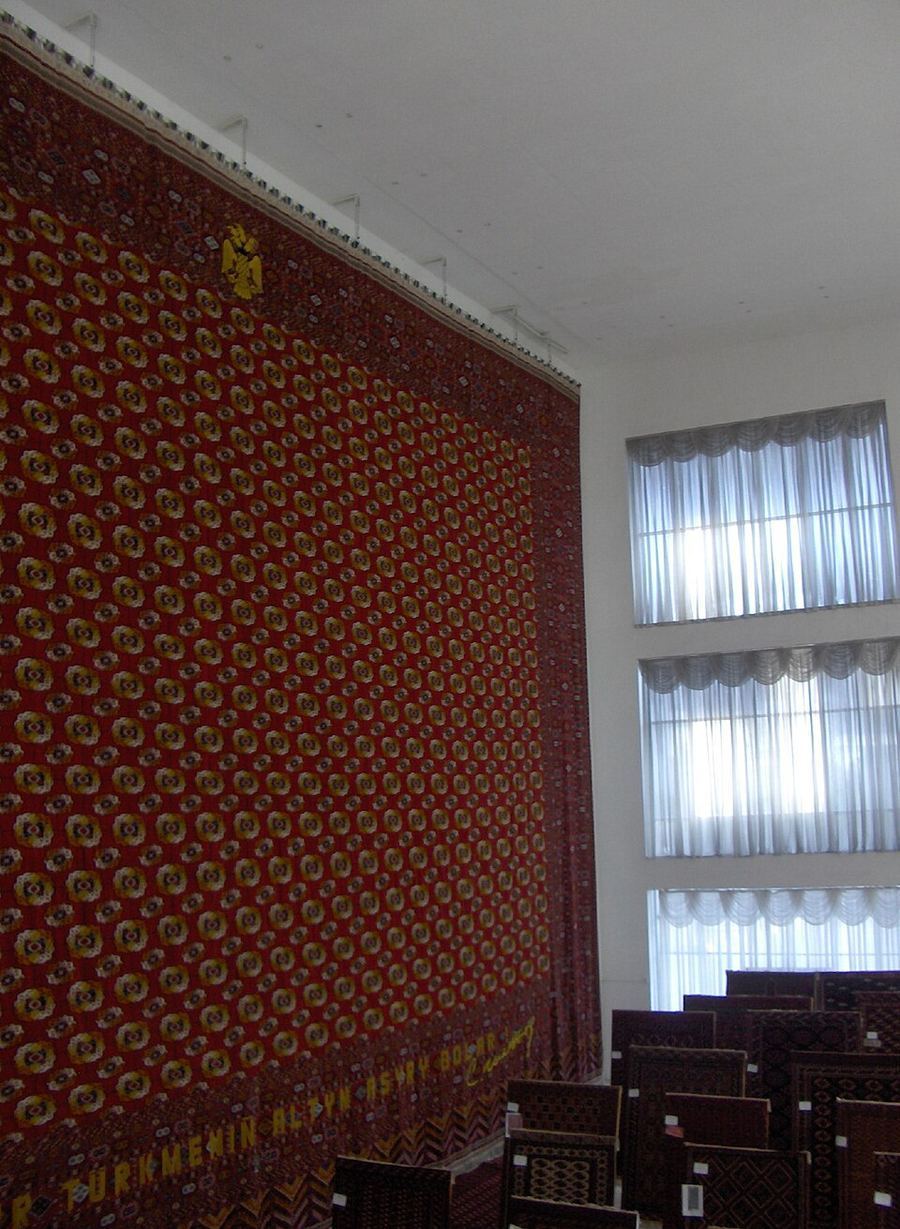
Turkmenistan's most distinctive claim is the Akhal-Teke horse — a slender desert breed of great endurance with a metallic sheen to its coat, bred for centuries in the Kopet Dag oases, shown on the national emblem and celebrated with its own public holiday each spring. The second is the carpet: dense hand-knotted rugs whose repeating güls encode tribal identity, honoured with a Carpet Day, displayed in a dedicated museum in Ashgabat that holds one of the largest handwoven carpets ever made, and inscribed by UNESCO on its intangible cultural heritage list. Three cultural landscapes carry World Heritage status — the ancient city of Merv, the Khwarezmian remains at Kunya-Urgench, and the Parthian fortresses of Nisa — and Turkmen intangible heritage inscriptions include the Görogly epic, the kushtdepdi singing and dancing rite, and the making and playing of the dutar. The eighteenth-century poet Magtymguly Pyragy, who gave literary form to the Turkmen language and to the idea of Turkmen unity, is the national figure above all others. Turkmens also point to their permanent neutrality, recognised by the United Nations in 1995, and to gas reserves that rank among the largest in the world.
Points Of Pride, Turkmenistan
EugeneHorsemanship / CC0

Cultural Fusion

Turkmenistan sits at the meeting point of the Turkic and Persian worlds and shows it. The Turkmen language is Oghuz Turkic, the same branch as Turkish and Azerbaijani, and Turkmen speakers can follow Turkish more readily than they can the Kipchak Turkic of Kazakh or Kyrgyz; the alphabet was switched from Cyrillic to a Latin script after independence. At the same time the country's material and festive culture is deeply Persianate: Nowruz, the courtyard house, the poetic tradition that Magtymguly wrote within, and the cuisine's shared repertoire of pilaf and flatbread all come from that side. Merv and Kunya-Urgench were Silk Road cities where Iranian, Turkic, Arab, Indian and Chinese trade and ideas met, and Buddhist as well as Zoroastrian and Nestorian Christian remains have been excavated in the region. The Soviet century layered on Russian language, Cyrillic literacy, apartment-block urbanism and industrial infrastructure, traces of which remain despite deliberate de-Russification. Large Turkmen populations live across the borders in northeastern Iran and northern Afghanistan, sustaining cross-border kinship, carpet trade and shared musical repertoire that the closed frontier has slowed but not ended.
Cultural Fusion, Turkmenistan
Roland Lin / CC BY-SA 3.0 igo

Music & Dance

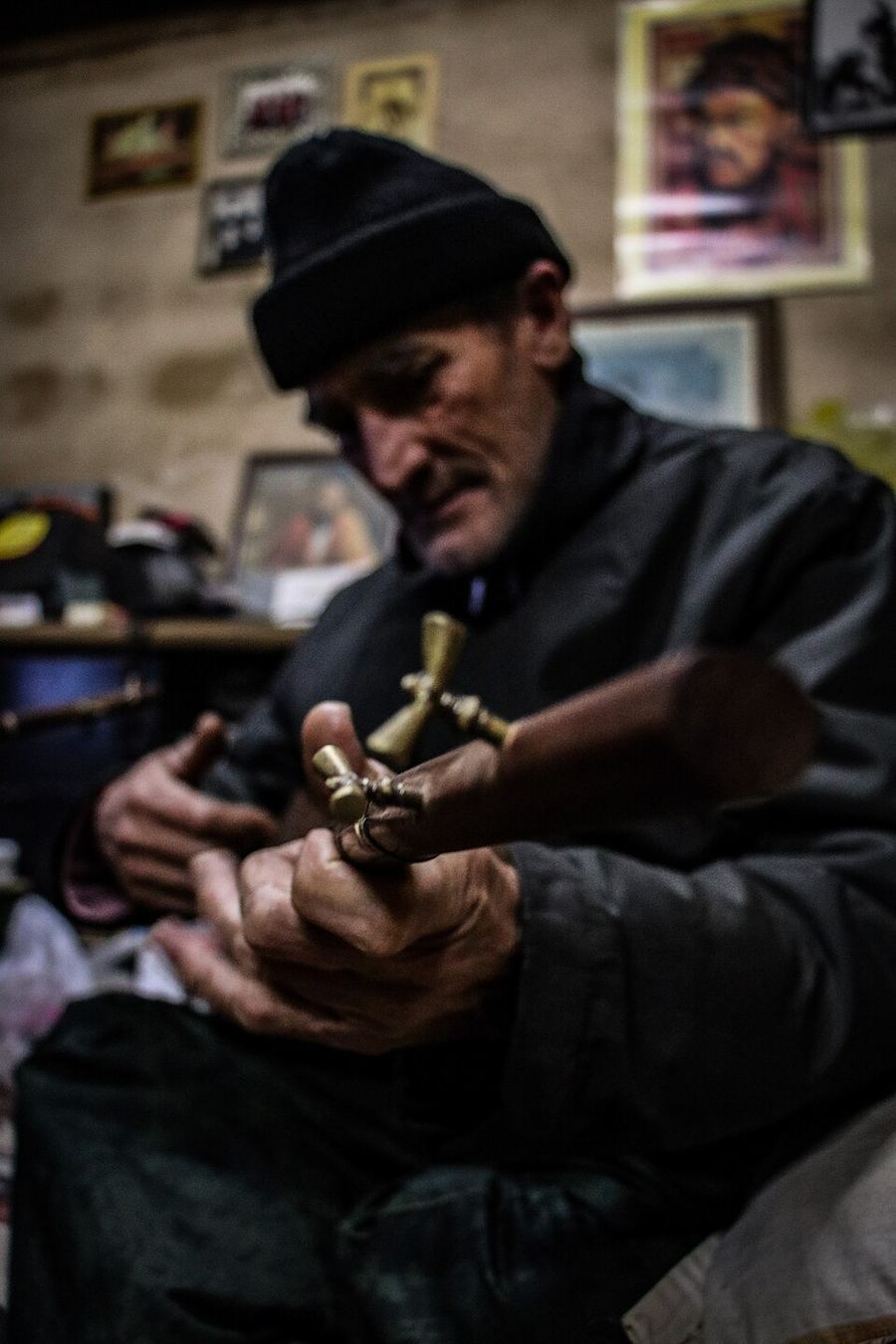
The core of Turkmen music is the bagshy, the bard who sings epic and lyric verse while accompanying himself on the dutar, a two-stringed long-necked lute, often joined by the gyjak, a bowed spike fiddle, and sometimes by the tuyduk flute. The repertoire runs from the classical dessan cycles to settings of Magtymguly's poetry, and a bagshy's authority rests on lineage — training passed from master to pupil within named schools associated with particular regions. UNESCO has inscribed the art of dutar making together with bagshy performance on its intangible heritage list, and separately the Görogly epic, the vast heroic cycle shared across the Turkic world and performed in Turkmenistan in a distinctive sung form. The best-known dance tradition is kushtdepdi, a rite of singing and dancing in which a group performs rhythmic sung praise with synchronised movement at weddings and celebrations, also carried on the UNESCO list. In the twentieth century composers such as Nury Halmammedov worked Turkmen modal material into orchestral and film scores, and today wedding music blends dutar with synthesisers and amplified vocals, while state ensembles perform stylised folk repertoire at official occasions.
Music & Dance, Turkmenistan
Soheil sargolzayi / CC BY-SA 4.0

Cuisine & Misattributed Foods

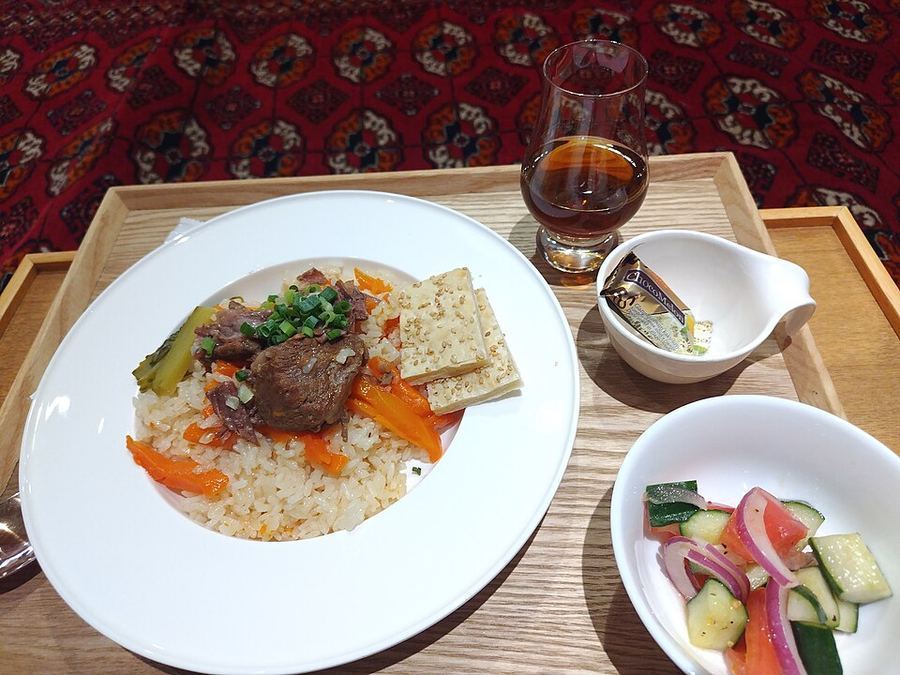
Turkmen food is desert and steppe cooking: meat, wheat, dairy and melons, with less vegetable variety than in neighbouring Uzbekistan and a strong preference for lamb and camel. Palow, the rice pilaf cooked with mutton, carrot and onion in a cauldron, is the centrepiece of feasts. Chorba is the everyday soup of meat and vegetables; dograma is a distinctive dish of bread, boiled meat and onion torn and mixed by hand and served with broth, associated with religious festivals. Ishlekli, a large meat-and-onion pie baked in ashes or a covered pan, is the signature bake of the Balkan and Ahal regions. Gutap are fried turnovers filled with meat, pumpkin or greens, and çörek, the round bread baked on the wall of a clay tandyr, accompanies everything. Dairy is central and includes chal, lightly fermented camel's milk drunk in the hot months and credited locally with medicinal value. Green tea is the constant drink. Above all there are melons: Turkmen varieties are famous across the former Soviet Union for sweetness and keeping quality, and the country marks a national Melon Day in August in their honour.
Cuisine & Misattributed Foods, Turkmenistan
妖精書士 / CC0

National Dress

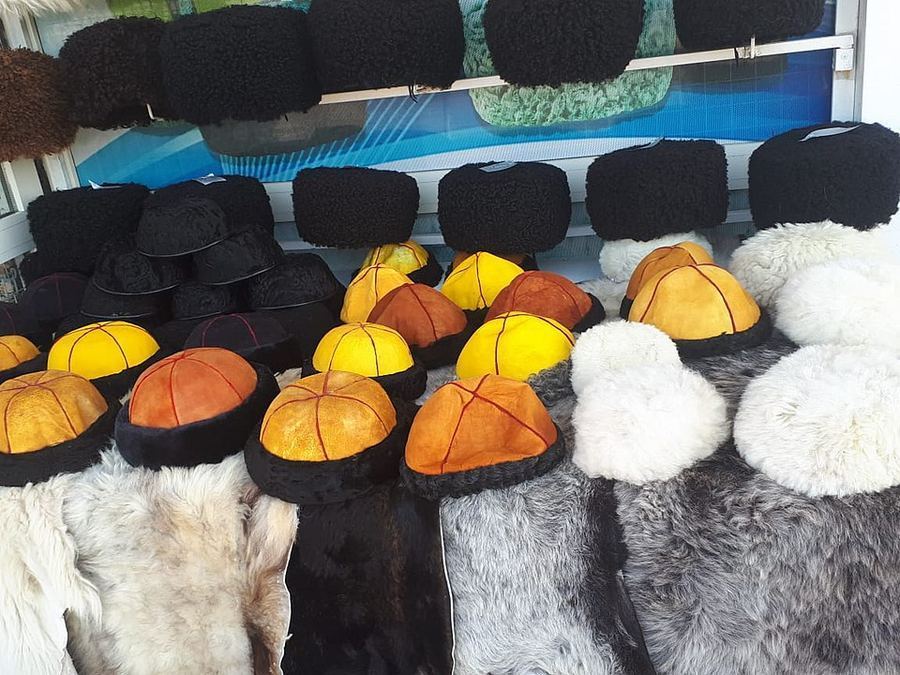
Turkmen dress is among the most immediately recognisable in Central Asia. Women wear a long straight-cut dress of keteni, a hand-woven silk usually in deep red or crimson with fine stripes, its neckline covered by a densely embroidered panel called the yaka whose stitch patterns vary by region and by the wearer's age and marital status; over it go loose trousers gathered at the ankle and, for married women, a headscarf, while unmarried girls wear an embroidered skullcap topped with a silver dome-shaped gupba. Silver jewellery set with carnelian is worn in quantity — heavy pectorals, temple pendants, the crescent-shaped asyk hung at the back — traditionally forming a bride's portable wealth. Men wear a long quilted or silk robe called a don, often in bright red silk for ceremonial occasions, over a shirt and loose trousers tucked into boots, and the definitive item is the telpek, a tall shaggy sheepskin hat worn in black or white that insulates against both summer heat and winter cold. Since independence a standardised version of this dress has been made near-compulsory in schools and public institutions, so the traditional silhouette is now also a uniform.
National Dress, Turkmenistan
Gulzar Nurlyyeva / CC BY-SA 4.0

Sports & Inspiring Athletes

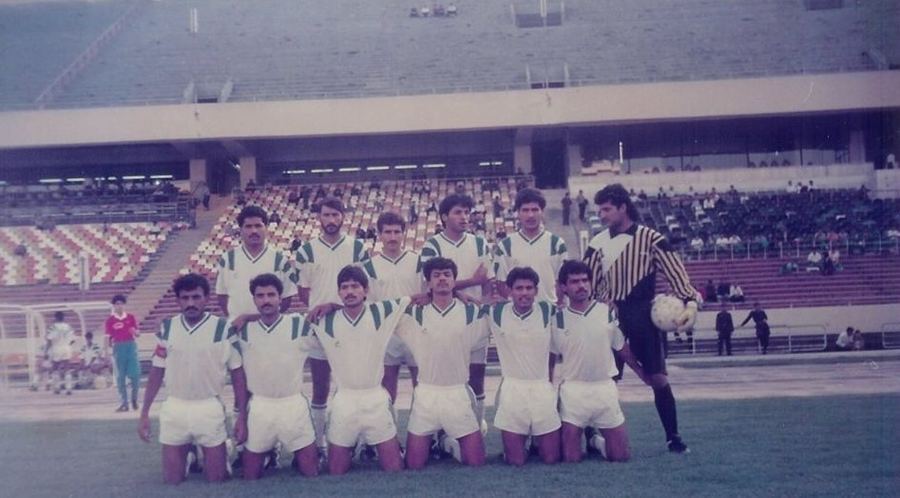
Wrestling in its Turkmen belt form, goreş, is the deepest-rooted sport, contested at weddings and festivals as well as in organised competition, and it feeds a strong national base in freestyle wrestling, judo, sambo and other grappling codes. Horse racing is the other historic pillar, run on the Ashgabat hippodrome and at provincial tracks and centred on the Akhal-Teke, with equestrian events, endurance riding and displays of trick riding forming part of the spring horse festival. Football is the most watched team sport; the domestic Ýokary Liga is dominated by Ashgabat clubs, above all Altyn Asyr, and matches at the capital's stadiums draw the largest crowds. Weightlifting has become a genuine strength, supported by state investment and by the country's hosting of the World Weightlifting Championships in Ashgabat in 2018. Ice hockey, an unlikely enthusiasm in a desert country, has been promoted heavily since indoor rinks were built in the capital. Traditional games associated with horsemanship, archery and strength persist at rural celebrations, and mass calisthenic and cycling events are organised by the state as public health campaigns.
Sports & Inspiring Athletes, Turkmenistan
Unknown authorUnknown author / Public domain

Notable Educational Programs

Education is free, state-run and compulsory, and literacy is near universal, a legacy of the Soviet system. The sector was badly damaged under Saparmurat Niyazov, who shortened the school course, cut university places and years, made his own book Ruhnama a compulsory examined subject at every level, and refused recognition to foreign degrees, leaving a cohort of Turkmens educated to a standard the outside world would not accept. Gurbanguly Berdimuhamedow reversed much of this after 2007: the school course was lengthened and then extended to twelve years, higher education intakes were increased, Ruhnama was pushed out of the curriculum, and new institutions were founded in Ashgabat, including the International University for the Humanities and Development and the Oguz Han Engineering and Technology University. The flagship remains Magtymguly Turkmen State University in the capital, alongside specialised institutes in medicine, agriculture, energy and transport. Very large numbers of Turkmen students study abroad — in Turkey, Russia, Belarus, China and elsewhere — making education one of the country's main channels of contact with the wider world, though periodic restrictions on students leaving or on the recognition of particular foreign institutions have disrupted this.
Notable Educational Programs, Turkmenistan
Daderot / Public domain

Wars & Conflicts

Turkmenistan has fought no war since independence and maintains a doctrine of permanent neutrality recognised by the United Nations General Assembly in 1995, which keeps it out of the military and security blocs its neighbours have joined and shapes an unusually withdrawn foreign policy. Its historical conflicts are those of conquest and resistance: the Russian campaigns of the 1870s and 1880s that culminated in the storming of the fortress of Geok Tepe in 1881, where defenders and civilians were killed in large numbers and which is commemorated as a national day of mourning, and the Basmachi insurgency against Soviet rule in the 1920s and 1930s. The principal contemporary security concern is the long southern border with Afghanistan, where the country has faced cross-border incidents, smuggling and the risk of instability, and has responded by reinforcing frontier positions while continuing to deal pragmatically with whoever governs in Kabul in order to protect gas transit ambitions. Domestically, the state's own record is the recurring subject of international criticism: human rights organisations document severe restrictions on speech, movement, assembly and religion, and the use of forced labour in the cotton harvest.
UNHuman Rights WatchAmnesty InternationalEncyclopaedia Britannica
Current as of 2026-08-07
Wars & Conflicts, Turkmenistan
joepyrek from Richmond, Va, USA / CC BY-SA 2.0

Land & Border Disputes

The most consequential dispute has been over the Caspian Sea. Turkmenistan and Azerbaijan long contested ownership of offshore hydrocarbon structures in the middle of the sea, a quarrel sharp enough at times to interrupt relations, and the wider question of whether the Caspian is a sea or a lake — and therefore how its bed should be divided among the five littoral states — was unresolved for decades. A framework convention signed by the five at Aktau in 2018 set out the principles for delimitation, and in 2021 Turkmenistan and Azerbaijan agreed to develop jointly the disputed structure they renamed Dostluk, or Friendship, removing the most difficult obstacle to a trans-Caspian gas link to Europe. Water is the other running issue: Turkmenistan draws heavily on the Amu Darya through the Karakum Canal, sharing an over-allocated river with Uzbekistan, Tajikistan and Afghanistan, and Afghanistan's construction of the large Qosh Tepa canal on the upper river has raised serious concern in Ashgabat about future flows. Land borders themselves are settled. Progress on the long-planned Turkmenistan-Afghanistan-Pakistan-India gas pipeline remains hostage to security and financing rather than to any boundary disagreement.
Land & Border Disputes, Turkmenistan
Allan Mustard / CC BY-SA 4.0
Land, Life & Legacy

Land & Climate

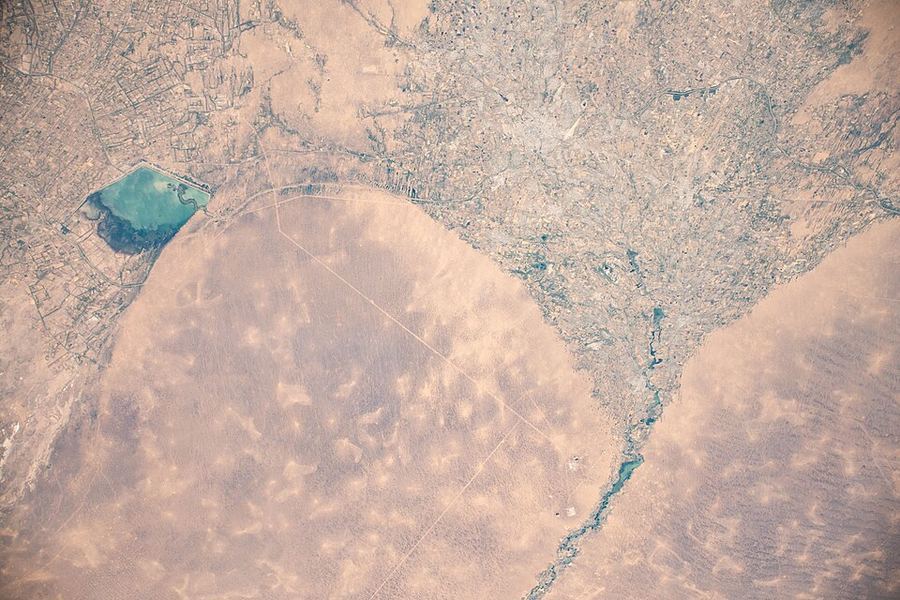
The Karakum desert covers roughly four-fifths of Turkmenistan, a vast expanse of sand ridges and takyr clay pans that is largely uninhabited. Settlement clusters where water reaches it: along the northern foot of the Kopet Dag range that forms the Iranian border, where Ashgabat sits; on the Murgab and Tejen alluvial fans around Mary; and along the Amu Darya, which runs along the Uzbek and Afghan frontiers before turning north. The Karakum Canal, one of the largest irrigation channels ever built, draws water from the Amu Darya and carries it more than a thousand kilometres west across the desert, making cotton and wheat cultivation possible while contributing heavily to the desiccation of the Aral Sea. The west of the country meets the Caspian at Turkmenbashi, with the Karabogazgol lagoon, the eroded badlands of the Yangykala canyons and the Balkan uplands nearby. The climate is sharply continental and arid: summers routinely exceed 40 degrees Celsius, winters can fall well below freezing, and annual rainfall in much of the country is under 150 millimetres. Earthquakes are a serious hazard along the Kopet Dag fault, as the destruction of Ashgabat in 1948 demonstrated.
Land & Climate, Turkmenistan
Tormod Sandtorv (original picture) Hellbus (derived work) / CC BY-SA 2.0

Entertainment

Family gatherings, weddings and visits to relatives dominate leisure time, and hospitality around a spread of tea, bread, melon and sweets is the standard form of an evening. Public holidays are elaborate state occasions with mass performances, and the horse racing season at the Ashgabat hippodrome, culminating in the spring festival of the Akhal-Teke, draws large crowds. In summer, families with the means head to Awaza, the government-built resort strip on the Caspian coast near Turkmenbashi, with hotels, water parks and a yacht harbour. Nearer to the capital, Kow Ata — a warm sulphurous lake inside a cave under the Kopet Dag — is a favourite day trip, as are the Nokhur highlands and the Firyuza gorge on the Iranian border. Picnics in the mountain foothills, chaikhana tea houses, and bazaars such as Ashgabat's Altyn Asyr market are ordinary weekend fixtures. Football and wrestling are watched keenly. Internet access is among the most restricted and expensive in the world, so online entertainment plays a much smaller part in daily life than in neighbouring countries, and state television, satellite dishes and recorded music fill the gap.
Entertainment, Turkmenistan
Awaza / Public domain

Art & Museums

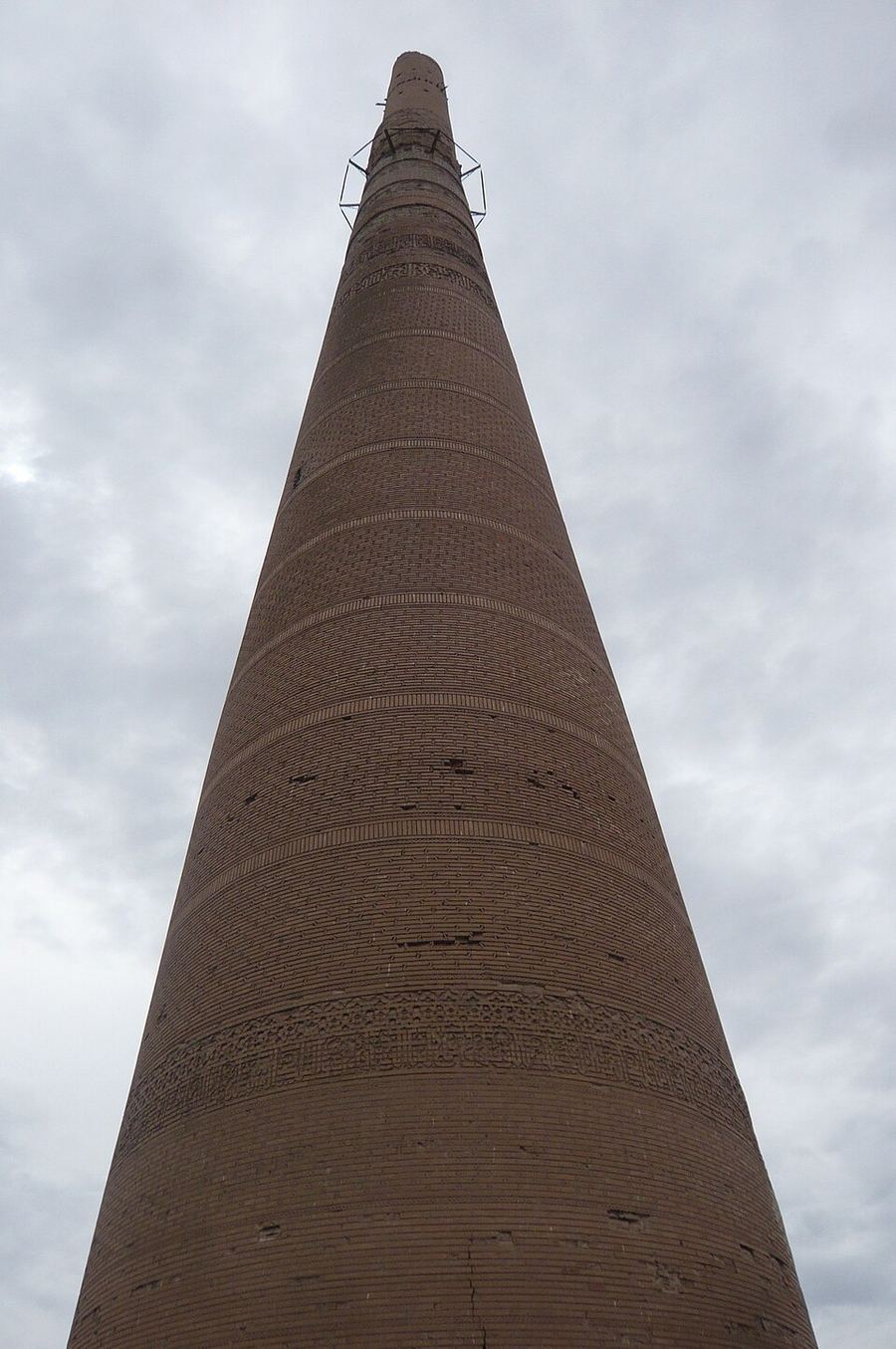
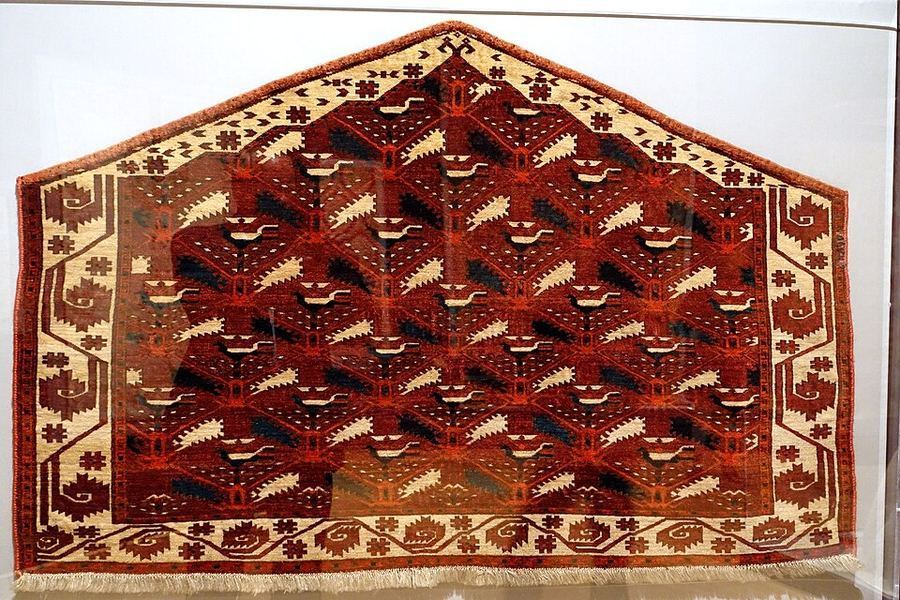
The pre-eminent Turkmen art form is the knotted carpet. Woven by women on narrow looms in wool dyed with madder to the deep red that dominates the palette, Turkmen rugs are organised around repeating octagonal medallions called güls, each associated with a tribe — the Tekke gül being the best known and the one that became the national emblem on the flag. Related weaving covers the whole material world of the tent: door surrounds, tent-band strips, storage bags, camel trappings and prayer rugs. Silversmithing is the other great tradition, producing gilded and carnelian-set ornaments for women and for horses in forms that scarcely changed for centuries. Embroidery on the yaka collar panel is a third distinct craft, its stitches and motifs identifying region and status. Older monumental art survives in architecture and archaeology: the Seljuk mausoleum of Sultan Sanjar at Merv, the soaring minaret and mausolea of Kunya-Urgench, the rhytons and sculptures excavated at Parthian Nisa and held in the national museum in Ashgabat. Contemporary visual art is dominated by state commissions — monumental sculpture, portraiture and marble-clad public architecture — with independent studio practice limited and largely private.
Art & Museums, Turkmenistan
Ibrahim Rustamov (tg:User:Ibrahim) / CC BY 2.5

Notable People

The towering national figure is Magtymguly Pyragy, the eighteenth-century poet whose verse in Turkmen rather than Persian or Chagatai gave the language literary standing and whose calls for unity among the tribes are read as a founding national text; UNESCO joined the marking of his three-hundredth anniversary. In the Soviet period the novelist Berdi Kerbabayev established modern Turkmen prose, and the composer Nury Halmammedov built a body of orchestral, chamber and film music on Turkmen modal material that is still widely performed. Politically the country's history since independence is bound to three men: Saparmurat Niyazov, who ruled as Türkmenbaşy from 1991 until his death in 2006 and whose personality cult reached into calendars, textbooks and street names; Gurbanguly Berdimuhamedow, president from 2007 to 2022 and afterwards chairman of the People's Council; and Serdar Berdimuhamedow, his son and successor. In sport the outstanding name is the weightlifter Polina Guryeva, who won silver at the Tokyo Olympic Games and became the first Turkmen athlete to win an Olympic medal of any colour. Older history supplies Sultan Sanjar, the Seljuk ruler buried at Merv, and the defenders of Geok Tepe, commemorated annually.
Notable People, Turkmenistan
. The original uploader was Лев Хомов at Russian Wikipedia. / Public domain

Inventions & Breakthroughs

Turkmenistan's inventive record is bound up with water, horses and textiles. Underground water-gathering tunnels of the karez type, driven into alluvial fans to bring groundwater to the surface by gravity alone, made oasis agriculture possible on the Kopet Dag piedmont without pumps or evaporation losses. The Akhal-Teke is itself a feat of selective breeding sustained over centuries, producing an animal capable of covering long desert distances on very little water and feed, and traditional Turkmen horse management — including the specific regimes of feeding and covering used to condition the animals — is a body of technique passed within families. In weaving, the Turkmen system of tribal güls amounts to a durable visual notation of identity, and the dyeing and knotting standards behind the best carpets represent extremely refined craft technology. Yurt construction, with its collapsible lattice frame and felt covers, solves shelter in extreme heat and cold with materials a herding household can carry. In the modern era the country's engineering ambitions are large-scale rather than fine-grained: the thousand-kilometre-plus Karakum Canal, the development of the Galkynysh gas field, and a commercial plant converting natural gas into synthetic gasoline that opened in Ahal province in 2019.
Inventions & Breakthroughs, Turkmenistan
NASA / Public domain

Science & Technology

Turkmenistan's technical capacity is concentrated in hydrocarbons. The Galkynysh field is among the largest gas accumulations known anywhere, and its development, along with the Central Asia-China pipeline that opened in 2009 and now carries the bulk of exports, represents the country's most substantial engineering achievement since the Karakum Canal. A plant in Ahal province that converts natural gas into synthetic gasoline began commercial operation in 2019, one of very few facilities of its kind at that scale. The same sector is the source of Turkmenistan's most-discussed environmental problem: satellite monitoring published in recent years identified Turkmen gas infrastructure as the source of some of the largest single methane releases detected anywhere on earth, a finding reported widely and one the government has since begun to address in international climate forums. Elsewhere, scientific institutions inherited from the Soviet Academy of Sciences work on desert agronomy, seismology — a live concern given the Kopet Dag fault — water management and Akhal-Teke breeding. Information technology is the weakest area: internet penetration is among the lowest in the world, access is heavily filtered and expensive, and the resulting isolation from global technical networks constrains research and enterprise alike.
Science & Technology, Turkmenistan
ILMur / CC BY-SA 3.0
On The World Stage
Champions of Turkmenistan

Champions & Defining Moments

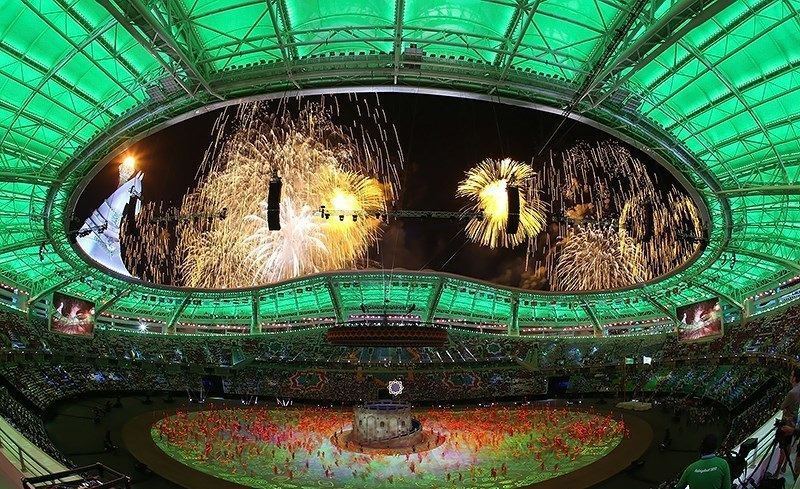
Turkmenistan has competed at the Olympic Games as an independent country since 1996 and waited a quarter of a century for its first medal, which came at the delayed Tokyo Games when Polina Guryeva took silver in weightlifting — an event treated at home as a national landmark and rewarded with extraordinary public honours. The country's largest sporting undertaking was hosting: Ashgabat staged the Asian Indoor and Martial Arts Games in 2017, building an Olympic-scale complex in the capital for the purpose, and followed it with the World Weightlifting Championships in 2018. In football the men's national team has never qualified for a World Cup but has reached the AFC Asian Cup finals, most recently in the 2019 tournament, and the club Altyn Asyr has gone deep into the AFC Cup, reaching the competition's final stages. Turkmen athletes also feature at the Asian Games, the Islamic Solidarity Games and world championships in wrestling, judo, karate and kickboxing. International participation is constrained less by talent than by the country's general restrictions on travel and its limited integration into global sporting circuits.

Javid Nikpour / CC BY 4.0
Government & Leadership

Presidential republic; authoritarian

Seat of the executive

Executive

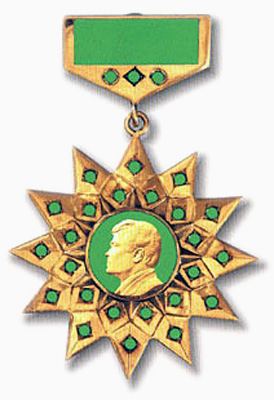
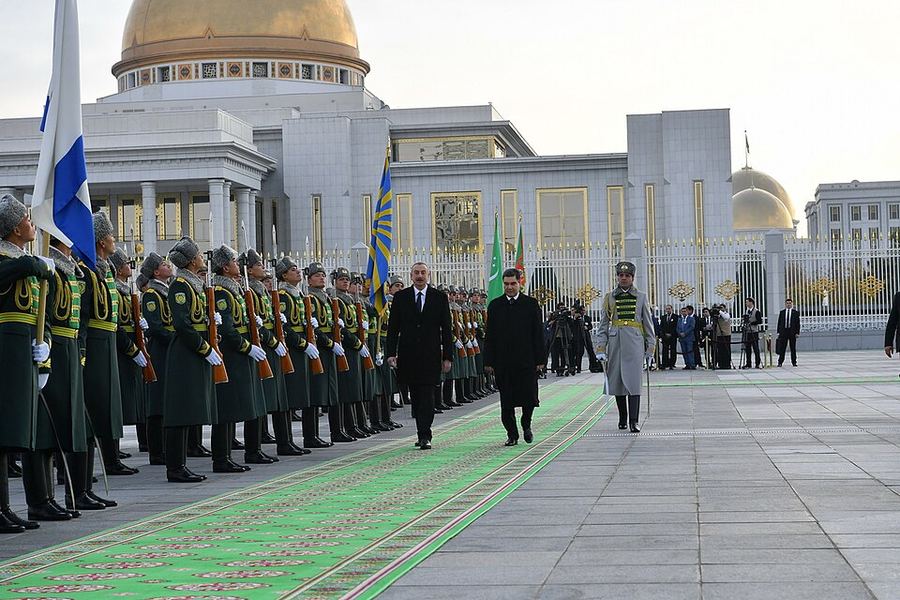
Serdar Berdimuhamedov — PresidentDPT

In office since 19 March 2022

U.S. Department of State / Public domain
The legislature

Assembly (Mejlis)

Unicameral

Composition — 56 seats

Last election 3/28/2021 · 25.5% women

Supreme Court of Turkmenistan

consists of the court president and 21 associate judges and organized into civil, criminal, and military chambers

Economy, Trade & Government

Currency & GDP

TMM — TMM (None)

GDP (PPP): $134.555 billion (2024 est.)

Per capita: $18,000 (2024 est.)

Exports

$13.111 billion (2023 est.)

natural gas, refined petroleum, fertilizers, crude petroleum, electricity (2023)

Partners: China 63%, Turkey 11%, Greece 7%, Uzbekistan 6%, Azerbaijan 4% (2023)

Imports

$7.563 billion (2023 est.)

broadcasting equipment, cars, wheat, computers, iron pipes (2023)

Partners: Turkey 21%, UAE 21%, China 20%, Kazakhstan 8%, Germany 5% (2023)

Government

Type: presidential republic; authoritarian

Independence: 27 October 1991 (from the Soviet Union)

Terrain → Where People Live

How mountains, coasts, and rivers shape settlement (LandScan).

Coming — data

Migration & Ethnic Settlement

Where groups settled and how people move (GeoEPR + UNHCR).

Coming — data

Universities

Notable institutions, mappable as points.

Coming — data
Economy & government facts: CIA World Factbook (public domain), via OpenFactBook / factbook.json.
Every fact and narrative claim will carry a visible source citation. Data-driven sections light up automatically wherever HERA has coverage.